Signs in Creation
The map of signs
Every natural sign we found in the scriptures: 122 of them, in 10 groups, each with its Jewish and Christian echo and what science says today.
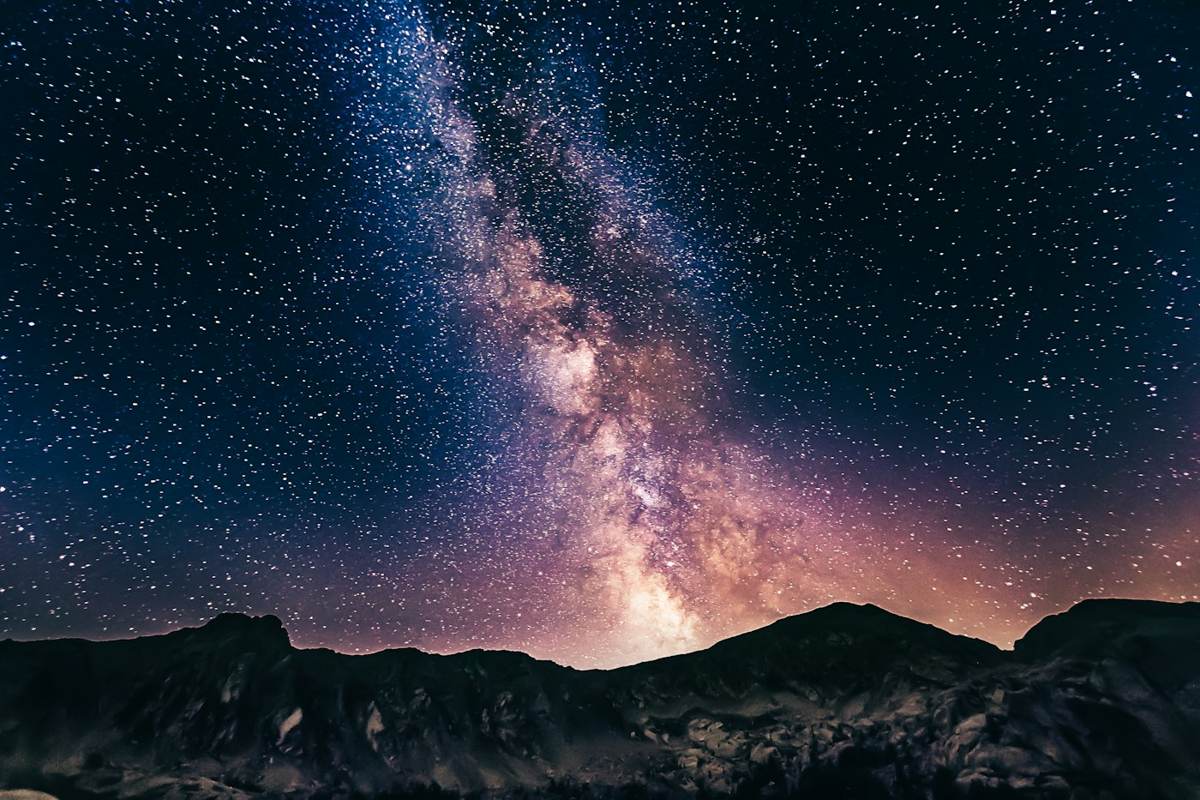
A00 · Sky and cosmos
The four looks: camel, sky, mountains, earth
Qur'an 88:17-20 · أَفَلَا يَنظُرُونَ · a-fa-lā yanẓurūna … kayfa
The Qur'an asks its listeners to look at four things, the camel, the sky, the mountains and the earth, and to ask how each was made. In the Hebrew Bible, Job (peace be upon him) is told to 'ask the beasts' and Isaiah (peace be upon him) says 'lift up your eyes'. In the Gospels, Jesus says 'look at the birds'. Each of the four now has its own science: camels survive heat and heavy dehydration by letting their body temperature swing.
Biology; astronomy; earth science · Settled · Name 11 · Name 12 · Name 13
Full episode →A01 · Sky and cosmos
The sky raised without pillars you can see
Qur'an 13:2 · رَفَعَ السَّمَاوَاتِ بِغَيْرِ عَمَدٍ · rafaʿa l-samāwāti bi-ghayri ʿamadin
The sky is raised high with no pillars anyone can see. The Hebrew Bible speaks of a firmament and of heavens stretched out like a curtain; the New Testament calls rain from the sky a witness to God's kindness. Science explains the blue: air scatters short blue wavelengths of sunlight more than red ones.
Physics; earth science · Settled · Name 63
A02 · Sky and cosmos
A protected ceiling
Qur'an 21:32 · سَقْفًا مَّحْفُوظًا · saqfan maḥfūẓan
The sky is called a protected roof over the earth. Genesis describes a firmament dividing the waters, a picture Christians read in the same book. Science today: tens of tonnes of space dust and rock reach Earth every day, and most of it burns up harmlessly high in the atmosphere as meteors.
Earth science; astronomy · Settled · Name 38 · Name 90
Often misused as a “miracle” claim: why we never say a verse predicted science
A03 · Sky and cosmos
Look again, and again: no rifts
Qur'an 67:3-4 · فُطُور · fa-rjiʿi l-baṣara … hal tarā min fuṭūr
Look at the heavens again and again, the Qur'an says, and you will find no flaw or rift. Psalm 19 says the heavens declare God's glory without words; Christians pray the same psalm. Space telescopes such as JWST now show thousands of galaxies in a patch of sky smaller than a grain of sand held at arm's length.
Astronomy · Settled · Name 46
A04 · Sky and cosmos
Heaven as smoke
Qur'an 41:11 · دُخَان · wa-hiya dukhān
Before the heavens took shape they were 'smoke', and God called heaven and earth to come willingly or unwillingly. Genesis begins with an earth 'unformed and void'; Christians read the same Genesis account. Astronomers today say the Sun and planets formed from a spinning disc of gas and dust about 4.6 billion years ago.
Astronomy · Settled
Often misused as a “miracle” claim: why we never say a verse predicted science
A05 · Sky and cosmos
Stars to guide you through the darkness of land and sea
Qur'an 6:97 · النُّجُوم · al-nujūm
God made the stars so that people can find their way through the darkness of land and sea. The Hebrew Bible names the Pleiades and Orion and has God count the stars by name; the New Testament recalls sailors lost when no stars appeared. Navigators used stars for thousands of years, and the Pleiades are a real cluster about 445 light-years away.
A06 · Sky and cosmos
Lamps adorning the nearest heaven
Qur'an 67:5 · مَصَابِيح · bi-maṣābīḥ
The nearest heaven is adorned with lamps. Psalm 148 calls on all the stars of light to praise God, a psalm Christians also sing. The European Gaia spacecraft has now measured the positions of nearly 1.7 billion stars in our own galaxy.
Astronomy · Settled
A07 · Sky and cosmos
An oath by the setting-places of the stars
Qur'an 56:75-76 · مَوَاقِع النُّجُوم · bi-mawāqiʿ al-nujūm
The Qur'an swears by the places where the stars set, and says it is a mighty oath if only people knew. Psalm 19 hears the heavens speaking day and night. Science adds a sense of depth: starlight is old, so we see every star as it was when its light set out, not as it is now.
Astronomy; physics · Settled
Often misused as a “miracle” claim: why we never say a verse predicted science
A08 · Sky and cosmos
The night-comer, the piercing star
Qur'an 86:1-3 · الطَّارِق · al-ṭāriq … al-najm al-thāqib
The chapter swears by the 'night-comer', then explains it as the piercing star. There is no close Jewish or Christian parallel to this image. Some modern writers link it to pulsars, discovered in 1967 by Jocelyn Bell Burnell. But the verse is best read as a bright star cutting through the night, not as a prediction.
Astronomy · Settled
Often misused as a “miracle” claim: why we never say a verse predicted science
A09 · Sky and cosmos
The star and the tree bow down
Qur'an 55:6 · يَسْجُدَان · wa-l-najmu wa-l-shajaru yasjudān
The star and the tree both bow down to God. Psalm 148 calls stars and fruit trees alike to praise, and Christians pray it too. Plants really do turn: stems grow towards light (phototropism) and some flowers follow the sun across the sky (heliotropism).
Botany; astronomy · Settled
A10 · Sky and cosmos
The sun a lamp, the moon a light
Qur'an 71:16 · سِرَاجًا · sirājan … nūran … ḍiyāʾan
God made the sun a blazing lamp and the moon a light. Genesis calls them the two great lights for signs and seasons; Paul (1 Corinthians 15) notes that sun, moon and stars each have their own glory. The Sun's core is about 15 million °C, hot enough for fusion; the Moon shines only by reflected sunlight, which Greek astronomers already knew.
Astronomy; physics · Settled · Name 93
Often misused as a “miracle” claim: why we never say a verse predicted science
A11 · Sky and cosmos
The moon's stations, until it returns like an old date-stalk
Qur'an 36:39 · الْعُرْجُون · ka-l-ʿurjūni l-qadīm
The moon passes through measured stations until it returns thin and curved like an old dried date-stalk. The Psalms say God appointed the moon for seasons, a verse Christians share. The Moon is tidally locked, always showing us the same face, and its phases are simply how much of its sunlit half we can see.
Astronomy · Settled
Full episode →A12 · Sky and cosmos
New moons: markers of time for people
Qur'an 2:189 · الْأَهِلَّة · al-ahilla … mawāqītu li-l-nās
The new moons are markers of time for people and for the pilgrimage. Judaism marks each new month as Rosh Chodesh; Christians date Easter from the spring full moon. Twelve lunar months make about 354 days, roughly 11 days short of the solar year, so Ramadan moves through every season.
Astronomy · Settled
Full episode →A13 · Sky and cosmos
Each swims in an orbit; the sun runs to its resting-place
Qur'an 36:38-40 · فِي فَلَكٍ يَسْبَحُون · fī falakin yasbaḥūn … tajrī li-mustaqarrin lahā
The sun runs to its resting-place and sun, moon and night each swim in an orbit. The Psalms picture the sun running its course like a strong man, and Ecclesiastes has it hurrying back to its place; Christians read both books as scripture too. The Sun itself orbits the centre of the Milky Way about once every 230 million years.
Astronomy · Settled · Name 3 · Name 8 · Name 19 · Name 40 · Name 46
Often misused as a “miracle” claim: why we never say a verse predicted science
Full episode →A14 · Sky and cosmos
Do not bow to the sun or the moon
Qur'an 41:37 · لَا تَسْجُدُوا لِلشَّمْسِ · lā tasjudū li-l-shamsi wa-lā li-l-qamar
Sun and moon are signs; do not bow to them, but to the One who made them. Deuteronomy warns against being drawn to worship the sun, moon and stars; Paul says God's power is seen in what He has made (Romans 1:20). Science treats the Sun as a star like billions of others, which fits the warning.
· Settled · Name 3
A15 · Sky and cosmos
Abraham and the lights that set
Qur'an 6:75-79 · الْآفِلِين · lā uḥibbu l-āfilīn
Abraham (peace be upon him) watches a star, the moon and the sun rise and set, and turns from them: 'I do not love things that set.' Jewish tradition tells other stories of his reasoning. Maimonides pictures him thinking from the turning heavens to their Mover. Paul calls Abraham 'the father of us all' (Romans 4:16). Everything in the sky rises and sets because the Earth turns.
Astronomy · Settled
Full episode →A16 · Sky and cosmos
When the sun is wrapped and the stars fall
Qur'an 81:1-2 · كُوِّرَت · kuwwirat … inkadarat
At the end of time the sun is folded up and the stars fall and fade. The prophet Joel (peace be upon him) speaks of the sun turned to darkness; Jesus (peace be upon him) and the Book of Revelation use similar images. Astronomers expect the Sun to swell into a red giant in about 5 billion years.
Astronomy · Settled
B01 · Weather
Winds as bearers of good news
Qur'an 30:46 · الرِّيَاح · al-riyāḥ / al-rīḥ
God sends the winds as bearers of good news before His mercy. The Psalms call the winds God's messengers; Jesus (peace be upon him) compares the Spirit to the wind that blows where it wills (John 3:8). Winds are driven by the Sun heating the Earth unevenly and are steered by the planet's spin.
Earth science; physics · Settled · Name 1
B02 · Weather
Fertilising winds
Qur'an 15:22 · لَوَاقِح · al-riyāḥa lawāqiḥ
God sends the winds 'fertilising', then sends down water from the sky. The Song of Songs calls the north wind to blow on a garden. In John's Gospel the wind that 'blows where it wants to' is a picture of the Spirit (John 3:8). Many plants, including grasses, are pollinated by the wind, and every cloud droplet forms on a tiny airborne speck of dust, salt or pollen.
Biology; earth science · Settled
Often misused as a “miracle” claim: why we never say a verse predicted science
B03 · Weather
Clouds driven, joined, stacked; rain from within; mountains of hail
Qur'an 24:43 · رُكَامًا · saḥāban … rukāman … al-wadq … jibālin fīhā min barad
God drives the clouds, joins them, piles them up, and rain comes from within; from mountains in the sky He sends down hail. Job speaks of God loading the thick cloud with moisture and of the 'treasuries of the hail'; Christians share Job. Hail really does grow in tall thunderclouds, where updrafts carry ice up and down through freezing water, adding layers.
Earth science · Settled
B04 · Weather
Clouds held between sky and earth
Qur'an 2:164 · السَّحَاب الْمُسَخَّر · wa-l-saḥābi l-musakhkhari bayna l-samāʾi wa-l-arḍ
Clouds held in service between sky and earth are among the signs for people who think. Job wonders at the spreading of the clouds and Proverbs says the skies drop down dew; Christians read the same books. A small fair-weather cloud can hold hundreds of tonnes of water, kept aloft as tiny droplets in rising air.
Earth science · Settled
B05 · Weather
Who brought it down from the white clouds? We could make it bitter
Qur'an 56:68-70 · الْمُزْن · al-muzn … ujājan
Have you seen the water you drink? Did you bring it down from the white clouds, or did We? We could have made it bitter. Isaiah (peace be upon him) compares God's word to rain that waters the earth; Jesus (peace be upon him) says God sends rain on the just and the unjust. When seawater evaporates the salt stays behind, so rain falls fresh.
Chemistry; earth science · Settled
B06 · Weather
Rain in measure, lodged in the earth; you are not its keepers
Qur'an 23:18 · بِقَدَر · bi-qadarin fa-askannāhu fi l-arḍ … wa-mā antum lahu bi-khāzinīn
God sends down rain in measure and lodges it in the earth, and people are not its keepers. The Psalms and Jeremiah speak of God bringing wind out of His storehouses; Christians share these scriptures. Rain soaks into rock and soil as groundwater and returns as springs; England holds most of the world's chalk streams.
Earth science · Settled
B07 · Weather
Two words for rain: ghayth (relief) and maṭar (often punishment)
Qur'an 42:28 · الْغَيْث · al-ghayth / al-maṭar
The Qur'an has two words for rain: ghayth, rain that brings relief, and maṭar, often used for rain that punishes. The Torah promises rain in due season but also tells of brimstone rained on Sodom; Christians share both stories as scripture. Science has one word for both: water falling from clouds, gentle or destructive depending on amount and place.
B08 · Weather
Rain revives the dead earth: 'so will be the resurrection'
Qur'an 35:9 · أَحْيَيْنَا الْأَرْضَ · fa-aḥyaynā bihi l-arḍa baʿda mawtihā; ka-dhālika l-nushūr
Rain brings dead land back to life, 'and so will be the resurrection'. Jewish daily prayer links God's 'might of the rains' with His power to revive the dead; Jesus (peace be upon him) and Paul use the seed that dies and rises. Desert seeds can wait years in the soil and sprout together after rare heavy rain, as in Chile's flowering desert.
Biology; earth science · Settled · Name 1 · Name 2 · Name 16 · Name 42 · Name 49 · Name 59 · Name 60 · Name 61
Full episode →B09 · Weather
The thunder glorifies Him
Qur'an 13:13 · الرَّعْد · wa-yusabbiḥu l-raʿdu bi-ḥamdih
The thunder glorifies God with His praise, and the angels too, in awe of Him. Psalm 29 hears the God of glory thundering over the waters; in John's Gospel a voice from heaven is heard by some as thunder. Lightning heats the air to around 28,000 °C, five times hotter than the Sun's surface, and the air's violent expansion is the thunder.
Physics · Settled
Full episode →B10 · Weather
Lightning: fear and hope
Qur'an 30:24 · الْبَرْق · al-barqa khawfan wa-ṭamaʿan
Lightning is shown to people in fear and in hope: fear of the strike, hope of the rain. Jeremiah and the Psalms say God makes lightning for the rain; Christians share these texts. Satellites show about 40 to 45 lightning flashes somewhere on Earth every second.
Physics; earth science · Settled
B11 · Weather
Hail
Qur'an 24:43 · بَرَد · barad
God sends hail from mountains of cloud and strikes with it whom He wills. Hail is one of the plagues of Egypt in Exodus and Job (peace be upon him) is asked if he has seen its storehouses; Revelation also has great hail. Hailstones grow layer by layer as updrafts toss them through a thundercloud's freezing water (see B03).
Earth science · Settled
B12 · Weather
The barren wind
Qur'an 51:41 · الرِّيحَ الْعَقِيم · al-rīḥa l-ʿaqīm
The people of ʿĀd, an ancient Arabian tribe, were destroyed by a 'barren wind' that left nothing alive or fruitful. In Exodus, a book Christians share, an east wind brings the locusts. Desert dust storms, called haboobs, can raise walls of dust more than a kilometre high.
Earth science · Settled
B13 · Weather
Storm at sea: sincere prayer in the waves
Qur'an 10:22 · رِيحٌ عَاصِف · jāʾathā rīḥun ʿāṣif … daʿawu llāha mukhliṣīn
When a storm wind strikes a ship and waves come from every side, the passengers call on God sincerely, and then many forget once they are safe. Psalm 107 tells of sailors who cry to the LORD in a storm; in Mark's Gospel Jesus calms a storm. Rogue waves are real: the Draupner wave of 1995 was measured at about 26 metres.
Earth science · Settled · Name 44
Full episode →B14 · Weather
Shaded by cloud in the wilderness
Qur'an 2:57 · الْغَمَام · al-ghamām
God shaded the people of Moses (peace be upon him) with cloud in the wilderness and sent them manna and quails. Exodus tells of a pillar of cloud by day; Paul recalls the cloud in 1 Corinthians 10. Cloud cover can lower the temperature on the ground by several degrees.
Earth science · Settled
C01 · Land and water
Mountains as pegs, firmly set
Qur'an 78:6-7 · أَوْتَادًا · awtādan / rawāsiya
The mountains are set like pegs, and like firm anchors so the earth does not sway with people. The Psalms picture mountains rising and valleys sinking at God's word; Christians share them. Geologists describe mountain 'roots': thick crust that floats deep in the mantle beneath high ranges (isostasy).
Earth science · Settled · Name 54
Often misused as a “miracle” claim: why we never say a verse predicted science
Full episode →C02 · Land and water
Mountains in streaks of white, red and jet black
Qur'an 35:27-28 · جُدَدٌ بِيضٌ وَحُمْر · judadun bīḍun wa-ḥumrun … wa-gharābību sūd
Among the mountains are streaks of white and red, of many colours, and jet black, a sign that those who know stand in awe. There is no direct Jewish or Christian parallel for this colour image. Rock colour comes from minerals: iron oxides make reds, quartz and chalk make whites, iron-rich basalt makes black.
Earth science; chemistry · Settled
C03 · Land and water
The mountain that could not bear it
Qur'an 7:143 · دَكًّا · fa-lammā tajallā rabbuhu li-l-jabali jaʿalahu dakkan
Moses (peace be upon him) asks to see God; God reveals Himself to the mountain and it crumbles to dust. Exodus has Moses told 'thou canst not see My face'. Elijah hears God not in the wind that splits mountains but in a still small voice; Christian scripture shares these. There is no science claim: this is a story about the limits of human sight.
· · The story
C04 · Land and water
Mountains and birds echo praise
Qur'an 34:10 · أَوِّبِي مَعَهُ · yā jibālu awwibī maʿahu wa-l-ṭayr
God tells the mountains and the birds to echo praise with David (peace be upon him). The Psalms and Isaiah have mountains singing and trees clapping their hands, and Christians sing those psalms. Science knows the ordinary marvel behind the image: an echo, sound reflected from rock and returning after a delay set by distance.
Physics · Settled
C05 · Land and water
Mountains like carded wool; passing like clouds
Qur'an 101:5 · كَالْعِهْنِ الْمَنفُوش · ka-l-ʿihni l-manfūsh
On the last day the mountains will be like tufts of carded wool. Isaiah (peace be upon him) says the mountains may depart but God's kindness will not; Revelation says every mountain is moved from its place. Mountains are not fixed even now: plates move a few centimetres a year and the Himalaya still rise by millimetres each year.
Earth science · Settled
Often misused as a “miracle” claim: why we never say a verse predicted science
C06 · Land and water
The earth spread out: a bed, a carpet, with roads
Qur'an 20:53 · مَهْدًا · mahdan / bisāṭan / daḥāhā
God made the earth a cradle and a carpet, with paths for people to travel. Isaiah says God formed the earth to be lived in, and the Psalms say the earth is the LORD's; Christians share both. Astronomers call Earth's position the habitable zone: the distance from a star where liquid water can last.
Earth science · Settled · Name 20 · Name 21
Often misused as a “miracle” claim: why we never say a verse predicted science
C07 · Land and water
Neighbouring plots, one water, different fruit
Qur'an 13:4 · قِطَعٌ مُّتَجَاوِرَات · qiṭaʿun mutajāwirāt … yusqā bi-māʾin wāḥid
Neighbouring plots, watered by one water, give fruit of different taste. The song of the vineyard by Isaiah (peace be upon him), on a fruitful hill and the parable of the sower and the soils make related points. Farmers call it terroir: soil chemistry, drainage and microclimate change the taste of crops even between fields side by side.
Biology; earth science; chemistry · Settled
C08 · Land and water
The earthquake: the earth tells its news
Qur'an 99:1-5 · زِلْزَالَهَا · zilzālahā
When the earth is shaken with its final quake, it will tell its news. The prophet Haggai (peace be upon him) and the Book of Revelation both speak of the earth shaken at the end. Seismometers record hundreds of thousands of earthquakes a year, most too small for anyone to feel.
Earth science · Settled
C09 · Land and water
The sea: fresh meat, pearls, coral, and ships
Qur'an 16:14; 55:22 · اللُّؤْلُؤ وَالْمَرْجَان · al-baḥr … al-luʾluʾu wa-l-marjān
The sea is made subject to people for fresh food, ornaments of pearl and coral, and ships ploughing through it. Psalm 104 sees ships and great sea creatures together; Christians share the psalm. A pearl is layers of nacre laid down by a mollusc around an irritant, and Britain's rare freshwater pearl mussels make them too.
Biology; chemistry · Settled
C10 · Land and water
Two seas meet; between them a barrier (barzakh)
Qur'an 55:19-20 · بَرْزَخ · baynahumā barzakhun lā yabghiyān
Two seas meet, with a barrier between them they do not cross. Jeremiah (peace be upon him) and Job (peace be upon him) speak of God setting a bound for the sea. In the Gospels even the wind and the sea obey Christ (Mark 4:41). In estuaries fresh and salt water mix into brackish water, and where mixing is slow a sharp boundary can last.
Earth science; chemistry · Settled
Often misused as a “miracle” claim: why we never say a verse predicted science
Full episode →C11 · Land and water
If the sea were ink
Qur'an 18:109 · مِدَادًا · law kāna l-baḥru midādan li-kalimāti rabbī
If the sea were ink for the words of my Lord, the sea would run dry before His words did. The Talmud has its own picture of seas as ink and reeds as pens. John's Gospel says the world could not hold all the books about Jesus. The ocean holds about 1.3 billion cubic kilometres of water.
Earth science · Settled · Name 45 · Name 88
Full episode →C12 · Land and water
The sea set alight
Qur'an 52:6 · الْبَحْرِ الْمَسْجُور · al-baḥri l-masjūr
The Qur'an swears by 'the sea set alight' (or 'filled'), among signs of the coming judgement. There is no close Jewish or Christian parallel. Hot springs on the deep sea floor, hydrothermal vents, were discovered in 1977, but the verse is an oath about the end, not a forecast of geology.
Earth science · Settled
Often misused as a “miracle” claim: why we never say a verse predicted science
C13 · Land and water
Darkness upon darkness in a deep sea (parable)
Qur'an 24:40 · بَحْرٍ لُّجِّيّ · baḥrin lujjiyy
A parable: the deeds of those who reject faith are like darkness on a deep sea, wave upon wave, cloud above, darkness upon darkness. Job is asked if he has walked in the recesses of the deep; Christians share Job. In the open ocean, light fades to nothing below about 1,000 metres, and about three in four animals filmed in the water column make their own light.
Biology; earth science · Settled · Name 93
Often misused as a “miracle” claim: why we never say a verse predicted science
C14 · Land and water
Rivers, springs, and water from rock
Qur'an 2:74 · الْأَنْهَار · al-anhār
Some stones split and rivers gush from them. Moses strikes the rock and water flows in Exodus; Jesus speaks of 'living water' in John's Gospel. Rainwater is slightly acidic and dissolves limestone, so rivers can run underground and burst out of rock as springs.
Earth science · Settled
C15 · Land and water
Rivers of water, milk, wine and honey
Qur'an 47:15 · أَنْهَارٌ مِّن لَّبَن · anhārun min māʾ … min laban … min khamr … min ʿasal
Paradise is pictured with rivers of pure water, milk that never sours, delicious wine and clear honey. The Torah promises 'a land flowing with milk and honey'; Revelation shows a river of the water of life. There is no science claim here: this is a picture of abundance beyond this world.
C16 · Land and water
Corruption on land and sea by human hands
Qur'an 30:41 · ظَهَرَ الْفَسَاد · ẓahara l-fasādu fi l-barri wa-l-baḥr
Corruption has appeared on land and sea because of what people's hands have done, so that they may turn back. Genesis gives humanity a garden 'to till and to keep'; Pope Francis' Laudato si' (2015) calls for care of our common home. Today amphibians are the most threatened vertebrates: about 41 percent of species are at risk.
Earth science; biology · Settled
D01 · Plants
Grain in layers, palm clusters, olive, pomegranate: look at the fruit as it ripens
Qur'an 6:99 · انظُرُوا إِلَى ثَمَرِهِ · unẓurū ilā thamarihi idhā athmara wa-yanʿih
Look at the fruit as it forms and ripens: grain in layers, date clusters, olives and pomegranates. Deuteronomy praises a land of wheat, vines, figs, pomegranates and olives; Christians share the Psalms on bread, wine and oil. All of it starts with photosynthesis, as leaves turn sunlight, water and air into sugar.
D02 · Plants
He splits the grain and the date-stone
Qur'an 6:95 · فَالِقُ الْحَبِّ وَالنَّوَى · fāliqu l-ḥabbi wa-l-nawā
God splits the grain and the date-stone, bringing the living out of the dead. Jesus says a grain of wheat must fall into the earth and die to bear fruit; Paul uses the seed for resurrection. A date stone from Masada, about 2,000 years old, was germinated in 2005 and grew into a palm.
Biology · Settled
Full episode →D03 · Plants
Let man look at his food
Qur'an 80:24-32 · طَعَامِه · fa-l-yanẓuri l-insānu ilā ṭaʿāmih
Let people look at their food: rain poured down, the earth split open, grain, grapes, olives, dates and gardens. Psalm 104 praises God for bread and wine; Paul says God gives rain and fruitful seasons. Every bite we eat traces back to plants capturing sunlight.
D04 · Plants
A grain that grows seven ears, a hundred grains in each
Qur'an 2:261 · سَبْعَ سَنَابِل · sabʿa sanābila fī kulli sunbulatin miʾatu ḥabba
Spending in God's way is like a grain that grows seven ears, with a hundred grains in each. Isaac (peace be upon him) reaps a hundredfold in Genesis; in the parable of the sower told by Jesus (peace be upon him), seed yields thirty, sixty and a hundredfold. A single wheat plant can send up several stems, each with an ear of a few dozen grains.
Biology · Settled · Name 35
D05 · Plants
The weight of a mustard seed
Qur'an 31:16 · حَبَّةٍ مِّنْ خَرْدَل · mithqāla ḥabbatin min khardal
Even something the weight of a mustard seed, hidden in a rock or in the heavens or the earth, God will bring it out. Jesus (peace be upon him) compares God's kingdom to a mustard seed, tiny but growing great. A mustard seed is only about 1 to 2 millimetres across.
Biology · Settled · Name 19 · Name 29 · Name 30 · Name 31 · Name 86
D06 · Plants
The blessed olive: neither of the east nor of the west
Qur'an 24:35 · زَيْتُونَة · zaytūnatin lā sharqiyyatin wa-lā gharbiyyatin yakādu zaytuhā yuḍīʾ
In the Light Verse, the lamp is lit from a blessed olive tree, neither of the east nor of the west, whose oil almost glows untouched by fire. The Torah commands pure olive oil for the lamp that burns continually; Paul pictures God's people as an olive tree. Olive oil burns cleanly, and olives were among the first fruit trees farmed in the Levant.
Biology; chemistry · Settled · Name 93
Full episode →D07 · Plants
By the fig and the olive
Qur'an 95:1 · التِّين · wa-l-tīni wa-l-zaytūn
God swears by the fig and the olive, Mount Sinai and the safe city, then says He made human beings in the finest form. Micah (peace be upon him) dreams of everyone sitting under their own vine and fig tree; Jesus (peace be upon him) tells a parable of the fig tree. Figs and tiny fig wasps depend completely on each other, a classic case of partnership in nature.
Biology · Settled · Name 30
Full episode →D08 · Plants
Mary and the palm tree
Qur'an 19:23-26 · جِذْعِ النَّخْلَة · jidhʿi l-nakhla … ruṭaban janiyyā
In labour, Mary (peace be upon her) is told to shake the trunk of the palm tree, and fresh ripe dates fall. Psalm 92 says the righteous flourish like the palm; a later Christian text tells of a palm bending to her on the flight to Egypt. Date palms are male or female, and growers have hand-pollinated them since antiquity.
Biology · Settled · · The story
D09 · Plants
A good word is like a good tree
Qur'an 14:24-25 · شَجَرَةٍ طَيِّبَة · ka-shajaratin ṭayyibatin aṣluhā thābitun wa-farʿuhā fi l-samāʾ
A good word is like a good tree: its root firm, its branches in the sky, giving fruit in every season. Psalm 1 and Jeremiah (peace be upon him) picture the righteous as a tree by water; Jesus (peace be upon him) says a good tree bears good fruit. Roots anchor a tree and draw water; leaves exchange gases with the air.
Biology · Settled
D10 · Plants
Date-palms and grapes: drink and good provision
Qur'an 16:67 · الْأَعْنَاب · al-aʿnāb
From dates and grapes people take both intoxicants and good provision, a sign for those who use reason. The spies in Numbers carry one huge cluster of grapes on a pole; Jesus (peace be upon him) says 'I am the vine'. Wild yeasts on grape skins turn sugar into alcohol and carbon dioxide: fermentation.
Chemistry; biology · Settled
D11 · Plants
Pomegranates, alike and unlike
Qur'an 6:141 · الرُّمَّان · al-rummāna mutashābihan wa-ghayra mutashābih
God made gardens, palms, crops, olives and pomegranates, alike and unlike. Pomegranates decorate the high priest's robe in Exodus and fill the Song of Songs; in Christian art the many-seeded pomegranate became a picture of the church and of resurrection. Seed counts vary widely between fruits; the folk saying that every pomegranate holds 613 seeds, one for each commandment, does not hold up.
Biology · Settled
D12 · Plants
Every fruit in pairs
Qur'an 13:3 · زَوْجَيْنِ اثْنَيْن · zawjayni thnayn
Of every fruit God made pairs, two and two. Genesis has plants each 'after its kind' and animals entering the ark two by two; Christians share Genesis. Most flowers carry both male and female parts; only a minority of flowering plants have separate male and female plants.
Biology · Settled
Often misused as a “miracle” claim: why we never say a verse predicted science
D13 · Plants
He made you grow from the earth like plants
Qur'an 71:17-18 · أَنبَتَكُم · anbatakum mina l-arḍi nabātā
God made you grow from the earth like plants, and will return you to it and bring you out again. Genesis says God formed the human being from the dust of the ground; Christians share the image. Almost all the carbon in your body was first pulled out of the air by plants.
Biology · Settled
D14 · Plants
This life is like rain and its greenery, then straw
Qur'an 18:45 · هَشِيمًا · fa-aṣbaḥa hashīman tadhrūhu l-riyāḥ
This life is like rain that makes the earth green, and then dry stalks the wind scatters. Isaiah (peace be upon him) says all flesh is grass but God's word stands for ever, and 1 Peter and James repeat it. As plants age, green chlorophyll breaks down and the yellow pigments beneath show through.
Biology; chemistry · Settled · Name 70
Full episode →D15 · Plants
The gourd that shaded Jonah
Qur'an 37:146 · يَقْطِين · shajaratan min yaqṭīn
After Jonah (peace be upon him) is cast ashore, God makes a gourd plant grow over him for shade. The Book of Jonah also tells of a gourd prepared for his shade, which then withers; Christians share the story. Gourd vines grow fast, many centimetres a day in good conditions.
Biology · Settled · · The story
D16 · Plants
Fire from the green tree
Qur'an 36:80 · الشَّجَرِ الْأَخْضَر · mina l-shajari l-akhḍari nāran
God makes fire for you from the green tree, and from it you kindle. The burning bush in Exodus burns and is not consumed; Christians share the story. Wood stores the Sun's energy, captured by photosynthesis, and burning releases it as heat and light.
Chemistry; biology · Settled
E01 · Honey and milk
The bee was inspired; honey of many colours
Qur'an 16:68-69 · النَّحْل · wa-awḥā rabbuka ila l-naḥl … sharābun mukhtalifun alwānuh
God inspired the bee to build homes in hills, trees and hives, and from its belly comes a drink of many colours, a healing for people. Samson finds honey in a lion's carcass in Judges, and John the Baptist eats wild honey in Matthew. Bees' waggle dance tells others the distance and direction of food, and most honeys make hydrogen peroxide, which stops microbes.
Biology; chemistry · Settled · Name 92
Often misused as a “miracle” claim: why we never say a verse predicted science
Full episode →E02 · Honey and milk
Pure milk from between digested food and blood
Qur'an 16:66 · لَبَنًا خَالِصًا · min bayni farthin wa-damin labanan khāliṣan
From inside cattle comes pure milk, from between digested food and blood, pleasant to drink. The Torah promises a land flowing with milk and honey and Job (peace be upon him) pictures himself 'poured out as milk'. Paul uses milk for the first, simple teaching given to new believers (1 Corinthians 3:2). Milk is made in the udder from nutrients carried by the blood, and a great deal of blood flows through it for every litre.
Biology · Settled
Often misused as a “miracle” claim: why we never say a verse predicted science
F00 · Animals
Every creature a community like you
Qur'an 6:38 · أُمَمٌ أَمْثَالُكُم · umamun amthālukum
Every creature on land and every bird on the wing lives in communities like yours. Job (peace be upon him) says to ask the beasts and they will teach you, and Proverbs praises the wisdom of small creatures. Jesus (peace be upon him) points to the birds God feeds. Biologists now study animal societies, from ant colonies to whale clans, in great detail.
Biology · Settled · Name 17
F01 · Animals
Created from water; on bellies, two legs, four
Qur'an 24:45 · مِن مَّاء · khalaqa kulla dābbatin min māʾ
God created every moving creature from water: some creep on their bellies, some walk on two legs, some on four. Genesis has the waters swarm with living creatures first; Christians share it. Water is the medium of every known living cell.
Biology · Settled
F02 · Animals
Provision for every creature; He knows where it rests and stores
Qur'an 11:6 · مُسْتَقَرَّهَا وَمُسْتَوْدَعَهَا · mustaqarrahā wa-mustawdaʿahā
There is no creature on earth whose provision is not with God, and He knows where it rests and where it is stored. The Psalms say God gives food to the young ravens that cry; Jesus (peace be upon him) says consider the ravens, who have no barn yet God feeds them. Some birds hide food in thousands of places and find much of it again, as jays do with acorns.
F03 · Animals
The ant who warned her people
Qur'an 27:18-19 · نَمْلَة · qālat namlatun yā ayyuhā l-naml
An ant warns her colony to get into their homes before the army of Solomon (peace be upon him) crushes them unknowingly, and he smiles and gives thanks. Proverbs, which Christians read as scripture too, tells the lazy to go to the ant and learn. There may be about 20 quadrillion ants on Earth, and many species warn nestmates with alarm chemicals.
Biology; chemistry · Settled · · The story
Often misused as a “miracle” claim: why we never say a verse predicted science
Full episode →F04 · Animals
The spider's house
Qur'an 29:41 · الْعَنكَبُوت · wa-inna awhana l-buyūti la-baytu l-ʿankabūt
Those who take protectors other than God are like the spider, which builds a house, and the flimsiest of houses is the spider's. In Job (peace be upon him), the trust of the godless is a spider's web; Jesus (peace be upon him) contrasts houses on rock and sand. Spider silk can be tougher than Kevlar, yet a web is still no shelter.
Biology · Settled · Name 54
Often misused as a “miracle” claim: why we never say a verse predicted science
Full episode →F05 · Animals
A mosquito, or what is beyond it
Qur'an 2:26 · بَعُوضَة · baʿūḍatan fa-mā fawqahā
God is not shy of giving the example of a mosquito, or something even smaller. The Talmud tells of a gnat that humbles the emperor Titus; Jesus (peace be upon him) mocks those who strain out a gnat and swallow a camel. Some mosquitoes spread malaria, which the WHO estimates caused about 282 million cases and 610,000 deaths in 2024.
Biology · Settled · Name 30
Often misused as a “miracle” claim: why we never say a verse predicted science
F06 · Animals
Look at the camel, how it was created
Qur'an 88:17 · الْإِبِل · al-ibil
Do they not look at the camel, how it was created? Genesis shows Rebekah watering a stranger's camels; John the Baptist wears camel hair. Dromedaries let their body temperature rise in the heat to save water and can survive losing about a fifth of their body weight in water.
Biology · Settled
Full episode →F07 · Animals
A camel through the eye of a needle
Qur'an 7:40 · الْجَمَل · ḥattā yalija l-jamalu fī sammi l-khiyāṭ
Those who arrogantly reject God's signs will not enter Paradise until a camel passes through the eye of a needle. In the Gospels, Jesus uses a camel and a needle for the rich and the kingdom of God. Some readers in both traditions suggest 'rope' instead of 'camel'. There is no science claim: this is a picture of the impossible.
Full episode →F08 · Animals
The horse: chargers striking sparks
Qur'an 100:1-5 · الْعَادِيَات · wa-l-ʿādiyāti ḍabḥan fa-l-mūriyāti qadḥā
The Qur'an swears by charging horses, panting, striking sparks, raiding at dawn, then says the human being is ungrateful to his Lord. The poem in the Book of Job, chapter 39, is the great Hebrew poem of the war-horse; James uses the bit in a horse's mouth to talk about the tongue. Ancient DNA traces modern horses to the western Eurasian steppe, though the details of domestication are still debated.
Biology · Open
Full episode →F09 · Animals
Birds held aloft, wings spread and folding
Qur'an 67:19 · صَافَّات · ṣāffātin wa-yaqbiḍna mā yumsikuhunna illa l-raḥmān
Do they not see the birds above them, wings spread and folding? None holds them up but the Most Merciful. Job (peace be upon him) is asked whether the hawk soars by human wisdom, and Isaiah (peace be upon him) promises wings like eagles. Jesus (peace be upon him) says look at the birds of the air. A wing's shape and angle make lift, and soaring birds ride rising warm air without flapping.
Physics; biology · Settled · Name 1 · Name 20 · Name 21 · Name 27
Full episode →F10 · Animals
Solomon taught the speech of birds
Qur'an 27:16 · مَنطِقَ الطَّيْر · ʿullimnā manṭiqa l-ṭayr
Solomon (peace be upon him) says he has been taught the speech of birds. The Book of Kings says he spoke of beasts, birds, creeping things and fish; Christians share the account. Science finds that birdsong and human speech are learned through similar brain pathways.
Biology · Settled · · The story
F11 · Animals
The hoopoe brings news from Sheba
Qur'an 27:20-22 · الْهُدْهُد · al-hudhud
The hoopoe returns to Solomon (peace be upon him) with news of the Queen of Sheba. The hoopoe appears in Leviticus' list of birds, and a Jewish Aramaic retelling of Esther has a bird carry his letter. Hoopoes probe soil for larvae with long bills, and their preen gland hosts helpful bacteria.
Biology · Settled · · The story
F12 · Animals
The crow that taught burial
Qur'an 5:31 · غُرَابًا · ghurāban yabḥathu fi l-arḍ
After one son of Adam (peace be upon him) kills his brother, God sends a crow scratching the ground to show him how to cover the body. A Jewish midrash has Adam learn burial from a raven, and 1 John holds up Cain as the opposite of love. American crows gather around their dead and learn from them about danger, though they do not bury them.
Biology · Settled
Full episode →F13 · Animals
Jonah and the fish: a cry from the darknesses
Qur'an 21:87; 37:142 · الْحُوت · al-ḥūt … fi l-ẓulumāt
Jonah (peace be upon him), swallowed by the fish, calls out from the darknesses that there is no god but God. The Book of Jonah is read in synagogues on Yom Kippur afternoon; Jesus (peace be upon him) speaks of the 'sign of Jonah'. The blue whale is the largest animal ever, up to about 33 metres long, but the story's point is repentance, not whale biology.
F14 · Animals
The fish that slipped away at the meeting of two seas
Qur'an 18:61-63 · سَرَبًا · majmaʿa baynihimā … fa-ttakhadha sabīlahu fi l-baḥri saraban
At the meeting of two seas, the fish Moses (peace be upon him) and his companion carried slips away into the water, marking the place they were looking for. There is no close Jewish or Christian parallel. Some fish, such as salmon and eels, really do move between fresh and salt water during their lives.
Biology · Settled · · The story
F15 · Animals
The dog of the Sleepers
Qur'an 18:18 · كَلْبُهُم · wa-kalbuhum bāsiṭun dhirāʿayhi bi-l-waṣīd
The Sleepers' dog lies at the cave mouth with its forelegs stretched out, guarding them. Ecclesiastes says a living dog is better than a dead lion, and Christian tradition tells the legend of the Seven Sleepers of Ephesus. Dogs were the first domestic animal; by 11,000 years ago several dog lineages already existed, though where they were first tamed is still argued.
Biology · Open · · The story
F16 · Animals
The dog that pants
Qur'an 7:176 · يَلْهَث · ka-mathali l-kalbi in taḥmil ʿalayhi yalhath
A person who turns away from God's signs is like a dog that pants whether you chase it or leave it. Proverbs compares a fool to a dog returning to its vomit, and Jesus (peace be upon him) speaks of dogs eating the crumbs; the images differ. Dogs cool themselves mainly by panting.
Biology · Settled
F17 · Animals
The cow without blemish
Qur'an 2:67-71 · بَقَرَة · baqaratun ṣafrāʾu fāqiʿun lawnuhā … lā shiyata fīhā
Told to slaughter a cow, the people of Moses (peace be upon him) ask question after question before they finally do it, and a hidden killing is revealed. The Torah has the red heifer without blemish and a heifer for an unsolved murder; Hebrews reads the heifer's ashes as pointing to Christ. Cattle were domesticated from the wild aurochs about 10,500 years ago, and the last aurochs died in Poland in 1627.
Biology · Settled
Full episode →F18 · Animals
The year of the elephant; birds in flocks
Qur'an 105:1-5 · الْفِيل · aṣḥābi l-fīl … ṭayran abābīl
God dealt with the army of the elephant, sending birds in flocks against it, in the year Muhammad ﷺ (peace be upon him) was born. The Bible tells of an army before Jerusalem struck in the night, and 1 Maccabees describes war elephants. A 2024 study suggests African elephants call each other with individual, name-like sounds.
Biology · Open
F19 · Animals
The Sabbath-breakers told to be apes (handle with great care)
Qur'an 2:65 · قِرَدَة · kūnū qiradatan khāsiʾīn
A verse about Sabbath-breakers told to 'be apes, despised' is one of the most abused lines in the Qur'an. Its classical readings are about a single group in a story, and it has been twisted into hatred against Jews; this site refuses that use. There is no science here, and it must never be paired with primate biology.
Often misused as a “miracle” claim: why we never say a verse predicted science
F20 · Animals
Flood, locusts, lice, frogs, blood
Qur'an 7:133 · الْجَرَاد · al-ṭūfāna wa-l-jarāda wa-l-qummala wa-l-ḍafādiʿa wa-l-dam
God sent on Pharaoh's people flood, locusts, lice, frogs and blood as clear signs, yet they were arrogant. Exodus tells of the plagues of frogs, gnats and locusts; Christians share Exodus, and Revelation uses similar plagues. A one-square-kilometre desert locust swarm can hold up to 80 million insects and eat as much in a day as 35,000 people.
Biology · Settled · · The story
F21 · Animals
People like scattered moths; like spreading locusts
Qur'an 101:4 · كَالْفَرَاش · ka-l-farāshi l-mabthūth
On the day of the Striking, people will be like scattered moths. There is no close Jewish or Christian parallel to this image. Moths circle lamps because they keep their backs to the brightest light, mistaking a lamp for the sky.
Biology · Settled
G01 · The human body
Created from dust and clay
Qur'an 30:20 · تُرَاب · min turāb / min ṭīn
God created you from dust and clay, and then you became people spreading over the earth. Genesis says God formed the human being from the dust of the ground, and Ecclesiastes that the dust returns to the earth; Christians share both. About 96 percent of your body is oxygen, carbon, hydrogen and nitrogen; the rest are minerals from the earth.
G02 · The human body
Stages: drop, clinging thing, lump, bones clothed with flesh
Qur'an 23:12-14 · عَلَقَة · nuṭfa … ʿalaqa … muḍgha … ʿiẓāman … laḥman
The Qur'an describes human creation in stages: a drop, something clinging, a lump, bones clothed with flesh, then a new creation. Job pictures himself curdled like cheese and knit together with bones and sinews, and Psalm 139 speaks of being made in secret; Christians share both. Embryology has its own detailed stages; this site does not match diagrams to verses.
Biology · Settled · Name 11 · Name 12 · Name 13
Often misused as a “miracle” claim: why we never say a verse predicted science
Full episode →G03 · The human body
Your languages and your colours
Qur'an 30:22 · أَلْسِنَتِكُم · ikhtilāfu alsinatikum wa-alwānikum
The differences of your languages and your colours are among God's signs. The Tower of Babel in Genesis tells of many tongues as a scattering, while at Pentecost (Acts 2) people hear one message in many languages. There are about 7,000 living languages, and skin colour varies with gene variants shaped by sunlight and migration.
Biology; anthropology · Settled · Name 13
Full episode →G04 · The human body
Spouses, affection and mercy
Qur'an 30:21 · مَوَدَّةً وَرَحْمَة · mawaddatan wa-raḥmatan
God created spouses for you from among yourselves so that you may find rest in them, and placed affection and mercy between you. Genesis says it is not good for the human to be alone; Paul's hymn to love in 1 Corinthians 13 is read at many weddings. Bonding hormones such as oxytocin play a part in attachment, though how much they explain is still studied.
G05 · The human body
And in yourselves: will you not see?
Qur'an 51:20-21 · وَفِي أَنفُسِكُم · wa-fī anfusikum a-fa-lā tubṣirūn
On the earth are signs for those with certainty, and in yourselves too: will you not see? Psalm 139 praises God for being 'fearfully and wonderfully made'; Christians pray it too. Your body replaces about 330 billion cells every day, mostly blood cells and the lining of the gut.
G06 · The human body
Out of the womb knowing nothing; given hearing, sight, hearts
Qur'an 16:78 · الْأَفْئِدَة · al-samʿa wa-l-abṣāra wa-l-afʾida
God brought you out of your mothers' wombs knowing nothing, and gave you hearing, sight and hearts so that you might give thanks. Proverbs says the hearing ear and the seeing eye are both God's work; Christians share Proverbs. A newborn's senses keep developing for months as the brain wires itself through experience.
Biology · Settled
Often misused as a “miracle” claim: why we never say a verse predicted science
G07 · The human body
Even his fingertips
Qur'an 75:3-4 · بَنَانَه · nusawwiya banānah
Does man think We cannot gather his bones? We are able even to restore his fingertips. There is no close Jewish or Christian parallel. Fingerprints form before birth and no two have been found identical, but the verse is about God's power to restore, not a forecast of forensics.
Biology · Settled
Often misused as a “miracle” claim: why we never say a verse predicted science
G08 · The human body
Who will revive these bones?
Qur'an 36:78-79 · رَمِيم · man yuḥyi l-ʿiẓāma wa-hiya ramīm
Someone holds up a crumbling bone and asks who can revive it; the answer is the One who made it the first time. Ezekiel is asked 'can these bones live?' and Daniel speaks of those asleep in the dust awaking; Christians share both. Bone is living tissue, constantly being broken down and rebuilt.
Biology · Settled · Name 49 · Name 59 · Name 60 · Name 61 · Name 69
G09 · The human body
From water every living thing
Qur'an 21:30 · مِنَ الْمَاء · wa-jaʿalnā mina l-māʾi kulla shayʾin ḥayy
God made every living thing from water. Genesis opens with the Spirit over the waters and life swarming in them; Jesus (peace be upon him) speaks of living water. Every known living cell is mostly water and runs its chemistry in water. The first half of the verse, about the heavens and earth once joined, is often misused as a 'Big Bang' claim.
Biology; chemistry · Settled · Name 11 · Name 62 · Name 63
Often misused as a “miracle” claim: why we never say a verse predicted science
H01 · Sleep, death and life
Sleep: the soul taken and returned
Qur'an 39:42 · يَتَوَفَّى الْأَنفُس · allāhu yatawaffa l-anfusa ḥīna mawtihā wa-llatī lam tamut fī manāmihā
God takes souls at death, and those not yet dead in their sleep, keeping some and sending others back. Jewish prayer thanks God each morning for returning the soul, and Jesus (peace be upon him) calls the dead Lazarus 'asleep'. Sleep helps the brain clear waste and store memories, but why we sleep at all is still debated.
Biology · Open
Full episode →H02 · Sleep, death and life
Neither drowsiness nor sleep overtakes Him
Qur'an 2:255 · سِنَةٌ وَلَا نَوْم · lā taʾkhudhuhu sinatun wa-lā nawm
Neither drowsiness nor sleep overtakes God, in the Throne Verse. Psalm 121 says the Guardian of Israel neither slumbers nor sleeps; Christians share the psalm. Every animal with a nervous system that has been studied needs sleep, which makes the contrast sharper.
· Settled · Name 7 · Name 33 · Name 36 · Name 38 · Name 45 · Name 54 · Name 62 · Name 63
Full episode →H03 · Sleep, death and life
The Sleepers of the Cave: 300 years, and nine
Qur'an 18:25 · ثَلَاثَ مِائَةٍ وَازْدَادُوا تِسْعًا · thalātha miʾatin sinīna wa-zdādū tisʿā
The Sleepers stayed in their cave three hundred years, and added nine. The Talmud tells of Honi the Circle-Maker sleeping seventy years, and Christians tell of the Seven Sleepers of Ephesus. Three hundred solar years are about 309 lunar years: classical arithmetic that commentators noted long ago, not a prediction.
Astronomy · Settled · · The story
Often misused as a “miracle” claim: why we never say a verse predicted science
H04 · Sleep, death and life
He created death and life to test you
Qur'an 67:2 · خَلَقَ الْمَوْتَ وَالْحَيَاة · khalaqa l-mawta wa-l-ḥayāta
God created death and life to test which of you is best in deeds. Deuteronomy sets life and death before the people and says 'choose life', and Ecclesiastes gives a time to be born and a time to die. In biology, planned cell death is part of how bodies grow and stay healthy.
H05 · Sleep, death and life
He brings the living out of the dead, the dead out of the living
Qur'an 3:27 · تُخْرِجُ الْحَيَّ مِنَ الْمَيِّت · wa-tukhriju l-ḥayya mina l-mayyit
God brings the living out of the dead and the dead out of the living. In Deuteronomy God says 'I kill, and I make alive', and Hannah's song in the Book of Samuel says the same. Decomposers such as fungi and bacteria return the dead to the soil that feeds new life.
H06 · Sleep, death and life
Abraham: 'My Lord gives life and death… bring the sun from the west'
Qur'an 2:258 · فَأْتِ بِهَا مِنَ الْمَغْرِب · fa-ʾti bihā mina l-maghrib
Abraham (peace be upon him) tells a king who claims power over life and death: God brings the sun from the east, so bring it from the west. A midrash tells of Abraham before King Nimrod. The Letter to the Hebrews remembers his trust in the God who can raise the dead (Hebrews 11:17-19). The sun rises in the east because the Earth turns eastward.
Astronomy · Settled · Name 60 · Name 61 · Name 69 · The story
I01 · Elements, light and shade
We sent down iron
Qur'an 57:25 · الْحَدِيد · wa-anzalna l-ḥadīda fīhi baʾsun shadīdun wa-manāfiʿu li-l-nās
God sent down iron, with great strength and many uses for people. Deuteronomy praises a land whose stones are iron, and Job says iron is taken out of the dust; Christians share both. Iron is forged inside stars, and Earth's inner core is a solid iron-nickel ball about 1,221 km in radius.
Astronomy; earth science; chemistry · Settled · Name 53 · Name 86
Often misused as a “miracle” claim: why we never say a verse predicted science
I02 · Elements, light and shade
Gold
Qur'an 3:14 · الذَّهَب · al-dhahab
Gold and silver are among the things people love in this life, but what is with God is better. Psalm 19 says God's laws are more desirable than gold and sweeter than honey; Christians share the psalm. Gold is scattered through space by colliding neutron stars, and telescopes watched one such collision in 2017.
Astronomy; physics · Settled
I03 · Elements, light and shade
Have you seen the water you drink?
Qur'an 56:68-70 · الْمَاءَ الَّذِي تَشْرَبُون · a-fa-raʾaytumu l-māʾa lladhī tashrabūn
Have you considered the water you drink? Psalm 104 praises God for springs that water every beast, and Jesus (peace be upon him) offers living water. Water is densest at about 4 °C, so lakes freeze from the top down and life survives beneath the ice.
Chemistry; physics · Settled
I04 · Elements, light and shade
Have you seen the fire you kindle?
Qur'an 56:71-73 · النَّارَ الَّتِي تُورُون · a-fa-raʾaytumu l-nāra llatī tūrūn
Have you considered the fire you kindle? Did you grow its tree, or did We? The burning bush in Exodus is the great fire of the Hebrew Bible; Christians share it. Fire needs fuel, heat and oxygen, the 'fire triangle'.
Chemistry · Settled
I05 · Elements, light and shade
O fire, be coolness and safety
Qur'an 21:69 · بَرْدًا وَسَلَامًا · yā nāru kūnī bardan wa-salāman
When Abraham (peace be upon him) is thrown into the fire, God says: O fire, be coolness and safety for him. A midrash tells of Abraham saved from Nimrod's furnace, and the Book of Daniel tells of three young men unharmed in a furnace. There is no science claim: this is a story of rescue.
· · The story
I06 · Elements, light and shade
Light upon light: the niche, the lamp, the glass, the olive
Qur'an 24:35 · نُورٌ عَلَى نُور · allāhu nūru l-samāwāti wa-l-arḍ … nūrun ʿalā nūr
God is the light of the heavens and the earth. The verse pictures His light as a lamp in a niche, inside glass like a shining star, lit from a blessed olive tree: light upon light. Psalm 36 says 'in Thy light do we see light'; John calls Christ the light of the world. Light in a vacuum travels at exactly 299,792,458 metres a second.
Physics · Settled · Name 93
Full episode →I07 · Elements, light and shade
Darknesses (plural) and light (singular)
Qur'an 6:1 · الظُّلُمَات · al-ẓulumāti wa-l-nūr
God made the darknesses, always plural in the Qur'an, and the light, always singular. Isaiah (peace be upon him) has God form light and create darkness; John says the light shines in the darkness. In physics darkness is not a thing but the absence of light.
Physics · Settled · Name 55 · Name 93
Full episode →I08 · Elements, light and shade
Three darknesses in the womb
Qur'an 39:6 · ظُلُمَاتٍ ثَلَاث · fī ẓulumātin thalāth
God creates you in your mothers' wombs, stage after stage, within three darknesses. Psalm 139 speaks of being made in secret; Christians share the psalm. This verse is often pressed into 'embryology' claims; this site reads it as wonder at hidden beginnings.
· Settled
Often misused as a “miracle” claim: why we never say a verse predicted science
I09 · Elements, light and shade
How He stretches out the shadow
Qur'an 25:45-46 · مَدَّ الظِّلّ · kayfa madda l-ẓilla wa-law shāʾa la-jaʿalahu sākinan
Have you not seen how God stretches out the shadow? If He willed He could make it still; then He makes the sun its guide. Psalm 102 says 'my days are like a lengthening shadow'; Christians share the psalm. A shadow's sweep tracks the turning Earth, which spins at about 1,670 km/h at the equator.
Astronomy · Settled · Name 20 · Name 21
Full episode →I10 · Elements, light and shade
Shadows bow, morning and evening
Qur'an 16:48 · سُجَّدًا لِّلَّه · yatafayyaʾu ẓilāluhu … sujjadan li-llāh
The shadows of things lean right and left, bowing to God, morning and evening. Psalm 148 calls all creation to praise; Christians share it. Shadows stretch long at sunrise and sunset because the sun is low in the sky.
Astronomy · Settled
Full episode →I11 · Elements, light and shade
Shade and heat are not alike
Qur'an 35:21 · الظِّلُّ وَالْحَرُور · wa-la l-ẓillu wa-la l-ḥarūr
Shade and scorching heat are not alike, any more than the blind and the seeing. Psalm 121 says 'the LORD is thy shade', and Isaiah calls God a shadow from the heat; Christians share both. Tree shade can make streets markedly cooler on hot days.
Earth science · Settled
I12 · Elements, light and shade
Of everything We created pairs
Qur'an 51:49 · زَوْجَيْن · wa-min kulli shayʾin khalaqnā zawjayn
Of everything God created pairs, so that you may remember. Genesis creates humanity male and female; Christians share it. This verse is often pressed into claims about matter and antimatter; this site reads it as a picture of balance in creation.
Physics; biology · Settled
Often misused as a “miracle” claim: why we never say a verse predicted science
J01 · Time, day and night
By time
Qur'an 103:1-3 · وَالْعَصْر · wa-l-ʿaṣr
By time, surely humanity is in loss, except those who believe, do good and urge one another to truth and patience. Psalm 90 asks God to 'teach us to number our days', and Ecclesiastes gives a season for everything; Christians share both. The second is now defined by a fixed frequency of the caesium-133 atom.
Physics · Settled
J02 · Time, day and night
A stretch of time when man was nothing to speak of
Qur'an 76:1 · حِينٌ مِّنَ الدَّهْر · ḥīnun mina l-dahr
Was there not a stretch of time when the human being was nothing worth mentioning? Psalm 90 says a thousand years are as yesterday to God; Christians share the psalm. Squeeze the universe's 13.8 billion years into one calendar year and modern humans arrive in the last minutes of 31 December.
Astronomy · Settled
J03 · Time, day and night
Night as a garment, day for a living
Qur'an 78:10-11 · لِبَاسًا · wa-jaʿalna l-layla libāsan wa-jaʿalna l-nahāra maʿāshā
God made the night a garment and the day for earning a living. Psalm 104 has people go out to work until evening while the beasts prowl at night; Christians share the psalm. Ancient eclipse records show the day lengthening by about 1.8 milliseconds per century.
Astronomy; earth science · Settled · Name 17
J04 · Time, day and night
He winds the night over the day
Qur'an 39:5 · يُكَوِّرُ اللَّيْل · yukawwiru l-layla ʿala l-nahār
God winds the night over the day and the day over the night. There is no close Jewish or Christian parallel to this image. Seen from orbit, the line between night and day sweeps round the Earth without stopping; the verse is often misused as a 'round Earth' proof.
Astronomy · Settled · Name 14
Often misused as a “miracle” claim: why we never say a verse predicted science
J05 · Time, day and night
By the dawn when it breathes
Qur'an 81:17-18 · تَنَفَّس · wa-l-ṣubḥi idhā tanaffas
By the night as it departs, and by the morning as it breathes. God asks Job if he has ever commanded the morning; Christians sing of 'the dawn from on high' at morning prayer. Before sunrise, sunlight scattered in the upper air lights the sky in stages of twilight, and the dawn chorus begins.
Physics; biology · Settled
Full episode →J06 · Time, day and night
A day with your Lord is like a thousand years
Qur'an 22:47 · كَأَلْفِ سَنَة · wa-inna yawman ʿinda rabbika ka-alfi sana
A day with your Lord is like a thousand years of your counting. Psalm 90 says a thousand years in God's sight are as yesterday, and 2 Peter repeats it. All three traditions use it to say God is not bound by our time. Physics also knows time is not the same for everyone, but the verse should not be used to 'derive' the speed of light.
Physics · Settled
Often misused as a “miracle” claim: why we never say a verse predicted science
J07 · Time, day and night
The sun and moon for reckoning
Qur'an 6:96 · حُسْبَانًا · wa-l-shamsa wa-l-qamara ḥusbānā
God made the sun and moon for reckoning time. Genesis makes the lights for signs, seasons, days and years, and Psalm 104 appoints the moon for seasons; Christians share both. Calendars around the world still run on the sun, the moon, or both (see A12).
J08 · Time, day and night
We erased the sign of the night
Qur'an 17:12 · فَمَحَوْنَا آيَةَ اللَّيْل · fa-maḥawnā āyata l-layl
God made night and day two signs, erasing the sign of night and making the sign of day bright, so you can seek His bounty and count years. There is no close Jewish or Christian parallel. The Moon's dark patches, the maria, are plains of ancient lava.
Astronomy · Settled