 Episode 1
In us
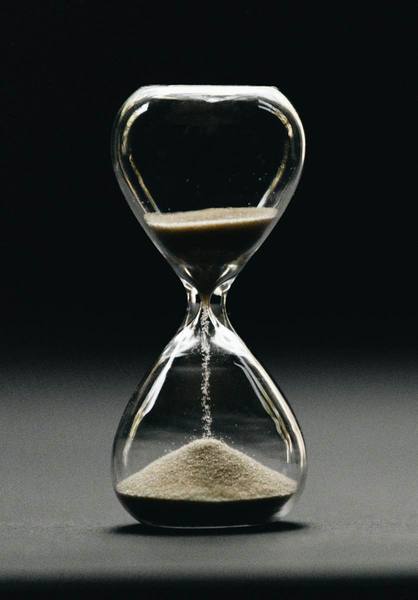
Glance at a handful of things and you can see about four at once. Beyond that, we count one by one, and lose count.
Reading settings
Text size
Easier reading
More space between lines and letters, plain font for headings, no italics.
Calm mode
No moving backgrounds or animations; softer images.
Save data
No background video and no card photos: good on a slow or capped connection.
Saved on this device only. Nothing is sent to us.

The 99 Names · Name 57 of 99 · Act
al-Muḥṣī الْمُحْصِي
Say it: al-Muḥṣī. A recording by our own reciter is on its way.
Heard together with: al-Muḥṣī / al-Ḥasīb
How many ants are there on Earth? In 2022 a team of scientists pulled together 489 studies of ants on every continent and came up with an answer: about 20 quadrillion. That is a 2 followed by 16 zeros, or roughly two and a half million ants for every person alive. Weighed together, they would outweigh all the wild birds and wild mammals on the planet combined.
Read the paper and the word that keeps appearing is “estimate”. Nobody counted them. Nobody could. Al-Muḥṣī is the Name for the One who does not estimate: who has numbered every ant, every grain of sand and every breath you have taken, exactly.
Start with something we know. Then take away everything it needs. What is left is not a bigger version of us: it is the Name.
Episode 1Glance at a handful of things and you can see about four at once. Beyond that, we count one by one, and lose count.
 Episode 2
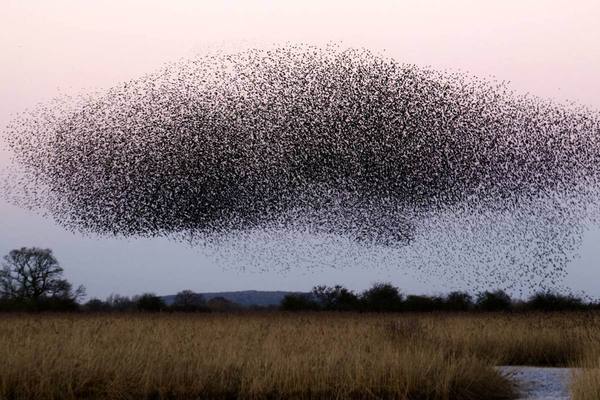
In 2024 scientists showed that crows can plan and produce from one to four calls on cue (Liao and others, Science).
 Episode 3
The Gaia telescope has catalogued nearly two billion stars. The stars of the observable universe we can only estimate: up to a million million million million.
 Episode 4
Take away counting one by one, estimating, error bars, running out of time. We estimate the stars. Al-Muḥṣī counts them, and names them. The Psalm says the same: “He counteth the number of the stars; He giveth them all their names” (Psalm 147:4, JPS 1917).
From the tradition: 'Whoever enumerates them (aḥṣāhā) enters Paradise' (Bukhari 7392); Ibn al-Qayyim's levels of aḥṣā: words, meanings, calling on Him by them.
On screen
—
Abraham (peace be upon him) was old, and he and his wife had no children. In the Torah, he spoke to God about it plainly: what good is any reward, if I have no one to leave it to?
God brought him outside, into the night, and said: “Look now toward heaven, and count the stars, if thou be able to count them.” Then: “So shall thy seed be.”
Abraham could not count them. On a dark night in the desert you can see a few thousand stars with the naked eye, and they seem endless. Today we know there are hundreds of billions in our galaxy alone. But the point was never the arithmetic. A man who could not count the stars was asked to trust the One who could, and the Torah says he did: “he believed in the LORD; and He counted it to him for righteousness” (Genesis 15:6).
Jews, Christians and Muslims all count themselves among the children of that promise. Their numbers now run into billions, more than any one person could count, as Abraham was told.
“Lift up your eyes on high, And see: who hath created these? He that bringeth out their host by number, He calleth them all by name”
Isaiah 40:26 · JPS 1917
The prophet Isaiah tells people to lift their eyes to the night sky and ask who made it. It is the One who brings out the stars like an army, by number, and calls each by name. In Judaism counting can itself be an act of worship. For forty-nine nights between Passover and Shavuot, Jews count the Omer aloud, one day at a time, with a blessing.
There is a tenderness here too. To be counted is to be noticed. The book of Numbers takes its English name from the census of every family in the wilderness.
“But the very hairs of your head are all counted. Therefore don't be afraid. You are of more value than many sparrows.”
Luke 12:7 · WEB
Jesus used counting to calm fear. Sparrows were sold five for two small coins, he said, and not one of them is forgotten by God. Then he went further: even the hairs on your head are counted.
For Christians the point is not that God keeps a ledger, but that nothing about a person is too small for God's care. A human head has about a hundred thousand hairs. No one else has ever counted yours.
Christians count in prayer too. Catholics pray the rosary, a loop of beads holding five ‘decades’ of ten Hail Marys each. Orthodox Christians pass a knotted prayer rope through their fingers, one knot for each Jesus Prayer: “Lord Jesus Christ, Son of God, have mercy on me.”
“Verily He knoweth them and numbereth them with (right) numbering. And each one of them will come unto Him on the Day of Resurrection, alone.”
Qur'an 19:94-95 · Pickthall (1930)
The Qur'an uses the verb aḥṣā, to count fully, for God's knowledge of everything: “That He may know that they have indeed conveyed the messages of their Lord. He surroundeth all their doings, and He keepeth count of all things.” (72:28, Pickthall). The same verb appears in a famous hadith. God has ninety-nine Names, and whoever ‘counts’ them (aḥṣāhā), in the sense of learning them, understanding them and living by them, will enter Paradise (Bukhari 7392).
Muslims also count in worship, often on prayer beads: thirty-three times ‘Glory be to God’, thirty-three ‘Praise be to God’, thirty-four ‘God is greatest’. And the Qur'an says the one count we can never finish is our blessings: “And He giveth you of all ye ask of Him, and if ye would count the bounty of Allah ye cannot reckon it. Lo! man is verily a wrong-doer, an ingrate.” (14:34, Pickthall).
All three faiths say God numbers the stars and knows each person individually, and all three use the image of the night sky over Abraham. All three also count in worship: the Omer, the rosary, the tasbīḥ beads. They differ in emphasis. In Christianity, being counted is above all a sign of the Father's care. In Judaism it is a sign of covenant belonging. In Islam it is a sign of exact knowledge, including the reckoning of our deeds, which each person will face alone.
A moment to reflect
ESA's Gaia mission, which has measured nearly two billion stars, rewrites the history of the Milky Way.
 The Billion Ant Mega Colony and the Biggest War on Earth · Kurzgesagt – In a NutshellPlays on “The ant who warned her people” →
Kurzgesagt on ant super-colonies with billions of members: counting at a scale we cannot picture.
How scientists redefined the kilogram by fixing a constant: one of the ways we turned counting into measurement.
On a clear, dark night, look at the constellation Orion and count how many stars you can see inside its four corner stars. Compare counts between gardens, streets and villages, then read Genesis 15:5 and Isaiah 40:26. The countryside charity CPRE runs a national Star Count each February you can join.
For one week, everyone drops a dried bean into a jar for every blessing they notice. At the end, try to remember what each bean was for. Read Qur'an 14:34 and talk about the ones you lost count of.
Between Passover and Shavuot, Jews count the Omer each night, many ticking off a printed chart. Make a 49-day chart for something you want to build up slowly, such as a kindness, a skill or a habit, and count it aloud each evening.
Ask a Catholic, an Orthodox Christian and a Muslim to bring a rosary, a prayer rope and a tasbīḥ, a string of prayer beads. Each shows how their beads are used and what is said on them. Notice what counting does to a prayer.
5 films and talks, chosen for this page. They play here.
10 - The Divine Names Al-Qawi until Al-Qayyum - Ninety-Nine Names of Allah for Youth - Imam Yama
SeekersGuidance · 55 min
SeekersGuidance: Imam Yama Niazi on the Names from al-Qawiyy to al-Qayyum, including al-Muhsi.
Discovering the Gospel in Numbers – Tim Keller
Gospel in Life · 13 min
Tim Keller: discovering the gospel in the book of Numbers, a census of a people.
Count the gifts
whoisallah.org.uk · 1 min
You're Living On An Ant Planet
PBS Eons · 11 min
PBS Eons: you're living on an ant planet, about 20 quadrillion ants, this Name's sign.
Best Of Ants | BBC Earth
BBC Earth · 21 min