
Three faiths, one God of Abraham
Who is God
to each of us?
Jews, Christians and Muslims each speak of the God of Abraham. Here each faith describes God in its own words, from its own scriptures and teachers, before we set them side by side.
Each in its own words



Where we agree, and where we don't
Shared
One God, Creator of heaven and earth, not part of the world and not like anything in it. Merciful and just. The God who spoke to Abraham, Moses and the prophets (peace be upon them). Every faith teaches that how we live honours or dishonours His Name.
Different, and said plainly
Christians know the one God as Trinity: Father, Son and Holy Spirit, and confess Jesus as the Son. Jews and Muslims understand God's oneness as admitting no such distinction, and honour Jesus differently: Muslims as a prophet and the Messiah, born of Mary (peace be upon her). Muslims believe Muhammad ﷺ (peace be upon him) is the last prophet; Jews and Christians do not. We don't blur these differences.
Go deeper

The fuller story
Jews, Christians and Muslims each speak of the God of Abraham. All three say God is One, Creator of heaven and earth, merciful and just. They also differ, and the differences matter to them. So we let each faith describe God in its own words first, and only then set them side by side.
In Judaism's own words
“Hear, O Israel: the LORD our God, the LORD is One.” Deuteronomy 6:4 (JPS 1917)
The Shema is said morning and night, and by tradition as a Jew's last words. God is One, the Creator, who chose Abraham and his descendants and gave the Torah at Sinai. God has no body and no image; the Ten Commandments forbid making one. God's own Name, written with four Hebrew letters, is not spoken aloud: in prayer Jews say Adonai, “my Lord”, and in conversation HaShem, “the Name”. In the twelfth century Maimonides summed up Jewish belief in thirteen principles, beginning with God's existence, God's oneness and that God is not a body. Judaism is less interested in defining God than in walking with God: keeping the commandments, studying, giving, resting on Shabbat.
Watch
Watch
A Jewish telling
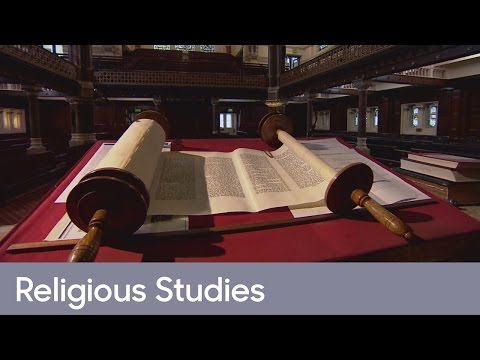 What is Judaism? | Religious Studies - My Life, My Religion: Judaism · BBC Bitesize for TeachersPlays on “The One called “the Name”” →
In Christianity's own words
“We believe in one God, the Father, the Almighty, maker of heaven and earth.” The Nicene Creed (325, 381)
Christians believe in the one God of Abraham and of Israel's scriptures. They believe this one God is Father, Son and Holy Spirit: three persons, one God, not three gods. They confess Jesus as the Son of God, who became human, died and rose again. “In the beginning was the Word, and the Word was with God, and the Word was God” (John 1:1). Arabic-speaking Christians across the Middle East say all this in Arabic, praying to Allah: Allāh al-Āb, “God the Father”.
Watch
Watch
A Christian telling
In Islam's own words
“Say: He is God, One. God, the One all turn to. He has not fathered, and was not born. And there is none comparable to Him.” Qur'an 112
Muslims believe in one God, Allah, the Creator, who sent prophets to every people, from Adam to Abraham, Moses, Jesus and finally Muhammad (peace be upon them). God is known through His Names, such as the Merciful, the Creator and the Truth, and through His signs in nature and in the self, but never pictured. The Qur'an says to Jews and Christians: “Our God and your God is one, and to Him we submit” (29:46).
Watch
Watch
A Muslim telling
Side by side
- Shared: one God, Creator, not part of the world and not like anything in it; merciful and just; the God who spoke to Abraham, Moses and the prophets; a God who asks for justice, kindness and thanks.
- Shared: prayer at set times, fasting, giving to the poor, a holy day each week, pilgrimage, and remembering God's Name with reverence.
- Different: Christians know God as Trinity and Jesus as the Son. Jews and Muslims understand God's oneness as admitting no such distinction.
- Different: Muslims honour Jesus as a prophet and the Messiah, born of Mary, but not as divine. Jews do not regard Jesus as the Messiah.
- Different: Muslims believe Muhammad ﷺ is the final prophet. Jews and Christians do not.
What scholars and leaders debate
Do the three faiths worship the same God? Their own leaders have answered carefully, and not all in the same way.
- The Catholic Church's Second Vatican Council said in 1965 that Muslims “adore the one God”, merciful and all-powerful, Creator of heaven and earth (Nostra Aetate 3).
- In 2000 a group of Jewish scholars and rabbis published Dabru Emet (“Speak the truth”), which says that Jews and Christians worship the same God.
- In 2007, 138 Muslim scholars wrote A Common Word, inviting Christians to common ground in love of God and love of neighbour.
- Some believers in each faith answer no: if Christians and Muslims describe God so differently, they argue, they cannot mean the same God. Philosophers reply that people can refer to the same person while disagreeing about him, as the Yale theologian Miroslav Volf argues in Allah: A Christian Response (2011).
Our own claim is modest: the same word, the same God of Abraham, understood differently. Our Big Question page sets out each answer in full.
Reflect
Think of someone you love who describes you differently from how you see yourself. Are they still talking about you? Where does that comparison help with this question, and where does it break down?
- Hebrew Bible: Jewish Publication Society translation (1917), public domain. New Testament: World English Bible, public domain.
- Qur'an 112 and 29:46: the renderings used across this site.
- Maimonides, Commentary on the Mishnah, Sanhedrin 10 (the Thirteen Principles).
- The Nicene-Constantinopolitan Creed (381).
- Second Vatican Council, Nostra Aetate (28 October 1965), §3: https://www.vatican.va/archive/hist_councils/ii_vatican_council/documents/vat-ii_decl_19651028_nostra-aetate_en.html.
- Dabru Emet: A Jewish Statement on Christians and Christianity (2000).
- A Common Word Between Us and You (2007): https://www.acommonword.com.
- Miroslav Volf, Allah: A Christian Response (HarperOne, 2011).