Before a Muslim eats, travels, sits an exam or starts a speech, a few words come under the breath. They are Bismillāh ir-Raḥmān ir-Raḥīm, “In the name of God, the Entirely Merciful, the Especially Merciful.” The same words open 113 of the Qur'an's 114 chapters. Say them twenty times a day for seventy years and you have said them about half a million times.
So, of every way there is to describe God, the one Muslims reach for first is not power, or judgement, or even greatness. It is mercy. Ar-Raḥmān is mercy as what God is, not a mood God is in. And in Arabic and Hebrew alike, the word for it grows from the word for a womb.
Start with what we know
Start with something we know. Then take away everything it needs. What is left is not a bigger version of us: it is the Name.
Episode 1
In us
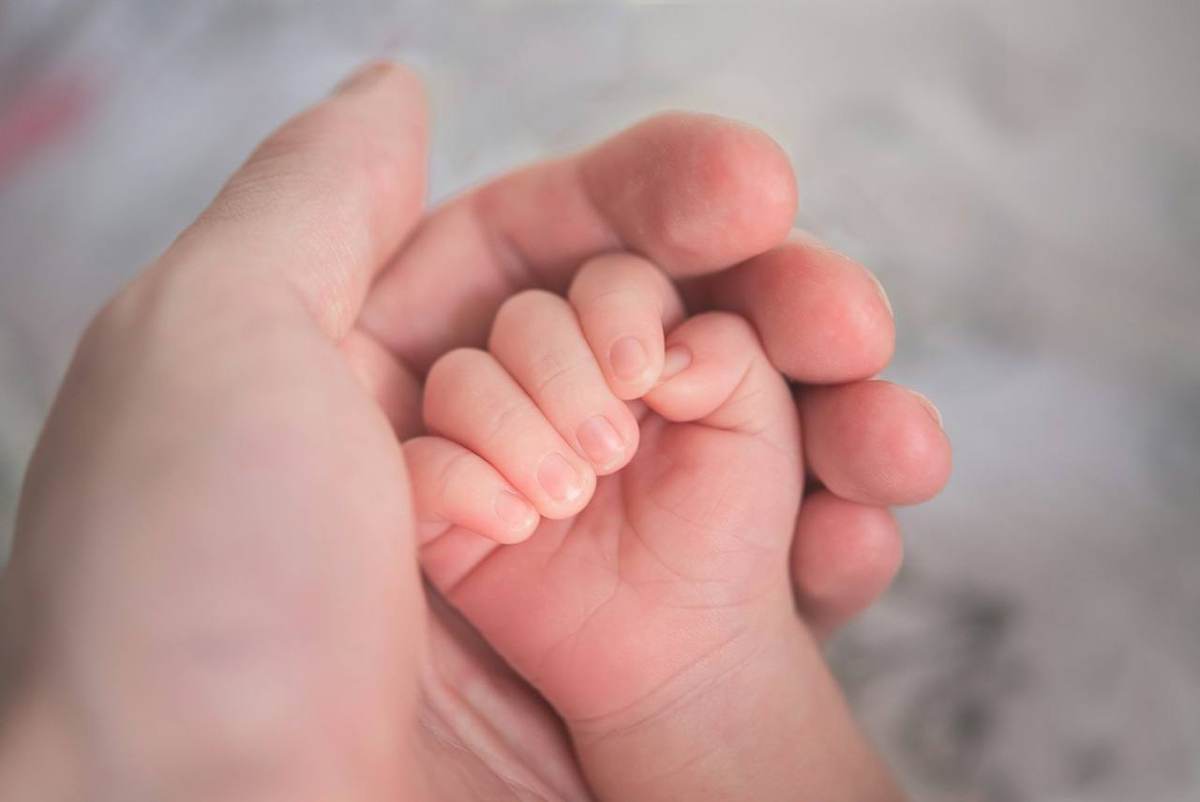
Nine months of carrying a child, then years of sleepless care. In the Prophet's time (peace be upon him), a woman who had lost her baby among the captives nursed every child she could find, until she found her own. He said: God is more merciful to His servants than this mother to her child (Bukhari 5999). But a mother's mercy goes to her own first. It tires. It needs food and sleep.
Episode 2
In nature
Deep in the Pacific, an octopus guarded her eggs for 53 months, never leaving, never eating: “by far the longest egg-brooding period ever reported” (Robison and others, 2014). One clutch, and then she died. Mercy in nature is real, and it costs everything.
Episode 3
At our best
A neonatal intensive care unit at 3am. An RNLI lifeboat crew, volunteers since 1824, launching into a storm. Our best mercy is organised and brave. It still needs money, staff, beds and shifts, and someone always has to wait.
Episode 4
The Break
Take away earning it, deserving it, being family, getting tired, running out. What is left is not a bigger mother's love, but mercy nobody earned and nothing uses up. “And ordain for us in this world that which is good, and in the Hereafter (that which is good), Lo! We have turned unto Thee. He said: I smite with My punishment whom I will, and My mercy embraceth all things, therefore I shall ordain it for those who ward off (evil) and pay the poor-due, and those who believe Our revelations.” (Qur'an 7:156 · Pickthall).
From the tradition: Hadith: mercy divided into 100 parts, one sent down 'so that even the mare lifts up its hoofs away from its baby animal' (Bukhari 6000); kinship (raḥim) is 'a branch' of ar-Raḥmān (Bukhari 5988). Al-Ghazālī (Maqṣad): ar-Raḥmān is the more specific Name, used of God alone; its mercy is the kind beyond human reach: bringing into being, guidance to faith, happiness in the next life and the vision of His face.
Watch and listen
Films, documentaries and voices that reach towards this Name. Each links out to where you can watch it.
Exodus 34:6 'God, merciful (raḥum) and gracious'; Hebrew reḥem = womb, same root; Luke 6:36 'be merciful, even as your Father is also merciful'; 2 Cor 1:3 'Father of mercies'
In the universe
NASA habitable zone: 'the distance from a star at which liquid water could exist on orbiting planets' surfaces' (science.nasa.gov/exoplanets/habitable-zone).
In people
Kindertransport, 1938-39: about 10,000 mostly Jewish children taken into British homes; foster carers today
In science
Biology: the placenta, an organ grown for one guest and discarded at birth; the womb holds the baby near 37 °C. Same Semitic root r-ḥ-m for womb and mercy
Living it
Mercy to the heedless and the needy (al-Ghazālī's counsel for ar-Raḥmān and ar-Raḥīm); 'be merciful' as daily practice
Its kind
Act: something done: mercy shown, provision given, a prayer answered.
In Victor Hugo's novel Les Misérables (1862), Jean Valjean walks out of prison after nineteen years: five for stealing a loaf of bread, the rest for trying to escape. He carries a yellow passport that marks him as a former convict. Every inn turns him away. Only the elderly Bishop of Digne lets him in, sits him at his own table and serves him supper on the house's only silver.
In the night Valjean steals the silver and runs. In the morning the police drag him back. The bishop does not accuse him. He tells the officers the silver was a gift, then turns to Valjean: you forgot the candlesticks. When the police have gone, he says quietly, “Jean Valjean, my brother, you no longer belong to evil, but to good. It is your soul that I buy from you.”
Valjean has done nothing to earn this. That is the point. Mercy arrives before the change, not as a reward for it, and it is the mercy that makes the change possible. The rest of the long novel is the story of what one undeserved kindness did to one man's life.
The bishop is fiction, but readers have recognised something true in him for more than 160 years. And notice how small even his mercy is: one man's silver, given once, to one thief. The Prophet Muhammad ﷺ (peace be upon him) said that God made mercy in a hundred parts, kept ninety-nine with Himself and sent one down to earth. From that single part, he said, creatures are kind to one another, “so that even the mare lifts her hoof away from her foal, lest she tread on it.” Every bishop, every mother, every mare is drawing on that one part.
What each faith says
Read:
Judaism
“The LORD, the LORD, God, merciful and gracious, long-suffering, and abundant in goodness and truth”
When God passes before Moses on Mount Sinai, the first words He speaks about Himself are words of mercy. The Hebrew raḥum, merciful, shares its root with reḥem, womb: mercy is the love that carries, shelters and feeds before the child can do anything at all. Jewish tradition counts these verses as the Thirteen Attributes of Mercy and sings them on fast days and festivals.
In Jewish grace after meals, a whole series of short prayers begins HaRachaman, “May the Merciful One…”. The rabbis also turned God's mercy into a duty: “Just as He is gracious and compassionate, so you be gracious and compassionate” (Talmud, Shabbat 133b).
Christianity
“Therefore be merciful, even as your Father is also merciful.”
Jesus told the story of a Samaritan who found a stranger beaten and left for dead on the Jericho road. A priest and a Levite passed by. The Samaritan, an outsider, “was moved with compassion”, bandaged the man's wounds and paid for his care (Luke 10:33-35). The point was that mercy does not ask whether someone belongs to us.
Christians believe God's mercy has a human face. When Pope Francis opened a Jubilee Year of Mercy in 2015, he began: “Jesus Christ is the face of the Father's mercy” (Misericordiae Vultus, 1). Mercy is not only something Christians receive; Jesus makes it the family likeness of God's children.
Islam
“Say (unto mankind): Cry unto Allah, or cry unto the Beneficent, unto whichsoever ye cry (it is the same). His are the most beautiful names. And thou (Muhammad), be not loud-voiced in thy worship nor yet silent therein, but follow a way between.”
Ar-Raḥmān is used almost like a second name for God. It is never used of anyone else, and a whole chapter of the Qur'an is named after it. That chapter opens: “The Beneficent Hath made known the Qur'an. He hath created man. He hath taught him utterance.” (55:1-4, Pickthall). Before anything is asked of us, mercy has already made us, taught us and given us words.
The Prophet (peace be upon him) also tied this Name to family: the word for the bonds of kinship, raḥim, is “a branch” of ar-Raḥmān (Bukhari 5988). Keeping in touch with relatives, visiting the sick and feeding the hungry are ways Muslims try to live by the one part of mercy that was sent down.
Same and different
All three faiths open their picture of God with mercy, and Hebrew and Arabic share the same root for mercy and womb. All three also turn mercy into a command: be merciful as God is merciful. They differ on how God's mercy is finally shown. Christians see it most fully in Jesus Christ and the cross. Jews and Muslims see it in God's forgiveness, given directly, with no one standing in between.
A moment to reflect
Has anyone ever been kind to you before you had done anything to deserve it? What did it change?
Is mercy always fair? Does it need to be?
Who near you is outside your usual circle, and what would mercy towards them look like this week?
Beyond the Abrahamic family, other traditions reach for something like this. Each in its own words; we connect, never rank.
Sikh
There is no limit to His mercy, and to His gifts there is no limit.
Japji 24 · Guru Granth Sahib p. 5 · tr. M. A. Macauliffe, The Sikh Religion (1909), vol. 1
Buddhist
As a mother at the risk of her life watches over her own child, her only child, so also let every one cultivate a boundless (friendly) mind towards all beings.
Metta Sutta (Sutta Nipata 1.8) · tr. V. Fausbøll (1881). Buddhism does not teach a Creator God; this is a human practice, set beside the Name, not equated with it.
 Episode 1