Most of us can forgive someone once. Twice, if we love them. By the fifth time, we start keeping a list. Our patience is real, but it is a jar, and jars run out.
Muslims say one line before almost everything: “In the name of God, ar-Raḥmān, ar-Raḥīm.” Ar-Raḥīm is its second Name. If ar-Raḥmān is mercy as God's very nature, ar-Raḥīm is that mercy arriving, again and again, at the door of someone who has come back. It is a second chance that never runs out.
Start with what we know
Start with something we know. Then take away everything it needs. What is left is not a bigger version of us: it is the Name.
Episode 1
In us
In 1993, Mary Johnson's only son, Laramiun Byrd, was shot dead in Minneapolis by a sixteen-year-old called Oshea Israel. For years she wanted him to suffer. Then she asked to meet him in prison. They talked, she hugged him, and when he was released she helped him find a home, which turned out to be next door to her own (The Forgiveness Project). It is one of the most extraordinary acts of mercy on record. But it took her more than a decade, and it cost her everything she had. She has said she could do it only because she had to, for her own healing. Our mercy is slow, rare and expensive.
Episode 2
In nature
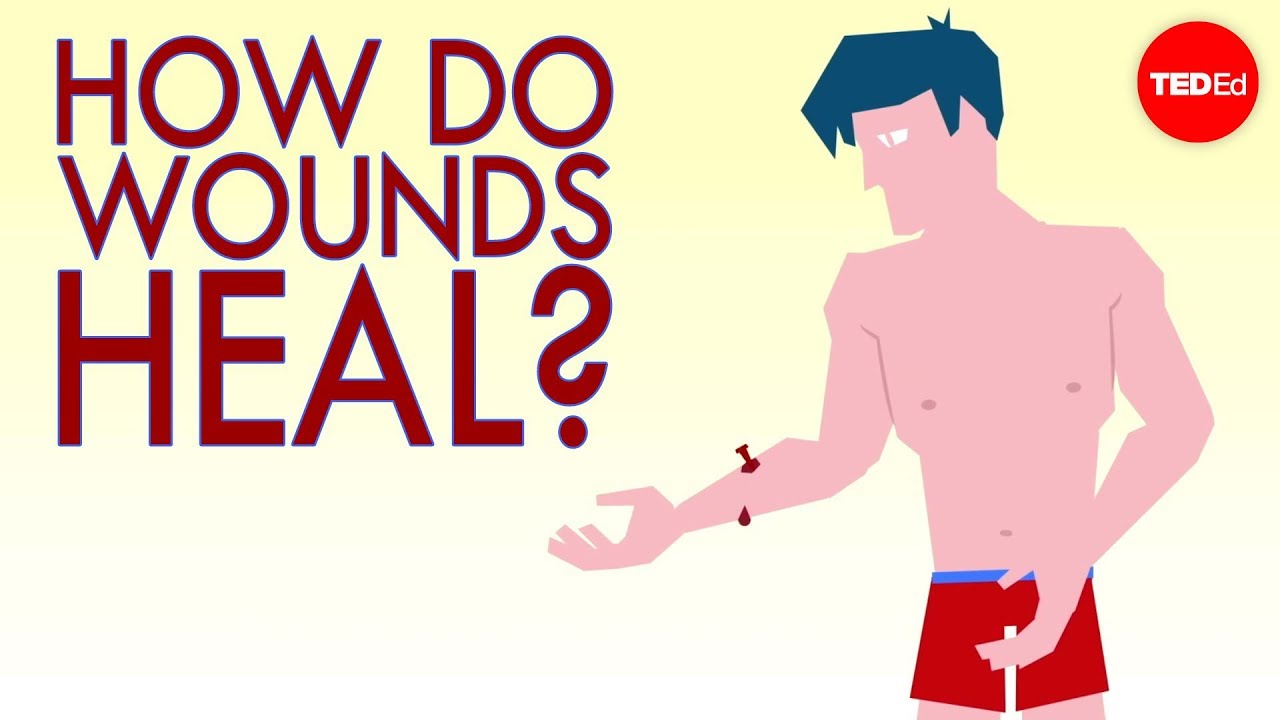
Your body forgives injury again and again. Cut the same finger twice and it heals twice, through four overlapping stages: clotting, inflammation, rebuilding and remodelling. Skin cells crawl across the gap; blood vessels regrow beneath. But the repair is never quite the original. Scar tissue reaches only about 80 per cent of the strength of the skin it replaces, and healing slows as we age. The body gives second chances, but each one leaves a mark, and the supply is not endless.
Episode 3
At our best
Restorative justice brings a victim and the person who harmed them face to face, with a trained facilitator. A seven-year study for the UK government found it cut the frequency of reoffending by 14 per cent. And 85 per cent of victims who took part were satisfied (Shapland and others, Ministry of Justice, 2008). It is one of the wisest things our justice system does. Yet it only happens when the victim agrees, when funding and staff exist, and when the offender admits the harm. Many people who need a second chance never get one.
Episode 4
The Break
Strip out the slow years, the cost, the scar that remains, the list we keep, the funding and the consent forms. What is left is not a more patient person. It is mercy that meets you at the door you left by, however many times you left. “Say: O My slaves who have been prodigal to their own hurt! Despair not of the mercy of Allah, Who forgiveth all sins. Lo! He is the Forgiving, the Merciful.” (Qur'an 39:53, Pickthall).
From the tradition: Bukhari 6469: had the non-believer known all the mercy with Allah he would not lose hope of Paradise. Ashʿarī/Atharī commentators: Raḥīm is the mercy that reaches, again and again
Watch and listen
Films, documentaries and voices that reach towards this Name. Each links out to where you can watch it.
The Prophet Muhammad ﷺ (peace be upon him) told of a man from an earlier people who had killed ninety-nine people. Wanting to know if there was any way back, he asked for the most learned person in the land and was sent to a hermit. He asked: is there repentance for me? The hermit said no. So the man killed him too, and made it a hundred.
Still he asked. This time he was sent to a scholar, who said: “Yes. What could stand between you and repentance? Go to such-and-such a town. People there worship God; worship with them, and do not go back to your own land, for it is a bad land.”
He set out, and died halfway. The angels of mercy and the angels of punishment argued over him. The angels of mercy said he had come turning to God with his whole heart; the others said he had never done a single good deed. They were told to measure the distance to both towns. He was found closer to the good town, by a hand's breadth, and the angels of mercy took him. In one telling, God drew the good land nearer.
The story does not say his crimes did not matter. It says that the door was still open on the hundredth day.
What each faith says
Read:
Judaism
“Surely the LORD'S mercies are not consumed, surely His compassions fail not. They are new every morning; great is Thy faithfulness.”
In the Hebrew Bible, God describes Himself to Moses on Mount Sinai as raḥum, compassionate. The word shares its root with reḥem, womb. Jewish tradition calls these words the Thirteen Attributes of Mercy, and they are sung on fast days and through the days of awe around Yom Kippur.
Judaism's word for coming back is teshuvah, literally ‘return’. The rabbis taught that the way back is open to anyone, at any time, and that God waits for it. After the destruction of Jerusalem, the book of Lamentations still finds mercy that renews itself each day.
In the run-up to the High Holy Days, many communities gather late at night or before dawn for Selichot, penitential prayers built around these same words. The Talmud turns the attributes into a duty: just as God is gracious and compassionate, so we should be (Shabbat 133b).
Christianity
“He arose and came to his father. But while he was still far off, his father saw him and was moved with compassion, and ran, fell on his neck, and kissed him.”
Jesus told the parable of the lost son, who wastes his inheritance and comes home rehearsing an apology. The father does not wait to hear it. While the son is still far off, the father runs to him. For Christians the story is a window onto God the Father, who longs for the return of the lost.
Christians believe that this mercy is offered fully in Christ, whose death and resurrection they understand as God reconciling the world to Himself. Paul calls God “the Father of mercies and God of all comfort” (2 Corinthians 1:3).
Many Christians live this mercy through confession: Catholics and Orthodox in the sacrament of reconciliation, Anglicans and others in the shared prayer of confession near the start of a service. The Catholic priest Henri Nouwen spent years with Rembrandt's painting of the son's return, and wrote a book about what it taught him.
Islam
“He it is Who blesseth you, and His angels (bless you), that He may bring you forth from darkness unto light; and He is ever Merciful to the believers.”
Ar-Raḥīm appears in the Qur'an over a hundred times, often paired with ar-Raḥmān and with al-Ghafūr, the All-Forgiving. Classical scholars explain the pair this way: ar-Raḥmān is mercy as what God is, embracing everything. Ar-Raḥīm is mercy as what God does, reaching people again and again, especially those who turn back to Him.
It is not mercy for one group only. The Qur'an says God is “Full of Pity, Merciful toward mankind” (2:143, Pickthall). The Prophet (peace be upon him) reported that when God created the world He wrote: “My mercy prevails over My anger” (Bukhari 3194).
Same and different
All three faiths describe God with a word from the same root as ‘womb’: the Hebrew raḥum and the Arabic raḥīm are cousin words. All three insist that the way back is open. Judaism speaks of teshuvah, return, through repentance, prayer and putting right what was wronged. It is distinctive in holding that Yom Kippur does not wipe away a wrong done to another person until that person has been appeased (Mishnah Yoma 8:9). Christianity teaches that mercy comes through Christ's death and resurrection. Islam teaches direct repentance to God, with no intermediary, and that God's mercy prevails over His anger. They agree that God's mercy is greater than our failures; they differ on how it reaches us.
A moment to reflect
When did someone give you a second chance you did not expect?
Is there a difference between forgiving someone and forgetting what they did?
Who in your life might be waiting for a door to open?
How the body repairs a wound, stage by stage: the ‘In nature’ rung.
Why healing leaves a scar, and why the repair is never quite the original.
An elephant herd gathering around a newborn: care that the whole family gives.
Do it together
faith groups / neighboursThe second-chance circle
Sit in a circle and each share a time someone gave you another chance, without naming anyone who might be embarrassed. Then read Lamentations 3:22-23, Luke 15:20 and Qur'an 39:53 aloud and talk about what they have in common.
familiesClean-slate breakfast
Once a week, start breakfast by each saying one thing from the past week you are letting go of. Lamentations says mercy is ‘new every morning’; let the morning be the reset.
families / neighboursPut it right before the fast
Jewish tradition asks people to mend things with each other before Yom Kippur. The day itself does not atone for a wrong done to someone until it is put right (Mishnah Yoma 8:9). Borrow the idea: each write one short note of apology or thanks, and deliver it by hand.
faith groups / schoolsRead a painting
Look at a print of Rembrandt's The Return of the Prodigal Son and read Luke 15:11-32 together. Which figure do you recognise yourself in: the son who left, the brother who stayed, or the father who ran?

 Episode 1