Sit very still on a park bench for one minute. In that minute you have travelled about 1,800 kilometres around the Sun, and about 12,000 kilometres around the centre of the Milky Way. Nothing in your coffee cup spilled.
Look up at night and you can see the clock that all of this keeps: the Moon, thinning from full to a sliver over two weeks, then vanishing and returning. Jews, Christians and Muslims all set their holy days by it. The Qur'an describes the sun, moon, night and day as each “swimming” in its own course, never overtaking the other.
“And the sun runneth on unto a resting-place for him. That is the measuring of the Mighty, the Wise. And for the moon We have appointed mansions till she return like an old shrivelled palm-leaf. It is not for the sun to overtake the moon, nor doth the night outstrip the day. They float each in an orbit.”
Qur'an 36:38-40 · Pickthall (1930)
These verses come in the chapter Yā Sīn, named after its two opening Arabic letters, which many Muslims recite often. The “old palm stalk”, ʿurjūn, is the dried, curved stem left on a date palm: a perfect picture of the thin crescent of a waning moon. The verb yasbaḥūn, “they swim”, is the same used for swimming in water. Classical scholars disagreed over the sun's “resting place”: some read it as a place beneath God's Throne, others as the end of its appointed term. The verse is an image of order and measure, not a physics lesson, and we do not read modern orbital mechanics into it.
Heard in all three
“The sun and the moon are made punctual.”
Qur'an 55:5 · Pickthall (1930)
What science shows
The Earth travels around the Sun at an average of 29.78 kilometres per second, according to NASA's Earth fact sheet. That is about 107,000 kilometres an hour. One lap takes 365.256 days, which is why our calendars need a leap day every four years.
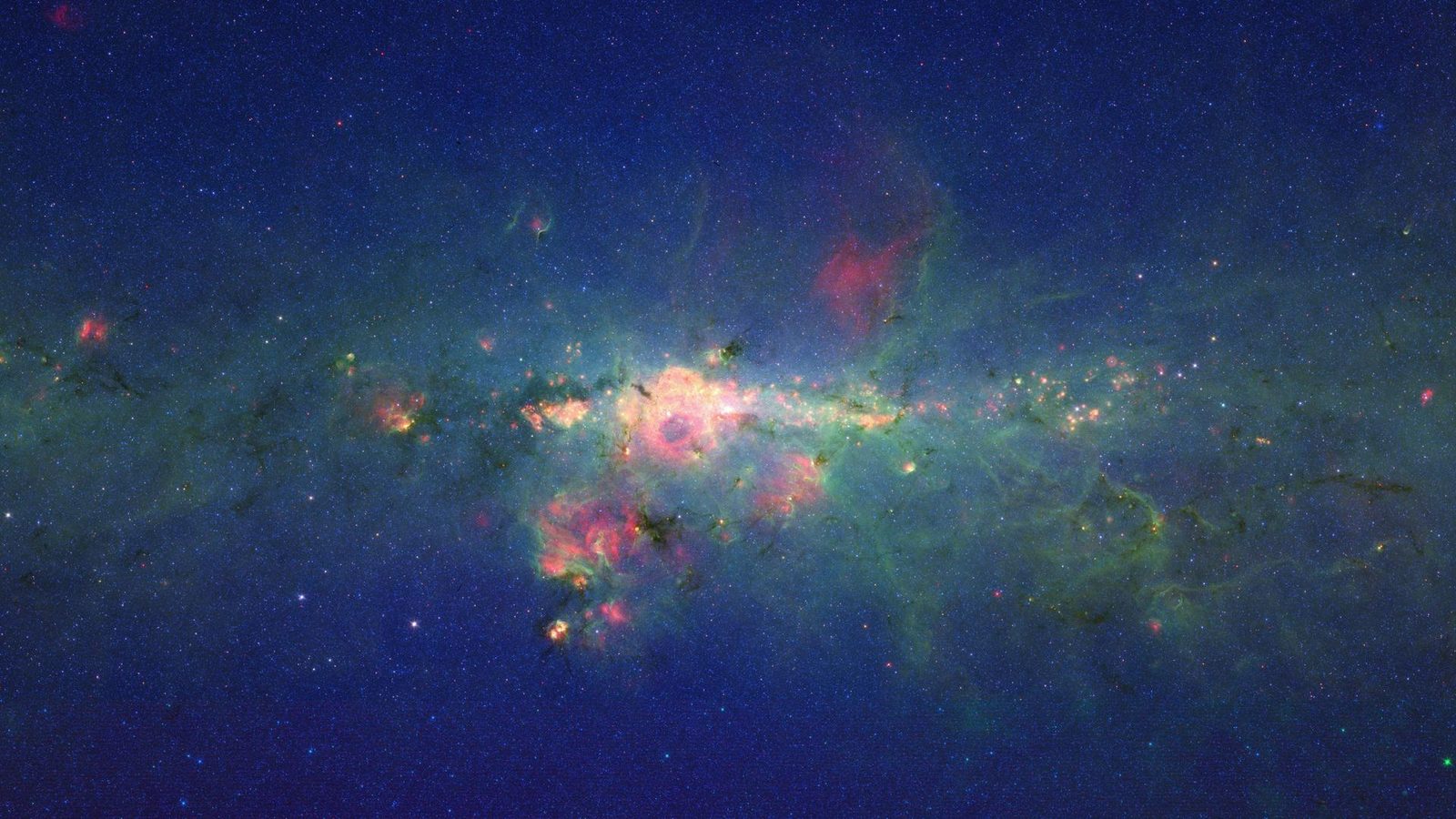
The Sun is moving too. NASA explains that the whole solar system travels around the centre of our galaxy at about 720,000 kilometres an hour, and even so, one lap takes around 230 million years. The last time the Sun was at this point in its galactic orbit, the first dinosaurs were just appearing on Earth.
The Moon circles the Earth at an average distance of about 384,400 kilometres. From one new moon to the next takes about 29.5 days. As it goes round, we see different amounts of its sunlit half: a thin crescent, a half, a full disc, then back again. NASA's moon-phase maps for 2026 show the whole cycle hour by hour.
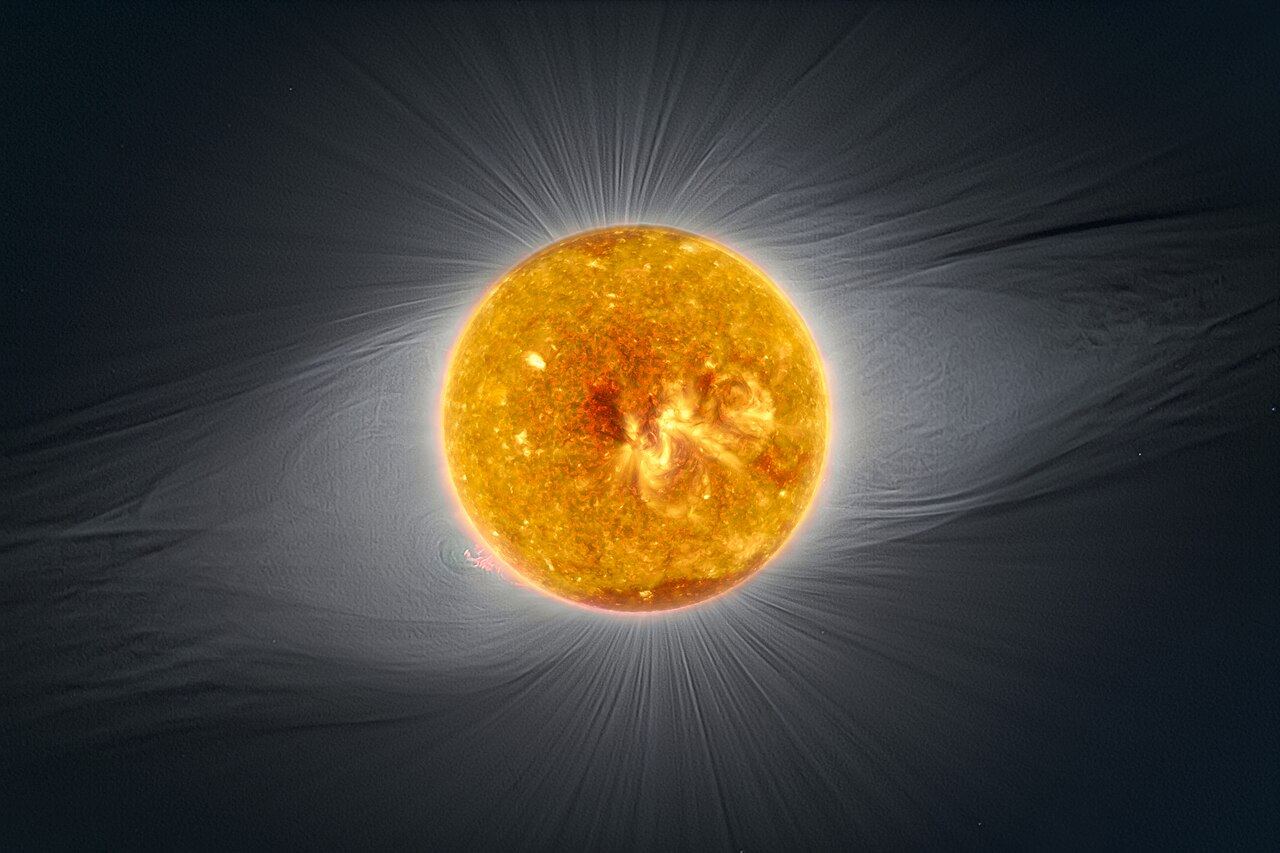
There is a lovely coincidence in the sky. The Sun is about 400 times wider than the Moon, and also about 400 times further away. So from Earth they look almost exactly the same size, which is why the Moon can just cover the Sun in a total solar eclipse.
All of this motion is regular enough to predict centuries ahead. Astronomers can tell you the time of moonrise in Manchester on any night in the year 2100. That regularity is what makes calendars, navigation and, for billions of people, religious festivals possible.
What each faith says
Judaism
“The sun also ariseth, And the sun goeth down, And hasteth to his place where he ariseth.”
Ecclesiastes 1:5 · JPS 1917
Genesis says the lights in the sky were made “for signs, and for seasons, and for days and years”. Ecclesiastes watches the same daily round: the sun rises, sets, “And hasteth to his place where he ariseth”. Psalm 19 imagines the sun as a strong runner rejoicing to run his course, from one end of the heavens to the other.
The Jewish calendar is lunisolar: months follow the Moon, and an extra month is added seven times in every 19 years to keep festivals in their seasons. Each new month, Rosh Chodesh, “head of the month”, is a minor festival. And once a month Jews go outside at night to say Kiddush Levanah, “sanctifying the Moon”, a blessing over the waxing Moon. Jeremiah says God's faithfulness is as sure as the “ordinances of the moon and of the stars”.
Christianity
“For he makes his sun to rise on the evil and the good, and sends rain on the just and the unjust.”
Matthew 5:45 · WEB
Christians also keep a festival set by the Moon. Since the Council of Nicaea in 325, most churches have celebrated Easter on the Sunday after the first full moon on or after the spring equinox, calculated by church tables. That is why it moves between March and April. Orthodox churches still make the calculation with the older Julian calendar, so Orthodox Easter often falls a week or more later. The Psalms Christians sing praise God for the great lights: “The sun to rule by day... The moon and stars to rule by night, For His mercy endureth for ever” (Psalm 136).
Jesus used the Sun to describe God's generosity: God “makes his sun to rise on the evil and the good”. The daily rising is not earned; it is given to everyone. Victorian Christians sang the turning Earth into a hymn. John Ellerton's The Day Thou Gavest, Lord, Is Ended (1870) pictures the church's prayer passing round the globe. In its words, “the sun that bids us rest is waking our brethren 'neath the western sky”.
Islam
“The sun and the moon are made punctual.”
Qur'an 55:5 · Pickthall (1930)
The Islamic calendar is purely lunar: twelve months of 29 or 30 days, about 354 days a year. So Ramadan moves about 11 days earlier each year and travels through every season over about 33 years. The Prophet Muhammad ﷺ (peace be upon him) said: fast when you see the new moon, and end the fast when you see it (Bukhari 1909). Every Ramadan, Muslims across Britain wait for news of the crescent.
The Qur'an says God made the sun a radiance and the moon a light. He measured out its stations “He it is Who appointed the sun a splendour and the moon a light, and measured for her stages, that ye might know the number of the years, and the reckoning. Allah created not (all) that save in truth. He detaileth the revelations for people who have knowledge.” (10:5, Pickthall). It also says that “The sun and the moon are made punctual.” (55:5, Pickthall). Muslim astronomers such as al-Battānī, who worked in Syria around 900, and al-Bīrūnī, the great eleventh-century scholar from Central Asia, made precise measurements of these motions. The Name al-Ḥasīb, the Reckoner, fits: everything is in measure.
Same and different
Judaism, Christianity and Islam each see the regular motions of sun and moon as a sign of God's order and faithfulness, and each keeps the Moon in its calendar. Judaism has lunar months and leap months. Christianity sets the date of Easter by the spring full moon. Islam has a purely lunar year. They differ in what they count by those lights: the festivals of the Torah, the death and resurrection of Jesus, and the fast of Ramadan and the Hajj. Islam is the one whose year never stays in step with the seasons, so over a lifetime Ramadan moves through summer and winter alike.
A moment to reflect
- You are moving at thousands of kilometres an hour right now. What else carries you along without your noticing?
- What are the rhythms that keep your week and your year in order?
- How does it feel to know that a Muslim, a Jewish and a Christian neighbour might all be checking the same Moon this month?
- Is regularity beautiful, or boring? Can it be both?
Watch
NASA Goddard's view of every phase of the Moon in 2026.
National Geographic's four-minute tour of the solar system.
ESA's Gaia mission on how the stars of our galaxy move.
Kurzgesagt on where we really are in the universe.
Do it together
Put a Jewish, a Christian and an Islamic calendar for this year side by side. Mark Rosh Chodesh, Easter and the start of Ramadan, and see how each depends on the Moon.
For one month, draw the Moon every clear night at about the same time. Label the dates. Find the night it looks like “an old, curved palm stalk”.
Ahead of a new Islamic or Jewish month, meet at a spot with a clear western horizon just after sunset and try to spot the first thin crescent together. Bring hot drinks.
Once a month, a few nights after the new moon, Jews gather outside to say Kiddush Levanah over the growing Moon, often after the Saturday evening service. Ask a local synagogue when they next plan to say it, or simply go out together on that night and look up.
Find the date of the spring equinox and the full moon after it, and work out next year's Easter Sunday. Then check it against the dates published by the Church of England and by the Orthodox Church. Why do they sometimes differ?
Go deeper
- Qur'an 36:37-40 with translations · scripture
- NASA: Earth fact sheet · article
- NASA: Sun facts · article
- Psalm 19 (JPS 1917) on Sefaria · scripture
- NASA: Moon phases · article
- Matthew 5 (WEB) on Bible Gateway · scripture
In pictures
Try this · All · 15 min · Science
The human solar system
You need: a playground or hall, three people
- One person stands still in the middle: the Sun.
- Another walks slowly in a big circle round them: the Earth.
- A third walks small circles round the Earth while the Earth keeps going: the Moon.
- Try to keep going without bumping. It is harder than it looks!
Safety: Clear the space of obstacles first.
The sun runs its course and the moon its stations, and all three faiths set their calendars by them.
Sources (5)
- Earth's mean orbital velocity 29.78 km/s; sidereal year 365.256 days: NASA Earth fact sheet
- Solar system moves at about 720,000 km/h; about 230 million years per galactic orbit: NASA Science, Sun facts, accessed Nov 2026
- Moon's average distance 384,400 km: NASA Science, Moon facts
- Sun about 400 times wider and 400 times farther than the Moon: NASA Science, Total solar eclipse
- First dinosaurs about 230 million years ago: Wikipedia, Dinosaur: evolutionary history (with sources)