This page talks about pregnancy and life before birth. If you have experienced pregnancy loss or infertility, please read gently. The NHS, Tommy's and the Miscarriage Association offer support.
Every person you have ever met started as a single cell, about a tenth of a millimetre across. Footballers, grandparents, newborns: every one of them began smaller than the full stop at the end of this sentence.
From that one cell came everything else: a heart that began beating before anyone knew you existed, eyes, hands, a brain that would one day read these words. Scientists can describe the stages in astonishing detail. They still talk about it with a kind of awe. So do the scriptures.
“Verily We created man from a product of wet earth; Then placed him as a drop (of seed) in a safe lodging; Then fashioned We the drop a clot, then fashioned We the clot a little lump, then fashioned We the little lump bones, then clothed the bones with flesh, and then produced it as another creation. So blessed be Allah, the Best of creators!”
Qur'an 23:12-14 · Pickthall (1930)
These verses are in the chapter al-Muʾminūn, The Believers. They are a hymn of becoming, moving from clay to drop to “another creation”, and ending in praise: “blessed is God, the best of creators”. Another verse says simply: “He it is Who fashioneth you in the wombs as pleaseth Him. There is no God save Him, the Almighty, the Wise.” (3:6, Pickthall). Some people present these verses as a modern embryology textbook; we do not. Scholars, Muslim and non-Muslim, have shown that such claims stretch the words, and that ancient Greek physicians such as Galen also described development in stages. The verse's purpose is wonder, and the wonder does not need a chart.
What science shows
A human egg cell is one of the largest cells in the body, about 0.1 millimetres across, just visible to the naked eye. After fertilisation, this single cell begins to divide: two cells, four, eight. By about five days it has become a hollow ball of around a hundred cells called a blastocyst. Over the next few days it settles into the lining of the womb.
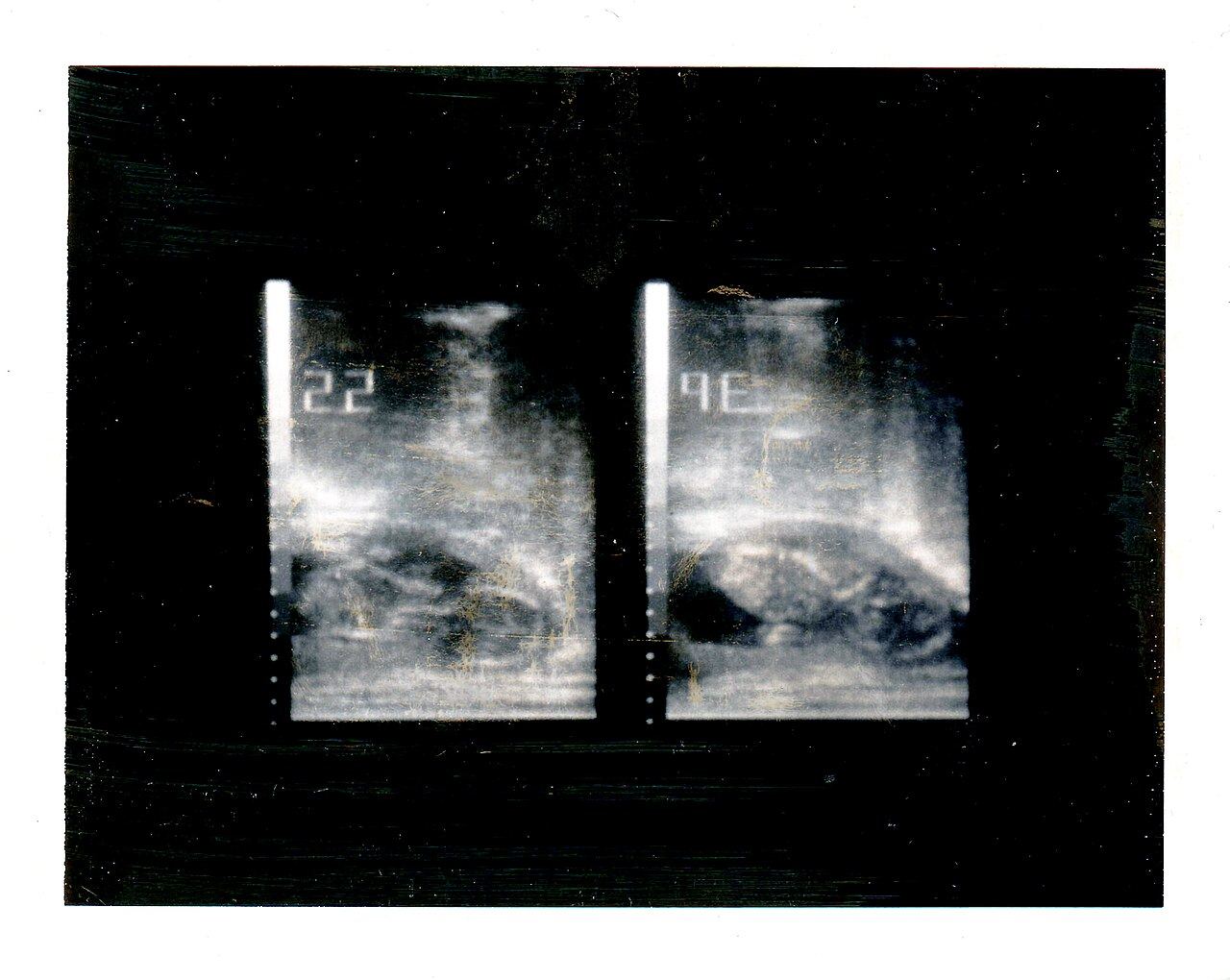
Then the plan unfolds. The journal Nature's film Building a baby shows the first two weeks. Cells begin to sort themselves into layers that will become skin and brain, muscle and bone, gut and lungs. Around three to four weeks after conception, a tiny tube of heart muscle begins to beat. The NHS pregnancy guide notes that by about six weeks of pregnancy the heartbeat can often be seen on an ultrasound scan.
How does each cell know what to become? Through a conversation of chemical signals and genes switching on and off in the right places and at the right times. Developmental biologists are still mapping it. A 2013 study by Eva Bianconi and colleagues estimated that the adult body is made of about 37 trillion cells, all descended from that first one.
Every stage depends on the one before. Most of the major organs have formed by about ten weeks, and the rest of pregnancy is mostly growth and fine-tuning. A baby is usually born around 40 weeks after the start of the mother's last period.
None of this is simple, and not every pregnancy continues; the NHS estimates that about one in eight known pregnancies ends in miscarriage. That is part of the honest picture too. Perhaps that is why becoming a person, when it happens, has always felt like something given.
What each faith says
Judaism
“For Thou hast made my reins; Thou hast knit me together in my mother's womb. I will give thanks unto Thee, for I am fearfully and wonderfully made; Wonderful are Thy works.”
Psalm 139:13-14 · JPS 1917
Psalm 139 is the best-loved Hebrew Bible passage on life before birth: “Thou hast knit me together in my mother's womb. I will give thanks unto Thee, for I am fearfully and wonderfully made.” The psalmist says God saw his “unformed substance” before he was born. Job, in his suffering, also remembers being formed. He was poured out like milk, curdled like cheese, clothed with skin and flesh and knit together with bones and sinews (Job 10:10-12).
The Talmud teaches that there are three partners in the making of every person. They are the father, the mother and God, who gives the breath, the soul, sight, hearing and the power to speak (Niddah 31a, our rendering). And in Hebrew reḥem, “womb”, comes from the same root as raḥamim, “compassion”: a mother's womb is the first picture of mercy. The rabbis made a mother-to-be the model of all prayer: Hannah, who prayed for a child so silently that only her lips moved (Berakhot 31a). Her story is read in synagogue on the first day of Rosh Hashanah.
Christianity
“When Elizabeth heard Mary's greeting, the baby leapt in her womb; and Elizabeth was filled with the Holy Spirit.”
Luke 1:41 · WEB
Christians pray Psalm 139 too, and it is often read at baptisms and in thanksgiving for children. Luke's Gospel tells how Mary, newly pregnant, visits her relative Elizabeth, who is expecting John the Baptist. When Elizabeth hears Mary's greeting, the baby leaps in her womb.
For Christians, the womb is also where they believe God came closest to humanity. They hold that Jesus was carried in Mary's womb and born as a human child. So the long, hidden months of pregnancy are part of the Christian story of God with us. Many churches mark the Annunciation, nine months before Christmas, on 25 March. And Mary's own song of praise, the Magnificat, is sung every evening at Anglican Evensong and Catholic Vespers.
Islam
“He it is Who fashioneth you in the wombs as pleaseth Him. There is no God save Him, the Almighty, the Wise.”
Qur'an 3:6 · Pickthall (1930)
In Islam, the forming of a child is a work of al-Muṣawwir, the Fashioner, the One who “shapes you in the wombs as He wills”. The Qur'an speaks of the child being made “He created you from one being, then from that (being) He made its mate; and He hath provided for you of cattle eight kinds. He created you in the wombs of your mothers, creation after creation, in a threefold gloom. Such is Allah, your Lord. His is the Sovereignty. There is no God save Him. How then are ye turned away?” (39:6, Pickthall). Classical scholars read as the belly, the womb and the membrane around the baby.
Arabic, like Hebrew, links the womb to mercy. Raḥim, womb, shares its root with ar-Raḥmān and ar-Raḥīm, the Most Merciful and the Especially Merciful. In a hadith qudsī, a saying in which the Prophet passes on God's own words, God says: I am ar-Raḥmān. I created the raḥim, the bond of kinship, and gave it a name taken from My own name (Abu Dawud 1694, Tirmidhi 1907). Every time a Muslim says “In the name of God, the Most Merciful, the Especially Merciful”, the word for womb is echoing inside it.
Same and different
All three faiths see life before birth as God's own work. Each answers it with praise rather than explanation: “fearfully and wonderfully made”, “blessed is God, the best of creators”. Hebrew and Arabic both tie the word for womb to the word for mercy. Islam is the one that walks through the stages one by one, from a drop to a clinging form to bones clothed with flesh. Judaism is the one that names three partners in every birth. Christianity adds its belief that God himself entered a womb in Jesus. All three are honest that they are speaking of wonder, not giving a biology lesson.
A moment to reflect
- You were once a single cell. What does that do to how you see yourself?
- When have you been shown mercy before you had done anything to earn it?
- Who carried you, cared for you or made room for you before you could do anything for yourself?
- Is something less wonderful once we understand how it works? Or more?
Watch
Nature's film of the first two weeks of human development.
Nature on the very first heartbeat and how it starts.
National Geographic's overview of pregnancy, stage by stage.
Do it together
Write a letter, or record a voice note, to someone who looked after you when you were too small to remember: a parent, grandparent, carer or foster carer. Read Psalm 139:13-14 or Qur'an 23:14 beside it if you wish.
Look at the Hebrew reḥem and raḥamim and the Arabic raḥim and raḥma side by side. Talk together about what mercy looks like in practice in your community, especially for new parents.
Organise a baby-bank collection, a meal rota for new parents on your street, or a quiet space at a place of worship for parents who have lost a pregnancy. Partner across faith groups.
Read Hannah's prayer (1 Samuel 2:1-10), which Jewish tradition holds up as a model of prayer, and Mary's Magnificat (Luke 1:46-55), which churches sing every evening. Notice the lines they share about the proud brought low and the hungry filled.
On the fourth Sunday of Lent, many British churches give flowers to mothers and to everyone who has mothered someone. Go along, or make a posy for a mother, grandmother, foster carer or neighbour who has looked after others.
Go deeper
- Qur'an 23:12-14 with translations · scripture
- Psalm 139 (JPS 1917) on Sefaria · scripture
- NHS: Your pregnancy and baby guide · article
- Wonder, not proof: why we don't say verses 'predicted' science · article
- Luke 1 (WEB) on Bible Gateway · scripture
- 1 Samuel 2 (JPS 1917) on Sefaria: Hannah's prayer · scripture
In pictures
Try this · KS1 · 15 min · Science
Smaller than a full stop
You need: paper and a sharp pencil, a magnifying glass, a tape measure
- Make the smallest dot you can with the pencil. Look at it through the magnifying glass.
- Everyone began life as one cell about that small.
- Measure how tall you are now.
- How many dots tall are you? (A dot is about half a millimetre.)
Safety: Some children may be adopted or have families who have lost a baby; keep the talk about wonder, not about anyone's story.
You began as one cell the size of a full stop: three scriptures stand in wonder at what happened next.
Sources (6)
- Human egg about 0.1 mm across: Encyclopaedia Britannica, Egg (biology)
- First two weeks of human development: Nature video, Building a baby: the first two weeks
- Heartbeat often visible on ultrasound by about six weeks; birth around 40 weeks: NHS, Your pregnancy and baby guide
- About 37 trillion cells in the adult body: Bianconi et al., Annals of Human Biology, 2013
- About one in eight known pregnancies ends in miscarriage: NHS, Miscarriage
- Galen and Greek medicine describe embryonic development in stages: Wikipedia, Quran and science (embryology section, with sources)