Jonas Salk's polio vaccine was announced as safe and effective on 12 April 1955. That evening a television interviewer asked him who owned the patent. Salk seemed surprised. “Well, the people, I would say. There is no patent. Could you patent the sun?”
Al-Wahhāb is the Giver of gifts: the One who gives freely, without being asked, without needing anything back. The shape of the word means giving again and again. Even the most generous giving we know has a small catch. His has none.
Start with what we know
Start with something we know. Then take away everything it needs. What is left is not a bigger version of us: it is the Name.
Episode 1
In us
In 2017, nine-year-old Keira Ball died after a car crash in Devon. Her family agreed to donate her organs, and her heart went to a boy of the same age, Max Johnson, who had been in hospital for months. Max lived. In 2020 England's new organ donation law, which presumes consent unless people opt out, was named Max and Keira's Law (NHS Blood and Transplant). One donor can save up to nine lives. It is one of the greatest gifts a family can give. But it comes through grief. It needs a match, a team of surgeons and an intensive-care bed, and we can only give what we were given.
Episode 2
In nature
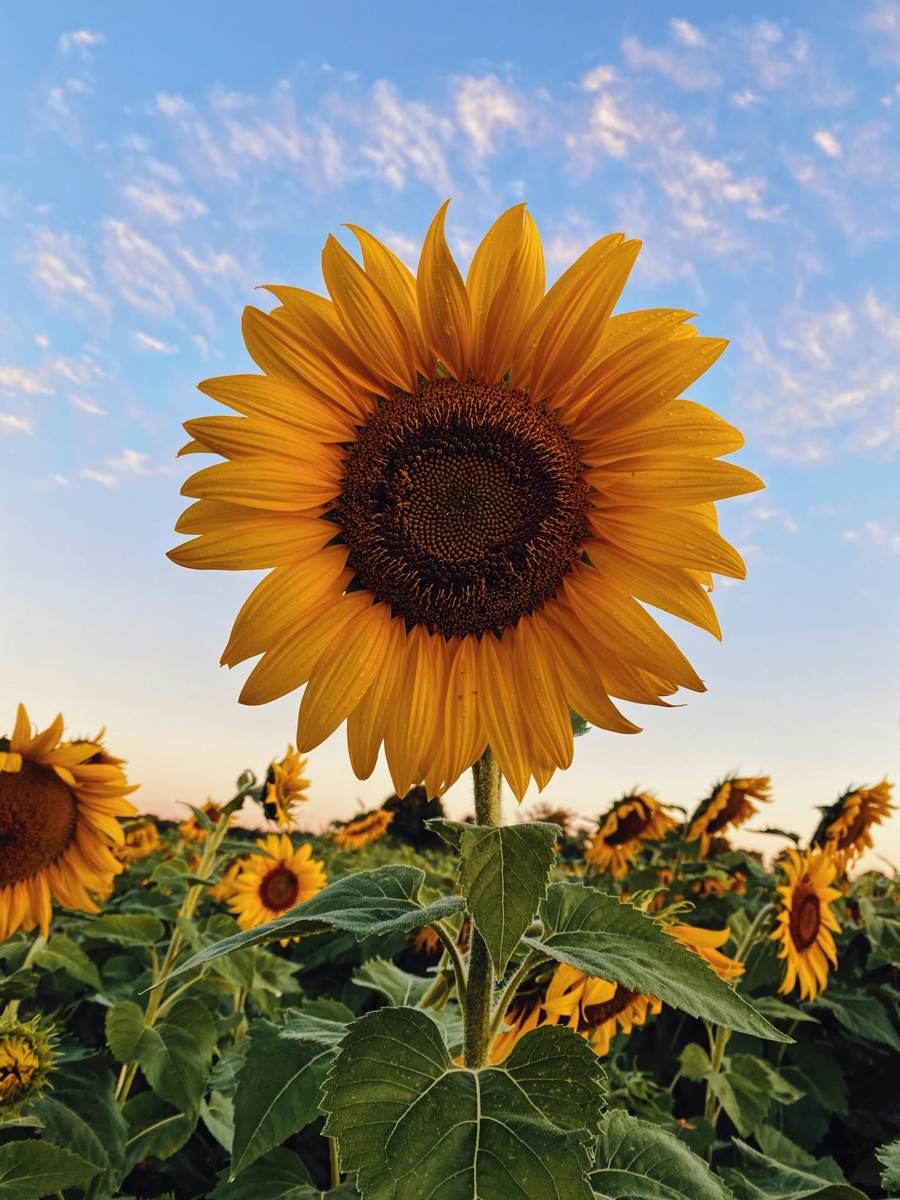
A flower gives away sugar. Nectar costs a plant a real share of the energy it makes from sunlight, and bees, butterflies, bats and birds drink it freely. Around three-quarters of the world's leading food crops benefit from these visitors (Klein and others, 2007). Without them, our tables would be bare. It looks like pure generosity. But it is a trade: the nectar pays for pollen to be carried to another flower. When the visitors stop coming, many plants stop making it. Nature is wonderfully generous, and almost always expects something back.
Episode 3
At our best
Salk's vaccine was a gift to the world, and the American public paid for it. Millions of people sent dimes to the March of Dimes to fund the research and the 1954 trial, in which about 1.8 million children took part (Science History Institute). Polio, which once paralysed hundreds of thousands of children a year, is now almost gone. Yet lawyers had already advised that the vaccine probably could not be patented. The companies that made it still sold it, and the gift reached the world only through money, factories and freezers. Our best giving still runs on supply chains.
Episode 4
The Break
Look past the grief behind the gift, the trade with the bee, the dimes and the factories, the stock that runs down, the hope of thanks. Every giver we know gives from what was given to them, at a cost. Al-Wahhāb is not a bigger giver. He gives with nothing lost and nothing needed in return. The believers pray: “Our Lord! Cause not our hearts to stray after Thou hast guided us, and bestow upon us mercy from Thy Presence. Lo! Thou, only Thou, art the Bestower.” (Qur'an 3:8, Pickthall).
Read: Q 3:8; 38:35 Solomon (peace be upon him): (Q 38:35); 42:49-50 He gives daughters, sons, or both
From the tradition: al-Ghazālī: the true giver gives with no aim of return and no benefit to Himself. James 1:17 'Every good gift… from above, coming down from the Father of lights'
Watch and listen
Films, documentaries and voices that reach towards this Name. Each links out to where you can watch it.
The Qur'an tells of Zechariah (peace be upon him), a priest in the Temple in Jerusalem and the guardian of the young Mary (peace be upon her). He was old; his hair was white and his bones were weak; and his wife had never had a child.
One day he went into Mary's prayer room and found food there that no one had brought. “Mary, where did this come from?” She answered: “It is from Allah. Allah giveth without stint to whom He will.” (3:37, Pickthall).
It moved him to pray, quietly, in a voice no one else could hear. “Saying: My Lord! Lo! the bones of me wax feeble and my head is shining with grey hair, and I have never been unblest in prayer to Thee, my Lord.” (19:4-6, Pickthall). The word he used, hab, comes from the same root as al-Wahhāb.
God gave him a son, John (peace be upon him), whom the Qur'an calls Yaḥyā.
The Qur'an also says plainly that God gives children to some and not to others (42:49-50). Muslim teachers stress that a gift not given is never a judgement on anyone's worth. The story is about something else: an old man who asked in secret, as if to a friend, because he had never found the Giver unwilling to listen.
What each faith says
Read:
Judaism
“But who am I, and what is my people, that we should be able to offer so willingly after this sort? for all things come of Thee, and of Thine own have we given Thee.”
When King David gathered gifts for the Temple, he refused to take credit for them. His prayer is still said in the morning service: everything people give back to God was His to begin with.
Jewish tradition teaches that the right response to gifts is a blessing. There are blessings for food, for new clothes, for a rainbow, for hearing good news: each one a way of noticing that something has been given.
For a new season, new clothes or a first time, Jews say the Shehecheyanu, thanking God who has kept us alive, sustained us and brought us to this moment. Even time is counted as a gift.
Christianity
“Every good gift and every perfect gift is from above, coming down from the Father of lights, with whom can be no variation, nor turning shadow.”
The letter of James calls God “the Father of lights”, the source of every good gift, who does not change. In Athens, Paul told the philosophers that God needs nothing from human hands, “seeing he himself gives to all life and breath, and all things” (Acts 17:25).
For Christians the greatest gift is Christ himself, and the word ‘grace’ means a gift that is free and undeserved.
Many Christians say grace before meals. The Methodist founder John Wesley put the response to grace into three rules for money: gain all you can, save all you can, give all you can.
Islam
“And whatever of comfort ye enjoy, it is from Allah. Then, when misfortune reacheth you, unto Him ye cry for help.”
Al-Wahhāb appears three times in the Qur'an (3:8; 38:9; 38:35), always in prayer. The believers ask for steady hearts, and Solomon (peace be upon him) asks for a kingdom. Al-Ghazālī defined a true gift as one given with no aim of return and no benefit to the giver. In that full sense, he said, only God truly gives.
The Qur'an reminds people: “And whatever of comfort ye enjoy, it is from Allah. Then, when misfortune reacheth you, unto Him ye cry for help.” (16:53, Pickthall). For Muslims, the human share of this Name is to give without expecting thanks, and to notice what has been given.
Same and different
Judaism, Christianity and Islam all teach that every good thing is a gift, that God needs nothing in return, and that the right response is gratitude and generosity. Judaism expresses this through blessings over everyday gifts. Christianity speaks of grace and of Christ as God's greatest gift. Islam calls God al-Wahhāb and teaches that true giving expects nothing back. They differ on what the greatest gift is; they agree on Who gives it.
A moment to reflect
What is the best gift you have ever received that cost you nothing?
Is it possible to give without wanting anything back, even thanks?
What have you been given that you have never thought of as a gift?
Watch
BBC News on how Keira's heart saved Max: the ‘In us’ rung.
Retro Report on Jonas Salk and ‘Could you patent the sun?’: the hook and ‘At our best’ rung.
From The Green Planet: flowers, insects and the trade behind nectar.
Do it together
families / schoolsThe blessing walk
Take a short walk and stop at five things you did not make and did not pay for: the air, a tree, rain, birdsong, sunlight. At each one, say thank you in whatever words you use.
faith groups / neighboursHave the conversation
Organ donation is an act of giving many faiths support. Invite a specialist nurse from NHS Blood and Transplant's faith engagement team to a community meeting to explain the law and answer questions. Then families can talk and decide for themselves.
familiesFirst-time blessing
Next time someone in the family does something for the first time, a first bike ride, a new job, the first strawberries of summer, stop and say thank you together. Jewish families say the Shehecheyanu blessing at moments like these.
families / neighboursA week of grace
For one week, say grace before one shared meal. Use a traditional one such as ‘For what we are about to receive, may the Lord make us truly thankful’, or simply your own words of thanks.
 Episode 1