Who is Allah?

Reading settings

Text size

Easier reading

More space between lines and letters, plain font for headings, no italics.

Calm mode

No moving backgrounds or animations; softer images.

Save data

No background video and no card photos: good on a slow or capped connection.

Saved on this device only. Nothing is sent to us.

The 99 Names · Name 17 of 99 · Act

The Provider of all sustenance

ar-Razzāq الرَّزَّاقُ

Start with what we know ↓

Recited as it sounds in the Qur'an, 51:58.

Heard together with: ar-Razzāq / al-Muqīt

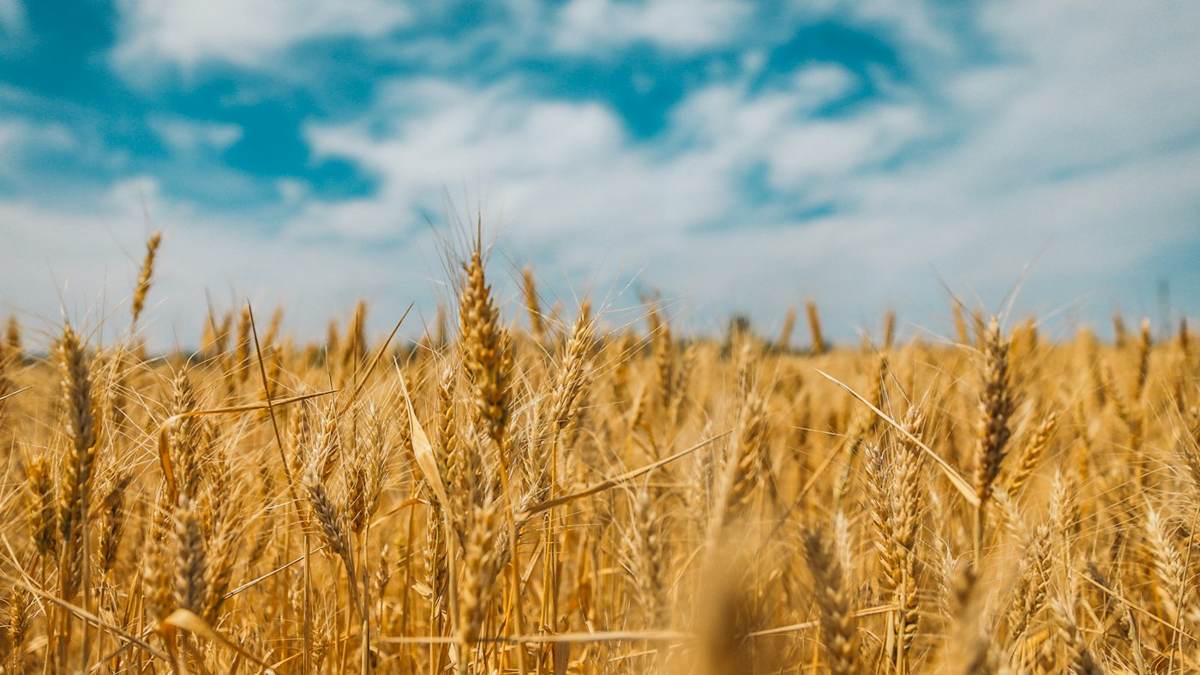
Plant scientists in Aleppo, with war tearing through the city, did something no one had done before in 2015. They asked for their seeds back from a vault dug into a frozen mountain in the Arctic. The seeds they had stored there, wheat, barley, lentils and chickpeas bred over ten thousand years, were flown out and planted again in Lebanon and Morocco.

Ar-Razzāq is the Provider: the One who gives every living thing its sustenance. Human beings have become very good at feeding ourselves. Our three greatest food systems share one thing none of them can do.

Start with what we know

Start with something we know. Then take away everything it needs. What is left is not a bigger version of us: it is the Name.

Episode 1

In us

In 1909 the German chemist Fritz Haber worked out how to pull nitrogen out of the air and turn it into ammonia; Carl Bosch then scaled it up for factories. Nitrogen fertiliser made by the Haber-Bosch process now helps grow the food of roughly half the people on Earth (Erisman and others, Nature Geoscience, 2008). It may be the most important invention most people have never heard of. But it runs on enormous amounts of natural gas and uses about one to two per cent of the world's energy. Its run-off pollutes rivers and seas. And it can only feed a seed that already exists.

Episode 2

In nature

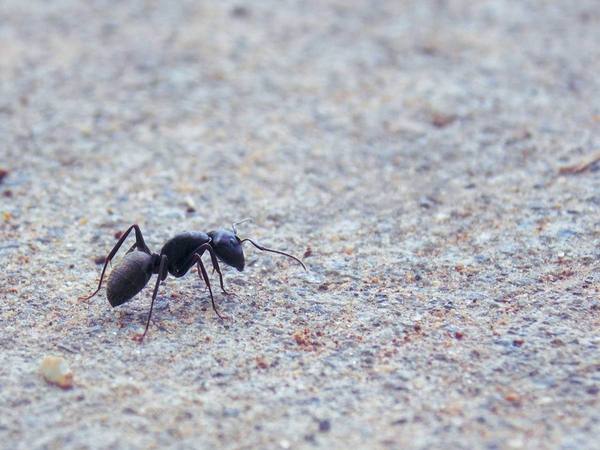
Ants were farming long before we were. Leafcutter ants in Central and South America carry pieces of leaf underground, not to eat but to feed a fungus garden, which in turn feeds the colony. Their ancestors began this about 50 million years ago, and a single nest can hold millions of workers tending their crop. It is agriculture without a single human. But the ants can only farm what the forest grows, their fungus can be wiped out by a parasite mould, and when the queen dies, the whole colony slowly ends.

Episode 3

At our best

The Svalbard Global Seed Vault is cut 120 metres into a mountain on a Norwegian island near the North Pole. It holds more than 1.4 million seed samples from almost every country, kept at minus 18 °C as a backup for the world's food (Crop Trust). When the ICARDA gene bank in Aleppo, an international seed collection for dry-land crops, had to be abandoned, Svalbard's copies let it rebuild its collection. It is perhaps the most hopeful building on the planet. But it can store a seed; it cannot make one. Everything inside it was first given by a plant.

Episode 4

The Break

Switch off the natural gas. Close the fungus garden, thaw the frozen mountain, forget the farmers who saved the seed. Every food system we know stores, multiplies or moves provision that was first given. Ar-Razzāq is not a bigger farmer. He is the One from whom every seed, every sunbeam and every mouthful first comes. “And there is not a beast in the earth but the sustenance thereof dependeth on Allah. He knoweth its habitation and its repository. All is in a clear Record.” (Qur'an 11:6, Pickthall).

Read: Q 51:58; 11:6

From the tradition: Tirmidhi 2344: if you relied on Allah as you should, He would provide as He provides for birds, which go out hungry and return full. Matthew 6:26 'Your heavenly Father feeds them'

Watch and listen

Films, documentaries and voices that reach towards this Name. Each links out to where you can watch it.

On screen

In Interstellar the crops fail and we go looking for another planet. Ar-Razzāq is why there was a harvest to lose.

Where it shows up

In scripture
Q 51:58; 11:6; 29:60. Genesis 22:14; Psalm 145:15-16; Matthew 6:26
The same thread in Jewish and Christian scripture
Genesis 22:14 'Adonai-yireh' ('GOD will see' or 'GOD takes care'); Psalm 145:15-16; Psalm 136:25 'Who gives food to all flesh'; Matthew 6:26
In the universe
NASA PACE mission (launched 2024) studies phytoplankton, the base of ocean food webs; NOAA: about half of Earth's oxygen comes from the ocean
In nature
'Leaf-Cutter Ants', BBC Earth
In people
Food banks; the ICARDA seed rescue
In science
Ecology: food webs; chemistry: nitrogen fixation (Haber-Bosch, 1908 patent)

Living it

Earn honestly, share food, trust

Its kind

Act: something done: mercy shown, provision given, a prayer answered.

In the Qur'an: 51:58

Hagar between the hills

The Prophet Muhammad ﷺ (peace be upon him) told the story of Hagar (peace be upon her). Abraham (peace be upon him) brought her and their baby son Ishmael (peace be upon him) to a dry valley where Mecca now stands. There was no one there and no water. He left them with a bag of dates and a skin of water, and turned to go.

Hagar followed him. “Abraham, are you leaving us in this valley, where there is no one and nothing?” He did not answer. At last she asked: “Did God command you to do this?” He said yes. She said: “Then He will not let us be lost.”

When the water ran out, the baby began to cry with thirst. Hagar climbed the nearest hill, Ṣafā, to look for help. She saw no one. She ran down across the valley and up the other hill, Marwah. Nothing. Seven times she ran between the two.

Then she heard a sound. At the place where the baby lay, water was welling up from the ground. She built a little wall of sand around it and cupped the water in her hands. That spring is Zamzam (Bukhari 3364).

Every year, millions of pilgrims walk between Ṣafā and Marwah seven times, remembering her. The story holds both halves of trust: she ran with all her strength, and the water came from somewhere she could never have dug.

What each faith says

Read:

Judaism

“The eyes of all wait for Thee, and Thou givest them their food in due season. Thou openest Thy hand, and satisfiest every living thing with favour.”

Psalm 145:15-16 · JPS 1917

Three times a day, Jews say Ashrei, a prayer built around Psalm 145, which includes the verse below. Tradition says that anyone who says it daily, meaning it, is assured of a share in the world to come, because it praises God for feeding every living thing.

The first blessing of grace after meals praises God who “feeds the whole world in His goodness”. The story of manna in the wilderness, bread that came each morning and could not be hoarded, taught Israel to trust for one day at a time.

Every Shabbat table carries two loaves of challah, recalling the double portion of manna that fell before the day of rest, so that no one had to gather on Shabbat.

Christianity

“See the birds of the sky, that they don't sow, neither do they reap, nor gather into barns. Your heavenly Father feeds them. Aren't you of much more value than they?”

Matthew 6:26 · WEB

Jesus taught his followers to pray, “Give us today our daily bread”, and pointed to the birds as a sign of God's care. Christians understand this not as a reason to stop working, but as a reason to stop worrying.

Many Christians say grace before meals, and churches across Britain run food banks and community kitchens as a way of sharing the provision they believe comes from God.

The Salvation Army, a church founded by Catherine and William Booth in London's East End in 1865, still runs community meals and lunch clubs across the country.

Islam

“Lo! Allah! He it is that giveth livelihood, the Lord of unbreakable might.”

Qur'an 51:58 · Pickthall (1930)

Ar-Razzāq appears in the Qur'an as “Lo! Allah! He it is that giveth livelihood, the Lord of unbreakable might.” (51:58, Pickthall). Rizq, provision, means far more than food: it includes health, knowledge, friendship, guidance and time. Muslim scholars warned against reading this Name as a promise of wealth; it is a promise that nothing living is forgotten.

The Prophet said: “If you relied on God as He should be relied on, He would provide for you as He provides for the birds: they go out hungry in the morning and come back full in the evening” (Tirmidhi 2344). The birds still fly out to look.

Same and different

All three faiths thank God before or after eating, point to the birds as a sign of His care, and teach that trusting God goes together with working and sharing. Judaism remembers manna and blesses God who feeds the world. Christianity prays for daily bread and sees Christ as the bread of life. Islam calls God ar-Razzāq and treats rizq as every kind of provision, from food to faith. They differ on some of what provision ultimately points to, but agree that no living thing is forgotten.

A moment to reflect

  1. What did you eat today, and how many people and creatures were part of getting it to you?
  2. How do you hold together working hard and trusting that provision comes from beyond you?
  3. Who near you is going without, and what could you share?

Watch

A virtual tour inside the Svalbard Global Seed Vault: the ‘At our best’ rung.

PBS Eons on how ants became farmers 50 million years before us: the ‘In nature’ rung.

TED-Ed on the Haber-Bosch reaction that feeds half the world: the ‘In us’ rung.

Do it together

neighbours / schoolsSeed library

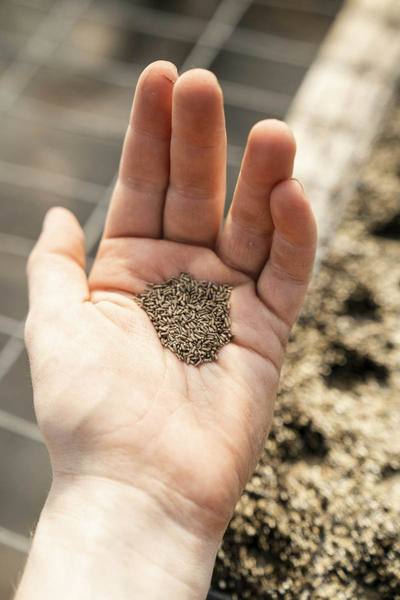
Start a seed swap shelf in a library, school or place of worship. Save seeds from tomatoes, beans or sunflowers and share them. Talk about Svalbard, and about the One a seed comes from.

faith groups / familiesFood bank shift

Volunteer together for a shift at a local food bank or community kitchen. Before or after, read Psalm 145:15-16, Matthew 6:26 and Qur'an 11:6.

familiesTwo loaves

Bake or buy two loaves for a Friday supper, as Jewish families do for Shabbat. Tell the story of the manna: enough for each day, and a double portion before the day of rest. Talk about what ‘enough for today’ means for you.

schools / faith groupsDaily bread

Say together the line from the Lord's Prayer, ‘Give us today our daily bread’. Then trace a single slice back: baker, miller, farmer, rain, sun. How many people and creatures were part of it?
Go deeper

Others say it too

Beyond the Abrahamic family, other traditions reach for something like this. Each in its own words; we connect, never rank.

Sikh

In every age man subsisteth by His bounty.

Japji 3 · Guru Granth Sahib p. 2 · tr. M. A. Macauliffe, The Sikh Religion (1909), vol. 1

Indigenous

Now we turn our thoughts to the Creator, the Great Natural Strength, and send greetings and thanks for all these gifts. Everything we need to live a good life is here on this Mother Earth.

Haudenosaunee Thanksgiving Address (Ohén:ton Karihwatéhkwen), Kanien'kehá:ka version by Charles Patton and Eileen Sawyer Patton · McGill University (short quotation, credited)

Sources (5)
  1. Haber-Bosch nitrogen supports food for roughly half the world's people: Erisman and others, Nature Geoscience 1:636, 2008
  2. Ant fungus farming began about 50-60 million years ago: Schultz and Brady, PNAS 105:5435, 2008
  3. Svalbard holds over 1.4 million samples at -18 °C; ICARDA made the first withdrawal in 2015: Crop Trust
  4. Hagar, Ishmael and Zamzam: Sahih al-Bukhari 3364
  5. Provision like the birds: Jamiʿ at-Tirmidhi 2344
الْفَتَّاحُ
Up next · Name 18 of 99The Opener, of doors, hearts and judgemental-Fattāḥ
Next →

Watch more: The Provider of all sustenance

9 films and talks, chosen for this page. They play here.

  • Romance Is Rizq... But So Is Everything Else | Allah’s Names | Dr. Omar Suleiman | Ep. 21

    Yaqeen Institute · 18 min

    Yaqeen: Dr Omar Suleiman on ar-Razzaq and al-Karim, everything is provision (episode 21).

  • Why Wealth Won't Give You Peace | The Names Class 21: Ar - Razzaq | Shaykh Mikaeel Smith

    Qalam Institute · 52 min

  • The Secret to Contentment - Ar-Razzaq (The Provider)

    Belal Assaad · 72 min

    Belal Assaad: the secret to contentment, ar-Razzaq.

  • Love Al-Razzaq More Than Rizq | Sh. Navaid Aziz | Juz 30 Qur’an 30 for 30 S7 | Ramadan Series

    Yaqeen Institute · 31 min

  • What Is Our Daily Bread? | Lent 2020

    Ascension Presents · 12 min

  • More Faith, More Livelihood

    Chabad.org · 1 min

    Chabad.org: more faith, more livelihood, a minute on trust in God for parnassah.

  • From Drifter to Dynamo: The Story of Plankton | Deep Look

    Deep Look · 3 min

    Deep Look: the story of plankton, the base of every ocean food web, as this page notes.

  • Food Webs: Crash Course Kids #21.2

    Crash Course Kids · 4 min

  • The Plankton Paradox

    MinuteEarth · 3 min

  • More films and talks on F-ILMWatch free