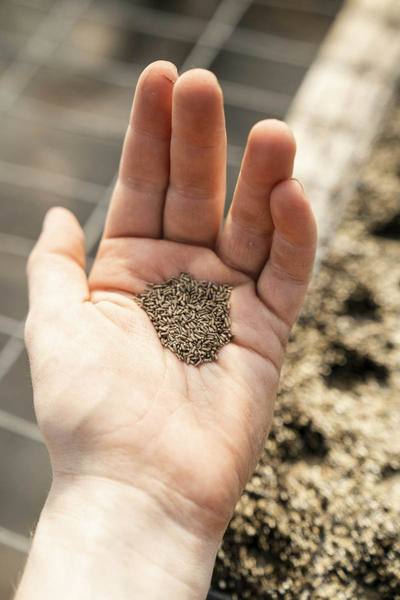
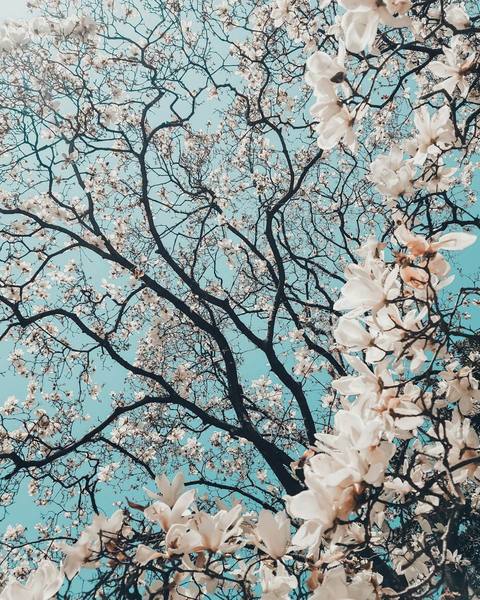
An Arctic ground squirrel buried seeds and fruit in its burrow, in what is now Siberia, about 32,000 years ago. Then the ground froze. In 2012, Russian scientists dug them out of the permafrost, took a few living cells from the fruit, and grew them into whole plants. The plants, a kind of campion called Silene stenophylla, flowered with delicate white petals, and set seed of their own (Yashina and others, PNAS, 2012).
Al-Bāʿith is the One who raises up: who brings the dead back to life, wakes the sleeping and sends messengers. The Qur'an often points to things coming back to life, rain on dead ground, a seed in the dark, as signs that make the raising of the dead thinkable. The most astonishing revivals we know all leave one thing undone.
Start with what we know
Start with something we know. Then take away everything it needs. What is left is not a bigger version of us: it is the Name.
Episode 1
In us
Every year in the UK, more than 30,000 people have a cardiac arrest outside hospital: the heart stops pumping, and within minutes the brain begins to be damaged. Fewer than one in ten survive. But when someone nearby starts chest compressions and uses a defibrillator quickly, the chances of survival can double or more (British Heart Foundation). CPR is the nearest thing we have to calling someone back. Yet it only works in the first few minutes, and it needs a trained person and a machine nearby. No one has ever been brought back once the brain has truly died.
Episode 2
In nature
The Siberian campion is not the only sleeper. In 2020, Japanese scientists took mud from the seafloor of the South Pacific that had been laid down about 101.5 million years ago, when dinosaurs lived. They fed the microbes in it, and many began to eat, grow and divide again (Morono and others, Nature Communications, 2020). Life can wait for astonishing lengths of time. But in every case, it had never quite stopped. The campion cells and the microbes were dormant, barely alive, not dead. Nature can wake the sleeping; it does not raise the dead.
Episode 3
At our best
To grow the 32,000-year-old campion, scientists had to find living cells in the fruit tissue and place them in sterile jars of nutrients and hormones. Then they coaxed them into roots and shoots, a technique called tissue culture, now used to save rare plants (Yashina and others, 2012). It is one of the most moving achievements in modern botany. Yet it depended on cells that were still, just, alive. Every revival we have ever managed starts from something that never fully died. Nothing in any laboratory has made the truly dead live again.
Episode 4
The Break
Strip away the first few minutes, the defibrillator, the dormant cell, the jar of hormones, the spark of life that never quite went out. Every revival we know wakes what was sleeping. Al-Bāʿith raises what has truly died, with nothing to start from but His word. The Qur'an answers the man who held up a crumbling bone and asked who could bring it back: “Say: He will revive them Who produced them at the first, for He is Knower of every creation.” (Qur'an 36:79, Pickthall).
From the tradition: Classical: al-Bāʿith also sends messengers and raises from sleep. Ezekiel 37:3-5 'can these bones live again?… I will cause breath to enter you'; Daniel 12:2; 1 Cor 15:42
On screen
Frankenstein stitches the dead together and gets a creature who calls himself a fallen angel. Al-Bāʿith raises from dust, whole, by the One who made it the first time.
Act: something done: mercy shown, provision given, a prayer answered.
In the Qur'an: 22:7 (verb yabʿathu) (not in the Qur'an verbatim (verb form))
A hundred years and a donkey
The Qur'an tells of a man who passed by a town lying in ruins, its roofs fallen in on its walls. He said to himself: “How could God ever bring this back to life after its death?” Many commentators identify him as ʿUzayr, known in the Bible as Ezra, though the Qur'an does not name him.
So God caused him to die for a hundred years, and then raised him. He was asked: “How long have you stayed?” He said: “A day, or part of a day.”
He was told: “No. You have stayed a hundred years. Look at your food and your drink: they have not spoiled. And look at your donkey. We will make you a sign for people. Look at the bones, how We bring them together and clothe them with flesh.”
When it became clear to him, he said: “And when (the matter) became clear unto him, he said: I know now that Allah is Able to do all things.” (2:259, Pickthall).
The very next verse tells of Abraham (peace be upon him) asking God: “My Lord, show me how You give life to the dead.” God asked: “Do you not believe?” Abraham said: “Abraham said: Yea, but (I ask) in order that my heart may be at ease.” (2:260, Pickthall).
Neither man is mocked for asking. The Qur'an treats wonder about resurrection as a natural human question, and answers it with signs.
What each faith says
Read:
Judaism
“And He said unto me: 'Son of man, can these bones live?' And I answered: 'O Lord GOD, Thou knowest.'”
In one of the most famous visions in the Bible, the prophet Ezekiel is set down in a valley full of dry bones. He is asked: can these bones live? He answers: “O Lord GOD, Thou knowest.” Then the bones come together, flesh covers them, and breath enters them.
Jewish prayer praises God three times a day, in the second blessing of the Amidah, as meḥayyeh metim, ‘who gives life to the dead’. Belief in the resurrection of the dead became a core Jewish teaching, listed by Maimonides as the thirteenth of his principles of faith.
Each morning begins with the same hope in small. The prayer Elohai neshamah thanks God for returning the soul after sleep, and trusts that He will restore it again in the time to come.
Christianity
“So also is the resurrection of the dead. The body is sown perishable; it is raised imperishable. It is sown in dishonour; it is raised in glory. It is sown in weakness; it is raised in power.”
At the heart of Christian faith is the belief that God raised Jesus from the dead on the third day. They believe God will raise all the dead at the end of time. The Nicene Creed ends: “We look for the resurrection of the dead, and the life of the world to come.”
Paul compared the resurrection body to a seed: what is sown is perishable, what is raised is imperishable.
Funerals in the Church of England traditionally open with Jesus' words from John's Gospel: “I am the resurrection and the life” (John 11:25). At Easter, many churches and primary schools make an Easter garden, with moss, flowers and an empty tomb made from a stone.
Islam
“And because the Hour will come, there is no doubt thereof; and because Allah will raise those who are in the graves.”
Al-Bāʿith comes from the root b-ʿ-th, which means to raise, rouse and send. The Qur'an uses it for raising the dead (22:7) and for waking people from sleep each morning (6:60). It is also used for sending messengers: “He it is Who hath sent among the unlettered ones a messenger of their own, to recite unto them His revelations and to make them grow, and to teach them the Scripture and wisdom, though heretofore they were indeed in error manifest.” (62:2, Pickthall).
Belief in the resurrection is one of the six articles of faith in Islam. The Qur'an often argues from what people can already see: “He bringeth forth the living from the dead, and He bringeth forth the dead from the living, and He reviveth the earth after her death. And even so will ye be brought forth.” (30:19, Pickthall).
Same and different
Judaism, Christianity and Islam all believe that God will raise the dead, and all three find the hope in images of seeds, bones and breath. Ezekiel's valley, Paul's seed and the Qur'an's donkey and ruined town all answer the same question: can these live? They differ in detail. Christianity sees Christ's resurrection as the first fruits of the general resurrection. Judaism praises God who gives life to the dead three times a day, in the Amidah. Islam teaches the raising of all on the Last Day as an article of faith.
A moment to reflect
Have you ever seen something you thought was dead come back to life: a plant, a friendship, a hope?
What big question have you been afraid to ask out loud, and who could you ask it with?
What would you want to be raised for?
Watch
Reuters on the 32,000-year-old plant that bloomed again: the hook and ‘In nature’ rung.
SciShow on 100-million-year-old microbes that are still alive: the ‘In nature’ rung.
The British Heart Foundation's 15-minute RevivR guide to CPR: the ‘In us’ rung.
Do it together
schools / faith groups / neighboursLearn CPR together
Spend 15 minutes together on the British Heart Foundation's free RevivR course, using a cushion as a dummy. Find out where your nearest defibrillator is. Read Ezekiel 37:1-10 or Qur'an 36:78-79 afterwards.
families / schoolsSeeds in the dark
Plant a few dry beans in a clear jar with damp kitchen paper and watch them over a week. Talk about how something that looked lifeless was only waiting, and about the difference between waking and raising.
familiesWaking up thankful
The Jewish morning prayer Elohai neshamah gives thanks for waking up. For a week, before anyone checks a phone, each person says one line of thanks for being alive this morning.
schools / familiesEaster garden
Make an Easter garden in a tray: soil, moss, small flowers, and a stone rolled away from a little cave. Read John 11:25 and Ezekiel 37:1-10, and talk about hope that something ended can begin again.
Over 30,000 out-of-hospital cardiac arrests a year in the UK; fewer than 1 in 10 survive; CPR and defibrillation can double survival: British Heart Foundation

 Episode 1