Edward Stone, a vicar in Chipping Norton, Oxfordshire, wrote to the Royal Society about willow bark in 1763. Chewing it, he found, eased fevers. The active ingredient became the starting point for aspirin.
Benefit is hidden all through creation, waiting to be found. An-Nāfiʿ, the One who brings benefit, is the source of every good that reaches us. He is always named with aḍ-Ḍārr: benefit and harm both pass only by His leave.
Start with what we know
Start with something we know. Then take away everything it needs. What is left is not a bigger version of us: it is the Name.
Episode 1
In us
On 25 April 1763 the Reverend Edward Stone sent a letter to the President of the Royal Society. He described how he had dried and powdered willow bark and given it to about fifty people with 'agues', fevers. It worked. His letter still survives. A century later chemists isolated salicylic acid, and in 1897 Bayer made a gentler form, aspirin. Human beings are wonderful at finding benefit in the world. But every medicine we find has side effects, and every healer works with what they did not make.
Episode 2
In nature
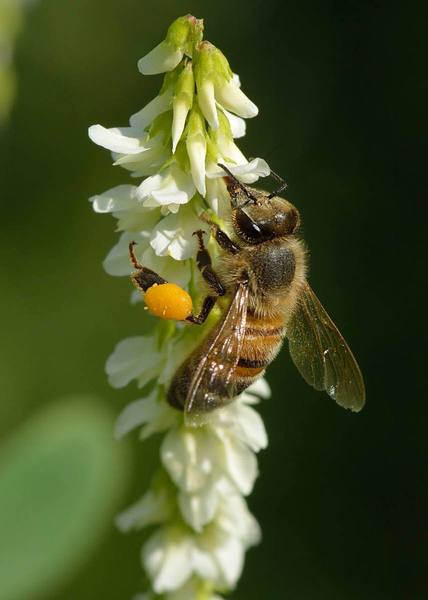
The Qur'an speaks of bees and the drink that comes from them, “of varying colours, in which there is healing for people” (16:69). Scientists have found that honey has natural antibacterial properties. It is very sugary, slightly acidic and, in some types, produces small amounts of hydrogen peroxide. Medical-grade honey is used in some wound dressings. That is wonder, not medical advice. A single worker bee makes only a small fraction of a teaspoon of honey in her life. Nature's benefit comes drop by drop, and with limits.
Episode 3
At our best
In 1928 Alexander Fleming noticed that a mould had killed bacteria on a dish in his London laboratory. In 1941 Howard Florey and Ernst Chain's team in Oxford gave penicillin to its first patient, a policeman named Albert Alexander, who began to recover. But they did not have enough. They even recovered penicillin from his urine to reuse it. On the fifth day it ran out, he relapsed, and he died on 15 March 1941. Penicillin went on to save millions. Even our greatest benefit has limits.
Episode 4
The Break
Our remedies have side effects, run short, are found by chance and reach the limits of every healer. Every benefit we know comes from somewhere, costs something and runs out. An-Nāfiʿ brings benefit by His will, and nothing in creation can benefit us unless He allows it. The Prophet said that God has not created a disease without also creating its cure (Bukhari 5678). Benefit is woven into the world, waiting for us to find it. “Say: Serve ye in place of Allah that which possesseth for you neither hurt nor use? Allah it is Who is the Hearer, the Knower.” (Qur'an 5:76, Pickthall).
The Qur'an remembers a speech of Abraham (peace be upon him) to his father and his people, who worshipped idols. He asked them: when you call on them, do they hear you? Do they benefit you, or harm you?
They had no answer except: this is what we found our fathers doing.
So Abraham described the Lord he worshipped, in some of the most tender lines in the Qur'an: He created me, and He guides me. He gives me food and drink. When I am ill, it is He who heals me. He will cause me to die and then bring me to life. And He is the One I hope will forgive my faults on the Day of Judgement. (Qur'an 26:69-82)
Abraham does not deny illness, or death. He lists them, plainly, beside food, guidance and healing. Everything that reaches him, the benefit and the hardship, comes from one Lord. That is why the tradition names an-Nāfiʿ with aḍ-Ḍārr.
The Prophet Muhammad ﷺ (peace be upon him) also encouraged people to seek treatment: “God has not sent down a disease without sending down its cure” (Bukhari 5678). Finding the cure is part of trusting the Healer.
After the Israelites found the bitter water at Marah made sweet, God told them: “I am the LORD that healeth thee.” One of God's names in Jewish tradition is Rofe, Healer. The eighth blessing of the daily Amidah is a prayer for healing.
Jewish law treats seeking a doctor as a duty, not a lack of faith: the Talmud reads Exodus 21:19 as giving physicians permission to heal (Bava Kamma 85a).
When someone is ill, the congregation prays a Mi Shebeirach, “May the One who blessed”, naming them during the Torah reading. In many Reform and Liberal synagogues it is sung to a setting by the American songwriter Debbie Friedman.
Christianity
“Every good gift and every perfect gift is from above, coming down from the Father of lights”
The letter of James says that every good thing comes from God: “Every good gift and every perfect gift is from above, coming down from the Father of lights.”
Christians remember Jesus as a healer, and many of Britain's oldest hospitals, such as St Bartholomew's (founded 1123) and St Thomas', began as Christian foundations.
Florence Nightingale, an Anglican, wrote that at sixteen she felt God call her to His service; the nursing she reformed has shaped every hospital since.
An-Nāfiʿ is not in the Qur'an as a Name but is in the traditional list, always paired with aḍ-Ḍārr. The Qur'an repeatedly asks why people worship what “has no power to harm or benefit” (5:76). Abraham's words, “And when I sicken, then He healeth me.” (26:80, Pickthall), are recited in prayers for the sick.
Muslim civilisation built great hospitals, such as the Manṣūrī hospital in Cairo (1284), seeing medicine as a way of honouring this Name.
Same and different
Exodus' 'the LORD that healeth thee', James' 'every good gift' and Abraham's 'He heals me' all trace benefit and healing to God, and all three faiths encourage medicine. Christians also see healing in the ministry of Jesus in a distinctive way, linked to their belief about who he is. Judaism makes seeing a doctor a duty, and the Prophet taught that God created no disease without a cure, so that medicine itself is part of faith in all three.
A moment to reflect
What is the most useful thing in your home that started in nature?
For you, is asking for help a sign of weakness, or of trust?
Who has been a benefit in your life without knowing it?
Watch
TED-Ed on Fleming's accident and how penicillin changed the world.
Deep Look on how honeybees make honey, drop by drop.
Do it together
schools / familiesHealing plants
Visit a physic garden (such as the Chelsea Physic Garden or a botanic garden) or look up plants that gave us medicines, such as willow and foxglove. Read Exodus 15:26 and Qur'an 26:80.
neighbours / faith groupsThank a healer
Write thank-you cards to a local GP surgery, pharmacy or hospice. Share stories of people in your communities who have worked in medicine.
schools / familiesThe operating theatre in the church roof
Visit the Old Operating Theatre Museum in London, hidden in the roof of St Thomas' Church, Southwark, where the hospital's apothecary dried medicinal herbs. Talk about how healing, faith and science have shared a building for centuries.
 Episode 1