Scientists in Japan laid oat flakes on a wet surface in 2010, in the pattern of the cities around Tokyo. Then they placed a yellow slime mould where Tokyo itself would be. The slime mould has no brain. Within about a day, it had spread out and then pulled back into a network of tubes linking the food sources. The network was strikingly similar to the region's real railway system, designed by engineers over decades (Tero and others, Science, 2010).
Al-Ḥakīm is the All-Wise: the One who puts every single thing in its right place, for the right reason. It is one of the Names the Qur'an uses most often. Wisdom shows up in us, in nature and in our smartest machines. Each kind stops somewhere.
Start with what we know
Start with something we know. Then take away everything it needs. What is left is not a bigger version of us: it is the Name.
Episode 1
In us
Does wisdom come with age? In 2010 psychologists in Michigan gave people from their twenties to their nineties stories about conflicts between groups and between people, and asked how they would resolve them. Older people were more likely to consider other points of view, admit the limits of their knowledge and look for compromise (Grossmann and others, PNAS, 2010). Wisdom can grow. But it grows slowly, unevenly and not in everyone; older people were not wiser about everything, and no one is wise all the time. Human wisdom is hard won and patchy.
Episode 2
In nature
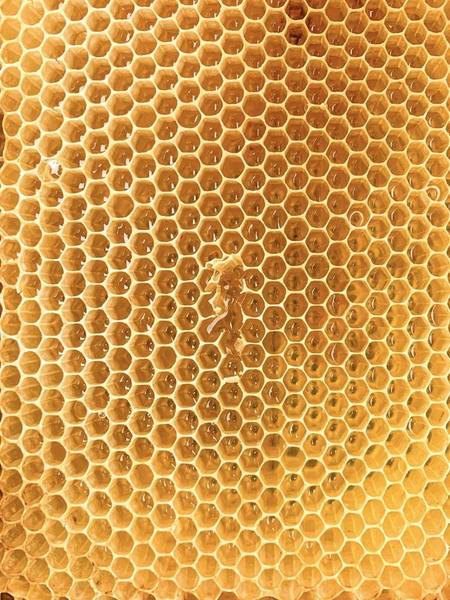
Bees build their honeycomb out of hexagons. In 1999 the mathematician Thomas Hales proved what people had suspected for two thousand years. The hexagon is the most efficient way to divide a flat surface into equal cells using the least total wall. So bees store the most honey for the least wax (Hales, 1999). The slime mould finds efficient networks; the bee builds the best possible cell. Yet neither knows why. Their ‘wisdom’ is shaped by physics and by countless generations, not by understanding.
Episode 3
At our best
In 2020 Google DeepMind's AlphaFold solved a fifty-year-old problem: predicting the three-dimensional shape of a protein from its chemical code. By 2022 it had predicted structures for about 200 million proteins, nearly every one known to science. In 2024 its creators shared the Nobel Prize in Chemistry (EMBL-EBI; Nobel Foundation). It is one of the wisest-seeming tools ever built. But AlphaFold learned from shapes people had already measured. It predicts what a protein looks like; it does not know what it is for, or why it exists at all.
Episode 4
The Break
Discard the slow years of learning, the blind efficiency of the bee and the slime mould, the machine that predicts without understanding. Every wisdom we know is partial, borrowed or without purpose. Al-Ḥakīm puts each thing in its place with full knowledge of why, so that nothing in creation is aimless. Those who reflect on the heavens and earth say: “Such as remember Allah, standing, sitting, and reclining, and consider the creation of the heavens and the earth, (and say): Our Lord! Thou createdst not this in vain. Glory be to Thee! Preserve us from the doom of Fire.” (Qur'an 3:191, Pickthall).
The Qur'an names a wise man called Luqmān, whom God gave wisdom. Tradition says he was an African, perhaps a carpenter or a shepherd, not a king or a prophet. The Qur'an records the advice he gave his son (31:12-19).
“My son, do not associate anything with God. That is a great wrong.”
“My son, even if a deed were the weight of a mustard seed, hidden in a rock or in the heavens or in the earth, God would bring it out. God is Subtle, All-Aware.”
“My son, keep up the prayer, encourage what is right and discourage what is wrong, and be patient with whatever befalls you.”
“Do not turn your cheek away from people in pride, and do not walk on the earth with arrogance. Be moderate in your walking, and lower your voice. The harshest of voices is the braying of a donkey.”
Between his words, the Qur'an adds its own: be grateful to your parents, especially your mother, who carried you in weakness upon weakness (31:14).
Luqmān's wisdom is not cleverness. It is putting each thing in its right place: God first, then gratitude, then kindness, patience and a quiet voice. The Qur'an says: “He giveth wisdom unto whom He will, and he unto whom wisdom is given, he truly hath received abundant good. But none remember except men of understanding.” (2:269, Pickthall).
What each faith says
Read:
Judaism
“The LORD by wisdom founded the earth; by understanding He established the heavens.”
The book of Proverbs pictures Wisdom as present with God at creation: by wisdom He founded the earth. Jewish tradition calls a scholar a ḥakham, a wise one.
When King Solomon was offered anything he wanted, he asked for “an understanding heart to judge” (1 Kings 3:9). Jews say a special blessing on seeing a great scholar: blessed is God who has given of His wisdom to flesh and blood.
Proverbs pictures Wisdom as a woman calling out at the crossroads and the city gates, inviting everyone in (Proverbs 8). And Ben Zoma asked: who is wise? The one who learns from every person (Pirkei Avot 4:1).
Christianity
“But the wisdom that is from above is first pure, then peaceful, gentle, reasonable, full of mercy and good fruits, without partiality, and without hypocrisy.”
The New Testament calls God “the only wise God” (Romans 16:27). Christians believe God's wisdom is seen in Christ, whom Paul calls “the wisdom of God” (1 Corinthians 1:24), even though it looked like foolishness to the world.
The letter of James describes what real wisdom looks like in a person: not clever, but gentle and merciful.
In the Orthodox liturgy, the deacon calls out “Wisdom! Let us attend!” before the readings. And Hildegard of Bingen, the twelfth-century German abbess, composer and healer, wrote a chant to Holy Wisdom, O virtus Sapientiae, still sung by choirs today.
Islam
“He giveth wisdom unto whom He will, and he unto whom wisdom is given, he truly hath received abundant good. But none remember except men of understanding.”
Al-Ḥakīm appears more than ninety times in the Qur'an, most often paired with al-ʿAzīz, the Almighty, and with al-ʿAlīm, the All-Knowing: might and knowledge are always guided by wisdom. Classical scholars defined ḥikmah as putting each thing in its proper place.
The same root gives ḥukm, judgement, and al-Ḥakam, the Judge. The Qur'an invites people to look at creation and see that it is not aimless (38:27). Muslim scholars warn that this is a reflection to wonder at, not a proof to win arguments with.
Same and different
Hebrew ḥokhmah and Arabic ḥikmah come from the same root, and all three faiths see the world as made with wisdom and call people to seek it. Proverbs, James and Luqmān describe wisdom in remarkably similar ways: humble, gentle, honest and grateful. Judaism has a blessing to say on meeting a wise person. Christianity adds that God's wisdom is revealed in Christ crucified. Islam honours Luqmān, a wise man who was not a prophet, with a chapter of the Qur'an named after him. All three warn against confusing cleverness with wisdom.
A moment to reflect
Who is the wisest person you know? What makes them wise rather than clever?
Which of Luqmān's pieces of advice do you most need?
Do you think something can be well designed without being wise?
Watch
Harvard Magazine: slime mould forms a map of the Tokyo railway: the hook.
TED-Ed on why honeybees love hexagons: the ‘In nature’ rung.
Veritasium on AlphaFold: the ‘At our best’ rung.
Do it together
familiesLuqmān's letters
Read Luqmān's advice (Qur'an 31:12-19) and Proverbs 3:1-12 together. Then each parent or grandparent writes three short pieces of advice for a child, and each child writes one for a grown-up.
schoolsHexagon challenge
Give groups the same amount of card and ask them to make as many equal storage cells as possible using squares, triangles or hexagons. Measure the results, then talk about bees, Hales's proof, and the difference between efficiency and wisdom.
families / schoolsLearn from everyone
Ben Zoma said the wise person learns from everyone (Pirkei Avot 4:1). For one week, each person notes one thing they learned from someone unexpected: a younger sibling, a bus driver, a rival. Share them at the weekend.
choirs / schoolsHildegard's Wisdom
Listen to Hildegard of Bingen's chant O virtus Sapientiae, written by a twelfth-century abbess. Then talk about who first taught you something wise, and how.
 Episode 1