A hay meadow in early June is almost too much: grass to your knees, buttercups, clover, the hum of bees. Everything is soft and loud and green. Come back in late August and the same field is pale gold and crackling. By October the cut stalks have dried, broken and blown into the hedges. Nothing dramatic happened.
The Qur'an, the Hebrew prophets and the New Testament all stop and look at it hard. They think it is the clearest picture we have of something we would rather not look at: how short, bright and borrowed a human life is.
“And coin for them the similitude of the life of the world as water which We send down from the sky, and the vegetation of the earth mingleth with it and then becometh dry twigs that the winds scatter. Allah is able to do all things.”
Qur'an 18:45 · Pickthall (1930)
This verse sits in Surah al-Kahf (The Cave), the chapter many Muslims read every Friday. It comes straight after the parable of a proud man with two lush gardens who thought his wealth would last for ever. It is followed by a line that sets wealth and children as the 'adornment' of this life. The image returns in 57:20 and 10:24: rain, sudden green, yellowing, chaff. The word for the end of the process is hashīm, “dry stalks broken into pieces”.
What science shows
A green leaf is green because it is packed with chlorophyll, the pigment that captures sunlight and powers photosynthesis, the process that turns water and carbon dioxide into sugar. Chlorophyll is not the only pigment in a leaf. As the Woodland Trust explains, leaves also contain yellow and orange carotenes and, in some species, red and pink anthocyanins. In summer the green simply drowns them out.
When a plant prepares for winter, or when a grass stem has finished flowering and setting seed, it stops making chlorophyll and starts breaking it down. This is not decay in the usual sense. The plant is salvaging valuable nitrogen and other nutrients from the leaf and pulling them back into its roots or seeds before it lets the leaf go. As the green disappears, the yellow pigments that were there all along show through. The gold of a late summer field is the colour that was hidden under the green.
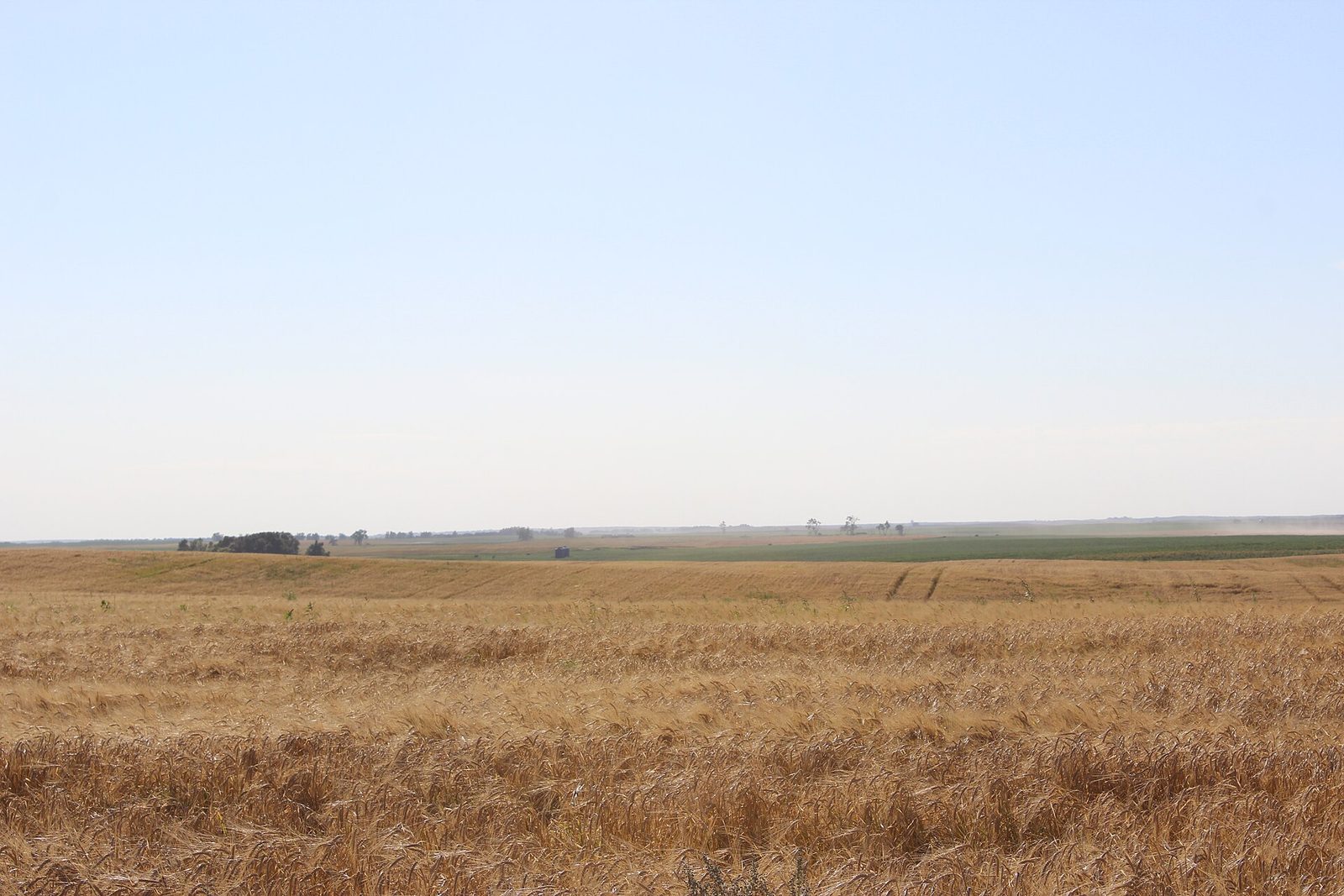
Grass is a special case. Its stems are stiffened with cellulose and lignin, tough materials that do not break down quickly. Once the living cells have died and dried, what is left is straw: light, hollow tubes that snap and blow about. The Qur'anic word for this stage, hashīm, describes exactly that: stalks dry enough to crumble in the hand and be carried by the wind.
Nothing in a meadow is wasted. The seeds fall or are carried off by birds, wind and animals' fur. Many lie in the soil for years in what ecologists call a seed bank, waiting for the right rain. Dead stalks become food for fungi, worms and beetles, and in time become soil. In deserts the cycle is compressed. After rare heavy rain, seeds that have waited for years can germinate together, as in Chile's Atacama 'flowering desert'. There a bare plain can turn pink and purple within weeks and then fade again.
So the science fills in the picture. Green life is borrowed from sunlight and water, real and abundant while it lasts. From the chemistry of the leaf to the life of the seed, it is built to pass on what it has and then let go. Scripture asks whether we are any different.
What each faith says
Judaism
“The grass withereth, the flower fadeth; because the breath of the LORD bloweth upon it; surely the people is grass. The grass withereth, the flower fadeth; but the word of our God shall stand for ever.”
Isaiah 40:7-8 · JPS 1917
The Hebrew Bible returns to grass again and again as the measure of a human life. In Psalm 103 a person's days 'are as grass', flourishing like a flower of the field until 'the wind passeth over it, and it is gone'. Psalm 102 says, 'My days are like a lengthening shadow; and I am withered like grass.' The most famous version comes from the prophet Isaiah, in chapter 40. It is a chapter of comfort, read in synagogues on Shabbat Nachamu, the “Sabbath of Comfort” after Tisha b'Av, the fast that mourns the destruction of the Temple.
What makes Isaiah's use of the image distinctive is its turn. The grass withers and the flower fades, but that is not the point of the passage; the point is what does not wither. Jewish teachers have read this as the heart of the matter: human glory is temporary, but God's word and covenant stand. The fading of the field is not a cause for despair but a reason to hold on to what lasts. The harvest has its own festival too. At Shavuot, the feast of the wheat harvest, synagogues read the Book of Ruth, the story of a young widow gleaning in the barley fields of Bethlehem.
Christianity
“All flesh is like grass, and all of man's glory like the flower in the grass. The grass withers, and its flower falls; but the Lord's word endures forever.”
1 Peter 1:24-25 · WEB
The New Testament takes Isaiah's words and uses them twice. The First Letter of Peter quotes the passage directly and adds that the word which endures is the good news preached to its readers. The Letter of James uses the same picture for wealth. The sun rises with its scorching heat, withers the grass and the flower falls, 'so also will the rich man fade away in his pursuits'.
Christian teachers have often linked the image to Jesus and his teaching on the lilies and the grass of the field. The grass 'today exists, and tomorrow is thrown into the oven' (Matthew 6:30), and yet the field is clothed more beautifully than Solomon. The message is double. Life is brief, so do not build your security on it. And the same God who clothes the brief grass so beautifully can be trusted with your life. The twelfth-century abbess Hildegard of Bingen had a word for that living green: viriditas, “greenness”, the freshness of God at work in everything that grows.
Islam
“The world is sweet and green, and God has placed you in it as successors, to see how you act.”
Muslim 2742 · our rendering
In the Qur'an the meadow is a parable, a mathal. The chapter does not say the world is worthless. It says the opposite of that and then something more. The rain is sent by God, and the green is a real gift. The verse ends by naming God as the One with power over all things, including the whole cycle from rain to straw.
Muhammad ﷺ (peace be upon him) used the same colour. 'The world is sweet and green,' he said, 'and God has placed you in it as successors, to see how you act' (Muslim 2742). Sweet and green: enjoy it, and do not mistake it for the destination. The verse that follows 18:45 draws the conclusion: wealth and children are the adornment of this life, but the good deeds that remain are better with your Lord.
Same and different
All three traditions look at the same field and draw the same first lesson: human life, glory and wealth are as brief as grass. They also agree that the brevity is not the last word. Judaism points to God's word that stands for ever. Christianity reads that word as the good news centred on Jesus. Islam points to God's power over the whole cycle and to the good deeds that remain. The difference lies in what each tradition says is the thing that lasts.
A moment to reflect
- What in your own life feels green right now, and what feels like it is turning gold?
- Is it comforting or unsettling to be compared to grass?
- If something lasts after the field has gone, what do you think it is?
- How would you live differently if you really believed a summer was short?
Watch
Two minutes on what really happens to the green when leaves change colour.
A clear explainer on chlorophyll, carotenoids and why plants let leaves go.
Slow footage of the year turning through spring, summer, autumn and winter.
Do it together
Pick one small patch of grass or verge near home or school and photograph it from the same spot once a month for a year. At the end, line the photos up and talk about what changed and what came back.
Read Isaiah 40:6-8, 1 Peter 1:24-25 and Qur'an 18:45 aloud in turn. Ask each person to finish the sentence: 'The thing that lasts is…'. Listen without arguing.
Crush a green leaf in a little surgical spirit, dip a strip of filter paper or coffee filter in it and wait. The pigments separate into bands of green and yellow, showing that the gold was there all along.
At Shavuot, in May or June, synagogues read the Book of Ruth. Read its second chapter together, where Ruth gleans barley and the farmer Boaz leaves extra for her on purpose. Then ask: who could we leave something extra for this week?
Each autumn, churches and schools across Britain hold harvest festivals, a custom popularised in Cornwall in 1843 by the vicar Robert Hawker. Go to one, and bring a gift for the local food bank, as many congregations now do.
Go deeper
- Qur'an 18:45 with translations · scripture
- Isaiah 40 (JPS 1917) on Sefaria · scripture
- 1 Peter 1 (WEB) on Bible Gateway · scripture
- Why autumn leaves change colour (Woodland Trust) · article
- Sahih Muslim 2742 on Sunnah.com · scripture
In pictures
Try this · KS3 · 40 min · Science
The hidden yellow in a leaf
You need: 2 or 3 green leaves (spinach works well), a coin, a strip of coffee filter paper, a small glass, surgical spirit (an adult pours it)
- Lay a leaf on the paper strip, 2 cm from the bottom, and rub hard with the edge of a coin to make a dark green line.
- An adult pours surgical spirit into the glass to about 1 cm deep.
- Stand the strip in the glass so the green line is just above the liquid.
- Wait 20 to 30 minutes. Watch the colours separate: greens, and a yellow band.
- The yellow was there all along, hidden under the green.
Safety: Surgical spirit is flammable: adults only, no flames anywhere nearby, open a window, keep it away from eyes.
The meadow turns from green to gold because the yellows were hidden in it all along: a picture of a life.
Check yourself
Three quick questions. No score, nothing saved.
1. What makes grass green?
2. Where do the autumn yellows come from?
3. What do the Qur'an, Isaiah and the New Testament compare a human life to?
Sources (4)
- Leaves contain chlorophyll (green), carotenes (yellow) and anthocyanins (red/pink); autumn colour comes from chlorophyll breakdown revealing other pigments: Woodland Trust, Why autumn leaves change colour, 2020
- Plants recover nitrogen from leaves during senescence before shedding them: Lim, Kim & Nam, Leaf senescence, Annual Review of Plant Biology, 2007
- Atacama 'flowering desert' after rare heavy rain: ESO, The Atacama Desert in bloom (image and caption)
- Hashīm means dry, broken stalks: Our own word study, 2026