Tonight, somewhere between ten and midnight, you will let go. Your eyes will close, your muscles will slacken, and for hours you will not be in charge of anything. Every night we hand ourselves over and trust that we will wake up.
Jellyfish do it. Fruit flies do it. Dolphins do it with half their brain at a time. As far as scientists can tell, everything with a nervous system needs to sleep. Which makes one line, said by millions of Muslims every night before bed, all the more striking: God is never drowsy, and never sleeps.
“Allah! There is no God save Him, the Alive, the Eternal. Neither slumber nor sleep overtaketh Him. Unto Him belongeth whatsoever is in the heavens and whatsoever is in the earth. Who is he that intercedeth with Him save by His leave? He knoweth that which is in front of them and that which is behind them, while they encompass nothing of His knowledge save what He will. His throne includeth the heavens and the earth, and He is never weary of preserving them. He is the Sublime, the Tremendous.”
Qur'an 2:255 · Pickthall (1930)
This is Āyat al-Kursī, the Verse of the Seat or Throne, in the second chapter of the Qur'an. Many Muslims learn it by heart as children. The word sina, “drowsiness”, means the light doze that comes before sleep. Classical scholars note that the verse rules out even that first heaviness of the eyes, and then sleep itself.
What science shows
Sleep turns up across the animal kingdom. In 2017, researchers at Caltech studied the upside-down jellyfish Cassiopea, which has no brain at all, only a simple net of nerves. Even so, it has a sleep-like state at night. It pulses more slowly, responds more sluggishly, and if it is kept awake it is drowsier the next day. Sleep seems to be very old and very widespread.
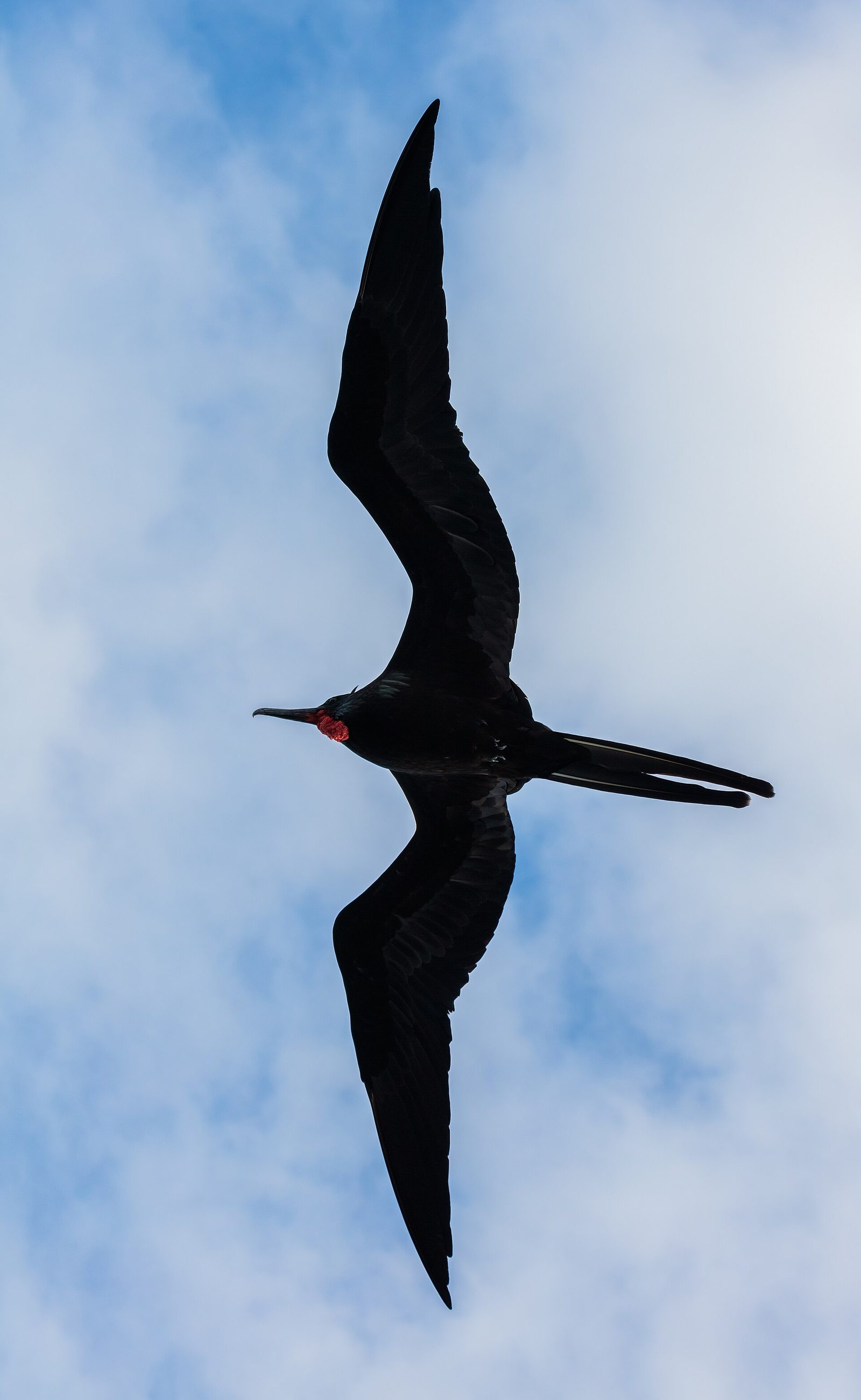
Animals have found clever ways to keep going. Dolphins and some seals can sleep with one half of the brain while the other half stays alert, so they can keep swimming and surfacing to breathe. Great frigatebirds fly over the ocean for days. In a 2016 study they were fitted with tiny brain sensors. In flight they slept for only about 41 minutes a day, in seconds-long bursts, sometimes with one half of the brain and sometimes with both.
Common swifts, which breed in Britain every summer, take this even further. A 2016 Swedish study found that some swifts stay airborne for ten months without landing, between leaving their nests in summer and returning the next year. They almost certainly sleep on the wing.
Humans spend roughly a third of their lives asleep, so someone who lives to 75 will have slept for about 25 years. The NHS says most adults need around seven to nine hours a night, and teenagers more. Going without sleep quickly harms attention, mood and memory.
Why we need sleep is still one of the open questions of biology. A 2013 study in mice suggested that sleep helps clear waste from the brain; a 2024 study in mice found the opposite. Scientists agree that sleep matters for memory, learning and health. What it is fully for, they are still working out. What they have never found is a living thing that does without it.
What each faith says
Judaism
“Behold, He that keepeth Israel Doth neither slumber nor sleep.”
Psalm 121:4 · JPS 1917
Psalm 121, one of the Songs of Ascents that pilgrims sang on the way up to Jerusalem, promises that the One who keeps Israel “doth neither slumber nor sleep”. It moves from the mountains to the One who made heaven and earth, and from day to night. The sun will not strike you by day, nor the moon by night.
The Hebrew Bible also uses sleep to mark the difference between God and idols. When the prophets of Baal cry out and nothing happens, Elijah mocks them: perhaps their god is asleep and must be woken (1 Kings 18:27). In Jewish homes, the bedtime prayers include words from the hymn Adon Olam: into His hand I entrust my spirit, when I sleep and when I wake.
Christianity
“He himself was in the stern, asleep on the cushion, and they woke him up.”
Mark 4:38 · WEB
The New Testament has a striking moment of sleep of its own. In Mark's Gospel, during a storm on the lake, Jesus is asleep on a cushion in the stern. The disciples wake him in terror, and he calms the wind. Christians read this as showing that Jesus was truly human, tired like anyone, and trusting enough to rest.
Christians pray Psalm 121 too. It is read at baptisms, before journeys and at funerals, and Compline, the night prayer of the Catholic and Anglican traditions, asks God to keep watch while we sleep. An old evening prayer often attributed to Augustine asks the Lord to watch with those who wake, or watch, or weep tonight. It asks him to give his angels charge over those who sleep.
Islam
“Neither slumber nor sleep overtaketh Him.”
Qur'an 2:255 · Pickthall (1930)
The Prophet Muhammad ﷺ (peace be upon him) called Āyat al-Kursī the greatest verse in the Book of God (reported in Muslim 810). Muslims recite it after each prayer and before sleep. A well-known hadith in Bukhari (2311) teaches that whoever recites it on going to bed will have a guardian from God over them until morning. We sleep; the One who guards us does not.
The verse joins two of the 99 Names: al-Ḥayy, the Ever-Living, and al-Qayyūm, the One who holds everything in being. Another hadith says simply: God does not sleep, and it does not befit Him to sleep (Muslim 179). For Muslims, this is a comfort rather than a puzzle: every night, as we let go, nothing is left unattended.
Same and different
Judaism and Islam say the same thing in almost the same words, and Christians pray the Jewish psalm that says it. Each treats bedtime as a moment of trust. Islam is the one that makes the line a nightly habit: many Muslims recite the Throne Verse before sleep, where Jews say the bedtime Shema and Christians pray Compline. The deepest difference is about God and human weakness. Christians believe God became human in Jesus, so the Gospels can show him asleep, and they see in that a God who shares our weakness. Jews and Muslims stress that God is never subject to it, and that this is exactly what makes Him safe to trust.
A moment to reflect
- What does it feel like to let go of control every night? Do you find it easy or hard?
- Who or what keeps watch over you while you sleep, in a practical sense? Who do you keep watch for?
- Why might it be comforting that God does not sleep? Could it ever feel uncomfortable?
- What do you think sleep is for?
Watch
What happens in the brain and body during a good night's sleep.
A two-minute answer to how dolphins sleep without drowning.
What happens to people who go without sleep.
Do it together
Share the bedtime words of each faith: the Shema and Adon Olam, a night prayer from Compline, and Āyat al-Kursī. Talk about what each asks for, and what they have in common.
In May to July, look up at dusk over rooftops for screaming parties of swifts. Remind each other that some of them have not landed since last summer. The RSPB has a free guide to spotting them.
For one week, everyone notes when they went to sleep, when they woke and how they felt. Compare with the NHS guidance and talk about what helps a good night.
Go deeper
- Qur'an 2:255 with translations · scripture
- Psalm 121 (JPS 1917) on Sefaria · scripture
- Rattenborg et al. 2016, birds sleep in mid-flight · paper
- NHS: How to get to sleep · article
- Mark 4 (WEB) on Bible Gateway · scripture
In pictures



Try this · KS2 · 10 min · Maths
The heart that keeps time
You need: a stopwatch, a calculator, a notebook
- Find your pulse on your wrist or neck.
- Count the beats for 15 seconds, then multiply by 4 to get beats per minute.
- Work out beats per hour (× 60) and per day (× 24).
- Your heart kept going all last night while you slept. Who looks after you while you rest?
Every living thing we know must rest. The Throne Verse and Psalm 121 describe the One who never does.
Sources (7)
- Cassiopea jellyfish has a sleep-like state: Nath et al., Current Biology, 2017
- Unihemispheric sleep in dolphins and seals: Rattenborg, Amlaner & Lima, Neuroscience & Biobehavioral Reviews, 2000
- Frigatebirds sleep about 0.69 hours a day in flight: Rattenborg et al., Nature Communications, 2016
- Common swifts airborne for 10 months: Hedenström et al., Current Biology, 2016
- Sleep and brain clearance: 2013 finding: Xie et al., Science, 2013
- Sleep and brain clearance: 2024 contrary finding: Miao et al., Nature Neuroscience, 2024
- Adults need around 7 to 9 hours: NHS, Sleep and tiredness