A mature hurricane releases heat energy, by one NOAA estimate, equivalent to about 200 times the world's entire electricity-generating capacity. It can flatten towns. It cannot cross a cold sea.
We are fascinated by power: who has it, how much, how long. Al-Qādir, the All-Capable, names a power that needs no fuel, no effort and no time.
Start with what we know
Start with something we know. Then take away everything it needs. What is left is not a bigger version of us: it is the Name.
Episode 1
In us
A resting adult gives off about 100 watts of heat, roughly the same as an old-fashioned light bulb. At full effort, a top cyclist can produce more than 1,000 watts in a sprint, but only for a few seconds. Human power is limited by food, oxygen and rest. We have learned to multiply it with tools, engines and electricity, but we still have to be fed, and we still get tired. Our greatest strength is ingenuity, not power. Everything we can do, we can do only with means, and only for a while.
Episode 2
In nature
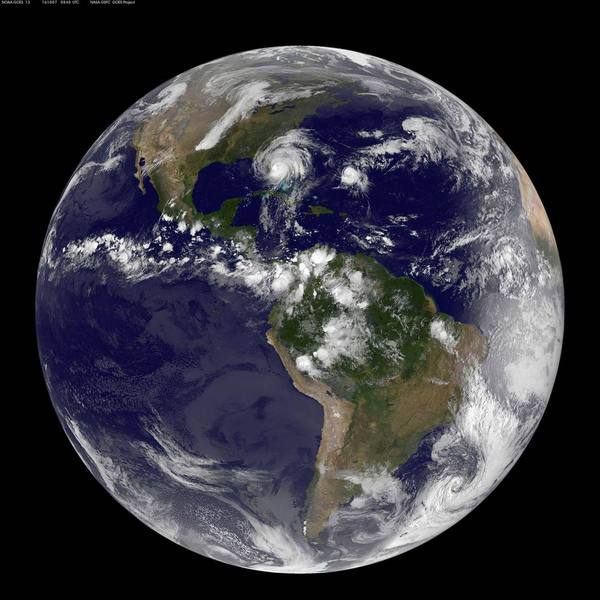
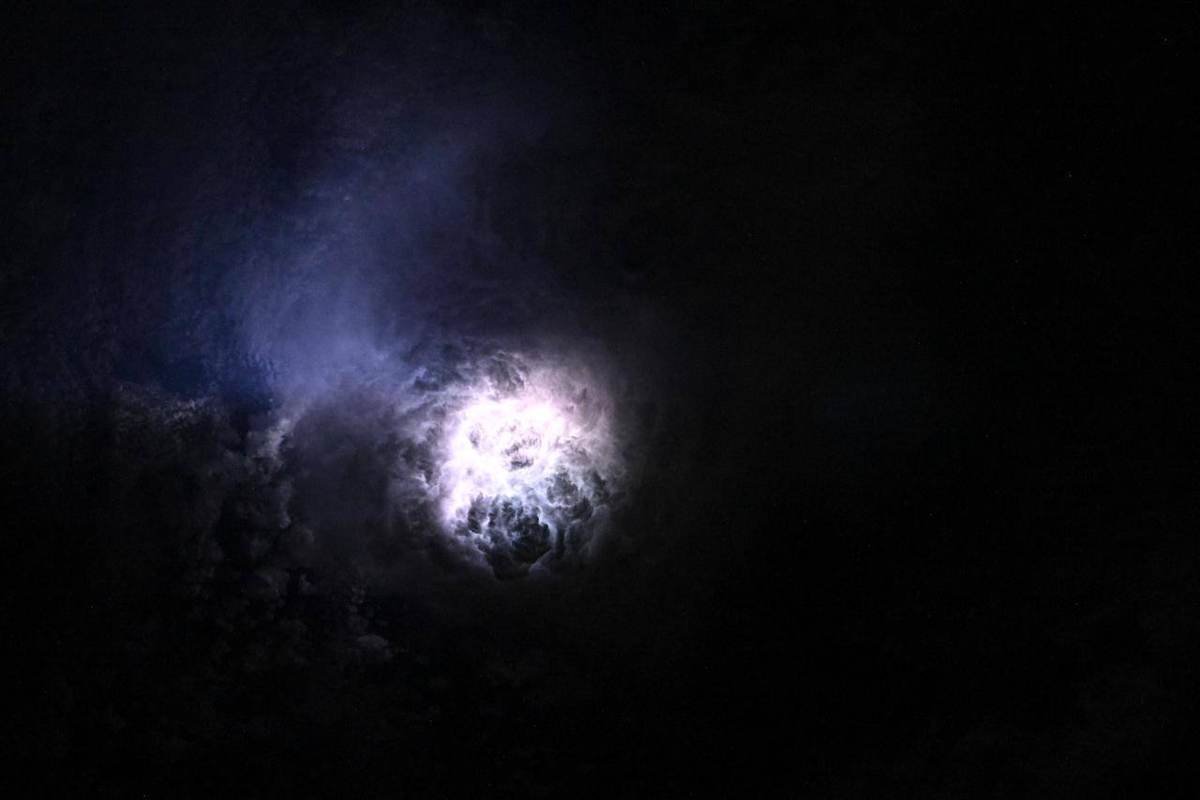
Hurricanes are among the most powerful things on Earth. NOAA's Hurricane Research Division estimates that a typical hurricane releases heat through cloud and rain formation at a rate equivalent to about 200 times the worldwide electrical generating capacity. Its winds can top 250 kilometres an hour. Yet a hurricane is entirely dependent on warm ocean water, at least 26 °C, to keep going. Over land or cold sea it weakens within hours. The most powerful things in nature need fuel, and run out.
Episode 3
At our best
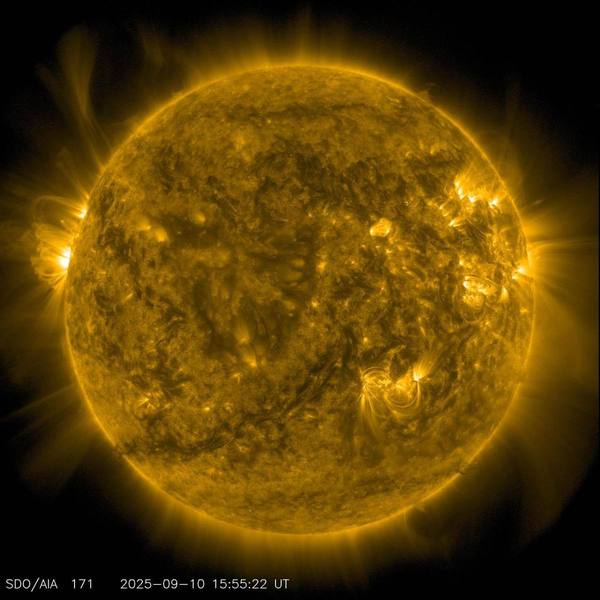
On 7 April 2025 the National Ignition Facility in California fired 2.08 megajoules of laser energy into a tiny fuel capsule. It got 8.6 megajoules of fusion energy back, a gain of more than four. It is a historic step towards the power of the stars. But it needs the world's largest laser, a building the size of three football pitches, and months between shots. The Sun, meanwhile, releases 3.828 × 10²⁶ joules every second. Even our greatest power is a spark beside what we did not make.
Episode 4
The Break
Every power we know costs effort, fuel, means and time, and meets resistance. It is a quantity: so many watts, for so long, from this source. Al-Qādir is not the top of that scale. His power is not measured in units at all. The Qur'an describes it in two words: “But His command, when He intendeth a thing, is only that He saith unto it: Be! and it is.” (Qur'an 36:82, Pickthall). And the Prophet (peace be upon him) said God wrote that His mercy outweighs His anger (Bukhari 3194): this power is held with mercy.
When Mary (peace be upon her) was a young woman devoted to prayer, an angel came to her with news. The Qur'an tells how he greeted her. God gives you good news of a word from Him, whose name will be the Messiah, Jesus (peace be upon him), son of Mary.
Mary asked the question anyone would ask. “My Lord, how can I have a child when no man has touched me?”
The answer came: “He said: So (it will be). Allah createth what He will. If He decreeth a thing, He saith unto it only: Be!” (Qur'an 3:45-47 · Pickthall)
Luke's Gospel tells the same moment. Mary asks, “How can this be?” and the angel Gabriel answers, “Nothing spoken by God is impossible” (Luke 1:34-37).
Christians and Muslims understand who Jesus is very differently. For Christians he is the Son of God; for Muslims he is a great prophet and messenger, born without a father as a sign of God's power. But on this scene they stand close together. A young woman asks how, and the answer is not a method. It is al-Qādir. The site's page on Mary tells the story more fully.
When Sarah laughed at the promise of a son in old age, the reply came as a question: “Is any thing too hard for the LORD?” (Genesis 18:14). The Torah names God El Shaddai, often translated God Almighty, when making His promises to Abraham, Isaac and Jacob.
Jewish teaching connects God's power with His care. The Amidah's second blessing praises God as mighty, and in the same breath as the One who “supports the falling, heals the sick and frees the captive”.
The Apostles' Creed begins: “I believe in God, the Father Almighty, creator of heaven and earth.” The Greek word behind 'Almighty', Pantokrator, means the ruler of all.
Christians often meet God's power in the story of Mary in Luke 1, where Gabriel's last words are about it. Mary's song that follows praises God because “he who is mighty has done great things for me”.
Mary's song, the Magnificat, is sung or said every evening at Anglican Evensong and Catholic Vespers, so that a young woman's praise of God's power ends the Church's day.
Islam
“Is not He Who created the heavens and the earth Able to create the like of them? Aye, that He is! for He is the All-Wise Creator.”
Al-Qādir and the related qadīr, “All-Capable”, appear many times in the Qur'an, often at the end of a verse: “The lightning almost snatcheth away their sight from them. As often as it flasheth forth for them they walk therein, and when it darkeneth against them they stand still. If Allah willed, He could destroy their hearing and their sight. Lo! Allah is able to do all things.” (2:20, Pickthall). The question in 36:81 is typical: “Is not He who created the heavens and the earth able to create the like of them? Yes indeed.”
Muslims express trust in God's power with lā ḥawla wa lā quwwata illā billāh, and are taught that His power is always joined with wisdom and mercy.
Same and different
All three traditions call God Almighty and tie His power to care for the weak. All three tell the story of a son promised against the odds. Christians and Muslims share the story of Mary and the birth of Jesus, but differ deeply on who he is. Jews do not hold the Christian or Muslim beliefs about Jesus.
A moment to reflect
What is the most powerful thing you have ever seen in nature?
Is power more trustworthy when it comes with mercy? Why?
What would you do with a little more power, and what would stop you misusing it?
Watch
Lawrence Livermore's own film on the National Ignition Facility achieving fusion ignition.
Brian Cox on the energy of stars and the long future of the universe.
Do it together
schools / familiesPower hunt
Find the wattage on household things: kettle, phone charger, light bulb. Compare with the 100 watts a resting person gives off and with the Sun's 3.8 × 10²⁶. Talk about what we can and cannot do with power.
faith groupsTwo annunciations
Read Luke 1:26-38 and Qur'an 3:42-47 side by side, with a Christian and a Muslim each explaining what the story means to them. Listen for both the overlap and the real differences.
families / faith groups / neighboursSarah's laugh
Read Genesis 18:1-15, where Sarah laughs at the promise of a son in old age and hears, “Is any thing too hard for the LORD?” Each person names something they once thought impossible that happened anyway, and something they still laugh at the thought of.
 Episode 1