People in a 2018 study wrote a short thank-you letter to someone who had helped them. Two psychologists asked them to guess how the recipient would feel. Then they asked the recipients. The writers had badly underestimated it. People who received the letters felt far more surprised and happy than the writers expected, and much less awkward (Kumar and Epley, 2018).
We are bad at thanking, and worse at guessing how much thanks matters. Ash-Shakūr is the Appreciative: the One who notices the smallest good. He rewards it far beyond its size, and sees the kindnesses no one else does.
Start with what we know
Start with something we know. Then take away everything it needs. What is left is not a bigger version of us: it is the Name.
Episode 1
In us
Kumar and Epley's study found one big reason people do not send thanks. They think it will not matter much, or that they will not find the right words. The recipients did not care about the words; they cared that someone had noticed. Gratitude is one of the best things we do. But we mostly thank big, visible kindnesses. The neighbour who takes in parcels, the cleaner who comes in at five, the stranger who held a door: most small goods go unthanked. Even our best thanks rarely matches what was given.
Episode 2
In nature
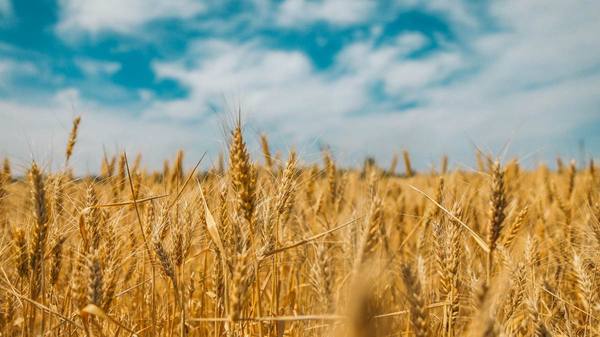
Plant one grain of wheat in good soil and it can grow into a plant with several stalks, each carrying an ear of dozens of grains. The Qur'an uses this picture as a parable for generosity: a grain that grows seven ears, with a hundred grains in each (2:261). Real wheat does not usually yield seven hundred from one seed, and the verse does not claim to be farming advice. But the image is real: nature multiplies what is sown. It does so only with soil, sun and rain, though, and a dry year can return almost nothing.
Episode 3
At our best
Since 1866, London's blue plaques have marked the houses where remarkable people lived and worked. English Heritage now cares for more than 1,000 of them, from scientists and writers to campaigners (English Heritage). It is one of the gentlest ways a city says thank you. But the rules are strict: a person must usually have died at least twenty years ago and be widely known. The carer who sat up with a dying neighbour, the dinner lady who knew every child's name, will never get a plaque. Our thanks reaches the famous, late.
Episode 4
The Break
Drop the guessing about whether thanks will matter, the dry year, the twenty-year rule, the need to be famous. Every thanks we give is small, late, or aimed at what is big and visible. Ash-Shakūr notices the smallest good no one else saw. He gives back far more than was given. “If ye lend unto Allah a goodly loan, He will double it for you and will forgive you, for Allah is Responsive, Clement.” (Qur'an 64:17, Pickthall).
The Prophet Muhammad ﷺ (peace be upon him) told this story.
A man was walking along a road in the heat and became desperately thirsty. He found a well, climbed down into it, drank and came back up. At the top he saw a dog panting, licking the damp earth out of thirst.
The man said to himself: “This dog is as thirsty as I was.” He climbed back down the well and filled his leather sock with water. Holding it in his teeth, he climbed back up and gave the dog a drink.
“God thanked him for it,” the Prophet said, “and forgave him.”
His companions were surprised. “Messenger of God, is there a reward for us even in animals?” He answered: “In every living creature with a moist liver, there is a reward” (Bukhari 2363; Muslim 2244).
The Arabic for ‘God thanked him’ is fa-shakara llāhu lahu, from the same root as ash-Shakūr. No one else saw the man at the well. The dog could not say thank you. But the deed was noticed, and thanked, by the One who notices everything.
What each faith says
Read:
Judaism
“The LORD recompense thy work, and be thy reward complete from the LORD, the God of Israel, under whose wings thou art come to take refuge.”
In the Hebrew Bible, God notices and rewards small goodness everywhere. When Boaz meets Ruth, a poor foreign widow gleaning in his fields, he blesses her for her loyalty to her mother-in-law, and prays that God will reward her fully.
The Mishnah teaches that you should be as careful with a ‘light’ commandment as with a ‘weighty’ one, because you do not know the reward of each (Pirkei Avot 2:1).
Thanks runs through Jewish prayer. Three times a day the Amidah bows at the word Modim, ‘We give thanks to You’, for the miracles that are with us every day. The Shabbat prayer Nishmat goes further. Even if our mouths were as full of song as the sea, it says, we could not thank God enough for one kindness in a thousand.
Christianity
“For God is not unrighteous, so as to forget your work and the labour of love which you showed towards his name”
Jesus said that even a cup of cold water given to a little one would not go unrewarded. He praised a poor widow who gave two tiny coins as giving more than all the rich.
The letter to the Hebrews reassures believers that God does not forget the love they have shown.
The General Thanksgiving in the Book of Common Prayer, still said in Anglican churches, thanks God “for our creation, preservation, and all the blessings of this life”.
Islam
“And whoso doeth good an atom's weight will see it then.”
Ash-Shakūr appears four times in the Qur'an, paired with al-Ghafūr (35:30, 35:34; 42:23) and with al-Ḥalīm (64:17). Classical scholars said He rewards a small deed with a great reward, and a short life of obedience with lasting good.
The Qur'an says that whoever does good the weight of a dharrah, the tiniest speck, will see it (99:7). Early commentators explained the dharrah as a small ant or a speck of dust in a sunbeam: a picture of the smallest thing imaginable.
Same and different
All three faiths teach that God sees and rewards small, hidden acts of goodness: Ruth's loyalty, the widow's coins, the cup of water, the man at the well. Islam gives this a Name, ash-Shakūr, the One who ‘thanks’. Judaism and Christianity speak instead of God remembering and rewarding. They differ in what the final reward is and how it is given, but agree that no good is too small to be seen.
A moment to reflect
Who has done something kind for you that you never thanked them for?
Is there something good you do that no one ever notices? Does it matter?
How would it change your day to believe the smallest kindness counts?
Watch
An explainer on the 2018 gratitude letter study: the hook and ‘In us’ rung.
A wheat plant growing from seed to ear in time-lapse: the ‘In nature’ rung.
English Heritage celebrates 150 years of London's blue plaques: the ‘At our best’ rung.
Each person writes a short letter to someone who helped them and never got thanked: a teacher, a neighbour, a bus driver. Before sending, guess how they will feel on a scale of 1 to 10. Then deliver it.
neighbours / community groupsA plaque for the unsung
Make a paper ‘blue plaque’ for someone in your street or group who quietly does good (with their permission), and put it on a community noticeboard.
familiesEveryday miracles
The Amidah thanks God for miracles ‘that are with us every day’. Over dinner, each person names three ordinary daily miracles: hot water, a friend's joke, the bus that came.
faith groups / schoolsA general thanksgiving
Read the Book of Common Prayer's General Thanksgiving aloud, then write your group's own version in plain words: what are you thankful for that nobody ever mentions?
Beyond the Abrahamic family, other traditions reach for something like this. Each in its own words; we connect, never rank.
Indigenous
For all the love that is still around us, we gather our minds together as one and send our choicest words of greetings and thanks to the Creator.
Haudenosaunee Thanksgiving Address (Ohén:ton Karihwatéhkwen), Kanien'kehá:ka version by Charles Patton and Eileen Sawyer Patton · McGill University (short quotation, credited)
 Episode 1