Everyone has done it. The sky lights up, and without thinking you start counting: one, two, three, four… and then the crack, or the long rolling boom that seems to shake the windows. Children hide under duvets. Dogs go under tables. Even adults who know exactly what it is go quiet for a second.
There is a chapter of the Qur'an named after that sound: Surah al-Raʿd, The Thunder. And in it is one of the most surprising lines in scripture. The thunder, it says, is not just noise. It is praising God.
“He it is Who showeth you the lightning, a fear and a hope, and raiseth the heavy clouds. The thunder hymneth His praise and (so do) the angels for awe of Him. He launcheth the thunderbolts and smiteth with them whom He will while they dispute (in doubt) concerning Allah, and He is mighty in wrath.”
Qur'an 13:12-13 · Pickthall (1930)
Surah al-Raʿd (The Thunder), chapter 13, is full of signs in nature. It names the sky raised without visible pillars, the earth spread out, rivers, fruits and 'neighbouring plots' watered alike. 'Fear and hope' describes exactly how desert people felt about lightning: danger, but also the promise of rain. The lexicographer al-Rāghib al-Iṣfahānī, who wrote a famous dictionary of the Qur'an's words around 1100, calls raʿd, “thunder”, 'the voice of the clouds'. Muslims who read 'the thunder glorifies Him' usually connect it with 17:44: everything in creation praises God, though we do not understand its praise.
What science shows
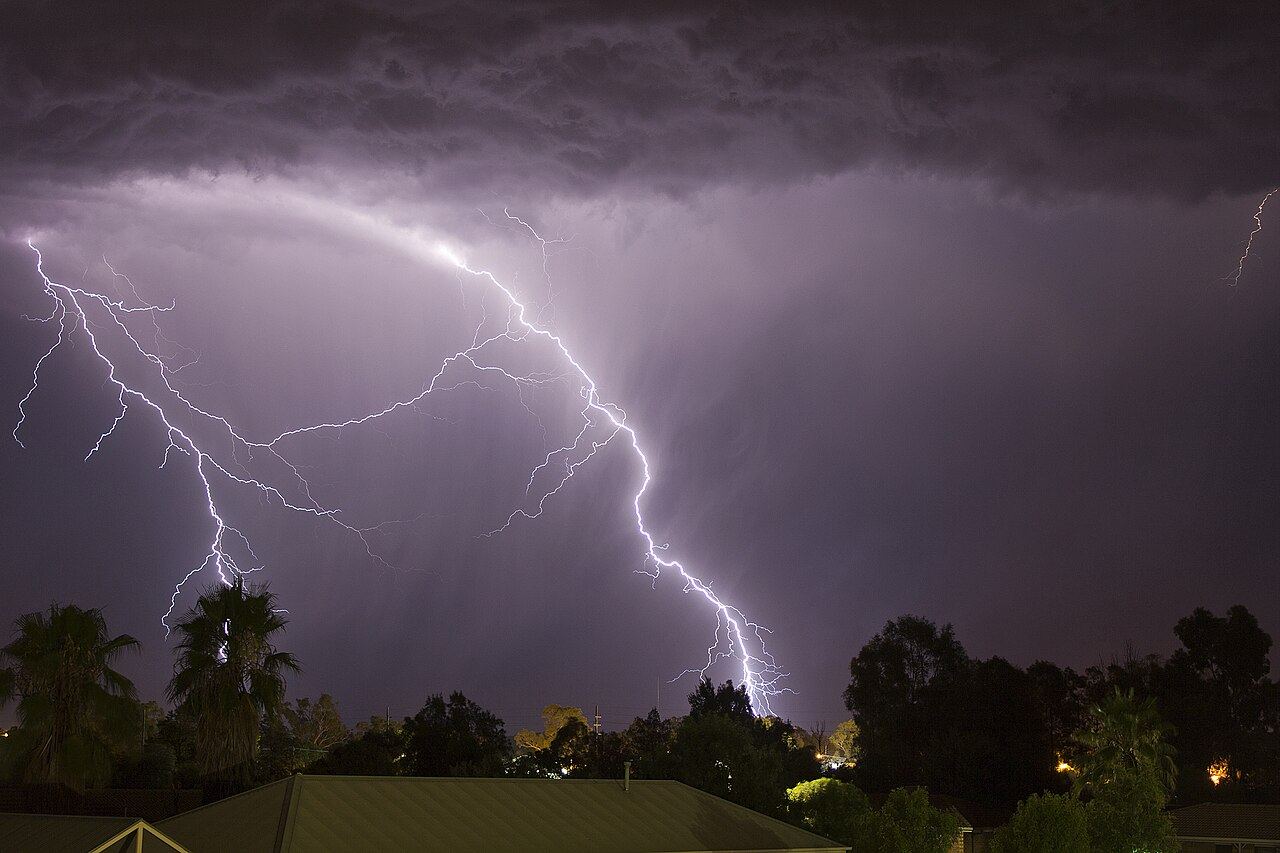
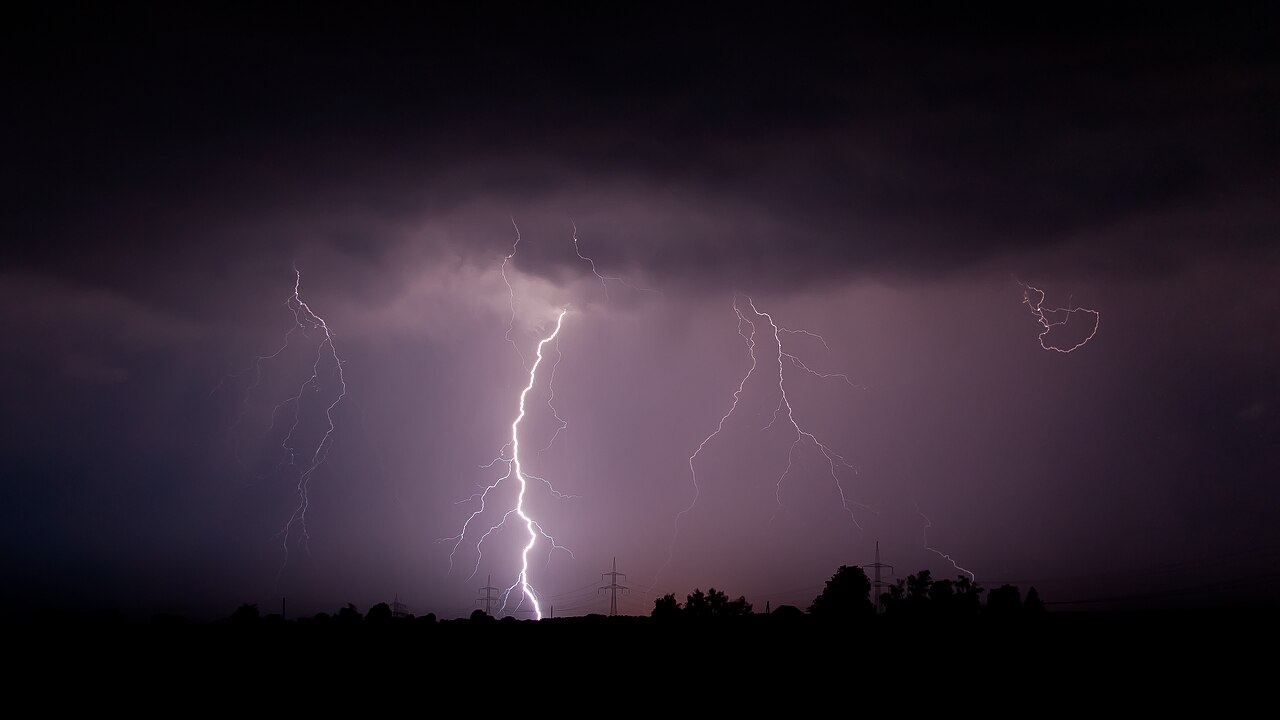
Thunder is the sound of lightning. A lightning flash is a giant electric spark between parts of a cloud, or between a cloud and the ground. According to the US National Weather Service, it heats the air in its narrow channel to as much as 50,000 degrees Fahrenheit, about 28,000 °C. That is about five times hotter than the surface of the Sun. The air expands violently, then cools and contracts just as fast. That sudden push and pull of air creates the sound wave we hear as thunder.
Light travels through the air roughly a million times faster than sound, so you see the flash almost instantly but hear it later. That is why counting works. NOAA's National Severe Storms Laboratory explains that sound travels about a third of a kilometre a second: divide the seconds by three for the distance in kilometres. A ten-second gap means the lightning was about three kilometres away.
Why does thunder rumble instead of going bang? Because a lightning channel can be several kilometres long. Sound from the nearest part reaches you first as a sharp crack, and sound from parts further away arrives over the next few seconds. So you hear a long roll that fades into a low rumble. Thunder can usually be heard only about 10 miles (16 km) away, so if you can hear it at all, you are close enough to be struck.
Lightning is far more common than most people realise. Satellites watching from orbit found that around 44 lightning flashes happen somewhere on Earth every second on average (Christian and colleagues, Journal of Geophysical Research, 2003). Most of them are over land in the tropics. The US alone has about 25 million flashes a year. NASA astronauts on the International Space Station film storms flickering across whole continents at night.
So the science is clear about what thunder is: heated air, moving fast. What it cannot say is what the sound means. That is the question the verse answers, and it is a question for the listener, not the laboratory.
What each faith says
Judaism
“The voice of the LORD is upon the waters; the God of glory thundereth, even the LORD upon many waters. The voice of the LORD is powerful; the voice of the LORD is full of majesty.”
Psalm 29:3-4 · JPS 1917
Psalm 29 is a psalm of the storm. Seven times it repeats 'the voice of the LORD': upon the waters, breaking the cedars, hewing out flames of fire, shaking the wilderness. It ends with the whole Temple answering: 'in His temple all say: Glory.' Jews sing this psalm every Friday evening as the Sabbath begins, welcoming rest with the sound of thunder.
At Mount Sinai, the Torah says, the giving of the Law began with 'thunders and lightnings and a thick cloud upon the mount', and the people trembled (Exodus 19:16). The Mishnah (Berakhot 9:2) gives a blessing to say when you hear thunder: 'Blessed are You, LORD our God, King of the universe, whose strength and might fill the world.' A storm becomes a moment of praise.
Christianity
“'Father, glorify your name!' Then a voice came out of the sky, saying, 'I have both glorified it and will glorify it again.' Therefore the multitude who stood by and heard it said that it had thundered.”
John 12:28-29 · WEB
Christians pray Psalm 29 and the storm poems of the Hebrew Bible as their own. The New Testament has a striking moment in John's Gospel: Jesus prays, 'Father, glorify your name', and a voice comes from the sky. Some in the crowd say it was thunder; others say an angel spoke. The Gospel leaves the question open: the same sound, heard as noise by some and as a word by others.
Jesus gave two of his disciples, James and John, the nickname Boanerges, 'Sons of Thunder' (Mark 3:17), probably for their fiery temperament. And in the Book of Revelation, lightnings and thunders come out from the throne of God (Revelation 4:5). Christian art and music, from Handel to hymn-writers, have returned to that picture of God's majesty again and again. The Swedish pastor Carl Boberg wrote the poem behind How Great Thou Art after a thunderstorm in 1885. Congregations around the world still sing of the thunder in its English version.
Islam
“The seven heavens and the earth and all that is therein praise Him, and there is not a thing but hymneth His praise; but ye understand not their praise. Lo! He is ever Clement, Forgiving.”
Qur'an 17:44 · Pickthall (1930)
ʿĀmir, son of ʿAbdullāh ibn al-Zubayr, a Companion of the Prophet, would stop talking whenever he heard thunder. He would say: 'Glory be to Him whom the thunder glorifies with His praise, and the angels, in awe of Him' (Muwaṭṭaʾ Mālik, book 56, hadith 26). The Muwaṭṭaʾ is the early collection of Imam Mālik of Medina. ʿĀmir had turned the verse itself into a prayer. Many Muslims still say it today when a storm breaks. Some classical commentators also mention reports that an angel drives the clouds and the thunder is its voice. Others take the verse more simply, as the praise all creation gives by being what it is.
Either way, the verse sits inside a bigger Qur'anic idea: nothing is silent before God. 'The seven heavens and the earth and all that is therein praise Him, and there is not a thing but hymneth His praise; but ye understand not their praise. Lo! He is ever Clement, Forgiving.' (17:44, Pickthall). Thunder is just the loudest example. The chapter's warning is in the same verse: people argue about God while the sky itself is declaring His power.
Same and different
All three traditions hear more than noise in thunder. Jews say a blessing to the One whose strength fills the world. Christians pray Psalm 29 and remember the voice that some heard as thunder. Muslims repeat the words of Qur'an 13:13 when a storm breaks. They differ in emphasis. The Hebrew Bible speaks of thunder as God's own voice; the Gospel story links a voice from heaven to Jesus; the Qur'an says thunder itself, like all creation, praises God.
A moment to reflect
- What do you feel when you hear thunder, and has that changed since you were small?
- Is it possible for something to praise God just by being what it is?
- Has something ordinary ever sounded like a message to you, when others heard only noise?
- What is the loudest thing in your life that might actually be saying something?
Watch
BBC Earth Science on how and why lightning happens.
National Geographic's short guide to the science of lightning.
NOAA explains what causes lightning, step by step.
NASA watches lightning from the International Space Station.
Do it together
Next time there is a storm, sit safely indoors by a window with a stopwatch. Time the gap between flash and thunder, divide by three and track whether the storm is coming closer or moving away.
Learn the three thunder prayers together: the Jewish blessing from Berakhot 9:2, Psalm 29, and the words of Qur'an 13:13. Talk about what it changes to say something when you are frightened.
Pop a balloon at one end of a playing field while a partner at the other end raises a hand at the flash of movement and again at the sound. Measure the delay and work out the speed of sound.
Listen to or sing How Great Thou Art, the hymn that began as a Swedish poem written after a thunderstorm. Then share the sound in nature that most fills you with awe, and why.
Go deeper
- Qur'an 13:12-13 with translations · scripture
- Psalm 29 (JPS 1917) on Sefaria · scripture
- John 12 (WEB) on Bible Gateway · scripture
- NWS: Understanding lightning, thunder · article
- NSSL: Severe weather 101, lightning · article
- Muwatta Malik 56:26 on Sunnah.com · scripture
In pictures
Try this · KS2 · during a storm · Science
How far away is the storm?
You need: a watch with seconds, or count steadily, a notebook
- From indoors, watch for a flash of lightning.
- Count the seconds until you hear the thunder.
- Divide the number of seconds by 3. That is roughly how many kilometres away the storm is.
- Do it again. Is the storm coming closer or moving away?
Safety: Stay indoors during a thunderstorm and keep away from windows if it is close.
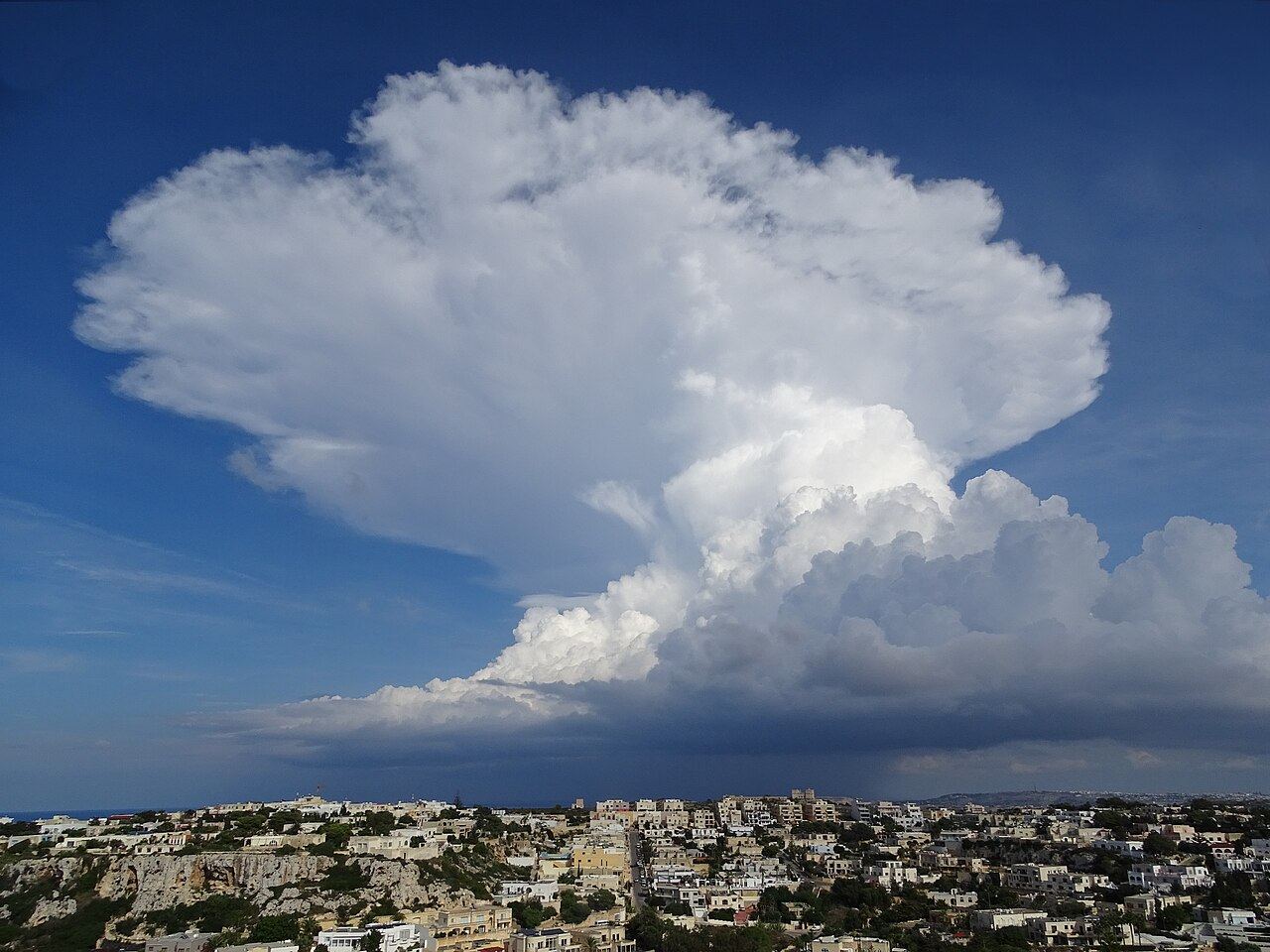
A flash, a count of seconds, then the roll: the Qur'an hears praise in it, and physics hears air torn open by heat.
Sources (5)
- Lightning heats air to up to 50,000 °F, five times hotter than the Sun's surface; rapid expansion and contraction makes thunder; heard up to about 10 miles: US National Weather Service, Understanding Lightning: Thunder
- Light travels about a million times faster than sound; divide seconds by 3 for kilometres; distant parts of the flash give the rumble: NOAA National Severe Storms Laboratory, Severe Weather 101: Lightning
- About 25 million lightning flashes a year in the US: US National Weather Service, Understanding Lightning Science
- About 44 lightning flashes per second worldwide, mostly over tropical land: Christian et al., Journal of Geophysical Research, 2003
- Al-Rāghib: raʿd is 'the voice of the clouds'; Ibn Kathir links 13:13 to 17:44: Our own word study, 2026