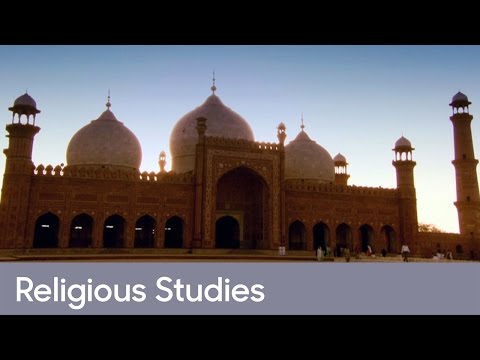
Visit six places of worship on the same weekend and watch people's bodies. In a synagogue, people stand and sway gently, murmuring. In a mosque, rows of people stand shoulder to shoulder, then bow, then press their foreheads to the carpet. In a gurdwara, people sit cross-legged with their heads covered while musicians sing. In a mandir, a flame is circled in front of the shrine and a bell rings. In a church, people kneel, stand, sit and sing. In a Quaker meeting house, a roomful of people sit in silence for an hour.
Every one of them is praying. Prayer turns out to be something people do with their whole selves.
“HEAR, O ISRAEL: THE LORD OUR GOD, THE LORD IS ONE. And thou shalt love the LORD thy God with all thy heart, and with all thy soul, and with all thy might.”
Deuteronomy 6:4–5 · JPS 1917
This is the Shema, said by Jews every morning and evening and, by tradition, as the last words before death. Jesus quoted the same words as the first commandment (Mark 12:29–30). The Qur'an's short chapter al-Ikhlas (112) also begins by saying that God is One.
If you visit
Shoes come off in mosques, gurdwaras, mandirs and Buddhist temples. Everyone covers their head in a gurdwara: scarves are usually provided. Women are often asked to cover their hair in a mosque, and men may be offered a kippah in a synagogue. In a mosque, don't walk directly in front of someone who is praying. In a church, visitors are welcome at services but usually do not take Communion unless invited. In a Quaker meeting, sit anywhere and simply be quiet. In any of them, ask: hosts are almost always glad to explain.
What each faith says
Judaism
“The LORD is nigh unto all them that call upon Him, To all that call upon Him in truth.”
Psalm 145:18 · JPS 1917
Jews pray three times a day: morning, afternoon and evening, from a prayer book called the siddur. Twice a day they say the Shema, often covering their eyes. The heart of each service is the Amidah, ‘the standing prayer’, said on your feet, facing Jerusalem, in a whisper, following Hannah's example. Some prayers need a minyan, a group of ten adults. Many Jews also pray in their own words at any time.
Christianity
“Our Father in heaven, may your name be kept holy. Let your Kingdom come. Let your will be done on earth as it is in heaven. Give us today our daily bread. Forgive us our debts, as we also forgive our debtors. Bring us not into temptation, but deliver us from the evil one.”
Matthew 6:9–13 · World English Bible (British Edition), public domain
When his disciples asked Jesus to teach them to pray, he gave them the Lord's Prayer, said by Christians of every church. Christian prayer takes many forms. Catholic and Anglican services follow set words. Orthodox worshippers stand before icons, with incense and chant. In many Pentecostal and Black-majority churches, prayer is spontaneous and loud, with the whole congregation joining in.
Quakers, the Religious Society of Friends, meet in silence, waiting together. Anyone who feels moved may stand and speak briefly, then the silence returns.
Islam
“And when My servants question thee concerning Me, then surely I am nigh. I answer the prayer of the suppliant when he crieth unto Me. So let them hear My call and let them trust in Me, in order that they may be led aright.”
Qur'an 2:186 · Pickthall (1930)
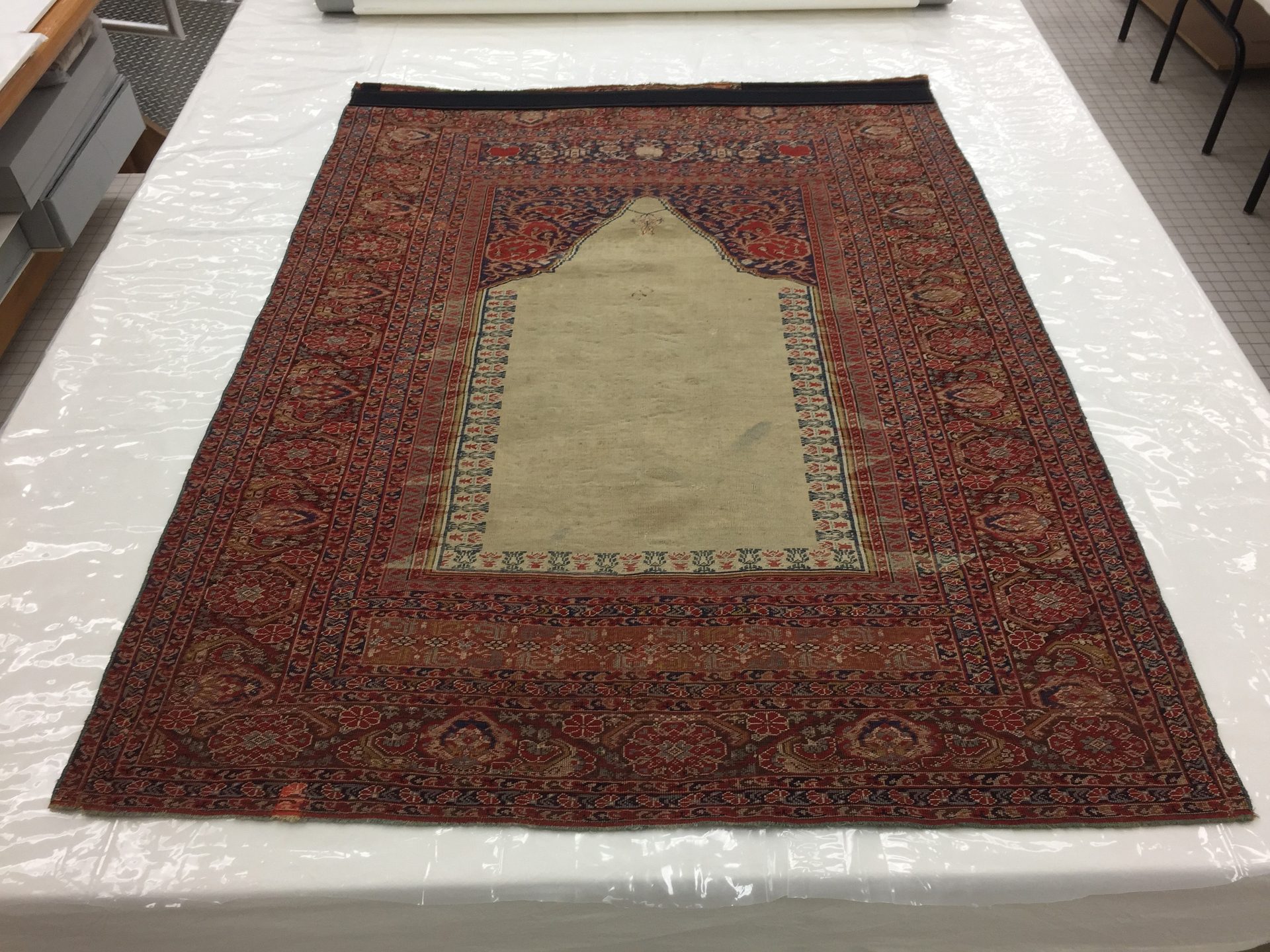
Muslims pray salah five times a day, at times set by the Sun: dawn, midday, afternoon, sunset and night. First they wash in a set way, called wudu. Then they face the Ka'bah in Makkah and move through standing, bowing, prostrating and sitting, saying the words in Arabic. Every cycle begins with al-Fatiha, the Qur'an's opening chapter, which praises the Lord of all the worlds and asks to be guided on the straight path. On Fridays, Muslims gather for jumu'ah, the congregational prayer with a sermon.
Alongside the set prayer is du'a: asking God for anything, in any language, at any time.
Without religion
Many people with no religion meditate, keep a moment of quiet each day, or write down what they are grateful for. And once a year, on Remembrance Sunday, the whole country falls silent together for two minutes: people of every faith and none, side by side.
Sikhi
“One Creator. Whose Name is Truth. The Maker. Without fear. Without hate. Beyond time. Never born. Self-existent. Known by the Guru's grace.”
Guru Granth Sahib, ang 1 (Mul Mantar) · our rendering
Many Sikhs rise before dawn to recite Japji Sahib, Guru Nanak's great hymn, the first of their daily prayers, called Nitnem. In the gurdwara, the Guru Granth Sahib sits on a raised throne under a canopy. Musicians sing its hymns, which is called kirtan. The service ends with Ardas, a prayer said standing, and everyone receives karah prashad, a sweet offering, before going to the langar. Japji begins with the Mul Mantar, the ‘root verse’.
Hindu traditions
Puja, worship, often happens at a home shrine as well as in the mandir. Flowers, food, water and incense are offered. In aarti, a lamp is circled before the image of the deity while people sing. Food offered in puja comes back as prasad, a blessing to share. Many Hindus speak of darshan: seeing the divine, and being seen. Many begin the day with the Gayatri Mantra from the Rig Veda (3.62.10), a prayer to the light of the divine Sun to inspire the mind.
Beyond the Abrahamic faiths
Buddhists bow, chant and meditate. For most, this is not prayer to a creator but training the mind in calm, wisdom and kindness. Bahá'ís say a daily obligatory prayer, alone, facing the shrine of Bahá'u'lláh in Akka.
Same and different
Every tradition here has set prayers and free prayer, words said together and words said alone. Three of them face somewhere: Jews towards Jerusalem, Muslims towards Makkah, Bahá'ís towards Akka. Many Christians and Sikhs need no direction. They differ on who is addressed. Jews, Christians and Muslims pray to the One God of Abraham, and Christians pray to Him as Father, through Jesus. Sikhs pray to the One Creator, Waheguru. Hindus approach the one divine through many forms. Most Buddhists do not pray to a creator at all.
A moment to reflect
- Which of these ways of praying, or being quiet, would you find easiest? Which hardest?
- Why do you think so many traditions involve the body: standing, bowing, kneeling, covering the head?
- Hannah whispered; Quakers wait in silence; gurdwaras sing. What does each say about how people meet God?
- Is there a time in your day that is quiet on purpose?
Watch
Each tradition, in its own words
A Jewish telling

A Christian telling
A Muslim telling
Do it together
Book visits to two different places of worship. Before you go, read the ‘If you visit’ box. Afterwards, list what was the same and what was different, starting with what people did with their bodies.
Keep a two-minute silence together, as on Remembrance Sunday. Afterwards, share one word for what it felt like.
Invite people from different traditions to bring one short line of prayer they love, say it in its own language, and explain it in English.
Go deeper
- The Shema (My Jewish Learning) · article
- The Amidah (My Jewish Learning) · article
- Salat: daily prayers (BBC Religions) · article
- Guru Granth Sahib, ang 1 (SikhiToTheMax) · scripture
- Quakers in Britain: our faith · find out more
- Find a Quaker meeting · find out more
Sources (12)
- Deuteronomy 6:4–5; Psalm 145:18 text: Sefaria, JPS 1917
- Matthew 6:9–13 text: World English Bible (British Edition) via bible-api.com
- Shema said morning and evening: My Jewish Learning, The Shema
- Amidah said standing, quietly: My Jewish Learning, The Amidah
- Jewish prayer three times a day; minyan: BBC Religions, Jewish prayer
- Salah: times, wudu, positions, al-Fatiha: BBC Religions, Salat
- Quaker meeting for worship in silence; ministry: Quakers in Britain; BBC Religions, Quakers
- Mul Mantar: Guru Granth Sahib ang 1, BaniDB / SikhiToTheMax
- Japji Sahib, morning prayer: Wikipedia, Japji Sahib
- Puja, aarti, prasad: Wikipedia, Puja (Hinduism)
- Gayatri Mantra, Rig Veda 3.62.10: Wikipedia, Gayatri Mantra
- Qur'an 2:186: Quran.com