On a crowded bus, a woman's thumb moves quietly along a string of beads. She might be a Muslim saying “subḥān Allāh”, a Catholic praying the rosary, an Orthodox Christian repeating the Jesus Prayer, a Hindu chanting a name of God, or a Buddhist counting breaths. From across the aisle, you could not tell which.
The habit is the same: remembering, on purpose, many times a day. Forgetting is easy. Every tradition says that remembering takes practice, and that thanks grows out of it.
“Who have believed and whose hearts have rest in the remembrance of Allah. Verily in the remembrance of Allah do hearts find rest!”
Qur'an 13:28 · Pickthall (1930)
The Arabic word for remembrance, dhikr, is related to the Hebrew zakhor, “remember”, a word that runs all through the Hebrew Bible. Both grow from the same old Semitic root. The verse promises not excitement but rest: a heart that has stopped racing.
What repetition does to a body
Scientists have studied repeated prayer. In a 2001 study in the British Medical Journal, Italian researchers found that saying the rosary in Latin, or a yoga mantra, slowed volunteers' breathing to about six breaths a minute. That rhythm steadied their heart rate and blood pressure patterns. The researchers wondered whether this is part of why such prayers spread.
Studies of mindfulness meditation show modest benefits for stress and low mood, though results vary and the research has limits. None of this measures God. It measures what happens to a body that slows down and pays attention. People of faith would say that is a gift too.
What each faith says
Judaism
“And thou shalt eat and be satisfied, and bless the LORD thy God for the good land which He hath given thee.”
Deuteronomy 8:10 · JPS 1917
Jewish life is full of brachot, blessings: on waking, washing, eating, hearing thunder, seeing the sea or meeting a wise person. Rabbi Meir taught that a person should say a hundred blessings every day (Talmud, Menachot 43b). The Torah keeps telling Israel to “remember” and to “forget not”. After a meal, Jews say Birkat HaMazon, grace after meals, rooted in one verse.
Christianity
“Whatever you do, in word or in deed, do all in the name of the Lord Jesus, giving thanks to God the Father through him.”
Colossians 3:17 · World English Bible (British Edition), public domain
Paul told Christians to “pray without ceasing” (1 Thessalonians 5:17). Orthodox Christians answered with the Jesus Prayer, repeated slowly with the breath: “Lord Jesus Christ, Son of God, have mercy on me, a sinner”, which grew from the tax collector's prayer in Luke 18:13. Catholics pray the rosary on beads, repeating the Hail Mary while thinking through events in the lives of Jesus and Mary. Many families say grace before meals.
Islam
“Such as remember Allah, standing, sitting, and reclining, and consider the creation of the heavens and the earth, (and say): Our Lord! Thou createdst not this in vain. Glory be to Thee! Preserve us from the doom of Fire.”
Qur'an 3:191 · Pickthall (1930) (part) · in brief
Dhikr means remembering God with short phrases: subḥān Allāh (glory be to God), al-ḥamdu lillāh (praise and thanks be to God) and Allāhu akbar (God is greater). After the daily prayers, many Muslims say each about 33 times, counting on their fingers or on prayer beads. Sufi gatherings may repeat God's names together for hours. The Qur'an asks believers to remember God often (33:41), and promises: remember Me, and I will remember you (2:152).
Without religion
Mindfulness is now taught in NHS services and in schools with no religious content. NICE, which advises the NHS, recommends mindfulness-based cognitive therapy to help prevent depression from coming back. Some people keep a gratitude journal, a secular cousin of counting blessings. See our page Why do we give thanks? for what the research does and does not show.
Sikhi
“The Guru hath explained one thing to me - That there is but one Bestower on all living beings; may I not forget Him!”
Guru Granth Sahib, ang 2 (Japji, pauri 5) · Max Arthur Macauliffe, The Sikh Religion (1909), public domain
Simran, remembrance, and naam japna, repeating God's Name, sit at the heart of Sikh life. Many Sikhs repeat “Waheguru”, “Wonderful Lord”, with the breath or with a mala of beads. Guru Nanak's three guides for life are often summed up as: remember God (naam japna), earn honestly (kirat karni) and share with others (vand chhakna).
Hindu traditions
“For who, none other Gods regarding, looks / Ever to Me, easily am I gained / By such a Yogi”
Bhagavad Gita 8:14 · Edwin Arnold, The Song Celestial (1885), public domain
Japa is the repetition of a mantra or a name of God, often 108 times on a mala. Some repeat “Om”, some “Rama”, some the Hare Krishna mantra. Many Hindus say a short prayer before eating, at sunrise or at dusk. The Bhagavad Gita praises the one who keeps God in mind at all times.
Beyond the Abrahamic faiths
Buddhists practise sati, mindfulness: steady, kind attention to breath, body and mind. Many also chant and count beads. Mindfulness courses in Britain grew from this tradition, though most are taught without any religion at all.
Same and different
Shared: short words repeated often; beads, breath or fingers to count them; a quiet mind as the goal; and thanks growing from attention. Different: whom you remember and why. Jews bless God for each gift as it comes. Christians may pray through Jesus, or with Mary. Muslims remember God by His names and praises. Sikhs repeat the Name. Hindus may repeat a name of one chosen form of God. Many Buddhists and secular mindfulness teachers focus on attention itself, without a God to remember. The beads may look alike, but each tradition fills them with its own words.
A moment to reflect
- What do you find easiest to forget to be thankful for?
- Why do you think so many traditions use beads to count?
- Rabbi Meir asked for a hundred blessings a day. Could you find a hundred things to be thankful for today?
- Is remembering God the same as mindfulness? What is alike and what is different?
Do it together
Try Rabbi Meir's challenge for one day: keep a tally of a hundred small thank-yous, said silently or aloud. Compare totals at bedtime, and the strangest thing anyone thanked God or life for.
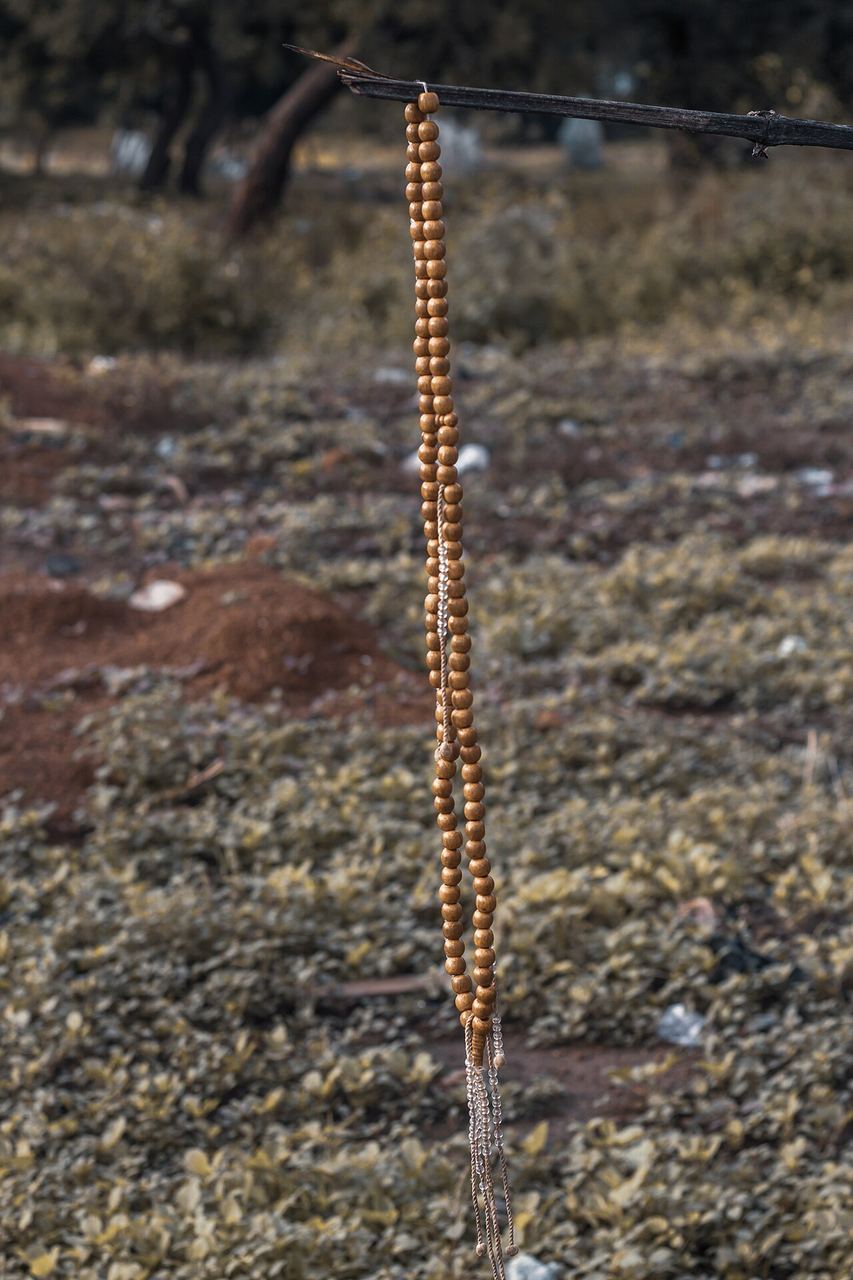
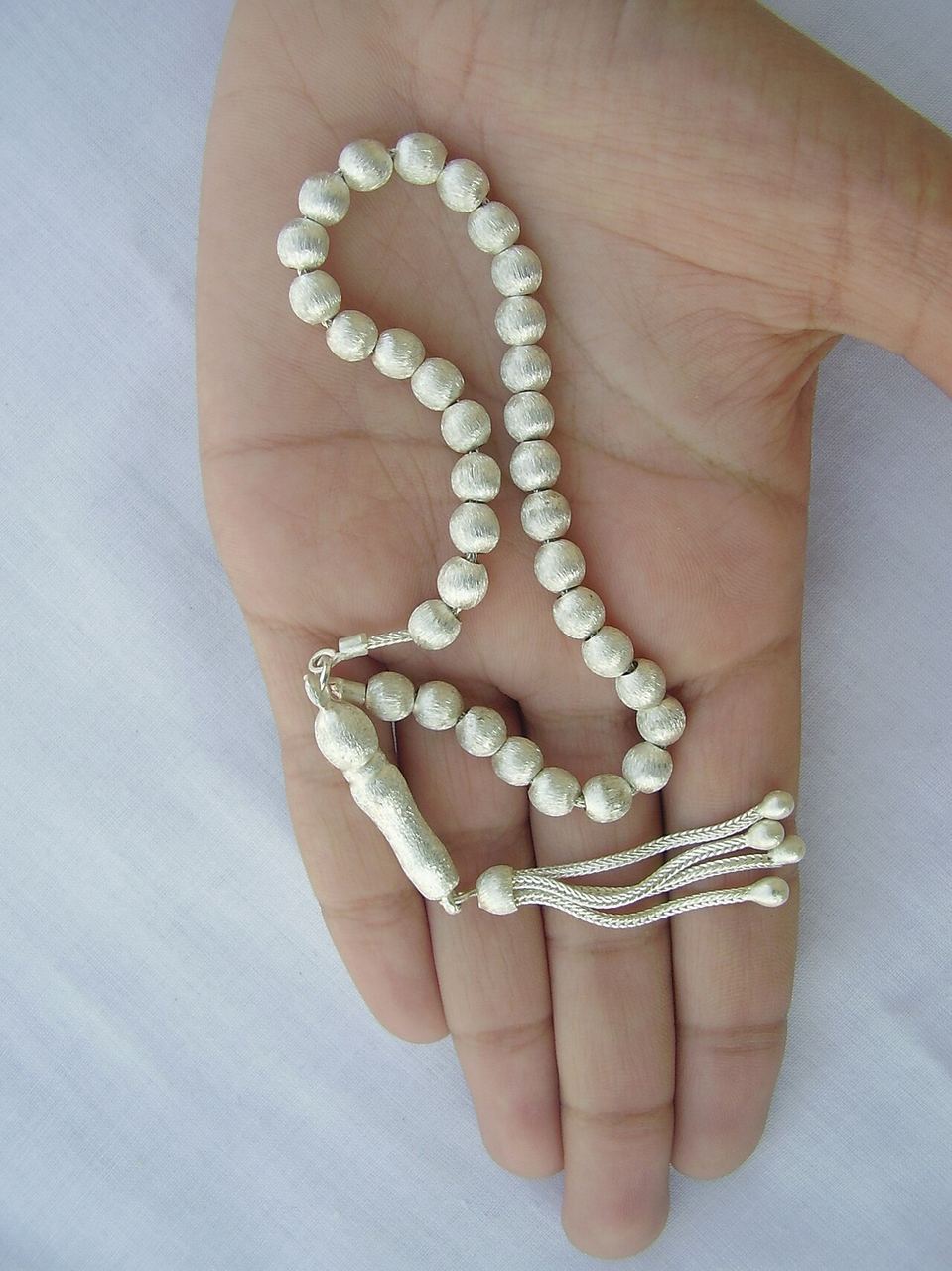
Invite people to bring a tasbih, rosary, mala or prayer rope. Each person explains what they say on it and why. Count the beads on each.
Begin a lesson with two minutes of quiet breathing. Afterwards, invite pupils to share, if they wish, a word, prayer or thought from their own tradition that helps them be still.
Go deeper
- Effect of rosary prayer and yoga mantras on autonomic cardiovascular rhythms (BMJ, 2001) · research
- Menachot 43b: a hundred blessings a day (Sefaria) · scripture
- Qur'an 13:28 (Quran.com) · scripture
- The Jesus Prayer (Wikipedia) · article
In pictures

Sources (8)
- Deuteronomy 8:10 text: Sefaria, JPS 1917
- A person is obligated to recite one hundred blessings every day (Rabbi Meir): Talmud, Menachot 43b (Sefaria)
- Colossians 3:16–17, 1 Thessalonians 5:17, Luke 18:13 text: World English Bible (British Edition) via bible-api.com
- Qur'an 13:28, 3:191, 33:41, 2:152 meanings (rendered Pickthall (1930) where quoted): Quran.com
- Japji pauri 5 ('one Bestower … may I not forget Him') in Macauliffe's translation: Max Arthur Macauliffe, The Sikh Religion, vol. 1 (1909), Wikisource
- Bhagavad Gita 8:14 in Arnold's translation: Edwin Arnold, The Song Celestial (1885), Project Gutenberg
- Rosary and mantra slow breathing to about six a minute (Bernardi et al., BMJ 2001;323:1446): BMJ
- NICE recommends mindfulness-based cognitive therapy for preventing relapse of depression: NICE guideline NG222 (2022)