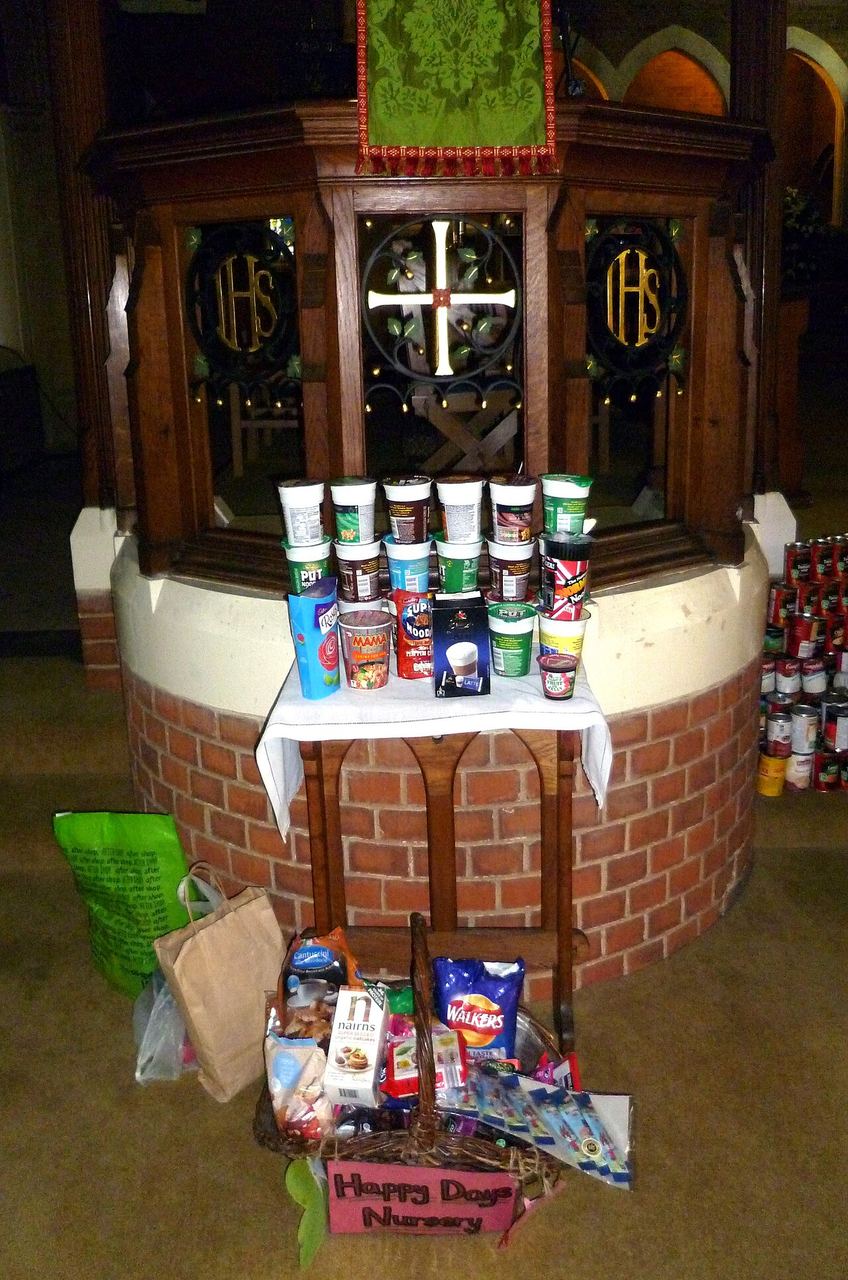
Every autumn, children across Britain carry tins, packets and the odd marrow into school halls and churches. The Harvest Festival table fills up, and afterwards the food goes to a local food bank or to older neighbours. Down the road, a Jewish family is eating supper in a hut with a roof of branches, open to the stars. In January, a Tamil family lets a pot of rice and milk boil over on purpose and calls out “Pongalo Pongal!”
Different crops, different calendars, the same reflex. When the food comes in, people say thank you.
“And now, behold, I have brought the first of the fruit of the land, which Thou, O LORD, hast given me.’ And thou shalt set it down before the LORD thy God, and worship before the LORD thy God. And thou shalt rejoice in all the good which the LORD thy God hath given unto thee, and unto thy house, thou, and the Levite, and the stranger that is in the midst of thee.”
Deuteronomy 26:10–11 · JPS 1917
Farmers brought a basket of first fruits to the Temple and told the short story of their people before giving thanks (Deuteronomy 26:5–10). Notice who joins the party: the Levite and the stranger, people with no land of their own. Jews remember this at Shavuot, the festival of first fruits.
Why harvests make us grateful
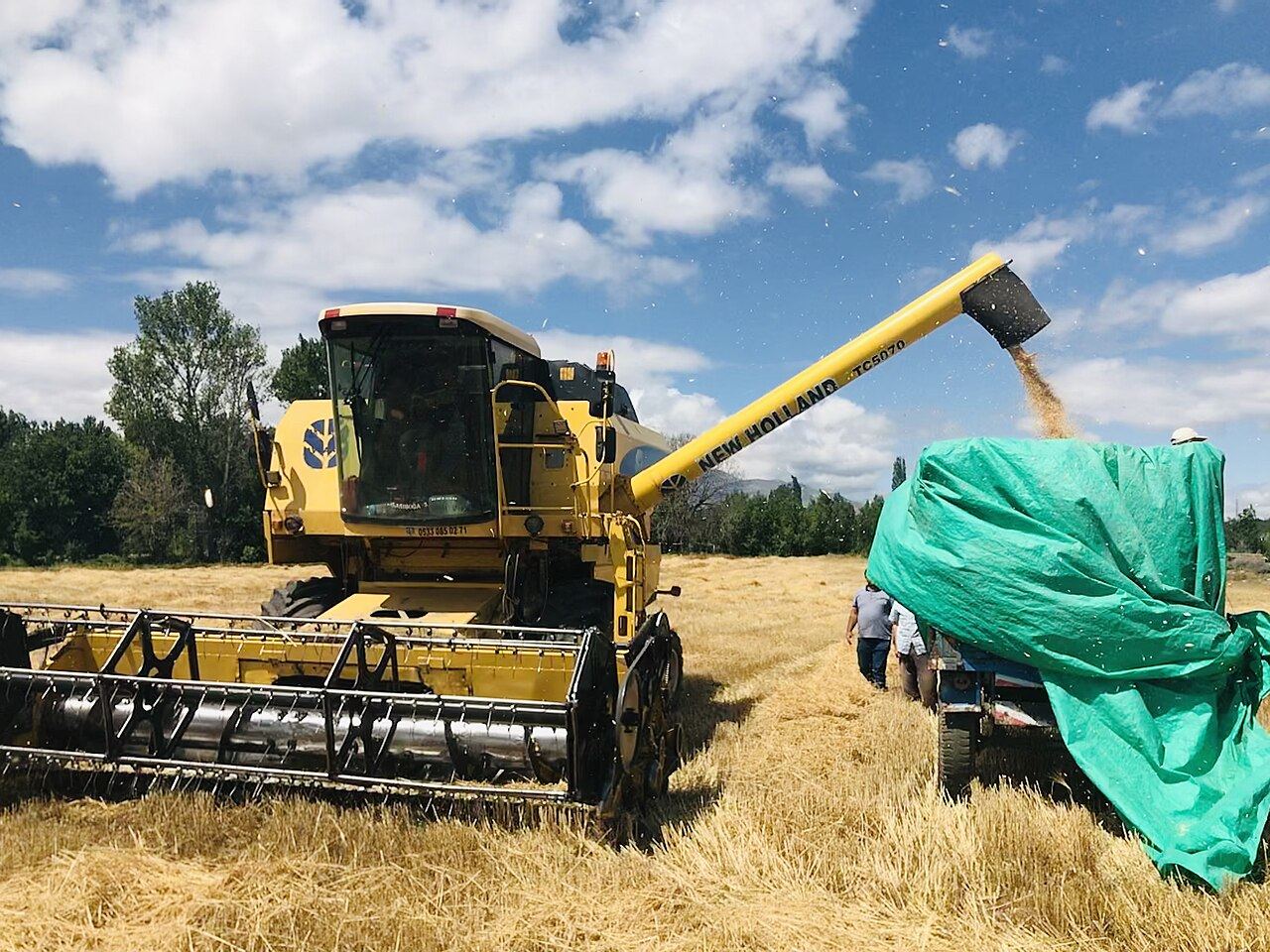
For most of history, the harvest decided whether a family would live through the winter. A good one meant life. A failed one could mean famine. It is no surprise that harvest festivals are among the oldest celebrations we know of, on every inhabited continent.
Today most of us buy food all year round, and the link is easy to forget. Yet one bad season somewhere in the world still shows up in our shops and prices. Rain, soil, sunlight, bees and farmers are still doing the work. A harvest festival is a yearly reminder of a chain of gifts we usually cannot see, and a nudge to share with people who have too little.
Watch
Watch
For everyone
What each faith says
Judaism
“Howbeit on the fifteenth day of the seventh month, when ye have gathered in the fruits of the land, ye shall keep the feast of the LORD seven days; … and ye shall rejoice before the LORD your God seven days.”
Leviticus 23:39–40 · JPS 1917
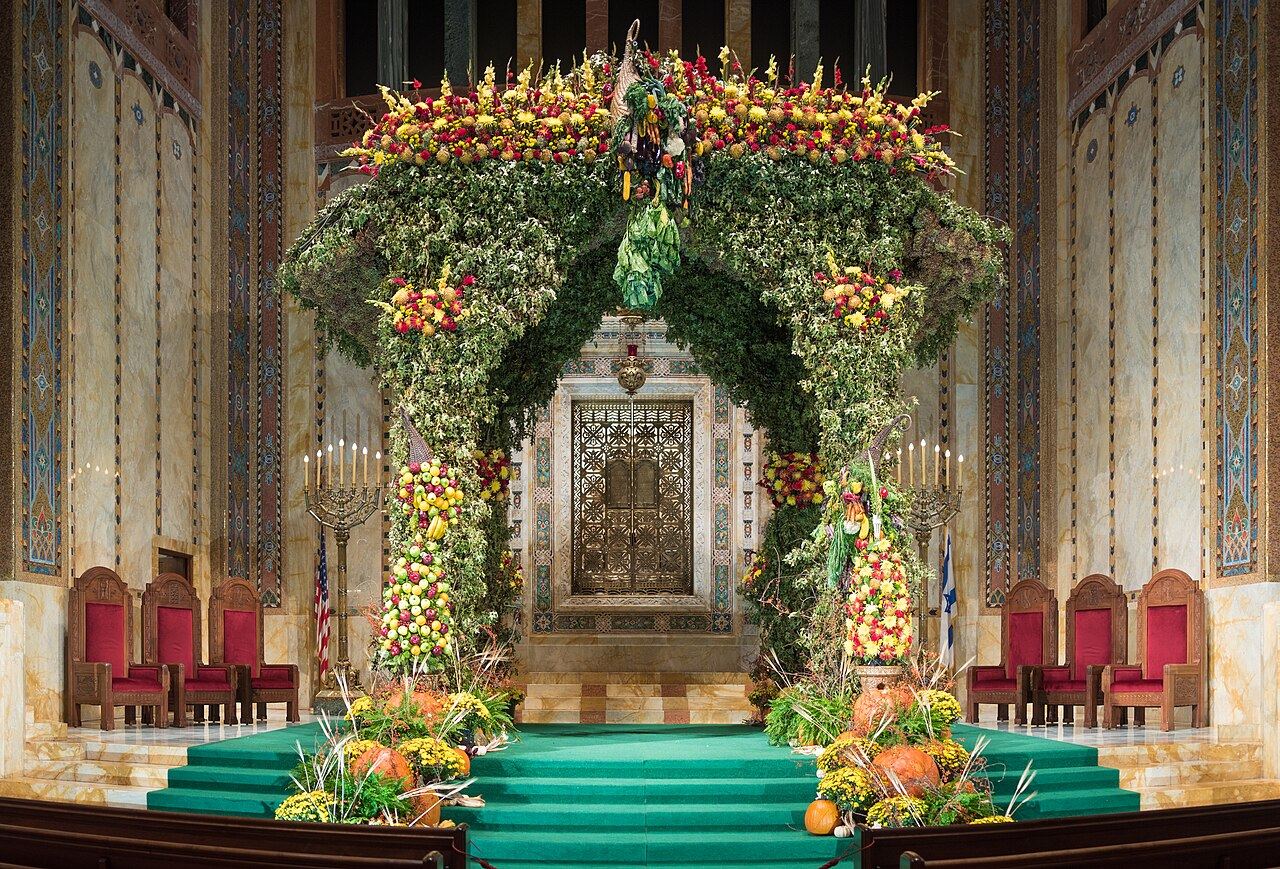
The Torah links three festivals to the farming year. Pesach comes with the barley harvest, Shavuot with the wheat and the first fruits, and Sukkot with the final gathering-in each autumn. At Sukkot, families build a sukkah, a hut with a roof of branches you can see the sky through, eat in it for a week, and wave the four species: palm, myrtle, willow and citron. In 2027 Shavuot begins on the evening of 10 June, and Sukkot on the evening of 15 October.
Christianity
“For every creature of God is good, and nothing is to be rejected if it is received with thanksgiving.”
1 Timothy 4:4 · World English Bible (British Edition), public domain
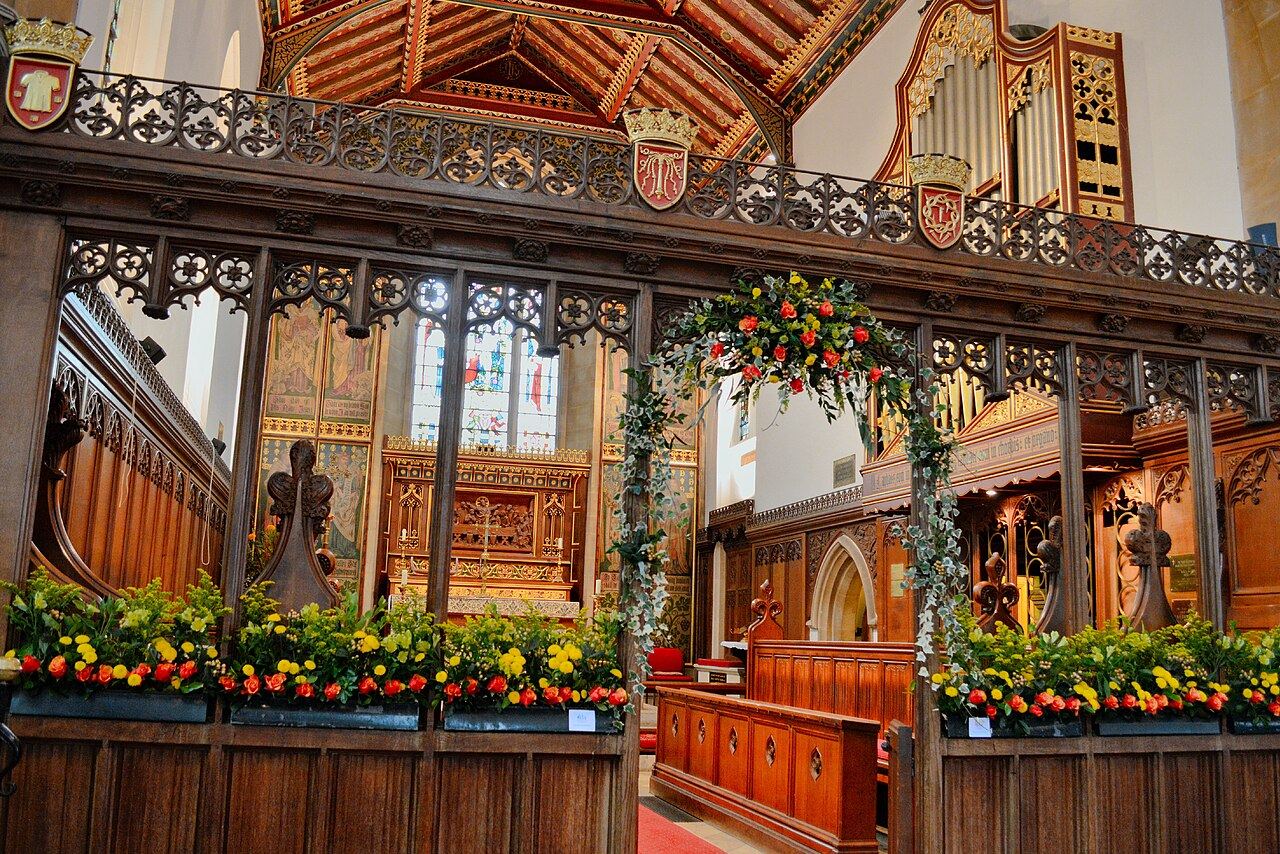
In medieval England, Lammas (“loaf-mass”) on 1 August brought bread from the new wheat to church. The modern Harvest Festival began in 1843, when the Revd Robert Hawker invited his parishioners at Morwenstow in Cornwall to a service of thanks. It spread quickly through Victorian Britain, with produce piled round the altar and harvest suppers afterwards. Today many churches and schools give the food to food banks and local charities.
Islam
“Have ye seen that which ye cultivate? Is it ye who foster it, or are We the Fosterer?”
Qur'an 56:63–64 · Pickthall (1930), 68–70 · Pickthall (1930)
Islam has no harvest festival as such, but the Qur'an ties every harvest to giving: eat the fruit when it ripens, and give its due on the day it is gathered (6:141). Part of zakat is paid on crops. Both Eids are days of thanks: Eid al-Fitr after the Ramadan fast, and Eid al-Adha at the time of Hajj, when meat is shared with family, friends and the poor. The Qur'an asks readers to look again at the seeds they plant and the water they drink.
Without religion
The harvest table in a school hall is one of Britain's most widely shared customs, kept by pupils of every faith and none. In North America, Thanksgiving has become a national day of gratitude for families of all backgrounds. Many non-religious people mark the season by volunteering at a food bank or a community kitchen. Saying thank you for food, and sharing it, needs no creed.
Sikhi
“People pray and beg, 'Give us, give us'; the Giver giveth His gifts; Then what can we offer Him whereby His court may be seen?”
Guru Granth Sahib, ang 2 (Japji, pauri 4) · Max Arthur Macauliffe, The Sikh Religion (1909), public domain
Vaisakhi, usually on 14 April, is the Sikh new year and a Punjabi harvest festival. It also marks 1699, when Guru Gobind Singh founded the Khalsa. Gurdwaras hold processions called nagar kirtan, and cities such as Southall, Birmingham and Leicester host some of the largest outside India, with free food for everyone. In mid-January, Punjabi families also celebrate Lohri around a bonfire, with sweets, peanuts and popcorn.
Hindu traditions
In mid-January, the Sun begins its northward path in the Hindu calendar and India celebrates Makar Sankranti. In Tamil Nadu, and among Tamil families in Britain, this is Pongal. New rice is boiled with milk and jaggery until it bubbles over, a sign of plenty, and offered to the Sun with thanks. The next day honours the cattle who help with the farming. Onam in Kerala and many other harvest festivals follow the farming year across India.
Beyond the Abrahamic faiths
Many cultures keep a harvest moon festival, such as the Chinese Mid-Autumn Festival with its mooncakes and lanterns. In Ethiopia, the Oromo people celebrate Irreecha at the end of the rainy season, giving thanks beside rivers and lakes. Pagan groups in Britain mark Lammas and the autumn equinox.
Same and different
Shared: first fruits and new grain set aside, a feast, and a duty to share with the poor and the stranger. Different: Jewish harvest festivals are commanded in the Torah and bound to the Temple year; Christian harvest services are a custom, not a command; Islam builds thanks for crops into zakat and the two Eids rather than a harvest feast; Sikh and Hindu harvests are woven with new year and the Sun's turning. The thread through all of them is the one this section began with. We did not make the rain, the seed or the Sun. When the food comes in, thanks is the natural reply.
A moment to reflect
- What is one food you ate today? List everyone and everything that helped it reach you.
- Why do so many harvest festivals include giving food away?
- The Qur'an asks, “Is it you who make it grow?” How would you answer?
- If your school or street held a harvest for everyone, what would you bring?
Watch
Each tradition, in its own words
A Jewish telling
A Christian telling
Do it together
Hold one harvest collection for the whole community, timed near Sukkot or the school's Harvest Festival. Invite families to add a card naming a harvest festival from their own tradition. Give everything to a local food bank.
With adult help, cook sweet pongal (rice, milk, jaggery or brown sugar). Let it bubble over a little, and say together what you are grateful for this year.
Some synagogues invite neighbours into their sukkah during Sukkot. Ask, go, and look up through the branches at the sky.
Go deeper
- Harvest festival (Wikipedia) · article
- Sukkot 101 (My Jewish Learning) · article
- Qur'an 56:63–74 (Quran.com) · scripture
- Find a food bank (Trussell) · find out more
In pictures
Sources (7)
- Deuteronomy 26:10–11, Leviticus 23:39–40, Exodus 23:16 text: Sefaria, JPS 1917
- Shavuot 2027 begins evening 10 June; Sukkot 2027 begins evening 15 October (16 October first day): Hebcal API, 2027
- 1 Timothy 4:4 text: World English Bible (British Edition) via bible-api.com
- Robert Hawker, Morwenstow, 1843; Lammas loaves; harvest festivals worldwide incl. Pongal, Lohri, Vaisakhi, Irreecha, Mid-Autumn: Wikipedia, Harvest festival
- Qur'an 6:141, 56:63–64, 68–70 meanings (rendered Pickthall (1930) where quoted): Quran.com
- Japji pauri 4 in Macauliffe's translation: Max Arthur Macauliffe, The Sikh Religion, vol. 1 (1909), Wikisource
- Vaisakhi 14 April 2027; Sukkot 2027: Site calendar (k2_calendar.csv)