Closer look · 7 min · Film: Dune
How Dune Built a Religion
Planted prophecies, a merged scripture and a Hebrew road that shrinks: the machinery of belief inside Dune.
The idea in one minute
Planted prophecies, a merged scripture and a Hebrew road that shrinks: the religious machinery inside Dune.
Our other Dune pages look at the messiah warning and the Arabic words Frank Herbert borrowed. This one looks at something stranger: how Herbert built a whole religious history for his universe, and what it says about how faith can be used.
Why a desert?
In 1957 Herbert flew over a project on the Oregon coast that was trying to stop sand dunes from moving. The idea of a sand planet followed. He noticed that Judaism, Christianity and Islam were all born in or beside deserts, and he read T. E. Lawrence's Seven Pillars of Wisdom and studied desert warfare and Arab culture. He was also drawn to Zen Buddhism.
Prophecy planted on purpose
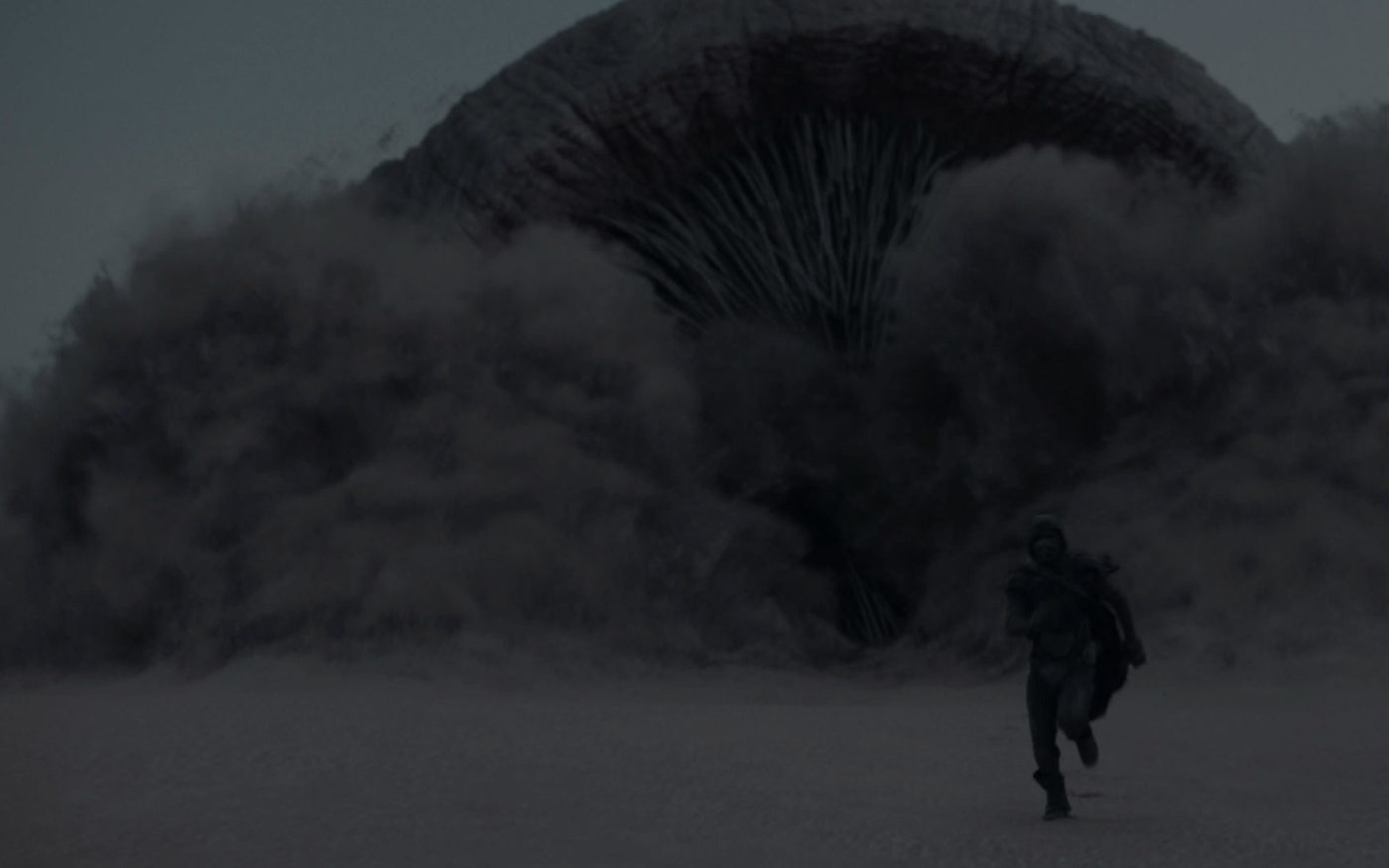
In the book, an order of women called the Bene Gesserit has a branch called the Missionaria Protectiva. Its job is to travel to remote worlds and plant legends and prophecies, so that one day, if a Bene Gesserit is in danger there, the people will already believe in someone like her. Paul is hailed as the promised one on Arrakis because the ground was prepared centuries earlier. It is Herbert's sharpest idea: religion manufactured as a tool of power.
All three faiths know the danger, and each has words against it. “There is no compulsion in religion” (Qur'an 2:256, Pickthall). The Hebrew Bible warns against a prophet who gives a sign that comes true and then leads people astray (Deuteronomy 13). Jesus warns of false christs who show great signs (Matthew 24:24).
One book for everyone?
Herbert also imagines a council of translators, meeting after a great war, who merge the old religions into one scripture, the “Orange Catholic Bible”. Fans and Herbert's son give different explanations of the name. Whatever its origin, it reads as a satire: a forced merger of faiths, agreed under pressure, that leaves nobody's tradition intact.
This site does the opposite. Each faith speaks in its own words. The Qur'an pictures the faiths as different paths, side by side: “For each We have appointed a divine law and a traced-out way… So vie one with another in good works” (5:48, Pickthall).
“Zensunni” is not Islam
The desert people of Dune, the Fremen, follow a faith Herbert called Zensunni, a blend of Zen and Sunni Islam invented for the story. It borrows words and shapes, but it is not a real sect, and no Muslim should be expected to own it or defend it.
Never trust the machines
Ten thousand years before the story, humanity fought a long holy war against thinking machines, the Butlerian Jihad. Its legacy is a commandment: you shall not make a machine in the likeness of a human mind. Instead, people train their own minds to calculate. It is a strangely timely question in an age of artificial intelligence. What should we never hand over to a machine?
A Hebrew road that shrinks
Paul is called the Kwisatz Haderach, which Herbert glosses as “the shortening of the way”. Hebrew speakers will hear something familiar. Kefitzat haderech is the Jewish tradition of a miraculous shortening of the road: the rabbis read it into the journey of Abraham's servant to find a wife for Isaac (Genesis 24), and Hasidic stories tell of rebbes who arrived impossibly fast. Herbert never confirmed it, but the match is very likely. In Jewish tradition it is a small kindness to someone in need. Herbert turns it into a centuries-long breeding programme to produce a man who can shorten history. The contrast is the point.
What the films kept, and what they dropped
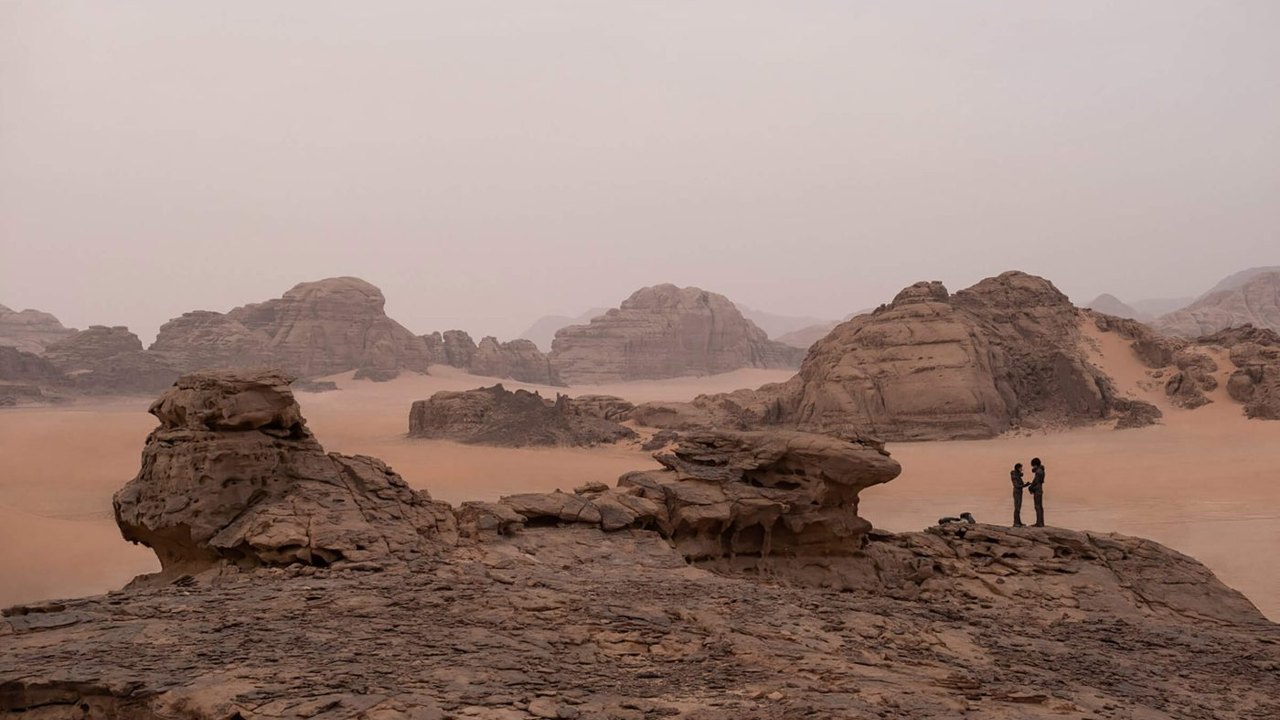
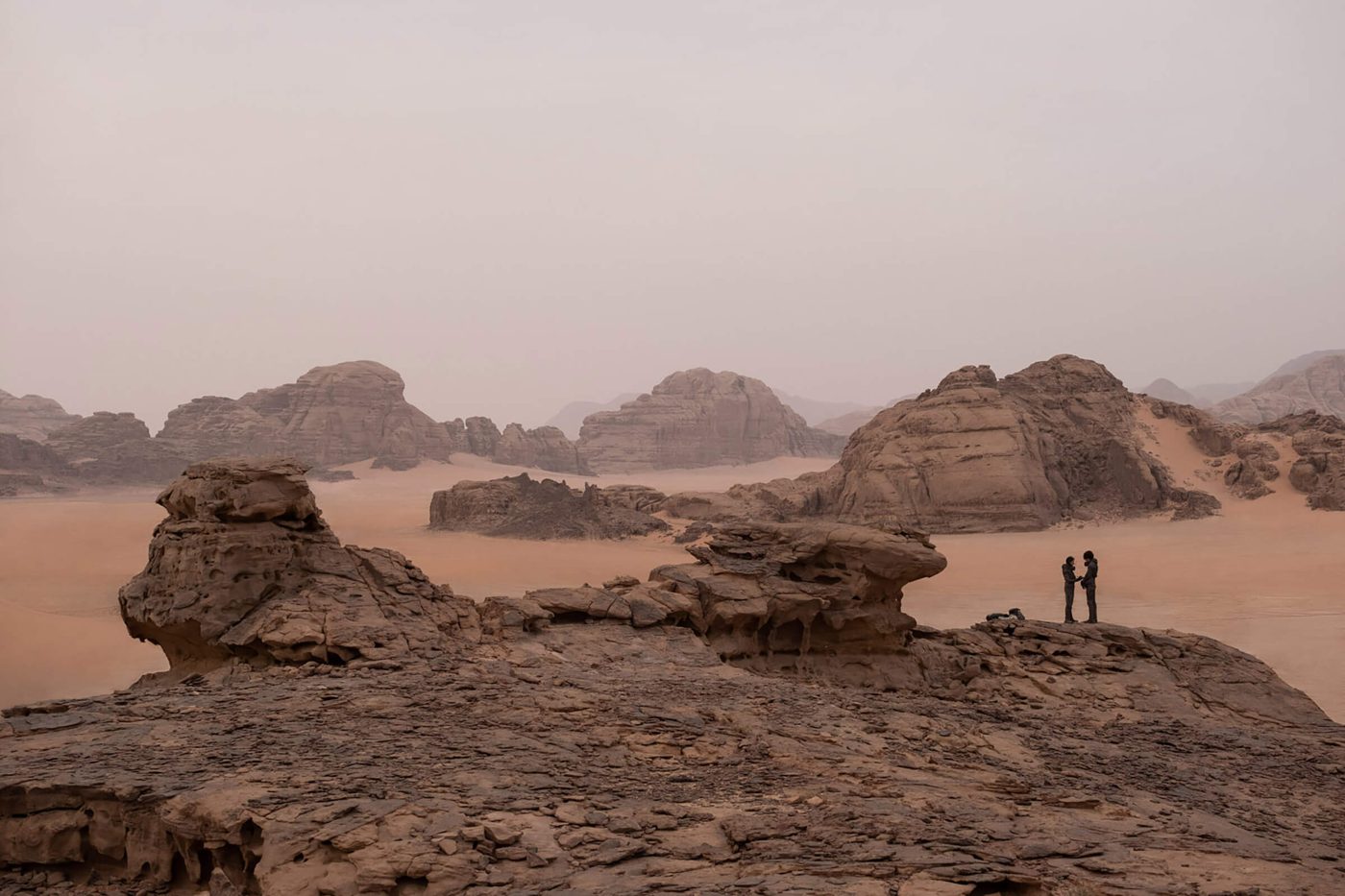
Denis Villeneuve's films keep “Mahdi” and “Lisan al-Gaib” but replace “jihad” with “holy war” or “crusade”, and drop much of the Arabic-derived language. Some writers, including Haris Durrani in the Washington Post, argued that this blunts the book's politics and hides where its world came from. After Part Two, critics also pointed to how few Middle Eastern and North African actors were cast. Others felt the changes avoided misunderstanding. The films were shot in Jordan's Wadi Rum and in the UAE. There is a good conversation to be had about both sides.
The Names in this closer look
Talk about it
- The Bene Gesserit plant prophecies to use later. Where have you seen faith used as a tool, and how did people resist?
- Is a prophecy still meaningful if someone planted it?
- One scripture for every faith: would that bring peace, or erase people?
- What should we never hand over to a machine?
- The films dropped the word “jihad”. Was that respectful, or did it hide the story's roots?
- Who gets to be the hero of someone else's land?
Dune (2021) and Dune: Part Two (2024) are both 12A. Part Two is on Netflix in the UK; both are to rent or buy. Dune: Part Three opens on 18 December 2026.
Sources: HistoryLink (Kathrine Beck, 2021); Gizmodo/io9 (Beth Elderkin, 2020) on Dune's religions; Juan Cole, Informed Comment, 2024; Michael Weingrad, “Jews of Dune”, Jewish Review of Books (via the Kefitzat haderech entry); SlashFilm on the Fremen language; Variety, March 2024; Frank Herbert, introduction to Eye (1987). Qur'an: Pickthall (1930). See also Beware the Messiah and The words Dune borrowed.
Where to watch · Trailer
Dune (2021) · Widely available to stream or buy · F-ILM
© Warner Bros. / Legendary
Content note. Dune: Desert epic about prophecy and power. Battle violence. See Before you watch.
Trailers are the studios' own, played from YouTube. We show them and any stills for criticism and review; all rights stay with their owners.
Next closer look
A different film, a different question.

Watch more: How Dune Built a Religion
8 films and talks, chosen for this page. They play here.
Dune, Islam & Religion
Let's Talk Religion · 28 min
Let's Talk Religion: Dune, Islam and religion.
Dune can help us analyze prophecy
ReligionForBreakfast · 3 min
The Islamic Roots of Dune (the movie and book)
Bart D. Ehrman · 2 min
Bart Ehrman: the Islamic roots of Dune.
Sufi Spirituality in Dune
Let's Talk Religion · 1 min
Let's Talk Religion: the Sufi ideas inside Dune.
Zensunni - The Origins of the Fremen in Dune
Let's Talk Religion · 1 min
Let's Talk Religion: "Zensunni", where the Fremen faith comes from.
Kitab al-Ibar - Islamic Influence in Dune
Let's Talk Religion · 1 min
Let's Talk Religion: Ibn Khaldun and the Islamic influence in Dune.
Why should you read “Dune” by Frank Herbert? - Dan Kwartler
TED-Ed · 5 min
Dune: Part Two | Deeper into the Desert: The Sounds of the Dune | Warner Bros. Entertainment
Warner Bros. Entertainment · 13 min
- More films and talks on F-ILMWatch free