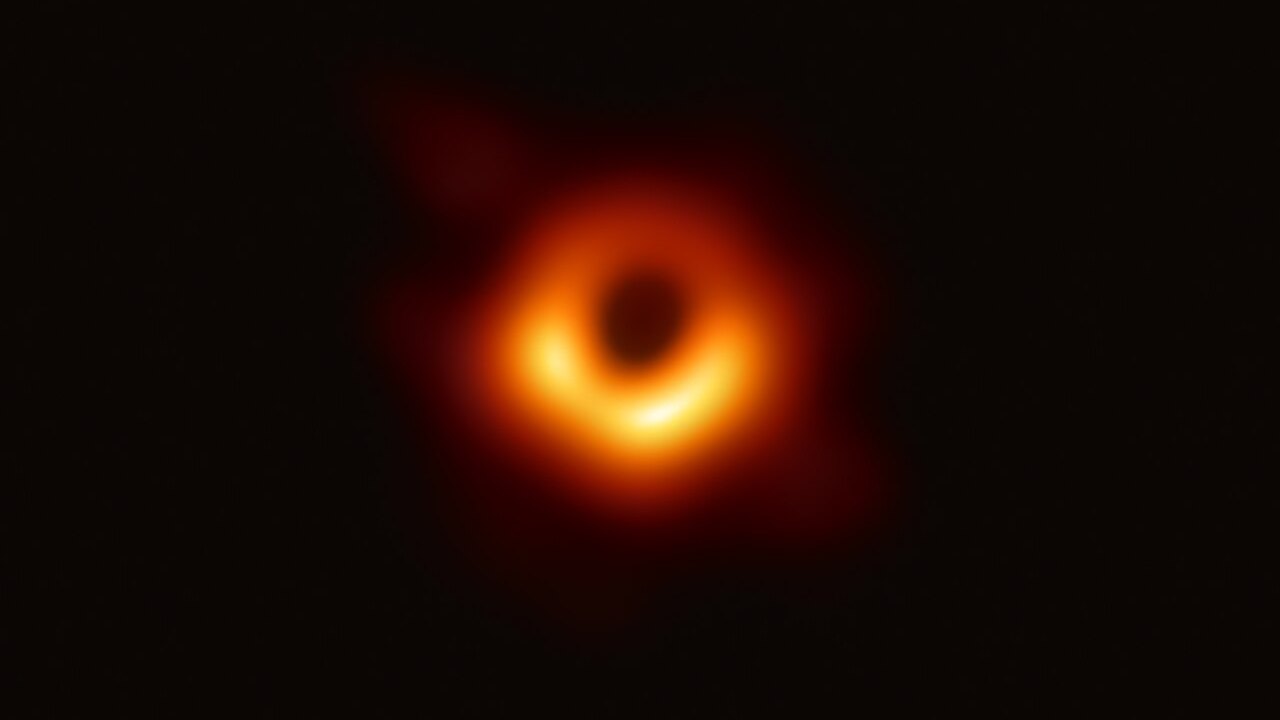
Closer look · 5 min · Film: Interstellar
Love across dimensions
Interstellar asks whether love crosses time and space. Three scriptures already say so.
The idea in one minute
This short read looks at the film Interstellar. In it, a scientist wonders whether love is something that can cross time and space. You will learn that the film was built on real physics, and that the scriptures of three faiths already speak of a love that goes beyond time and space.
In Interstellar (2014), Dr Brand argues that love may be something we perceive that goes beyond time and space. Christopher Nolan built the film on real physics: his adviser Kip Thorne, later a Nobel laureate, spent weeks holding him to the rules, because, Nolan said, “the audience can feel whether there's a rule set”.
The film's twist is that “they”, who build the way home, turn out to be us. Is that an answer, or does it only move the question back a step? Who built the universe the tesseract sits in?
Qur'an
“And of His signs is this: He created for you helpmeets from yourselves that ye might find rest in them, and He ordained between you love and mercy. Lo! herein indeed are portents for folk who reflect.” (30:21, Pickthall).
Hebrew Bible
“Love is strong as death” (Song of Songs 8:6, JPS 1917).
New Testament
“God is love, and he who remains in love remains in God” (1 John 4:16, WEB).
And time: the film's father and daughter are separated by it; al-Awwal and al-Ākhir, the First and the Last, are not.
Read on
Near the start of Interstellar (2014), Cooper, a farmer who used to be a pilot, looks at the dust settling on his fields and says: “We used to look up at the sky and wonder at our place in the stars. Now we just look down and worry about our place in the dirt.” The whole film is an argument for looking up again. It is also, quietly, a film about three things the scriptures care about very much: love, time and the unseen.
Love that crosses the dark
Halfway through, the crew must choose which planet to visit, and fuel is short. Dr Brand, played by Anne Hathaway, argues for the one where the man she loves is waiting. “Love isn't something we invented,” she says. “It's observable, powerful, it has to mean something.” Then the line people remember: “Love is the one thing we're capable of perceiving that transcends dimensions of time and space.”
Her colleagues outvote her. The film does not: in the end it is a father's love for his daughter that carries the message home.
Three scriptures had already said that love is not a passing chemical mood but something woven into how things are made. The Song of Songs says “love is strong as death” (Song of Songs 8:6, JPS 1917). The First Letter of John goes further: “God is love, and he who remains in love remains in God” (1 John 4:16, WEB). The Qur'an names the love between two people as one of God's signs: He “And of His signs is this: He created for you helpmeets from yourselves that ye might find rest in them, and He ordained between you love and mercy. Lo! herein indeed are portents for folk who reflect.” (30:21, Pickthall). And one of the 99 Names is al-Wadūd, the Loving: the One who loves, and who is loved. Brand thinks love might be a clue left in the universe. The three faiths would say it is a signature.
Time that bends
The film's most painful scene is a matter of physics. On Miller's planet, which orbits close to a giant black hole, gravity slows time so much that one hour there is seven years on Earth. Cooper goes down for what feels like an afternoon. When he returns, twenty-three years of video messages are waiting.
This is not fantasy. Einstein's general relativity says clocks run slower in strong gravity, and satellites must correct for it every day. Christopher Nolan built the film with the physicist Kip Thorne, who later shared the 2017 Nobel Prize in Physics, so that the rules would hold.
Scripture also knows that time is not the same everywhere. The Psalm says to God: “For a thousand years in Thy sight are but as yesterday when it is past” (Psalm 90:4, JPS 1917). The New Testament echoes it: “one day is with the Lord as a thousand years, and a thousand years as one day” (2 Peter 3:8, WEB). The Qur'an says a day with your Lord is like a thousand years of your counting (22:47, in brief). We do not claim they predicted relativity. They say something simpler and deeper: time is created, and the One who made it is not trapped inside it. That is what the Names al-Awwal and al-Ākhir, the First and the Last, mean. Cooper and Murph are separated by time. God is not.
The unseen in the room
Young Murph believes there is a ghost in her bedroom: books fall in patterns, dust lines up on the floor. Her father tells her to record it and look for the cause. The “ghost” turns out to be real, someone reaching across dimensions to tell her to stay.
The film's lesson is a good one for believers and sceptics alike: the unseen is not the same as the unreal. Gravity itself is invisible; we know it by what it does. The Qur'an describes people of faith as those “Who believe in the Unseen, and establish worship, and spend of that We have bestowed upon them.” (2:3, Pickthall), and the Letter to the Hebrews says “what is seen has not been made out of things which are visible” (Hebrews 11:3, WEB). Among the Names, al-Bāṭin, the Inward or Hidden, and al-Laṭīf, the Subtle, describe a God who is never seen yet is closer than anything. The Qur'an puts it in one bodily line: closer to a person than their jugular vein (50:16, in brief).
Who built the way home?
The crew assume that “they”, mysterious beings who placed a wormhole near Saturn, are helping humanity. The twist is that “they” are us: future humans, reaching back. But it leaves one question the film never asks. Who made the universe the loop sits in, with laws that let a wormhole, a black hole and a father's love all work at once?
The Qur'an has a verse that people sometimes connect with space travel: if you are able to pass beyond the regions of the heavens and the earth, then pass; you will not pass except with authority (55:33, in brief). Classical scholars read it about the Day of Judgement, not rockets, and so do we. But its spirit fits. Every journey outward, however far, happens inside rules we did not write.
Cooper ends the film heading out again, into the dark, to find Brand. Dylan Thomas's poem echoes through the story: “Rage, rage against the dying of the light.” The faiths would add a gentler line beside it. The light does not die. It was given, and we can say thank you for it.
- Interstellar (2014), dir. Christopher Nolan; Syncopy, Paramount and Warner Bros. Short quotations for criticism and review.
- Reactor (Tor.com), “Love in sci-fi: Interstellar's speech” (2014): reactormag.com
- Kip Thorne, The Science of Interstellar (W. W. Norton, 2014).
- O. James, E. von Tunzelmann, P. Franklin and K. S. Thorne, “Gravitational lensing by spinning black holes in astrophysics, and in the movie Interstellar”, Classical and Quantum Gravity 32 (2015).
- Nobel Prize in Physics 2017 (Weiss, Barish, Thorne): nobelprize.org
- Hebrew Bible, JPS 1917 (Song of Songs 8:6; Psalm 90:4): Sefaria
- New Testament, World English Bible (1 John 4:16; 2 Peter 3:8; Hebrews 11:3): Bible Gateway
- Qur'an 2:3, 22:47, 30:21, 50:16, 55:33, in brief: quran.com
- Dylan Thomas, “Do not go gentle into that good night” (1951).
The Names in this closer look
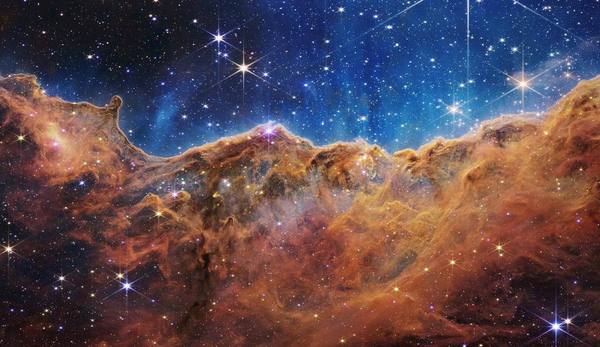

Where to watch · Trailer
Interstellar (2014) · Widely available to stream or buy · F-ILM
© Warner Bros. (international) / Paramount (US)
Content note. Interstellar: Space epic about love and survival. Some strong language. See Before you watch.
Trailers are the studios' own, played from YouTube. We show them and any stills for criticism and review; all rights stay with their owners.
Next closer look
A different film, a different question.
Watch more: Love across dimensions
7 films and talks, chosen for this page. They play here.
Black Holes, Wormholes, and Time Travel | World Science Festival
World Science Festival · 6 min
Wormholes Explained – Breaking Spacetime
Kurzgesagt – In a Nutshell · 8 min
What If You Fall into a Black Hole?
Kurzgesagt – In a Nutshell · 12 min
How to Understand What Black Holes Look Like
Veritasium · 9 min
Veritasium: what black holes really look like, the science behind Gargantua.
The King Above Every Throne | Allah’s Names | Dr. Omar Suleiman | Ep. 6
Yaqeen Institute · 15 min
Yaqeen: Dr Omar Suleiman on al-Malik, the King beyond time and space.
Neil Gillman - What is Eternal Life Like?
Closer To Truth · 12 min
Closer To Truth: a Jewish theologian on eternity and eternal life.
Is the Gospel of John Really About Eternal Life? | N.T. Wright
N.T. Wright Online · 3 min
- More films and talks on F-ILMWatch free