An emperor penguin father stands through the Antarctic winter with an egg balanced on his feet. For about nine weeks he keeps it tucked under a fold of skin, and eats nothing the whole time.
Tenderness is one of the most beautiful things in creation. Ar-Raʾūf, the Most Kind, names a tenderness that never tires, and of which all ours is only a share.
Start with what we know
Start with something we know. Then take away everything it needs. What is left is not a bigger version of us: it is the Name.
Episode 1
In us
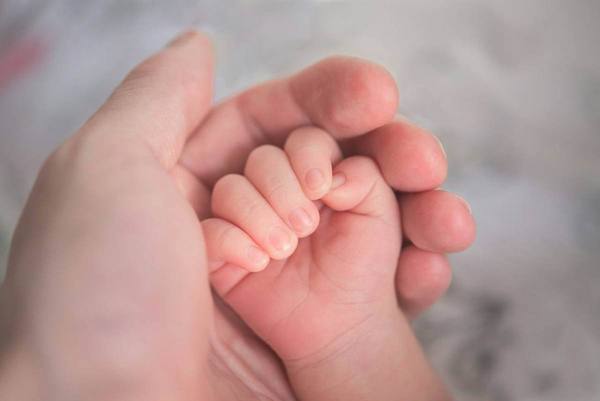
In November 2022 the World Health Organization advised that small and premature babies should be held skin to skin by a parent immediately after birth. The incubator can wait. 'Kangaroo care', as it is called, keeps babies warm, steadies their breathing and helps them feed. It shows how powerful a parent's tender touch can be. But even the most loving parent gets exhausted. They need sleep, they cannot be in two places, and they cannot hold a baby every minute. Human tenderness is real, and it tires.
Episode 2
In nature
The British Antarctic Survey describes how male emperor penguins incubate their single egg for about nine weeks in the darkest, coldest months. They rely on their fat reserves without eating, huddled together against winds that can reach 200 kilometres an hour. When the chick hatches, the father can even feed it a milky secretion from his throat. Nature is full of such care: elephants shielding calves, birds spreading wings over chicks. But each animal's tenderness is for its own young, for a season.
Episode 3
At our best
Neonatal intensive care units are among the most tender places in any hospital. Nurses and doctors keep watch over babies born weeks early, some weighing less than a bag of sugar, adjusting oxygen, warmth and feeding hour by hour. Incubators were first used for premature babies in Paris in the 1880s; today's units save many thousands of lives each year in the UK. Yet even here care comes in shifts and rotas, through machines and many hands. No single heart can stay awake for every baby.
Episode 4
The Break
Our tenderness tires, fails at a distance, has limited attention and mostly reaches only our own. The penguin's patience, the parent's touch, the nurse's watch: all the tenderness in creation is one part of mercy out of a hundred, in the words of the Prophet (peace be upon him). That one part was sent down to the world. The other ninety-nine God kept with Himself (Bukhari 6000). Ar-Raʾūf is that tenderness without limit. “But it was not Allah's purpose that your faith should be in vain, for Allah is Full of Pity, Merciful toward mankind.” (Qur'an 2:143, Pickthall).
The Companion ʿAbdullāh ibn Masʿūd remembered a journey with the Prophet Muhammad ﷺ (peace be upon him). The Prophet went off for a moment, and while he was away some of the travellers saw a small red bird with two chicks. They took the chicks.
The mother bird came back and began beating her wings, circling in distress above them.
When the Prophet returned, he asked: who has distressed this bird by taking her young? Give them back to her. (Abu Dawud 2675, graded ṣaḥīḥ)
On another occasion, Abū Hurayra reported, the Prophet said: God divided mercy into a hundred parts. He kept ninety-nine with Himself and sent one part down to the earth. Because of that one part, creatures show mercy to each other, so that a mare lifts her hoof away from her foal for fear of treading on it. (Bukhari 6000)
The two sayings belong together. One shows the Prophet noticing a bird's grief and putting it right. The other explains what he saw: the tenderness of a mother bird is a small share of a far greater tenderness. The Qur'an describes the Prophet himself with two of God's Names, raʾūf raḥīm, kind and merciful towards the believers (9:128): a servant's share of this Name made visible.
What each faith says
Read:
Judaism
“Like as a father hath compassion upon his children, So hath the LORD compassion upon them that fear Him..”
Psalm 103 compares God's compassion to a parent's: “Like as a father hath compassion upon his children, so hath the LORD compassion upon them that fear Him.” The Hebrew word for compassion, raḥamim, comes from reḥem, womb.
The Torah commands tenderness to animals too: if you find a bird's nest, let the mother go before taking the eggs (Deuteronomy 22:6-7).
The rabbis turned God's tenderness into a list of jobs. As God clothed Adam and Eve, clothe the naked; as He visited Abraham when he was ill, visit the sick; as He comforted Isaac, comfort mourners (Talmud, Sotah 14a). Visiting a shiva house, where a family sits in mourning for a week, is one of the most ordinary acts of Jewish life.
Christianity
“How often I would have gathered your children together, even as a hen gathers her chicks under her wings”
Jesus used a tender image from the farmyard. Looking over Jerusalem, he said he had longed to gather its children “even as a hen gathers her chicks under her wings”.
Paul calls God “the Father of mercies and God of all comfort” (2 Corinthians 1:3). Christians speak of God's tenderness shown in Christ's care for the sick, the children and the outcast.
Julian of Norwich, the fourteenth-century anchoress whose cell is remembered by a chapel rebuilt on its site at St Julian's Church in Norwich, dared to write that as truly as God is our Father, so truly is God our Mother (Revelations of Divine Love, chapter 59).
Islam
“He it is Who sendeth down clear revelations unto His slave, that He may bring you forth from darkness unto light; and lo! for you, Allah is Full of Pity, Merciful.”
Ar-Raʾūf appears ten times in the Qur'an, nearly always with ar-Raḥīm. Scholars explain that raʾfa is a particularly gentle, protective kind of mercy, mercy that spares from harm.
The same pair of words is used of the Prophet in 9:128, the only time two of God's Names are used together of a human being in the Qur'an. Muslims take this as a call to tenderness in their own lives.
Same and different
The father of Psalm 103, the hen of Matthew 23 and the mare of the hadith all picture God's tenderness through parents. Hebrew raḥamim and Arabic raḥma share a root linked to the womb. Christians also see God's tenderness in Christ; Jews and Muslims see it in God directly and in His prophets. Judaism writes tenderness into law, down to a bird's nest (Deuteronomy 22:6-7), and Islam remembers the Prophet noticing a mother bird's distress.
A moment to reflect
Who has been most tender towards you in your life?
When did you last notice an animal in distress, and what did you do?
Where in your street or school could a little more tenderness make a difference?
Watch
BBC Earth on mothers of the animal kingdom and the lengths they go to for their young.
Animal Super Parents: fish that shelter their babies in their mouths.
Do it together
schools / familiesAnimal parents
Each child chooses an animal parent (penguin, elephant, cichlid fish) and makes a poster about how it cares for its young. Read the mare hadith and Matthew 23:37.
neighbours / faith groupsCare for the carers
Find out whether your local hospital's neonatal unit or a baby charity needs knitted hats, snacks for parents or volunteers. Make a plan together.
neighbours / faith groupsSit with the mourners
If a Jewish neighbour is sitting shiva, it is usual to visit: you need not bring anything, and the custom is to let the mourners speak first. Christians and Muslims have their own ways of sitting with the bereaved. Talk together about what tenderness looks like when there is nothing to say.
 Episode 1