A huge granite head of the pharaoh Ramesses II sits in the British Museum in London. It was hauled from the ruins at Thebes in 1816 and shipped to England. As news of it spread, the poet Percy Bysshe Shelley wrote 'Ozymandias'. It is about a broken statue in the desert whose inscription boasts: 'Look on my works, ye Mighty, and despair.'
Around it, Shelley wrote, nothing else remains. Mālik al-Mulk, the Owner of all Sovereignty, names the One whose kingdom is not lent.
Start with what we know
Start with something we know. Then take away everything it needs. What is left is not a bigger version of us: it is the Name.
Episode 1
In us
Human power is always lent. By 1920 the British Empire covered roughly a quarter of the world's land and ruled about a fifth of its people; within fifty years almost all of it had gone. The Roman, Mughal and Ottoman empires each seemed permanent in their day. Leaders are elected and then voted out, kings crowned and then buried, companies rise and fall. Power is real, and it can do great good or harm. But it is always borrowed: from voters, armies, money or time. Every human kingdom ends.
Episode 2
In nature
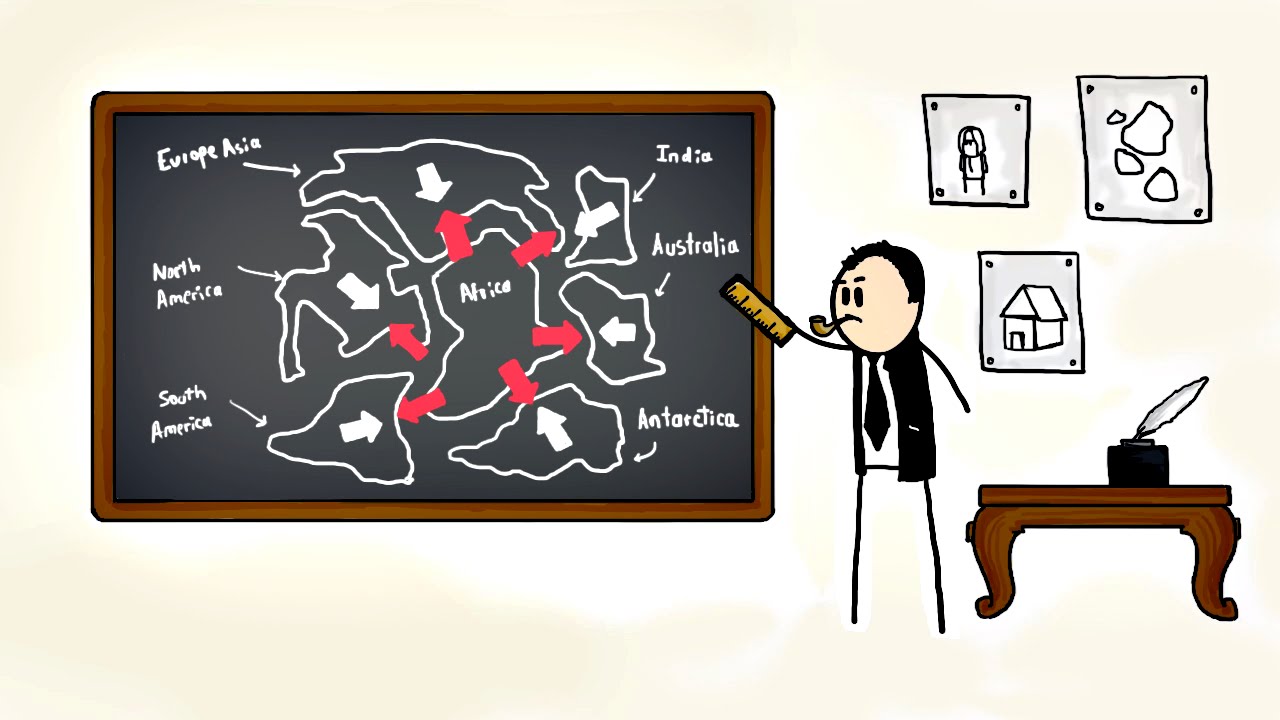
Even the ground beneath kingdoms moves. The British Geological Survey explains that the Atlantic Ocean is widening by a few centimetres a year, about as fast as your fingernails grow. The plates on either side of the Mid-Atlantic Ridge pull apart. Iceland is being slowly split in two. Mountains rise and wear away; coastlines shift; ice ages come and go. Over millions of years no landscape keeps its shape. Nature itself has no permanent borders.
Episode 3
At our best
Shelley's sonnet 'Ozymandias', published in 1818, is one of the most famous poems in English. A traveller describes two vast legs of stone in the desert and a shattered face with a 'sneer of cold command'. On the pedestal are the words: 'My name is Ozymandias, King of Kings; Look on my works, ye Mighty, and despair.' Then the punchline: 'Nothing beside remains.' The poem is a human masterpiece about the limits of human power. Even it is a warning, not a cure.
Episode 4
The Break
Human power passes by succession, conquest, borders, elections and time. Every human kingdom is held for a while and handed on, or taken away. Mālik al-Mulk is not the greatest king on a list; He owns kingship itself, and lends it. The Qur'an gives the believer a prayer for it: “Say: O Allah! Owner of Sovereignty! Thou givest sovereignty unto whom Thou wilt, and Thou withdrawest sovereignty from whom Thou wilt. Thou exaltest whom Thou wilt, and Thou abasest whom Thou wilt. In Thy hand is the good. Lo! Thou art Able to do all things.” (Qur'an 3:26, Pickthall).
From the tradition: Bukhari 4812: 'I am the King; where are the kings of the earth?'. Daniel 4:14 'the Most High is sovereign over human dominion, and gives it out at will'. Luke 1:52.
On screen
The statue said 'king of kings'. The sand answered.
When Solomon (peace be upon him) became king of Israel, he was young. The Hebrew Bible tells how God appeared to him in a dream and said: ask what I shall give you.
Solomon did not ask for wealth, a long life or victory over his enemies. He asked for “an understanding heart to judge Thy people, that I may discern between good and evil” (1 Kings 3:9). God was pleased, and gave him wisdom, and riches and honour as well.
The Qur'an remembers Solomon as a king of extraordinary power, with authority over winds and jinn, who could understand the speech of birds and ants. And it shows him at the moment of his greatest wonder, when the throne of the Queen of Sheba was brought before him in the blink of an eye. His first words were not a boast. He said: “And when he saw it set in his presence, (Solomon) said: This is of the bounty of my Lord, that He may try me whether I give thanks or am ungrateful.” (Qur'an 27:40 · Pickthall).
The Ozymandias of Shelley's poem said: look on my works and despair. Solomon, in both scriptures, said in effect: look on God's gift, and be grateful. One king thought his kingdom was his own. The other knew it was lent.
What each faith says
Read:
Judaism
“That the Most High ruleth in the kingdom of men, And giveth it to whomsoever He will”
The Book of Daniel tells of King Nebuchadnezzar, who boasted of the Babylon he had built. He was humbled until he learned “that the Most High ruleth in the kingdom of men, and giveth it to whomsoever He will” (Daniel 4:14 in Hebrew numbering; 4:17 in most English Bibles).
Psalm 24 begins: “The earth is the LORD'S, and the fulness thereof.” Jewish prayers address God as Melekh ha-olam, King of the universe, at the start of every blessing.
On seeing a reigning monarch, Jews say a blessing to God “who has given of His glory to flesh and blood” (Talmud, Berakhot 58a). The crown is honoured, and named as a loan.
Christianity
“He has put down princes from their thrones. And has exalted the lowly.”
Mary, in her song of praise in Luke's Gospel, sings that God “has put down princes from their thrones, and has exalted the lowly”.
Christians pray “Your kingdom come” in the Lord's Prayer and speak of God as “King of kings and Lord of lords” (1 Timothy 6:15). They also call Christ king: Catholic and Anglican churches keep the feast of Christ the King on the last Sunday before Advent.
Islam
“The day when they come forth, nothing of them being hidden from Allah. Whose is the Sovereignty this day? It is Allah's, the One, the Almighty.”
Mālik al-Mulk appears in 3:26, a verse many Muslims recite in hard times. The Qur'an asks on the Day of Judgement: “The day when they come forth, nothing of them being hidden from Allah. Whose is the Sovereignty this day? It is Allah's, the One, the Almighty.” (40:16, Pickthall).
The Prophet described that Day: God will roll up the heavens and hold the earth, and say, I am the King; where are the kings of the earth? (Bukhari 4812).
Same and different
Daniel, Mary's song and Qur'an 3:26 say almost the same thing: God gives kingdoms and takes them away, raises the lowly and humbles the proud. All three remember Solomon as a wise king who knew his power was a gift. Christians also speak of Christ as king, which is distinctive to them. Judaism, for its part, blesses God even on seeing a human monarch, for lending His glory to flesh and blood.
A moment to reflect
What kind of power do you have, at home, at school or at work?
What would change if you treated it as lent rather than owned?
If you could ask for one gift, wisdom, wealth or a long life, which would you choose, and why?
MinuteEarth explains plate tectonics: why no landscape keeps its shape.
Do it together
familiesSandcastle and tide
Build the grandest sandcastle you can, with a name carved on it, below the high-tide line. Come back after the tide and see what remains. Read 'Ozymandias' and Qur'an 3:26 on the beach.
schools / faith groupsVisit the Younger Memnon
Visit the colossal bust of Ramesses II in the British Museum's Egyptian sculpture gallery. Read Shelley's poem in front of it, then Daniel 4:14 and Luke 1:52.
 Episode 1