Who is Allah?

Reading settings

Text size

Easier reading

More space between lines and letters, plain font for headings, no italics.

Calm mode

No moving backgrounds or animations; softer images.

Save data

No background video and no card photos: good on a slow or capped connection.

Saved on this device only. Nothing is sent to us.

The 99 Names · Name 58 of 99 · Act

The Originator, who begins creation

al-Mubdiʾ الْمُبْدِئُ

Start with what we know ↓

Say it: al-Mubdiʾ. A recording by our own reciter is on its way.

Heard together with: al-Mubdiʾ / al-Muʿīd

A galaxy called MoM-z14 was confirmed by astronomers in January 2026. Its light set out about 280 million years after the universe began, and the James Webb Space Telescope caught it.

We can look back almost to the beginning. We cannot look past it. Al-Mubdiʾ, the Originator, is the One who began.

Start with what we know

Start with something we know. Then take away everything it needs. What is left is not a bigger version of us: it is the Name.

Episode 1

In us

Every human beginning starts from something. Isaac Newton wrote in a letter to Robert Hooke in 1675 that if he had seen further, it was “by standing on the shoulders of giants”. A composer begins with notes others named, a builder with stone the earth made, an inventor with every invention before. Even a baby begins from two cells and a story billions of years long. We are real starters: we begin friendships, families, businesses and songs. But no human beginning starts from nothing. We rearrange, we combine, we develop. We never originate in the full sense.

Episode 2

In nature

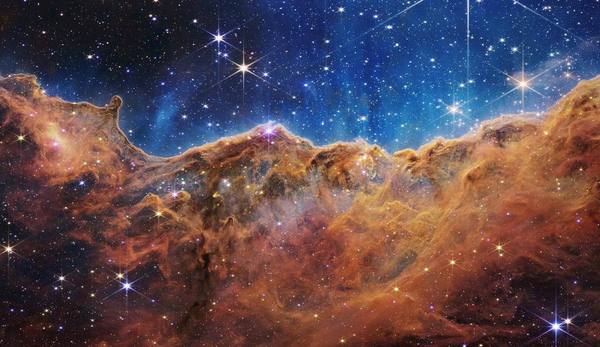
Stars begin, too. In the Eagle Nebula, 6,500 light years away, the towering 'Pillars of Creation' are clouds of gas and dust where new stars are forming as gravity pulls material together. NASA's Hubble photographed them in 1995 and Webb again in 2022, showing newborn stars glowing inside. It is the closest thing in nature to watching a beginning. But even here, the stars are made from older material: hydrogen from the early universe and heavier elements scattered by stars that died before them. Nature begins things only by recycling what was already there.

Episode 3

At our best

The Planck satellite mapped the oldest light in the universe, released about 380,000 years after the Big Bang. Webb has pushed further for galaxies: MoM-z14, confirmed in 2026, is seen as it was about 280 million years after the beginning. These are among the most astonishing achievements in science. But every telescope reaches a wall. Before the first light there is nothing to see, and physics itself cannot yet say what, if anything, came 'before' the hot Big Bang. Every instrument looks back to a beginning it cannot see past.

Episode 4

The Break

Every human beginning needs prior material, a model to copy, trial and error, and a 'before' to start from. Every beginning we know is a beginning out of something. Al-Mubdiʾ begins without precedent, as al-Ghazālī put it, and without anything to work from. This is not a scientific claim, and the Qur'an is not a physics book; it simply names the One behind every first moment. “Lo! He it is Who produceth, then reproduceth” (Qur'an 85:13, Pickthall).

Read: 85:13; 10:4.

From the tradition: Ghazālī: al-Mubdiʾ brings into being without precedent. Nahj al-Balāgha Sermon 1: created 'without… making use of any experiment'.

On screen

Arceus hatches from an egg into a chaos already there. Al-Mubdiʾ has nothing before Him to hatch from.

Where it shows up

In scripture
Q 85:13; 10:4; 29:20; 30:27; Gen 1:1.
The same thread in Jewish and Christian scripture
Genesis 1:1; Isaiah 65:17. Weak-moderate.
In the universe
JWST MoM-z14 record (2026); Planck CMB.
In nature
CMB: ESA 'Planck: Understanding the origins of the Universe'.
In people
Lemaître, a Catholic priest, proposed the expanding-universe origin.
In science
Cosmology: the hot Big Bang, nucleosynthesis of hydrogen and helium.

Living it

Begin good things (bismillāh at every start).

Its kind

Act: something done: mercy shown, provision given, a prayer answered.

In the Qur'an: 85:13; 10:4 (verb yubdiʾu)

The visitors from Yemen

The Companion ʿImrān ibn Ḥuṣayn tied up his camel at the gate and went in to see the Prophet Muhammad ﷺ (peace be upon him). A delegation from the tribe of Tamīm was there, and the Prophet offered them good news. They wanted something more practical, and the moment passed.

Then a group from Yemen arrived. They accepted the good news gladly and said: we have come to ask you about the beginning of this whole affair. How did it all start?

The Prophet answered: there was God, and there was nothing other than Him. His Throne was over the water. He wrote everything in the Record, and He created the heavens and the earth. (Bukhari 3191)

At that moment someone shouted: ʿImrān, your camel has run off. He dashed out after it, but it had vanished into the heat haze. Years later he said: by God, I wish I had let the camel go and stayed to hear the rest.

The Yemenis asked the biggest question there is. ʿImrān's regret, honest and a little funny, has kept the story alive ever since.

What each faith says

Read:

Judaism

“In the beginning God created the heaven and the earth. Now the earth was unformed and void, and darkness was upon the face of the deep; and the spirit of God hovered over the face of the waters. And God said: ‘Let there be light.’ And there was light.”

Genesis 1:1-3 · JPS 1917

The Torah opens with a beginning: “In the beginning God created the heaven and the earth.” Its Hebrew verb bara, create, is used in the Bible only with God as its subject. Jewish thinkers such as Maimonides taught creation out of nothing, while recognising that the text is written to teach, not to give a scientific timeline.

The Jewish prayer Adon Olam begins by praising the Lord “who reigned before any form was created”.

Jews mark new beginnings with a blessing. At the first night of a festival, on tasting the first fruit of a season or wearing something new, they say the Shehecheyanu, thanking God who has kept us alive, sustained us and brought us to this season.

Christianity

“In the beginning was the Word, and the Word was with God, and the Word was God.”

John 1:1-3 · WEB

Christians share Genesis and add the opening of John's Gospel, which begins with the same words: “In the beginning was the Word”. For Christians the Word is Christ, through whom all things were made.

Christianity also has a famous link with modern cosmology. Georges Lemaître, a Belgian Catholic priest and physicist, proposed in 1927 and 1931 that the universe was expanding from a 'primeval atom', the idea that became the Big Bang. He was careful to keep his science and his faith distinct.

Generations of British children have sung Eleanor Farjeon's hymn “Morning Has Broken” (1931) in school assemblies: each new morning greeted as if it were the first one in Eden.

Islam

“Say (O Muhammad): Travel in the land and see how He originated creation, then Allah bringeth forth the later growth. Lo! Allah is Able to do all things.”

Qur'an 29:20 · Pickthall (1930)

The Qur'an uses the verb yubdiʾu, He begins, several times, usually paired with yuʿīdu, He brings back: “He begins creation, then brings it back” (10:4). It also invites people to look for themselves: “Travel through the land and see how He began creation” (29:20).

Muslims are taught not to read modern physics into these verses. They are a call to wonder, not a scientific forecast.

Same and different

All three faiths teach that God created the universe and was not Himself created. They agree it was a free act, not a necessity. They differ on how God created. Christians speak of creation through the Word, Christ; Jews and Muslims speak of God's command alone. Islam gives that command a single word: when God wills a thing, He says to it kun, “Be!”, and it is (Qur'an 36:82).

A moment to reflect

  1. What was the best thing you ever began? What did you need in order to start it?
  2. Does knowing about the Big Bang make the question 'why is there anything?' bigger or smaller for you?
  3. What would it mean to begin something with nothing at all to work from?

Watch

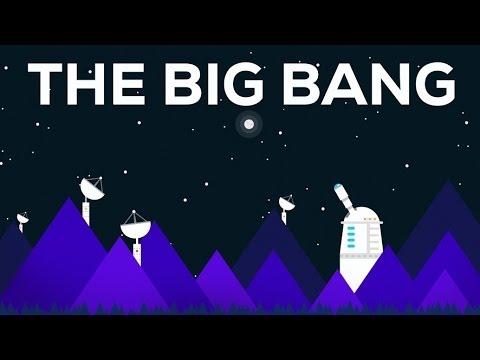
Kurzgesagt's animated tour of the first moments of the universe, as science currently understands them.

ESA explains how Planck mapped the oldest light in the universe.

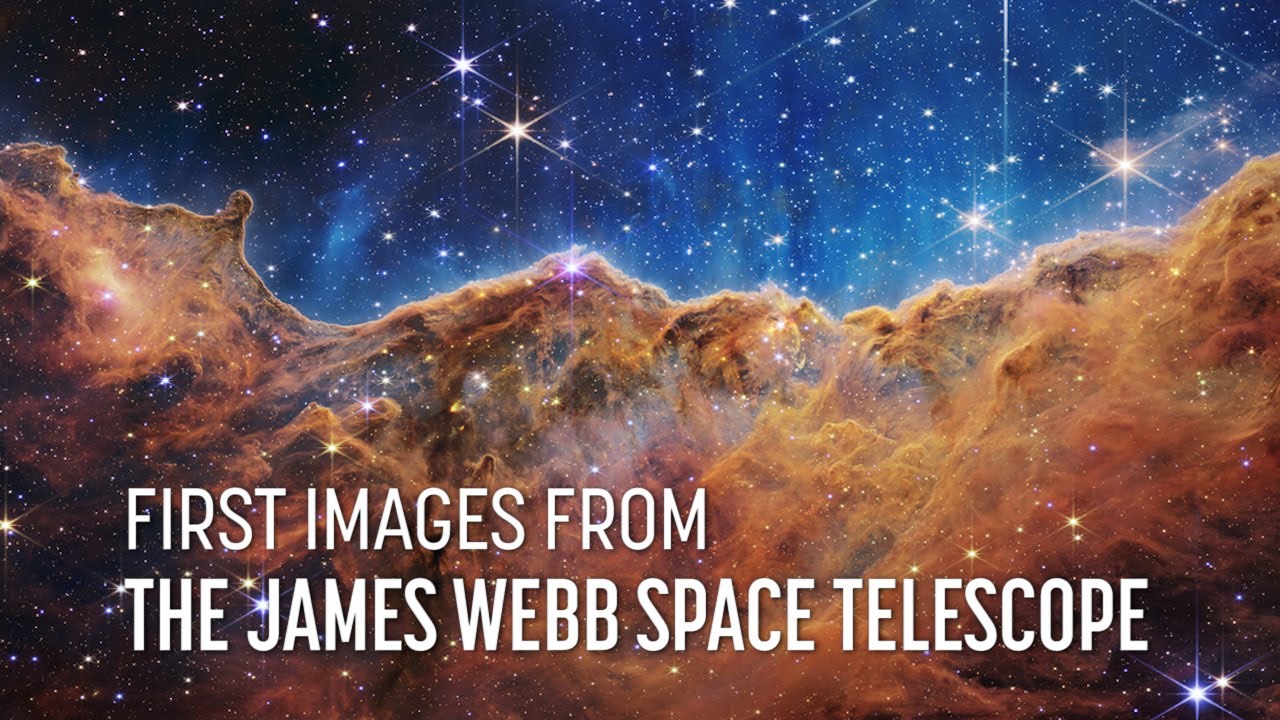
NASA's highlights of Webb's first images, the telescope now seeing the earliest galaxies.

Do it together

families / schoolsFirst things

Ask everyone to name a 'first': first word, first friend, first day at school. Then ask: what did you need before it could happen? Finish with Genesis 1:1, John 1:1 and Qur'an 85:13.

neighbours / faith groupsDark-sky night

Go somewhere dark and look at the stars together, ideally with a local astronomy society. Remember that the light you see left long ago, and that the oldest light we have found is 13.8 billion years old.

families / faith groupsA blessing for firsts

Jews say the Shehecheyanu over firsts: the first night of a festival, the first strawberries of summer. Many churches bless new homes and new babies. This month, notice one first in your household, mark it with a short thank-you in your own tradition's words, and talk about why beginnings feel holy.
Go deeper

Sources (5)
  1. MoM-z14 seen ~280 million years after the Big Bang (28 Jan 2026): STScI news release 2026-107
  2. Oldest light ~380,000 years after the Big Bang: ESA Planck
  3. Pillars of Creation imaged by Hubble 1995 and Webb 2022: NASA Webb
  4. Newton 'shoulders of giants' letter to Hooke, 1675: Historical Society of Pennsylvania (letter held)
  5. Beginning of creation hadith: Sahih al-Bukhari 3191
الْمُعِيدُ
Up next · Name 59 of 99The Restorer, who brings creation backal-Muʿīd
Next →

Watch more: The Originator, who begins creation

6 films and talks, chosen for this page. They play here.

  • 10 - The Divine Names Al-Qawi until Al-Qayyum - Ninety-Nine Names of Allah for Youth - Imam Yama

    SeekersGuidance · 55 min

    SeekersGuidance: Imam Yama Niazi on the Names from al-Qawiyy to al-Qayyum, including al-Mubdi'.

  • In the Beginning – Timothy Keller [Sermon]

    Gospel in Life · 47 min

  • Cosmic Microwave Background Explained

    PBS Space Time · 7 min

    PBS Space Time: the cosmic microwave background, the oldest light.

  • Exploring the Dark Universe: Cosmic Microwave Background

    American Museum of Natural History · 5 min

    American Museum of Natural History: the cosmic microwave background.

  • The Beginning of Everything -- The Big Bang

    Kurzgesagt – In a Nutshell · 6 min

  • More films and talks on F-ILMWatch free