The Prophet Muhammad ﷺ (peace be upon him) told the story of Hagar (peace be upon her). Abraham (peace be upon him) brought her and their baby son Ishmael (peace be upon him) to a dry valley where Mecca now stands. There was no one there and no water. He left them with a bag of dates and a skin of water, and turned to go.
Hagar followed him. “Abraham, are you leaving us in this valley, where there is no one and nothing?” He did not answer. At last she asked: “Did God command you to do this?” He said yes. She said: “Then He will not let us be lost.”
When the water ran out, the baby began to cry with thirst. Hagar climbed the nearest hill, Ṣafā, to look for help. She saw no one. She ran down across the valley and up the other hill, Marwah. Nothing. Seven times she ran between the two.
Then she heard a sound. At the place where the baby lay, water was welling up from the ground. She built a little wall of sand around it and cupped the water in her hands. That spring is Zamzam (Bukhari 3364).
Every year, millions of pilgrims walk between Ṣafā and Marwah seven times, remembering her. The story holds both halves of trust: she ran with all her strength, and the water came from somewhere she could never have dug.
Judaism
“The eyes of all wait for Thee, and Thou givest them their food in due season. Thou openest Thy hand, and satisfiest every living thing with favour.”
Psalm 145:15-16 · JPS 1917
Three times a day, Jews say Ashrei, a prayer built around Psalm 145, which includes the verse below. Tradition says that anyone who says it daily, meaning it, is assured of a share in the world to come, because it praises God for feeding every living thing.
The first blessing of grace after meals praises God who “feeds the whole world in His goodness”. The story of manna in the wilderness, bread that came each morning and could not be hoarded, taught Israel to trust for one day at a time.
Every Shabbat table carries two loaves of challah, recalling the double portion of manna that fell before the day of rest, so that no one had to gather on Shabbat.
Christianity
“See the birds of the sky, that they don't sow, neither do they reap, nor gather into barns. Your heavenly Father feeds them. Aren't you of much more value than they?”
Matthew 6:26 · WEB
Jesus taught his followers to pray, “Give us today our daily bread”, and pointed to the birds as a sign of God's care. Christians understand this not as a reason to stop working, but as a reason to stop worrying.
Many Christians say grace before meals, and churches across Britain run food banks and community kitchens as a way of sharing the provision they believe comes from God.
The Salvation Army, a church founded by Catherine and William Booth in London's East End in 1865, still runs community meals and lunch clubs across the country.
Islam
“Lo! Allah! He it is that giveth livelihood, the Lord of unbreakable might.”
Qur'an 51:58 · Pickthall (1930)
Ar-Razzāq appears in the Qur'an as “Lo! Allah! He it is that giveth livelihood, the Lord of unbreakable might.” (51:58, Pickthall). Rizq, provision, means far more than food: it includes health, knowledge, friendship, guidance and time. Muslim scholars warned against reading this Name as a promise of wealth; it is a promise that nothing living is forgotten.
The Prophet said: “If you relied on God as He should be relied on, He would provide for you as He provides for the birds: they go out hungry in the morning and come back full in the evening” (Tirmidhi 2344). The birds still fly out to look.
Same and different
All three faiths thank God before or after eating, point to the birds as a sign of His care, and teach that trusting God goes together with working and sharing. Judaism remembers manna and blesses God who feeds the world. Christianity prays for daily bread and sees Christ as the bread of life. Islam calls God ar-Razzāq and treats rizq as every kind of provision, from food to faith. They differ on some of what provision ultimately points to, but agree that no living thing is forgotten.
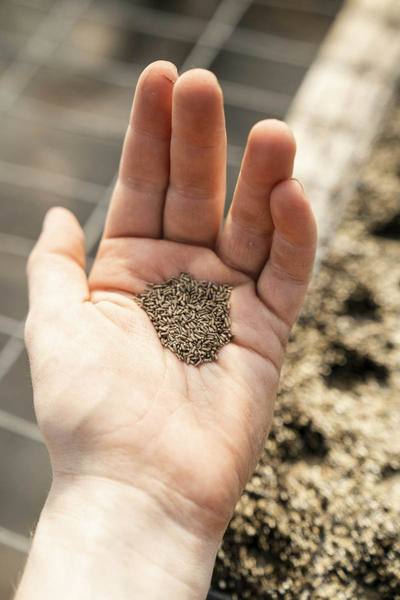
neighbours / schoolsSeed libraryStart a seed swap shelf in a library, school or place of worship. Save seeds from tomatoes, beans or sunflowers and share them. Talk about Svalbard, and about the One a seed comes from.
faith groups / familiesFood bank shiftVolunteer together for a shift at a local food bank or community kitchen. Before or after, read Psalm 145:15-16, Matthew 6:26 and Qur'an 11:6.
familiesTwo loavesBake or buy two loaves for a Friday supper, as Jewish families do for Shabbat. Tell the story of the manna: enough for each day, and a double portion before the day of rest. Talk about what ‘enough for today’ means for you.
schools / faith groupsDaily breadSay together the line from the Lord's Prayer, ‘Give us today our daily bread’. Then trace a single slice back: baker, miller, farmer, rain, sun. How many people and creatures were part of it?
 Episode 1