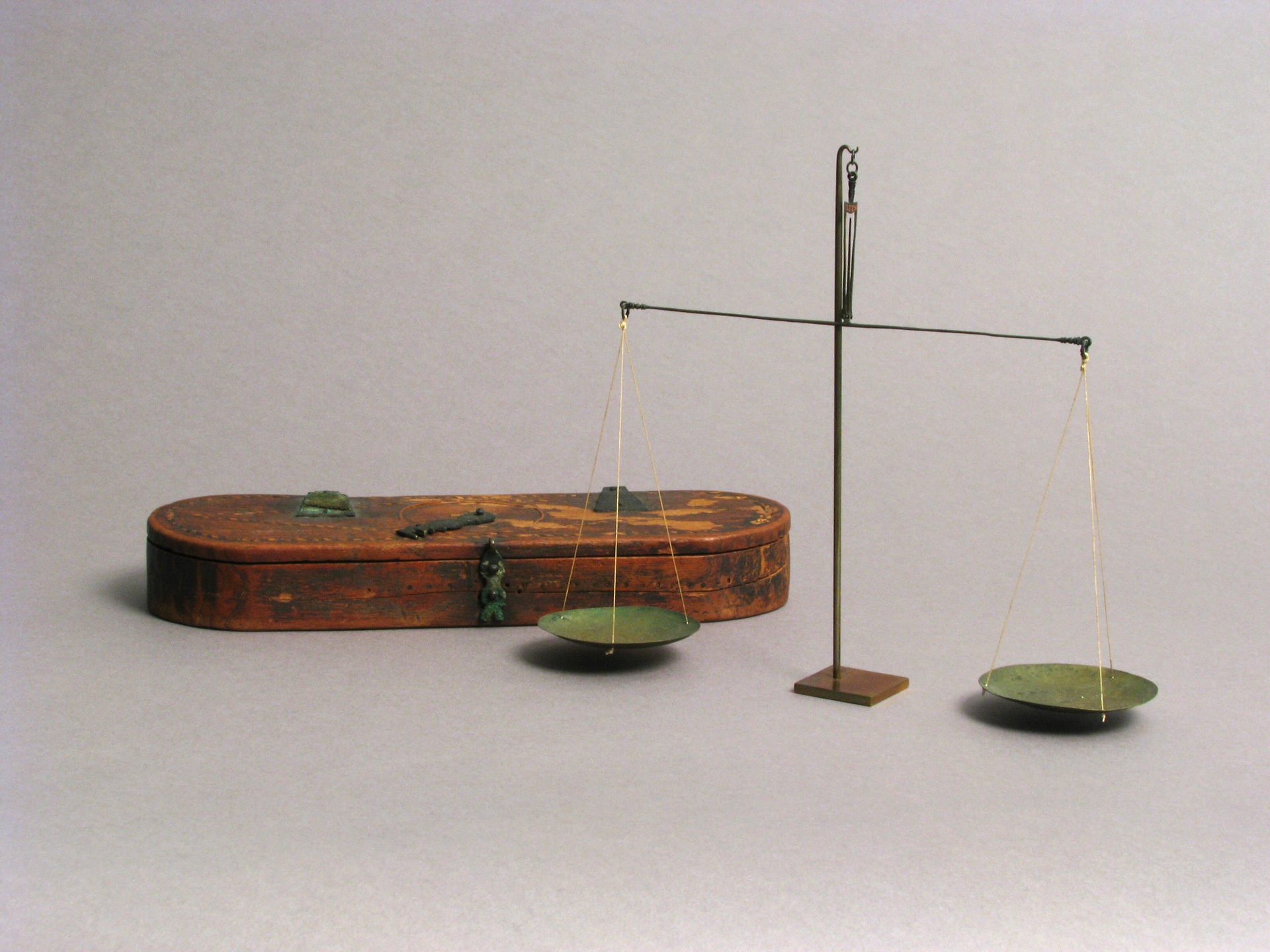
A man came to two famous rabbis in Jerusalem with a dare: teach me the whole Torah while I stand on one foot. The first, Shammai, chased him off with a builder's measuring rod. The second, Hillel, answered on the spot.
“What is hateful to you, do not do to your neighbour. That is the whole Torah; the rest is explanation. Now go and learn it.” (Talmud, Shabbat 31a)
Two thousand years later, versions of Hillel's sentence turn up all over the world: in the Gospels and in the sayings of the Prophet Muhammad, in Punjab and in ancient India, in China and among people who believe in no god at all. It is often called the Golden Rule.
“Thou shalt not take vengeance, nor bear any grudge against the children of thy people, but thou shalt love thy neighbour as thyself: I am the LORD.”
Leviticus 19:18 · JPS 1917
This is the oldest written form of the idea in the Abrahamic scriptures. Sixteen verses later, the same chapter widens it: love the stranger “as thyself”, too (Leviticus 19:34).
Where does fairness come from?
Scientists have looked for the roots of fairness in very young children and in animals. In a well-known 2007 study at Yale, babies of six to ten months mostly reached for a puppet that had helped another puppet rather than one that had hindered it. In 2003, two researchers found that capuchin monkeys refused a cucumber when they saw a partner get a grape for the same task.
These findings are debated, and they don't prove where morality comes from. Some see a Creator's fingerprint in them; others see evolution at work. Either way, they make the Golden Rule look less like a rule we invented and more like something we recognise.
Watch
Watch
What each faith says
Judaism
“The stranger that sojourneth with you shall be unto you as the home-born among you, and thou shalt love him as thyself; for ye were strangers in the land of Egypt: I am the LORD your God.”
Leviticus 19:34 · JPS 1917
“Love thy neighbour as thyself” comes from Leviticus. Rabbi Akiva, a century after Hillel, called it a great principle of the Torah. Hillel put it the other way round: don't do what you would hate. Jewish teachers point out that this version can be kept by anyone, every day, starting now.
The same chapter of Leviticus says the stranger must be loved like the home-born, “for ye were strangers in the land of Egypt”.
Christianity
“Therefore, whatever you desire for men to do to you, you shall also do to them; for this is the law and the prophets.”
Matthew 7:12 · World English Bible (British Edition), public domain
Jesus gave the rule in the Sermon on the Mount and said it sums up “the law and the prophets”. Asked for the greatest commandment, he joined two lines from the Hebrew Bible: love God with all your heart (Deuteronomy 6:5) and love your neighbour as yourself (Leviticus 19:18), in Matthew 22:37–39. When someone asked, “Who is my neighbour?”, he told the parable of the Good Samaritan (Luke 10:25–37). In it, the neighbour is the outsider who stops to help.
Islam
“None of you truly believes until he loves for his brother what he loves for himself.”
Sahih al-Bukhari 13; Sahih Muslim 45 · our rendering
The Prophet Muhammad put the rule at the heart of faith itself. The saying is in the two most trusted hadith collections, Sahih al-Bukhari (13) and Sahih Muslim (45), and it is number 13 in Imam al-Nawawi's famous Forty Hadith. In one version in Sahih Muslim the word is “neighbour” instead of “brother”. Many scholars read “brother” here as every human being.
The Qur'an makes the same point about fair dealing. It warns those who demand full measure for themselves but give short measure to others (83:1–3).
Without religion
Humanists and many other non-religious people hold the Golden Rule as their own. They say it needs no God behind it, only the human ability to imagine how another person feels. Some philosophers have pushed back: should you treat others as you want to be treated, or as they want to be treated? People still argue about that, which is part of the fun.
Sikhi
“No one is my enemy, and no one is a stranger. I get along with everyone.”
Guru Granth Sahib, ang 1299 (naa ko bairee nahee bigaanaa) · our rendering
Every Sikh Ardas, the prayer said standing at the end of worship, closes by asking for sarbat da bhala: the good of all, with no one left out. Guru Arjan wrote that once a person truly sees God in everyone, there are no enemies and no strangers left.
Hindu traditions
The Mahabharata, India's great epic, puts it as a summary of dharma, the right way to live. One should never do to another what one would regard as harmful to oneself; this, in short, is dharma (Anushasana Parva 113.8 in the Ganguli translation). The rest, the epic says, comes from desire.
Beyond the Abrahamic faiths
“All men tremble at punishment, all men fear death; remember that you are like unto them, and do not kill, nor cause slaughter.”
Dhammapada 129 · F. Max Müller (1881), public domain
The Buddha taught it through empathy with every living thing. In China, Confucius was asked for one word to live by. He answered “reciprocity”: what you do not want for yourself, do not do to others (Analects 15.24).
Same and different
Almost everyone agrees on the rule; they disagree about where it comes from and how far it reaches. Leviticus and Jesus put it positively, love and do; Hillel, the Mahabharata and Confucius put it as a limit, don't do harm. Jews ground it in God's command, Christians in God's love shown in Jesus, Muslims in the faith of the believer, Sikhs and Hindus in the one divine life in everyone, Buddhists in shared suffering, humanists in empathy and reason. And every tradition has had to wrestle with the same question the lawyer asked Jesus: who counts as my neighbour?
A moment to reflect
- Which version on this page do you like best: the ‘do’ version or the ‘don't’ version? Why?
- Is it harder to love your neighbour or to love the stranger?
- Should you treat people as you want to be treated, or as they want to be treated?
- Can you think of a time someone kept the Golden Rule when it cost them something?
Do it together
Retell Hillel's story. Then challenge everyone to sum up what matters most to them while standing on one foot. Compare the answers with the versions on this page.
Write each version from this page on a separate card, without the name of its tradition. Ask people to match each card to its source, then talk about what surprised them.
Draw your street or school. Mark who you know, who you don't, and one person you could do one kind thing for this week.
Go deeper
- Leviticus 19 (Sefaria) · scripture
- Sahih al-Bukhari 13 (Sunnah.com) · scripture
- Guru Granth Sahib, ang 1299 (SikhiToTheMax) · scripture
- The Golden Rule (Internet Encyclopedia of Philosophy) · article
- What is humanism? (Understanding Humanism) · article
Sources (11)
- Leviticus 19:18, 19:34 text: Sefaria, JPS 1917
- Hillel and Shammai, Shabbat 31a (our rendering): Wikipedia, Hillel the Elder
- Matthew 7:12; Matthew 22:37–39 text: World English Bible (British Edition) via bible-api.com
- Hadith: ‘None of you will have faith till he wishes for his brother what he likes for himself’ (Bukhari 13, narrated by Anas): Sunnah.com
- Qur'an on short measure: Qur'an 83:1–3 (Quran.com)
- Guru Arjan: naa ko bairee nahee bigaanaa: Guru Granth Sahib ang 1299, BaniDB / SikhiToTheMax
- Dhammapada 129, Müller translation: Project Gutenberg #2017
- Mahabharata, Confucius and other forms of the rule: Wikipedia, Golden Rule
- Philosophical objections and variants: Internet Encyclopedia of Philosophy, The Golden Rule
- Babies prefer helpers (Hamlin, Wynn and Bloom 2007): Nature 450:557–559
- Capuchins reject unequal pay (Brosnan and de Waal 2003): Nature 425:297–299