Every spring, Jewish families sit down to the Seder meal and tell the story of the Exodus as if they had been there themselves. At one point, as the ten plagues are named, everyone dips a finger into their wine and lets a drop fall for each plague. The reason is striking: a full cup is a sign of joy, and no one should rejoice fully at the suffering of others, even of enemies.
Moses (peace be upon him) is the prophet the Qur’an names more than any other, about 136 times. His confrontation with Pharaoh is told in the Torah, remembered in the Gospels and retold in many surahs of the Qur’an. It is the story of a tyrant who called himself a god, a stammering shepherd sent to face him, and a God who hears the cry of slaves.
“Go, both of you, unto Pharaoh. Lo! he hath transgressed (the bounds). And speak unto him a gentle word, that peradventure he may heed or fear.”
Qur'an 20:43–44 · Pickthall (1930)
In Surah Ta Ha, God sends Moses and his brother Aaron (peace be upon him) to the most arrogant ruler on earth, and tells them to speak gently. Muslim scholars have drawn from this verse a rule for how to speak even to those who are badly wrong. In Exodus, God says: “I have surely seen the affliction of My people that are in Egypt, and have heard their cry” (Exodus 3:7, JPS 1917).
The world behind the story
Exodus says the Hebrew slaves built the store-cities of “Pithom and Raamses” (Exodus 1:11). Archaeologists have found Pi-Ramesses, the great Delta capital of Ramesses II (reigned about 1279–1213 BCE), near the modern village of Qantir. That is why many people picture Ramesses as the Pharaoh of the Exodus. Egyptian records also show that Semitic-speaking people lived and worked in Egypt, some as labourers, over many centuries.
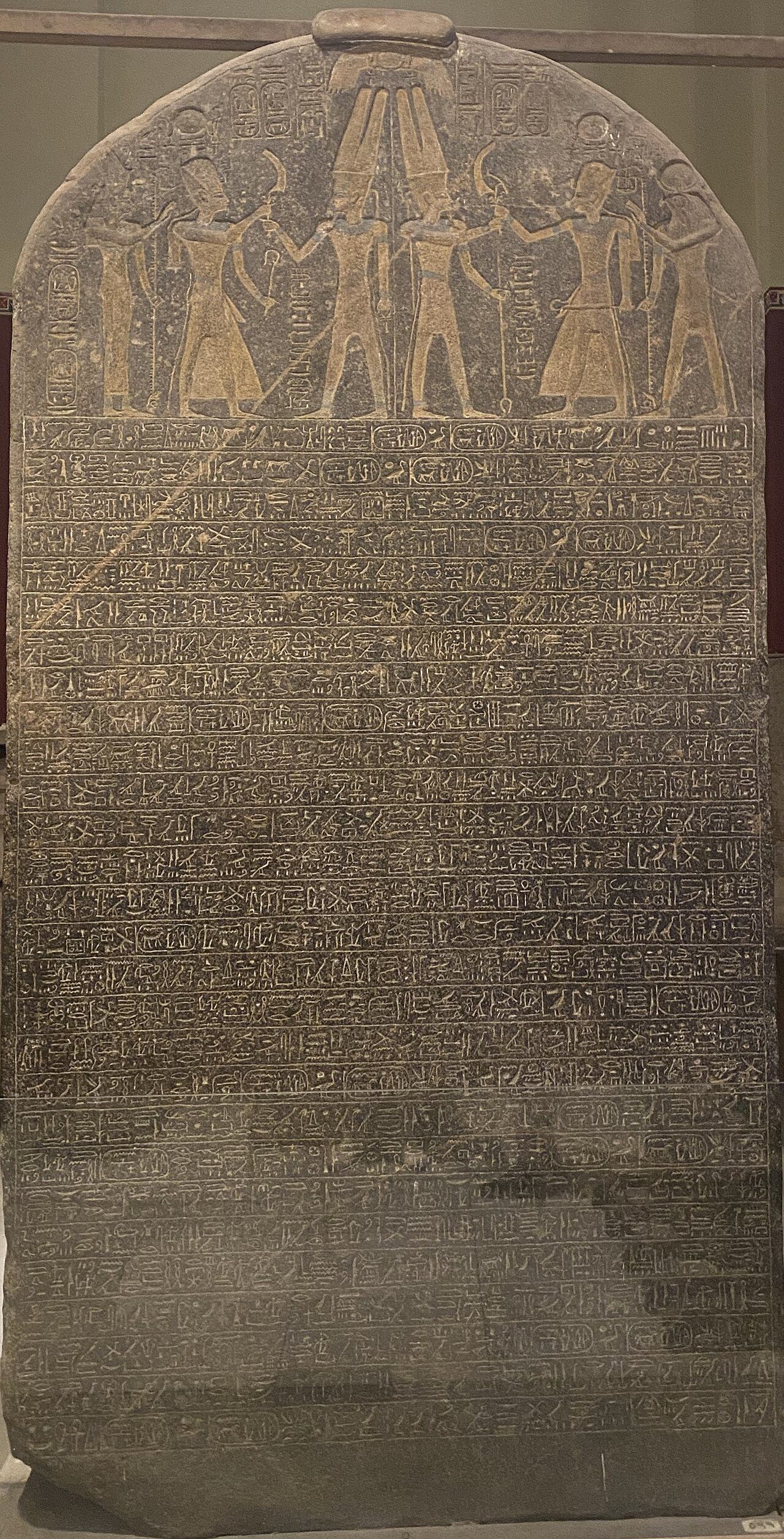
The earliest mention of “Israel” outside the Bible comes from Egypt itself. The Merneptah Stele, a granite inscription from about 1208 BCE now in the Egyptian Museum in Cairo, lists Israel among peoples defeated in Canaan. So by then a people called Israel existed in the land.
What archaeology has not found is direct evidence of the Exodus. There is no Egyptian record of the plagues or of a mass departure, and there are no remains of a large group camped in Sinai for forty years. Scholars respond in different ways. Some think the story preserves the memory of a smaller group escaping Egypt, later told as the story of all Israel. Some date it earlier or later than Ramesses. Some regard it as a founding story rather than history. Believing scholars point out that slaves and nomads leave few traces, and that absence of evidence is not evidence of absence.
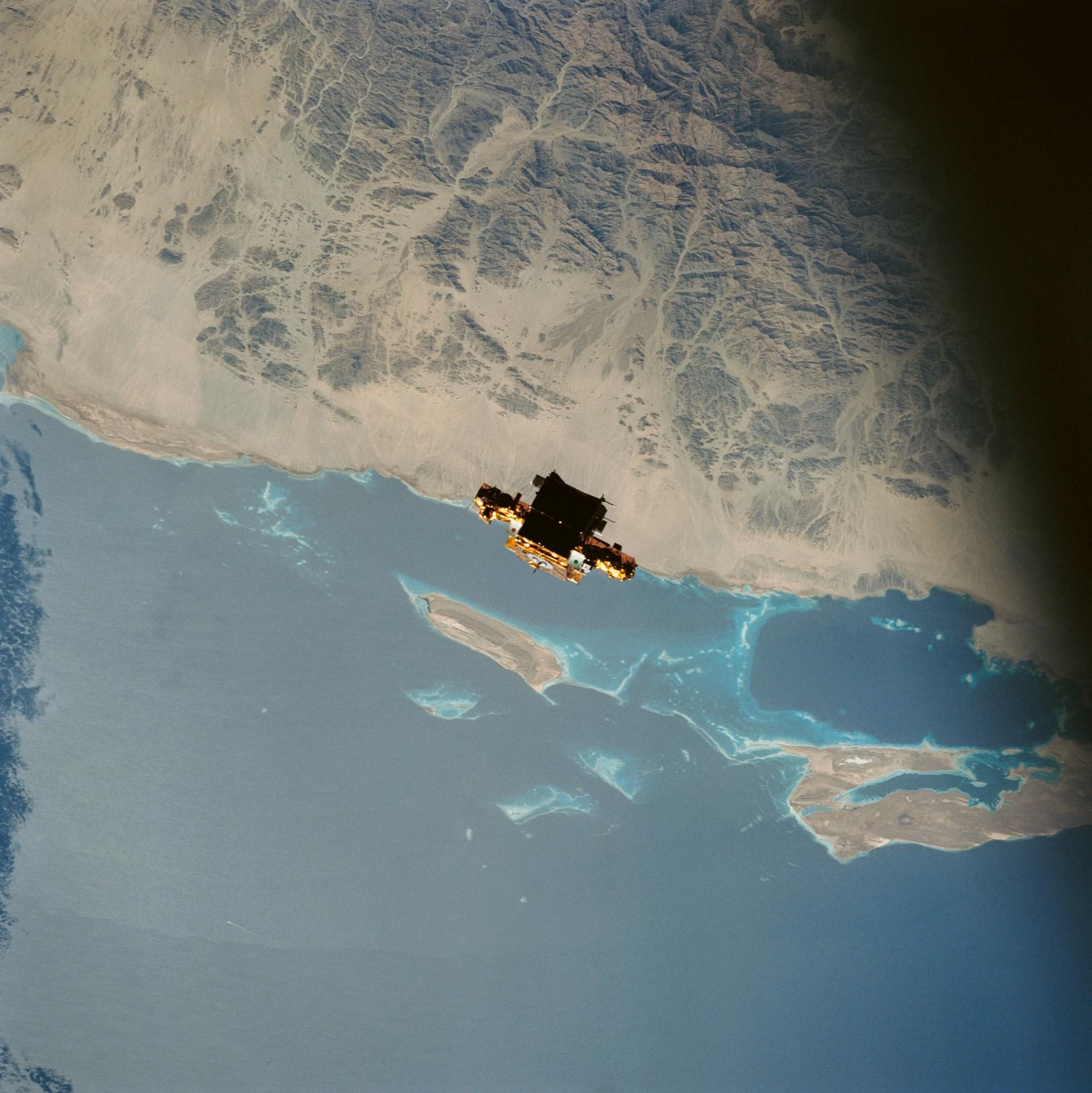
The sea itself is a puzzle. The Hebrew name is Yam Suf, which can mean “Sea of Reeds”. Scholars have suggested several places, from the marshy lakes near the Suez isthmus to the Gulf of Suez. Exodus says God parted the water with “a strong east wind all the night” (14:21). In 2010 researchers at the US National Center for Atmospheric Research used computer models to show how a strong, steady wind could push back shallow water in the Nile Delta. That shows a possible mechanism; it does not show what happened.
What each faith says
Judaism
“And the LORD said: ‘I have surely seen the affliction of My people that are in Egypt, and have heard their cry by reason of their taskmasters; for I know their pains”
Exodus 3:7 · JPS 1917
The Exodus is the founding story of the Jewish people. A new king fears the Hebrews and orders their baby boys drowned. Moses’ mother hides him in a basket in the Nile; Pharaoh’s daughter finds him and raises him as her own. Grown up, Moses kills an Egyptian who is beating a Hebrew slave, flees to Midian and becomes a shepherd. At a bush that burns without being consumed, God calls him: “put off thy shoes from off thy feet, for the place whereon thou standest is holy ground” (Exodus 3:5).
The story begins with women who refuse. Two Hebrew midwives, Shiphrah and Puah, are ordered to kill the baby boys. They will not: “the midwives feared God, and did not as the king of Egypt commanded them” (Exodus 1:17). Moses’ mother Jochebed hides him; his sister Miriam watches over the basket. The rabbis gave Pharaoh’s daughter a name, Bithiah, “daughter of God”. Because she called a child who was not hers “my son”, God called her “My daughter” (Leviticus Rabbah 1:3, reading 1 Chronicles 4:18).
Moses, who says he is “slow of speech”, returns with Aaron to tell Pharaoh, “Let My people go.” Ten plagues follow, then the night of the first Passover and the crossing of the sea. The Talmud says that when the Egyptians drowned, the angels wanted to sing. God silenced them: “My handiwork is drowning in the sea, and you would sing?” (Megillah 10b; Sanhedrin 39b). The Torah repeats again and again: love the stranger, “for ye were strangers in the land of Egypt” (Leviticus 19:34).
Christianity
“By faith, Moses, when he had grown up, refused to be called the son of Pharaoh’s daughter, choosing rather to share ill treatment with God’s people, than to enjoy the pleasures of sin for a time”
Hebrews 11:24–25 · WEB
Christians share the Exodus as part of their Old Testament and see in it a pattern of salvation. Jesus shared a Passover meal with his disciples before his death, and Christians remember it at the Last Supper, or Eucharist. Paul calls Christ “our Passover” (1 Corinthians 5:7). The Easter Vigil in many churches includes the reading of the crossing of the sea.
The story has also shaped Christian movements for freedom. Enslaved Africans in America sang “Go Down, Moses” and saw their own longing in Israel’s escape from Pharaoh. Martin Luther King Jr’s last speech, in 1968, ended with Moses on the mountain looking into the promised land.
One of the bravest of those Christians was a woman. Harriet Tubman, born into slavery in Maryland, escaped and went back again and again to lead others north, guided, she said, by prayer. The people she freed called her “Moses”.
Islam
“(Moses) said: My Lord! relieve my mind And ease my task for me; And loose a knot from my tongue, That they may understand my saying.”
Qur'an 20:25–28 · Pickthall (1930)
In the Qur’an, God inspires Moses’ mother to place him in the river and promises to return him to her (28:7). It is Pharaoh’s wife who adopts him: “a comfort of the eye for me and for you” (28:9). Muslim tradition names her Asiya. Living in a tyrant’s palace, she prays: “And Allah citeth an example for those who believe: the wife of Pharaoh when she said: My Lord! Build for me a home with thee in the Garden, and deliver me from Pharaoh and his work, and deliver me from evil-doing folk.” (66:11, Pickthall). The Qur’an holds her up as an example for all believers, and the Prophet Muhammad named her, with Mary, among the most perfect of women (Bukhari 3411). God speaks to Moses at the sacred valley of Tuwa: “Lo! I, even I, am thy Lord, So take off thy shoes, for lo! thou art in the holy valley of Tuwa.” (20:12, Pickthall). Moses asks God: “(Moses) said: My Lord! relieve my mind And ease my task for me; And loose a knot from my tongue, That they may understand my saying.” (20:25–28, Pickthall). Many Muslims say that prayer before speaking in public.
Pharaoh, who claims “And proclaimed: "I (Pharaoh) am your Lord the Highest.".” (79:24, Pickthall), refuses every sign. His own magicians believe when they see Moses’ staff, and accept punishment rather than deny it (20:70–73). As the sea closes over him, Pharaoh finally says he believes, but too late (10:90–92). Muslims fast on the day of Ashura, the 10th of Muharram, in memory of God saving Moses. The Prophet Muhammad ﷺ (peace be upon him) found the Jews of Madinah fasting it and said, “We have more right to Moses than you” (Bukhari 2004).
Same and different
All three remember a God who sees the oppressed and hears their cry, a reluctant prophet who found his voice, a tyrant humbled, and a people set free. All three give women a part in the rescue. The details differ. In the Qur’an, Pharaoh’s wife, Asiya, adopts the baby and becomes a model of faith; in the Torah, Pharaoh’s daughter rescues him, and the rabbis call her Bithiah. Both scriptures say “take off your sandals” at the holy place (Exodus 3:5; Qur’an 20:12). Christians see the Passover fulfilled in Jesus. The Torah turns the story into the Passover law. The Qur’an adds the magicians who believe and Pharaoh’s late repentance. Christians celebrate Easter, Muslims fast at Ashura, and Jews keep Passover: three festivals connected to one escape.
A moment to reflect
- The Qur’an tells Moses to speak gently, even to a tyrant (20:44). When have you had to speak calmly to someone who had power over you?
- Moses felt he wasn’t a good speaker. What task have you been asked to do that you felt unready for?
- The Seder spills wine for the enemy’s suffering. What would that look like in today’s conflicts?
- Who are the “strangers in Egypt” in Britain today?
- Two midwives quietly refused an order to do harm. When is it right to say no to someone in charge?
Watch
A Yale lecture on the Exodus and Sinai narratives in their ancient setting.
The same course on Moses’ beginnings and the name of God revealed at the bush.
A short Jewish teaching on what Passover is really about.
Do it together
Ask a local synagogue whether a member could lead a short demonstration Seder. Taste the bitter herbs and the matzah, and spill the drops of wine for the plagues.
On the day of Ashura, invite neighbours to a mosque or a home to break the fast at sunset, and tell the story of Moses as the Qur’an tells it.
Learn “Go Down, Moses” and a Passover song such as Dayenu. Talk about how one ancient story has carried hope for so many peoples.
Go deeper
- Exodus 1–15 (Sefaria) · scripture
- Surah Ta Ha (Quran.com) · scripture
- Hebrews 11 (Bible Gateway, WEB) · scripture
- Merneptah Stele (Wikipedia) · article
- Passover (My Jewish Learning) · article
- Leviticus Rabbah 1:3, on Bithiah (Sefaria) · scripture
Check yourself
Three quick questions. No score, nothing saved.
1. How did God tell Moses and Aaron to speak to Pharaoh?
2. About how many times does the Qur'an name Moses?
3. Who plays a key part in saving baby Moses?
Sources (7)
- Pi-Ramesses at Qantir, Ramesses II dates: Encyclopaedia Britannica, Ramses II
- Merneptah Stele, about 1208 BCE, first mention of Israel: Wikipedia, Merneptah Stele
- No direct archaeological evidence for the Exodus; scholarly views: Encyclopaedia Britannica, Exodus
- Wind setdown model for parting water: Drews and Han, PLoS ONE 5(8), 2010
- Moses named about 136 times in the Qur’an: Wikipedia, Moses in Islam
- Ashura fast and ‘more right to Moses’: Sahih al-Bukhari 2004, Sunnah.com
- God silences the angels’ song: Megillah 10b (Sefaria)