Noah (peace be upon him) lived in a world filled with violence. God told him to build an ark and warn his people. Few listened. The flood came, and Noah, his family and the animals in the ark were saved. All three faiths tell the story. Genesis ends with a rainbow and God's covenant with every living creature. Christians see a picture of salvation and baptism. The Qur'an adds Noah's long preaching and the heartbreak of a son who would not board.
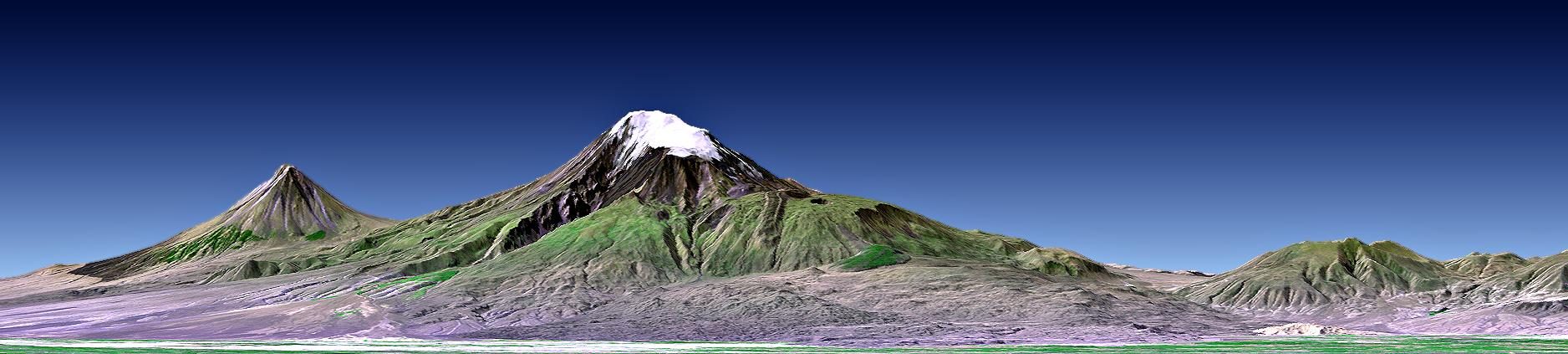
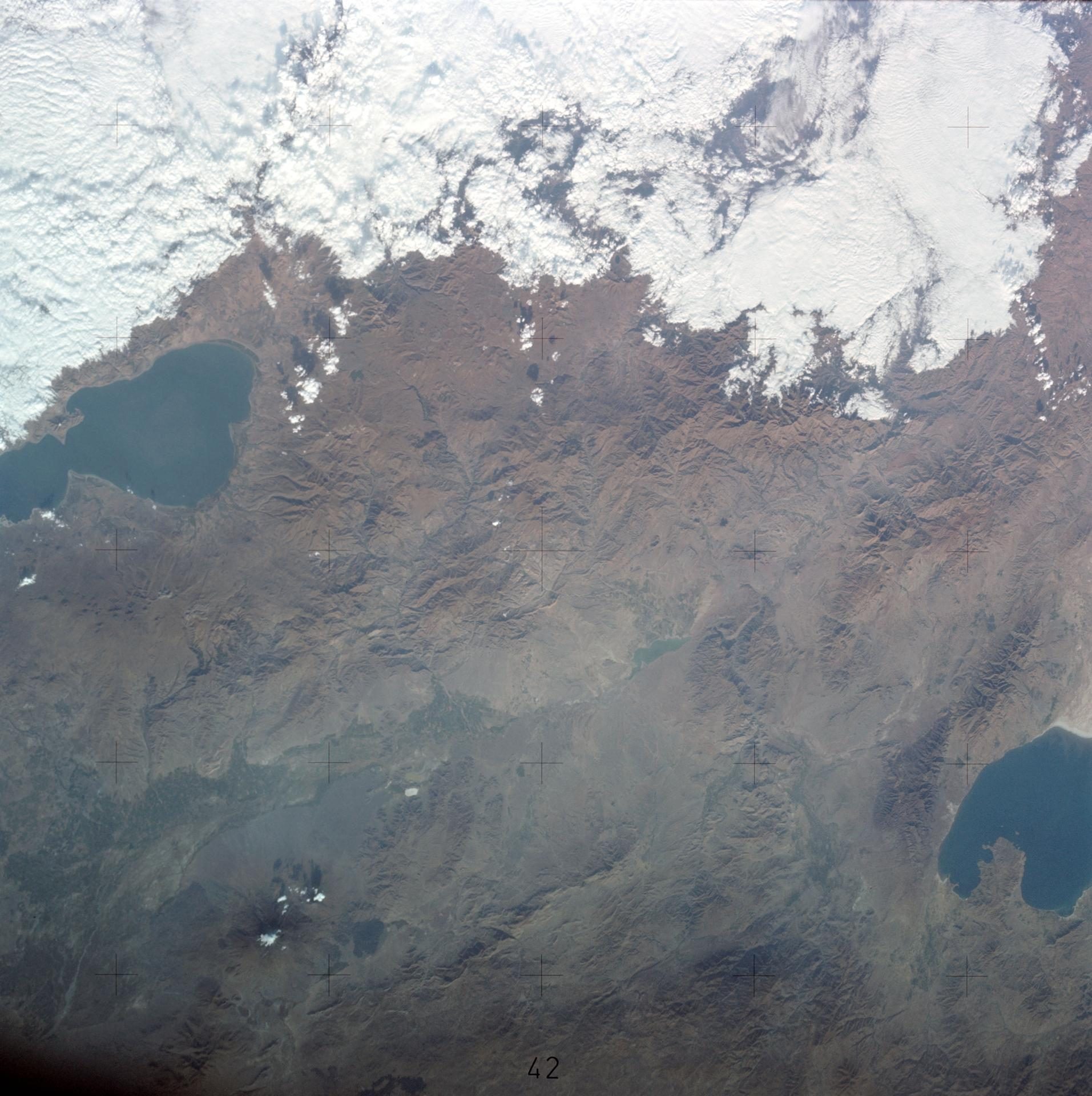
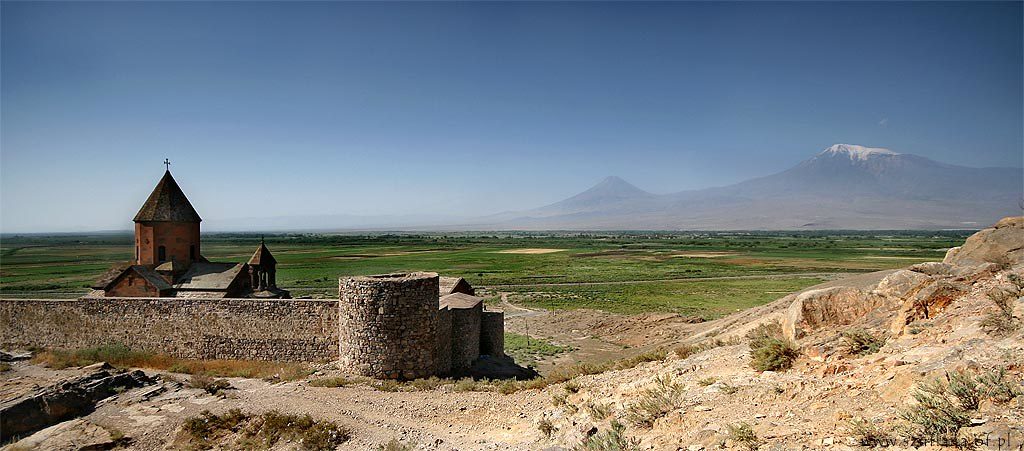
Mount Ararat in a Landsat perspective view. NASA / JPL (public domain)
Watch
Three traditions, three films
Each told by its own community, in its own words, side by side. More on F-ILM.
A Jewish telling
Covenant & Conversation | Noach | Rabbi SacksThe Rabbi Sacks Legacy · 12 minRabbi Sacks on Noach: righteousness, the flood and the covenant with all humanity.
A Christian telling
Noah's Ark (Genesis 7-9)Saddleback Kids · 4 min Shows prophets (a film-maker's portrayal)Kids option: Saddleback Kids Noah's Ark (Genesis 7-9).
A Muslim telling
Stories of the Prophets EP2: The Steadfastness of NuhQalam Institute · 11 minQalam: the steadfastness of Nuh, a focused 11-minute Muslim telling.
The story
One man warns; an ark; a flood; a promise to all life. All three faiths remember Noah (peace be upon him), and each draws its own lesson from the water.
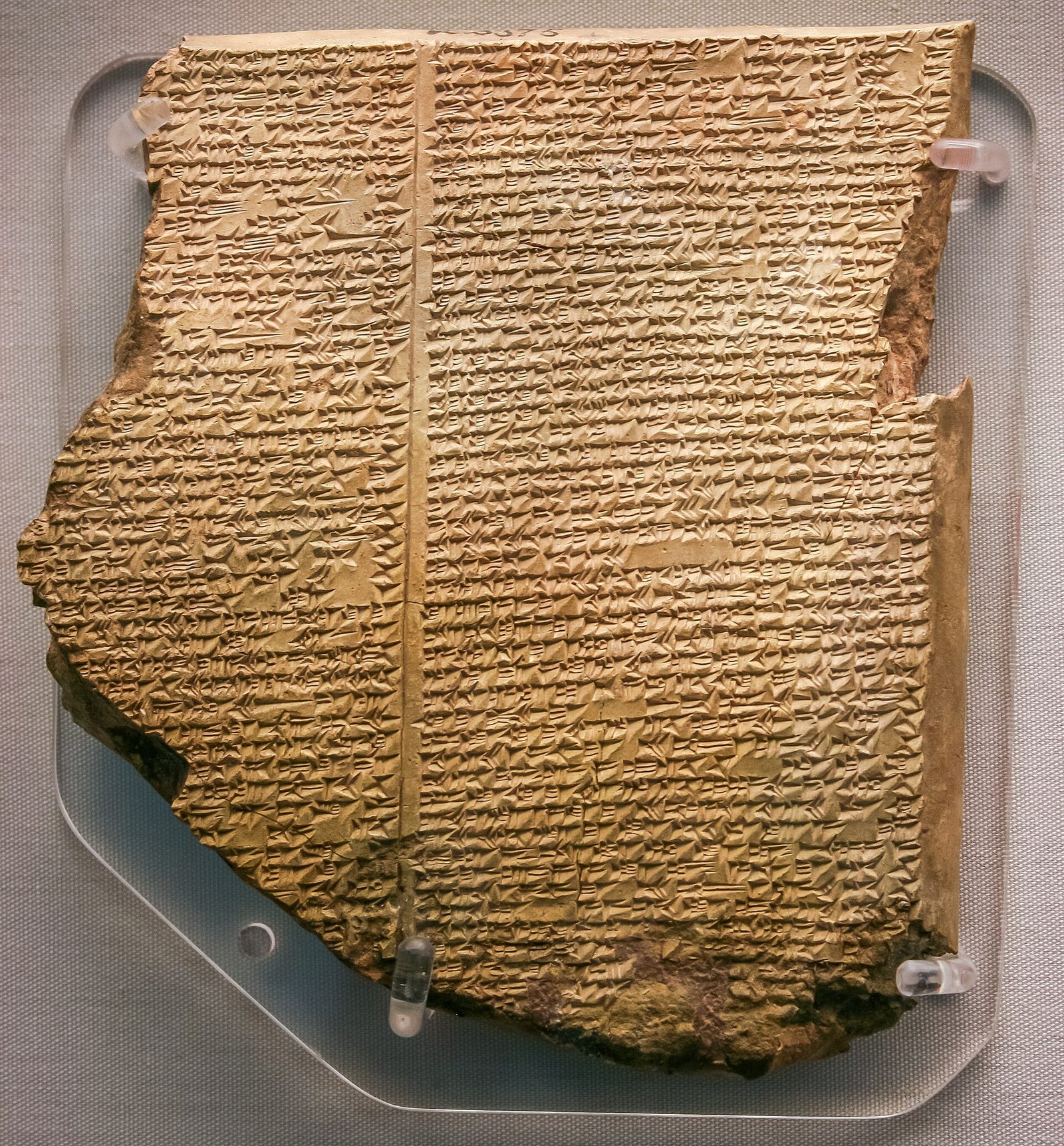
George Smith, a young British Museum assistant, was reading a broken clay tablet from ancient Nineveh when he stopped. It was 1872. It described a man warned by a god of a coming flood, a boat sealed with pitch, animals taken on board, and birds sent out to look for land. Smith was so excited, the story goes, that he jumped up and began to undress in front of his colleagues. He had found a Babylonian flood story older than any surviving copy of Genesis.
Noah (peace be upon him) is remembered by Jews, Christians and Muslims as the one righteous man of a corrupt age. The story of his ark has given us rainbows on nursery walls and some of the hardest questions in scripture.
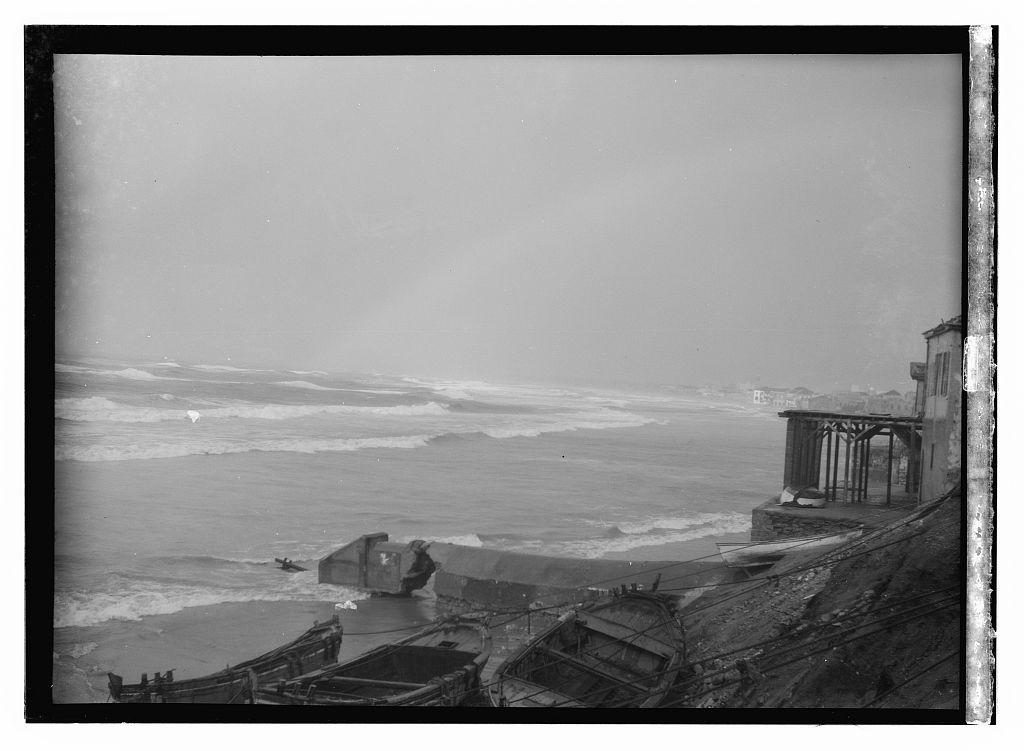
“The ark sailed with them through waves like mountains. Noah called to his son, who had stayed apart: “My son, ride with us, and do not be with those who deny.” He said, “I will take refuge on a mountain that will keep me from the water.” Noah said, “Today there is no refuge from God’s command, except for those on whom He has mercy.” And the waves came between them, and he was among the drowned. Then it was said: “And it was said: O earth! Swallow thy water and, O sky! be cleared of clouds! And the water was made to subside. And the commandment was fulfilled. And it (the ship) came to rest upon (the mount) Al-Judi and it was said: A far removal for wrongdoing folk!”
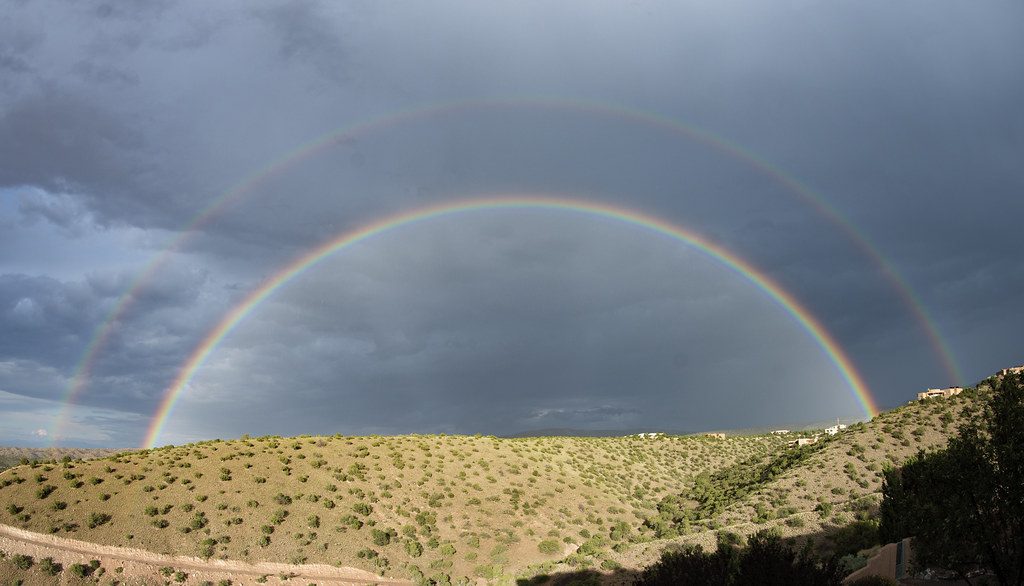
Surah Hud tells the flood in a few vivid verses, including a scene found only in the Qur’an: Noah pleading with his own son, who refuses to board. Genesis ends its flood story with a sign in the sky: “I have set My bow in the cloud, and it shall be for a token of a covenant between Me and the earth” (Genesis 9:13, JPS 1917).
The world behind the story
Flood stories are found in many ancient cultures, but the closest to Genesis come from Mesopotamia. The tablet George Smith read is Tablet XI of the Epic of Gilgamesh, in which a man named Utnapishtim survives a flood sent by the gods. The older Atrahasis epic tells a similar story. In 2014 Irving Finkel, a curator at the British Museum, published a small tablet from about 1750 BCE that gives building instructions for the ark. It was to be round, like a giant coracle, the river boats once used in Iraq.
British Museum Flood Tablet 1. Photograph by Mike Peel (www.mikepeel.net). / CC BY-SA 4.0 (via Wikimedia Commons)
Why Mesopotamia? Southern Iraq is a flat land between two great rivers, the Tigris and the Euphrates, and it flooded often and sometimes catastrophically. In 1929 Leonard Woolley found a thick layer of clean flood silt at Ur and announced that he had found Noah’s flood. Later digs showed that such layers come from different floods at different times in different cities. Floods were a constant memory there.
Geologists have looked for a single worldwide flood in the time of human history and have not found one. Tree rings, ice cores and the layers of rock show no such event. In 1997 the marine geologists William Ryan and Walter Pitman suggested that the Black Sea filled suddenly about 7,600 years ago when the Mediterranean broke through the Bosporus. This, they said, might lie behind flood memories. Their idea is still debated; other researchers argue the Black Sea rose more gently.
Where did the ark rest? Genesis says “upon the mountains of Ararat” (8:4), the ancient kingdom of Urartu in eastern Turkey and Armenia. The Qur’an says al-Judi (11:44), which many Muslim and Syriac Christian traditions identify with Mount Cudi in south-east Turkey. Expeditions claiming to find the ark have repeatedly been shown to be mistaken or worse. For believers, the story’s truth rests on revelation; for historians, it is a window into how ancient people faced the power of water.
1872George Smith reads the Babylonian flood tablet at the British Museum
c. 1750 BCEdate of the Ark Tablet describing a round boat
950years of Noah’s preaching in the Qur’an (29:14)
What each faith says
Read:
Judaism
“These are the generations of Noah. Noah was in his generations a man righteous and wholehearted; Noah walked with God.”
In Genesis 6–9, God sees that the earth is “filled with violence” and decides to bring a flood. Noah, “righteous and wholehearted”, builds an ark and takes his family and the animals. After the flood, God makes a covenant not just with Noah but “with every living creature”, sealed by the rainbow. He promises: “While the earth remaineth, seedtime and harvest, and cold and heat, and summer and winter, and day and night shall not cease” (8:22).
The rabbis debated a single phrase: Noah was righteous “in his generations”. One said this was praise, since he was good even in a wicked age. Another said it was faint praise: in the generation of Abraham he would not have stood out (Sanhedrin 108a). Jewish tradition also derives from Noah the seven Noahide laws, moral laws for all humanity. They include bans on murder, theft and cruelty to animals, and the duty to set up courts of justice.
The covenant became a blessing. When Jews see a rainbow, they say: “Blessed are You, LORD our God, King of the universe, who remembers the covenant, is faithful to His covenant, and keeps His word” (Berakhot 59a). Some teachers advise not staring at it too long, out of awe. A sight that children paint on nursery walls is, in Jewish practice, a moment to stop and say thank you.
Christianity
“who before were disobedient, when God waited patiently in the days of Noah, while the ship was being built. In it, few, that is, eight souls, were saved through water.”
Christians read the flood story in Genesis and see in it pictures of salvation. Jesus compared the days before the end of the age to the days of Noah. People went on “eating and drinking, marrying and giving in marriage” without noticing what was coming (Matthew 24:37–38). The first letter of Peter sees the eight people saved “through water” as a picture of baptism (1 Peter 3:20–21).
Early Christians painted Noah’s ark in the catacombs of Rome as a symbol of the Church. Many church buildings still call their main hall the nave, from the Latin for “ship”. Many Christians today read the story as a true account of God’s judgement and mercy told in the language of its time; others hold to a literal worldwide flood. Both find in the rainbow a sign of God’s faithfulness.
Islam
“And it was said: O earth! Swallow thy water and, O sky! be cleared of clouds! And the water was made to subside. And the commandment was fulfilled. And it (the ship) came to rest upon (the mount) Al-Judi and it was said: A far removal for wrongdoing folk!”
Noah (Nuh) is one of the five greatest messengers in Islam, and a whole chapter, Surah Nuh (71), is named after him. The Qur’an says he preached to his people for “a thousand years save fifty” (29:14, Pickthall), by night and by day, in public and in private. They put their fingers in their ears (71:5–9). Only a few believed. The ark is built “under Our eyes” (11:37, Pickthall), and those who mocked him are drowned.
The most painful scene is Noah and his son. When Noah prays that his son belongs to his family, God answers: “He said: O Noah! Lo! he is not of thy household; lo! he is of evil conduct, so ask not of Me that whereof thou hast no knowledge. I admonish thee lest thou be among the ignorant.” (11:46, Pickthall). Muslim scholars read this as a lesson that faith and righteousness matter more than blood ties. The ark comes to rest on al-Judi, and Noah descends “It was said (unto him): O Noah! Go thou down (from the mountain) with peace from Us and blessings upon thee and some nations (that will spring) from those with thee. (There will be other) nations unto whom We shall give enjoyment a long while and then a painful doom from Us will overtake them.” (11:48, Pickthall).
Same and different
All three remember a righteous man who warned a violent world, built an ark at God’s command, and was saved with those who believed. All three see the flood as both judgement and mercy, and all three end with a new beginning. They differ in detail and emphasis. Christians see salvation through water and a sign of the age to come. The Qur’an adds Noah’s long preaching and the tragedy of his son, stressing faith over family. Genesis ends with God’s covenant with every living creature and the rainbow, which Jews still greet with a blessing. Genesis has the ark rest in the mountains of Ararat, the Qur’an on al-Judi. Historians compare all these with the older Mesopotamian flood stories; believers hold their own scripture as revelation.
A moment to reflect
Noah kept warning for a very long time with little response. What keeps someone going when no one listens?
What do you make of the scene with Noah’s son? Is faith thicker than blood?
Genesis says God made a promise to every living creature, not only humans. What does that ask of us?
Which story from long ago does your family keep telling? Why do you think it has lasted?
Watch
The British Museum on the Ark Tablet and why the ark may have been imagined as round.
Irving Finkel’s full lecture on the Ark Tablet and ancient flood stories.
A scholar of religion on the older Mesopotamian flood stories and how Genesis differs.
Do it together
families / schoolsBuild a coracle
Following the Ark Tablet, make a small round boat from a bowl of woven card or willow lined with clay or foil. Test how many marbles it can carry before it sinks.
neighbours / faith groupsRainbow covenant walk
Genesis says God’s covenant is with every living creature. Do a local wildlife count together for an hour, then talk about one thing your group could do to protect it.
schools / community groupsThe flood tablet
Visit the British Museum and find the Gilgamesh flood tablet in the Mesopotamia rooms. Compare its story with Genesis 6–9 and Qur’an 11:25–49.
families / schoolsThe rainbow blessing
Learn the short Jewish blessing for seeing a rainbow (Berakhot 59a). Next time one appears, stop together, say it or simply say thank you, and notice how long it lasts.
neighbours / church groupsHarvest Festival
In September and October, many British churches and schools hold Harvest Festival, giving thanks for “seedtime and harvest” and collecting food for local food banks. Join one, or bring neighbours of other faiths to help sort the gifts.
Quotations: Torah and Hebrew Bible, JPS 1917 · New Testament, World English Bible (British Edition) · Qur'an, Pickthall (1930). Translations and sources
THebrew Bible · Torah
In Jewish tradition's own words.
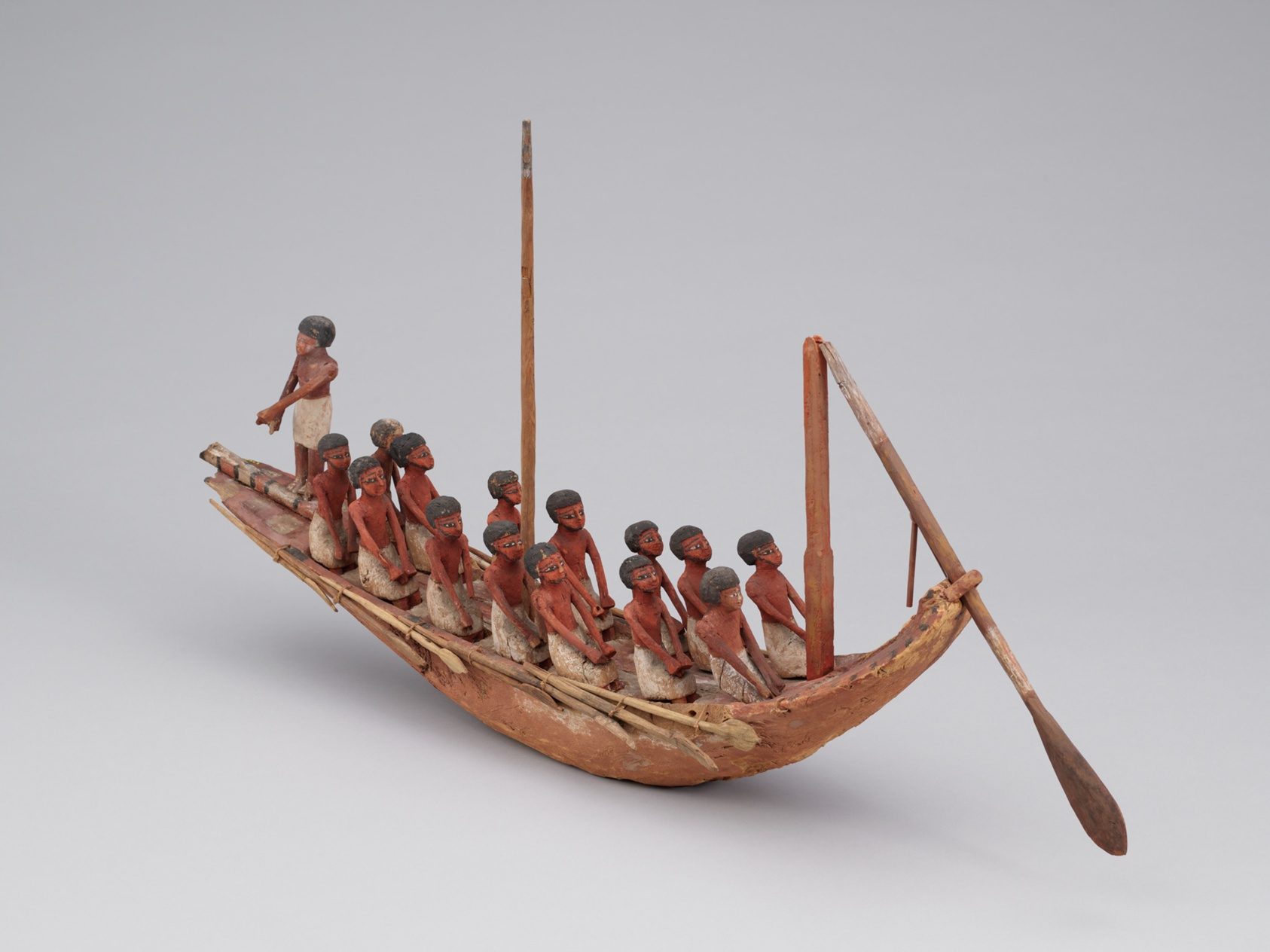
Model of a river boat, Egypt, about 1875 BCE: how ancient boats were built of wood. Ancient Egyptian, Art Institute of Chicago (CC0)
The earth is corrupt; Noah is righteous and builds the ark.
The flood; the raven and the dove.
The altar, the rainbow and the covenant with all life.
Laws for all humanity.
The rabbis debate “righteous in his generations”: high praise, or faint praise for a bad age (Sanhedrin 108a).
The seven Noahide laws (Sanhedrin 56a) are the moral law Judaism sets for all humanity.
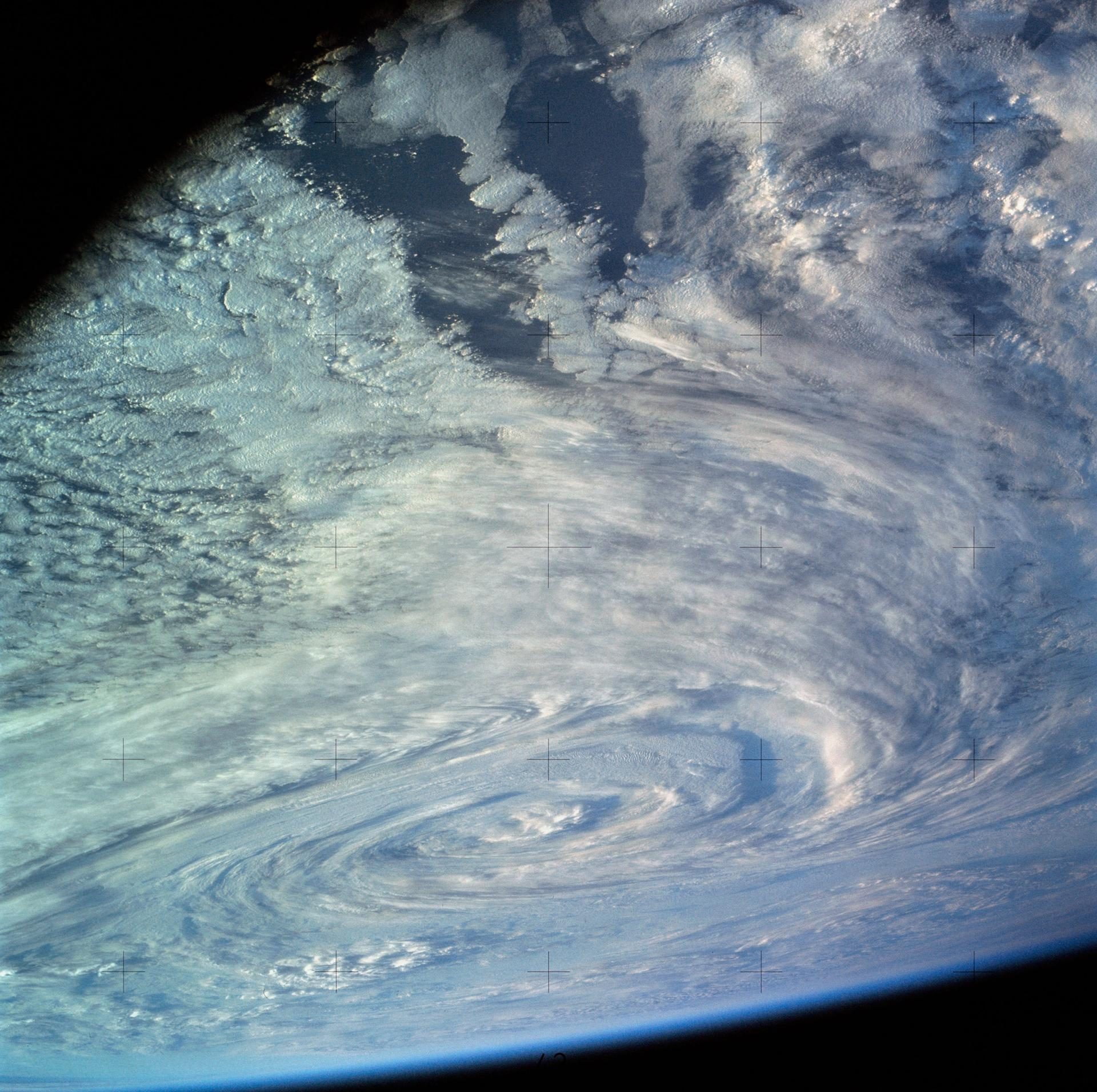
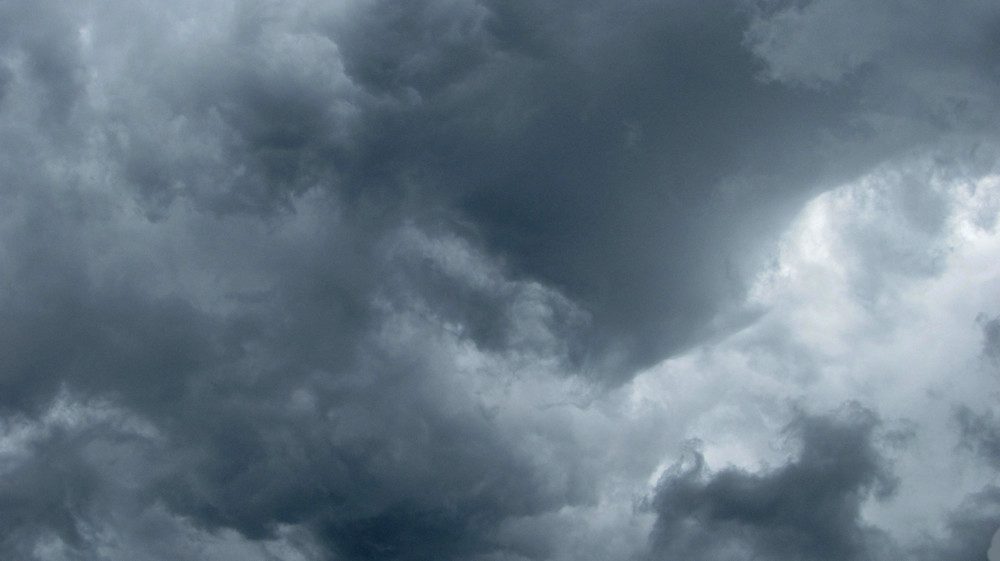
A South Pacific storm photographed from Skylab, 1974. NASA / JSC (public domain)
Jesus compares “the days of Noah” with the end of the age.
Peter links the ark with baptism.
Hebrews praises Noah's faith.
“By faith Noah, being warned about things not yet seen, moved with godly fear, prepared a ship for the saving of his house, through which he condemned the world and became heir of the righteousness which is according to faith.”Hebrews 11:7 · WEB (British Edition)
The ark appears in the catacomb paintings as a sign of the Church. The “nave” of a church takes its name from the Latin navis, “ship”.
Storm at Jaffa, early 20th century: “waves like mountains” (Qur'an 11:42). American Colony (Jerusalem) Photo Dept. / Matson Photo Service, Library of Congress (public domain)
Noah (peace be upon him) preaches “a thousand years save fifty”; his people mock and block their ears.
The ark is built “under Our eyes”.
His son refuses to board and drowns.
The ark comes to rest on al-Judi.
“And it sailed with them amid waves like mountains, and Noah cried unto his son - and he was standing aloof - O my son! Come ride with us, and be not with the disbelievers.”Qur'an 11:42 · Pickthall (1930)
Ibn Kathir, on 11:40–48: the lesson of 11:46 is that faith outweighs blood ties.
Noah (peace be upon him) is counted among the five “messengers of resolve” (ulu al-ʿazm), with Abraham (peace be upon him), Moses, Jesus and Muhammad ﷺ (peace be upon him), on the basis of 46:35 and 33:7.
And the LORD said: ‘I will blot out man whom I have created from the face of the earth; both man, and beast, and creeping thing, and fowl of the air; for it repenteth Me that I have made them.’
These are the generations of Noah. Noah was in his generations a man righteous and wholehearted; Noah walked with God.
Read the passages The Christian telling · 5
Hebrews 11:7 · New Testament · WEB British Edition
7
By faith Noah, being warned about things not yet seen, moved with godly fear, prepared a ship for the saving of his house, through which he condemned the world and became heir of the righteousness which is according to faith.
Matthew 24:37–39 · New Testament · WEB British Edition
37
As the days of Noah were, so will the coming of the Son of Man be.
38
For as in those days which were before the flood they were eating and drinking, marrying and giving in marriage, until the day that Noah entered into the ship,
39
and they didn’t know until the flood came and took them all away, so will the coming of the Son of Man be.
Luke 17:26–27 · New Testament · WEB British Edition
26
As it was in the days of Noah, even so it will also be in the days of the Son of Man.
27
They ate, they drank, they married, and they were given in marriage until the day that Noah entered into the ship, and the flood came and destroyed them all.
1 Peter 3:20–21 · New Testament · WEB British Edition
20
who before were disobedient when God waited patiently in the days of Noah while the ship was being built. In it, few, that is, eight souls, were saved through water.
21
This is a symbol of baptism, which now saves you—not the putting away of the filth of the flesh, but the answer of a good conscience towards God—through the resurrection of Jesus Christ,
2 Peter 2:5 · New Testament · WEB British Edition
5
and didn’t spare the ancient world, but preserved Noah with seven others, a preacher of righteousness, when he brought a flood on the world of the ungodly,
Then have patience (O Muhammad) even as the stout of heart among the messengers (of old) had patience, and seek not to hasten on (the doom) for them. On the day when they see that which they are promised (it will seem to them) as though they had tarried but an hour of daylight. A clear message. Shall any be destroyed save evil-living folk?
And when We exacted a covenant from the prophets, and from thee (O Muhammad) and from Noah and Abraham and Moses and Jesus son of Mary. We took from them a solemn covenant;
We sent Noah (of old) unto his people, and he said: O my people! Serve Allah. Ye have no other God save Him. Lo! I fear for you the retribution of an Awful Day.
Marvel ye that there should come unto you a Reminder from your Lord by means of a man among you, that he may warn you, and that ye may keep from evil, and that haply ye may find mercy.
Recite unto them the story of Noah, when he told his people: O my people! If my sojourn (here) and my reminding you by Allah's revelations are an offence unto you, in Allah have I put my trust, so decide upon your course of action you and your partners. Let not your course of action be in doubt for you. Then have at me, give me no respite.
But they denied him, so We saved him and those with him in the ship, and made them viceroys (in the earth), while We drowned those who denied Our revelations. See then the nature of the consequence for those who had been warned.
The chieftains of his folk, who disbelieved, said: We see thee but a mortal like us, and we see not that any follow thee save the most abject among us, without reflection. We behold in you no merit above us - nay, we deem you liars.
He said: O my people! Bethink you, if I rely on a clear proof from my Lord and there hath come unto me a mercy from His presence, and it hath been made obscure to you, can we compel you to accept it when ye are averse thereto?
And O my people! I ask of you no wealth therefor. My reward is the concern only of Allah, and I am not going to thrust away those who believe - Lo! they have to meet their Lord! - but I see you a folk that are ignorant.
I say not unto you: "I have the treasures of Allah" nor "I have knowledge of the Unseen," nor say I: "Lo! I am an angel!" Nor say I unto those whom your eyes scorn that Allah will not give them good - Allah knoweth best what is in their hearts - Lo! then indeed I should be of the wrong-doers.
They said: O Noah! Thou hast disputed with us and multiplied disputation with us; now bring upon us that wherewith thou threatenest us, if thou art of the truthful.
My counsel will not profit you if I were minded to advise you, if Allah's will is to keep you astray. He is your Lord and unto Him ye will be brought back.
The passage continues; open it in the player or your own Bible or Qur'an.
But the chieftains of his folk, who disbelieved, said: This is only a mortal like you who would make himself superior to you. Had Allah willed, He surely could have sent down angels. We heard not of this in the case of our fathers of old.
Then We inspired in him, saying: Make the ship under Our eyes and Our inspiration. Then, when Our command cometh and the oven gusheth water, introduce therein of every (kind) two spouses, and thy household save him thereof against whom the Word hath already gone forth. And plead not with Me on behalf of those who have done wrong. Lo! they will be drowned.
And verily we sent Noah (as Our messenger) unto his folk, and he continued with them for a thousand years save fifty years; and the flood engulfed them, for they were wrong-doers.
That He may forgive you somewhat of your sins and respite you to an appointed term. Lo! the term of Allah, when it cometh, cannot be delayed, if ye but knew.
And lo! whenever I call unto them that Thou mayst pardon them they thrust their fingers in their ears and cover themselves with their garments and persist (in their refusal) and magnify themselves in pride.
Some read the flood as worldwide, others as regional; the commentators are divided.
Era and place
The world of Noah
Where
Mesopotamia. The ark lands on the mountains of Ararat (Urartu: eastern Turkey and Armenia) or on al-Judi (Cudi, south-east Turkey).
When
Before history, as tradition places it.
What archaeology can and cannot say
Mesopotamian flood stories (Atrahasis, the Gilgamesh epic and the Ark Tablet of about 1750 BCE) are older than any surviving copy of Genesis. Flood layers at Ur and Shuruppak come from different dates. There is no geological evidence of a single worldwide flood in human times.
Mount Ararat from Skylab, 1973. NASA / JSC (public domain)
Noah and the flood: the story told in full, with the three tellings side by side.
Midrash and Jewish tradition
Sanhedrin 108a records two readings of “righteous in his generations”. The Noahide laws (Sanhedrin 56a) became the Jewish framework for the goodness of people of every nation.
Christian tradition
From the early Church, the ark was read as a picture of salvation through the Church and of baptism (1 Peter 3:20–21).
Read the passages 1 Peter 3:20–21
1 Peter 3:20–21 · New Testament · WEB British Edition
20
who before were disobedient when God waited patiently in the days of Noah while the ship was being built. In it, few, that is, eight souls, were saved through water.
21
This is a symbol of baptism, which now saves you—not the putting away of the filth of the flesh, but the answer of a good conscience towards God—through the resurrection of Jesus Christ,
Tafsir and hadith
Ibn Kathir, on 11:40–48, dwells on Noah (peace be upon him)'s plea for his son and God's answer, “he is not of thy household” (11:46): belonging is a matter of faith and deeds.
(Thus it was) till, when Our commandment came to pass and the oven gushed forth water, We said: Load therein two of every kind, a pair (the male and female), and thy household, save him against whom the word hath gone forth already, and those who believe. And but a few were they who believed with him.
And it sailed with them amid waves like mountains, and Noah cried unto his son - and he was standing aloof - O my son! Come ride with us, and be not with the disbelievers.
He said: I shall betake me to some mountain that will save me from the water. (Noah) said: This day there is none that saveth from the commandment of Allah save him on whom He hath had mercy. And the wave came in between them, so he was among the drowned.
And it was said: O earth! Swallow thy water and, O sky! be cleared of clouds! And the water was made to subside. And the commandment was fulfilled. And it (the ship) came to rest upon (the mount) Al-Judi and it was said: A far removal for wrongdoing folk!
He said: O Noah! Lo! he is not of thy household; lo! he is of evil conduct, so ask not of Me that whereof thou hast no knowledge. I admonish thee lest thou be among the ignorant.
He said: My Lord! Lo! in Thee do I seek refuge (from the sin) that I should ask of Thee that whereof I have no knowledge. Unless Thou forgive me and have mercy on me I shall be among the lost.
It was said (unto him): O Noah! Go thou down (from the mountain) with peace from Us and blessings upon thee and some nations (that will spring) from those with thee. (There will be other) nations unto whom We shall give enjoyment a long while and then a painful doom from Us will overtake them.
Reference works: Encyclopaedia Judaica (2nd ed.); The Oxford Dictionary of the Christian Church; Encyclopaedia of Islam (3rd ed.); Ibn Kathir, Qisas al-Anbiya.