ArabicموسىMūsātitle Kalīm Allāh, “the one to whom God spoke”
One-minute snapshot
In a minute
c. 15th or 13th c. BCERead time 1 min TorahGospelQur'an
Moses (peace be upon him) is the prophet the Qur'an names most often. To Jews he is Moshe Rabbeinu, “Moses our teacher”. Hidden as a baby in the Nile, raised in Pharaoh's palace, he fled to Midian, heard God at the burning bush, confronted Pharaoh, led the Israelites out of slavery through the sea, and received the Torah at Sinai. He died within sight of the promised land. Christians honour him as the giver of the Law. In all three faiths he is the prophet who spoke with God.
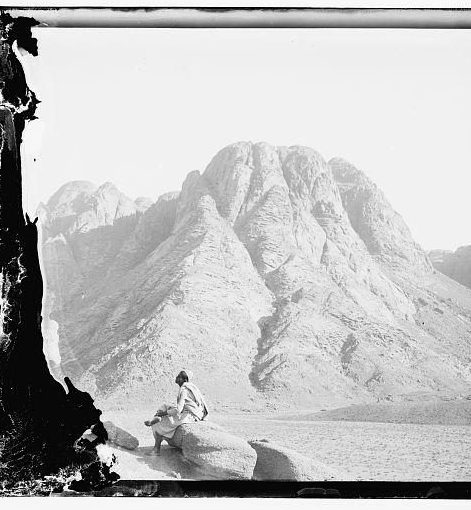
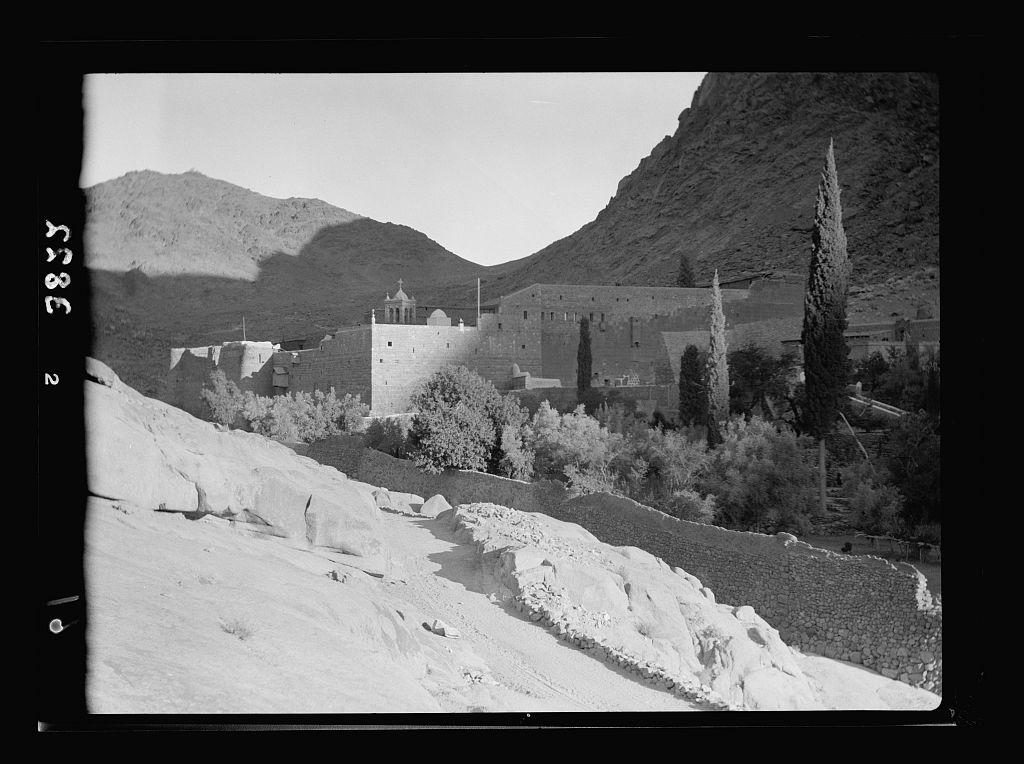
Near view of Mount Sinai (Jebel Musa). American Colony (Jerusalem) Photo Dept. / Matson Photo Service, Library of Congress (public domain)
Watch
Three traditions, three films
Each told by its own community, in its own words, side by side. More on F-ILM.
Book of Exodus Summary: A Complete Animated Overview (Part 1)BibleProject · 6 min Shows prophets (a film-maker's portrayal)BibleProject Exodus part 1: slavery, burning bush and liberation in 7 minutes.
A Muslim telling
Ep. 7: Let Go and Trust God: the Mother of Moses (as) | Upheld by Allah: Women in the Qur'anYaqeen Institute · 4 minYaqeen, Upheld by Allah ep 7: the mother of Moses letting go and trusting God.
Side by side
Three tellings
Quotations: Torah and Hebrew Bible, JPS 1917 · New Testament, World English Bible (British Edition) · Qur'an, Pickthall (1930). Translations and sources
THebrew Bible · Torah
In Jewish tradition's own words.
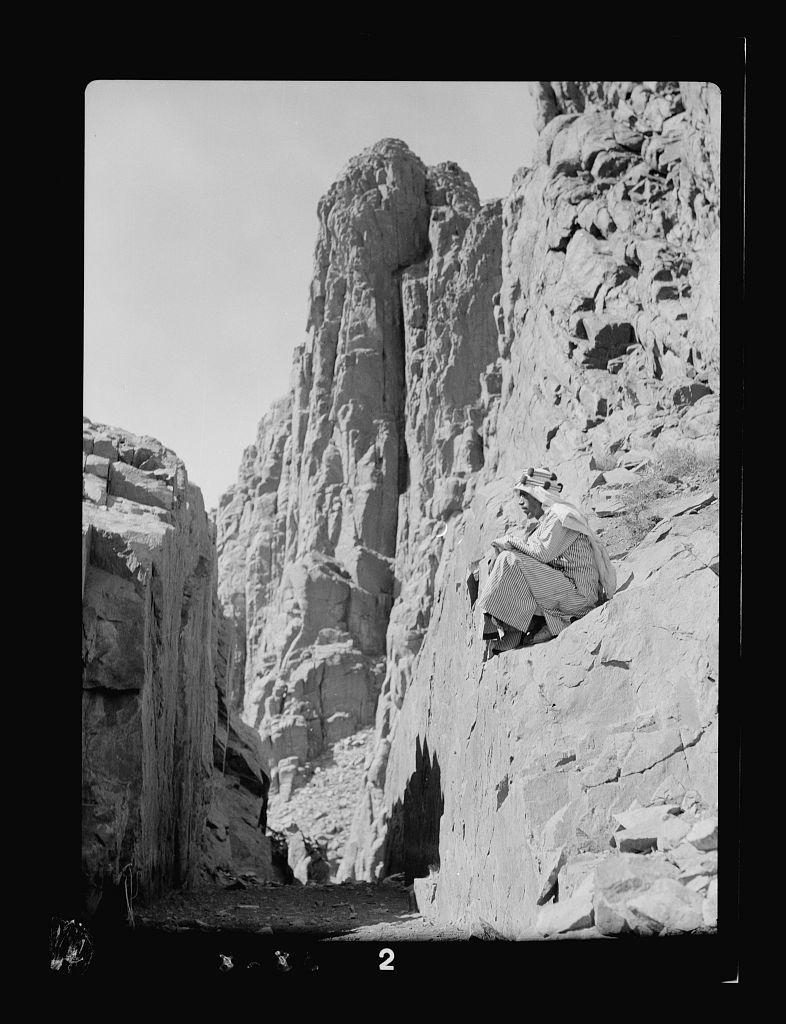
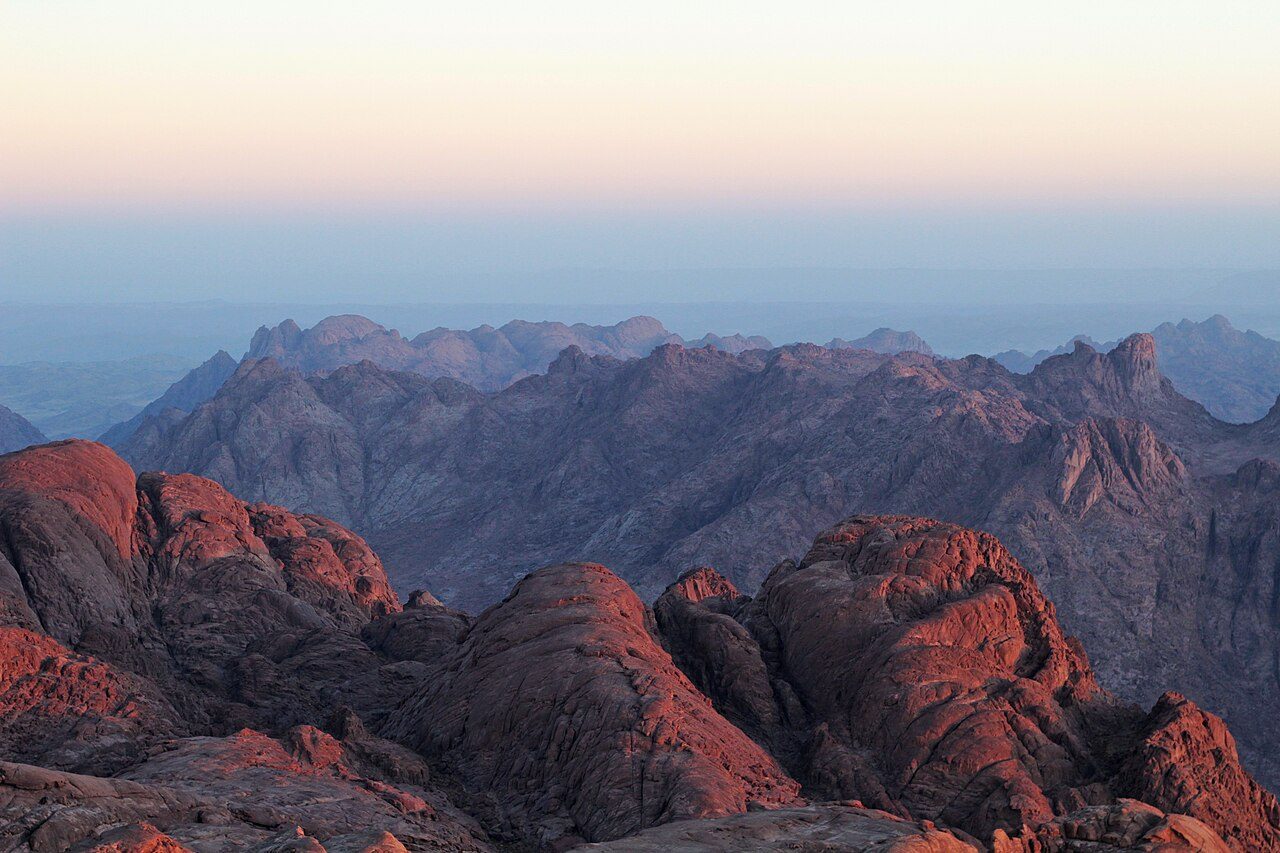
The granite cliffs of Sinai. American Colony (Jerusalem) Photo Dept. / Matson Photo Service, Library of Congress (public domain)
The baby in the river, raised in Pharaoh's household.
Midian and the burning bush.
The plagues, the Passover and the sea.
Sinai and the Torah; forty years in the wilderness; his death on Mount Nebo.
“And there hath not arisen a prophet since in Israel like unto Moses, whom the LORD knew face to face;”Deuteronomy 34:10 · JPS 1917
The midrash explains his slow speech by a test with a hot coal in Pharaoh's palace (Exodus Rabbah 1:26), and says God chose him for his care of a lost lamb (Exodus Rabbah 2:2).
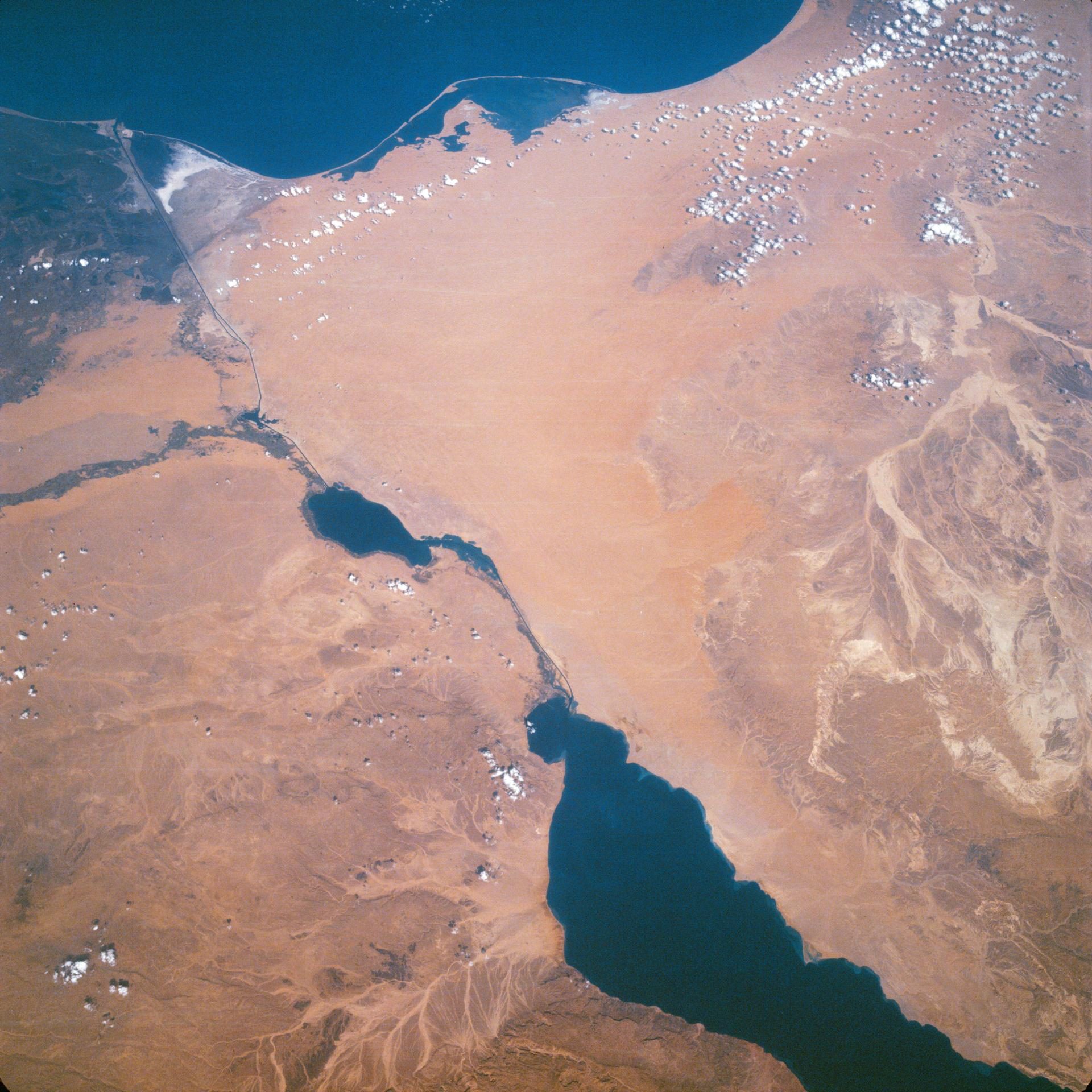
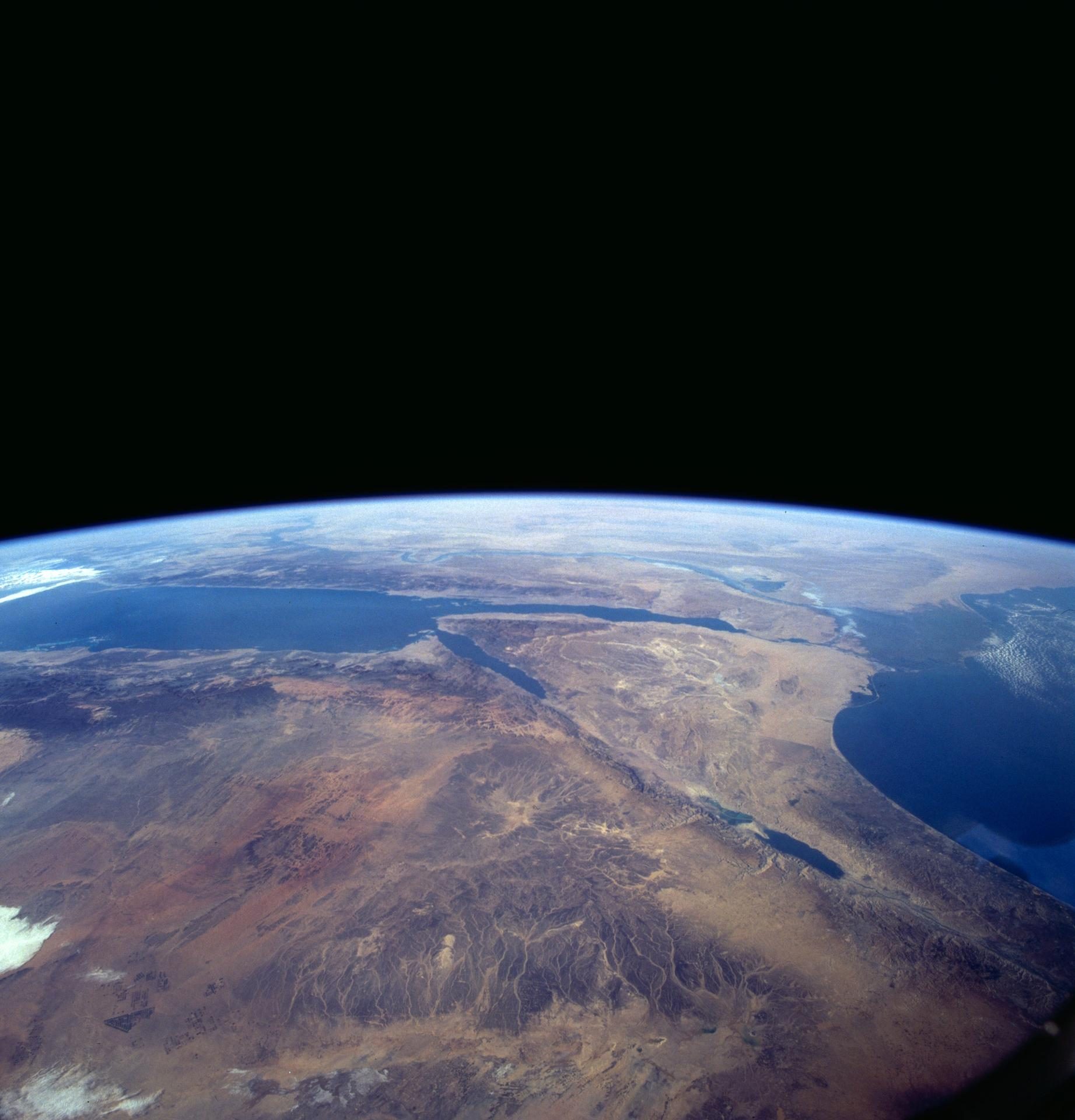
The Gulf of Suez and Sinai from Apollo 7, 1968. NASA / JSC (public domain)
God inspires his mother to set him in the river; Pharaoh's wife adopts him.
At the sacred valley he hears: “take off thy shoes”.
With Aaron (peace be upon him) he goes to Pharaoh “with gentle speech”.
The signs, the sea, the Torah, the golden calf; the journey with the hidden guide.
“And messengers We have mentioned unto thee before and messengers We have not mentioned unto thee; and Allah spake directly unto Moses;”Qur'an 4:164 · Pickthall (1930)
In the account of the Night Journey, Moses advises Muhammad ﷺ (peace be upon him) to ask for the daily prayers to be reduced from fifty to five (Bukhari 349; Muslim 162).
The Prophet fasted on ʿAshura because Moses (peace be upon him) was saved on that day (Bukhari 2004). Pharaoh's wife, Asiya, is honoured among the best of women (66:11).
And Moses went up from the plains of Moab unto mount Nebo, to the top of Pisgah, that is over against Jericho. And the LORD showed him all the land, even Gilead as far as Dan;
And the LORD said unto him: ‘This is the land which I swore unto Abraham, unto Isaac, and unto Jacob, saying: I will give it unto thy seed; I have caused thee to see it with thine eyes, but thou shalt not go over thither.’
And Joshua the son of Nun was full of the spirit of wisdom; for Moses had laid his hands upon him; and the children of Israel hearkened unto him, and did as the LORD commanded Moses.
A prophet will the LORD thy God raise up unto thee, from the midst of thee, of thy brethren, like unto me; unto him ye shall hearken;
John 1:17 · New Testament · WEB British Edition
17
For the law was given through Moses. Grace and truth were realised through Jesus Christ.
Matthew 17:1–8 · New Testament · WEB British Edition
1
After six days, Jesus took with him Peter, James, and John his brother, and brought them up into a high mountain by themselves.
2
He was changed before them. His face shone like the sun, and his garments became as white as the light.
3
Behold, Moses and Elijah appeared to them talking with him.
4
Peter answered and said to Jesus, “Lord, it is good for us to be here. If you want, let’s make three tents here: one for you, one for Moses, and one for Elijah.”
5
While he was still speaking, behold, a bright cloud overshadowed them. Behold, a voice came out of the cloud, saying, “This is my beloved Son, in whom I am well pleased. Listen to him.”
6
When the disciples heard it, they fell on their faces, and were very afraid.
7
Jesus came and touched them and said, “Get up, and don’t be afraid.”
8
Lifting up their eyes, they saw no one, except Jesus alone.
Acts 3:22 · New Testament · WEB British Edition
22
For Moses indeed said to the fathers, ‘The Lord God will raise up a prophet for you from amongst your brothers, like me. You shall listen to him in all things whatever he says to you.
Acts 7:20–44 · New Testament · WEB British Edition
20
At that time Moses was born, and was exceedingly handsome to God. He was nourished three months in his father’s house.
21
When he was abandoned, Pharaoh’s daughter took him up and reared him as her own son.
22
Moses was instructed in all the wisdom of the Egyptians. He was mighty in his words and works.
23
But when he was forty years old, it came into his heart to visit his brothers, the children of Israel.
24
Seeing one of them suffer wrong, he defended him and avenged him who was oppressed, striking the Egyptian.
25
He supposed that his brothers understood that God, by his hand, was giving them deliverance; but they didn’t understand.
26
“The day following, he appeared to them as they fought, and urged them to be at peace again, saying, ‘Sirs, you are brothers. Why do you wrong one another?’
27
But he who did his neighbour wrong pushed him away, saying, ‘Who made you a ruler and a judge over us?
28
Do you want to kill me as you killed the Egyptian yesterday?’
29
Moses fled at this saying, and became a stranger in the land of Midian, where he became the father of two sons.
The passage continues; open it in the player or your own Bible or Qur'an.
Hebrews 3:1–6 · New Testament · WEB British Edition
1
Therefore, holy brothers, partakers of a heavenly calling, consider the Apostle and High Priest of our confession: Jesus,
2
who was faithful to him who appointed him, as also Moses was in all his house.
3
For he has been counted worthy of more glory than Moses, because he who built the house has more honour than the house.
4
For every house is built by someone; but he who built all things is God.
5
Moses indeed was faithful in all his house as a servant, for a testimony of those things which were afterward to be spoken,
6
but Christ is faithful as a Son over his house. We are his house, if we hold fast our confidence and the glorying of our hope firm to the end.
Hebrews 11:23–29 · New Testament · WEB British Edition
23
By faith Moses, when he was born, was hidden for three months by his parents, because they saw that he was a beautiful child; and they were not afraid of the king’s commandment.
24
By faith Moses, when he had grown up, refused to be called the son of Pharaoh’s daughter,
25
choosing rather to share ill treatment with God’s people than to enjoy the pleasures of sin for a time,
26
considering the reproach of Christ greater riches than the treasures of Egypt; for he looked to the reward.
27
By faith he left Egypt, not fearing the wrath of the king; for he endured, as seeing him who is invisible.
28
By faith he kept the Passover and the sprinkling of the blood, that the destroyer of the firstborn should not touch them.
29
By faith they passed through the Red Sea as on dry land. When the Egyptians tried to do so, they were swallowed up.
And Allah citeth an example for those who believe: the wife of Pharaoh when she said: My Lord! Build for me a home with thee in the Garden, and deliver me from Pharaoh and his work, and deliver me from evil-doing folk;
And (remember) when We did deliver you from Pharaoh's folk, who were afflicting you with dreadful torment, slaying your sons and sparing your women: that was a tremendous trial from your Lord.
And when Moses said unto his people: O my people! Ye have wronged yourselves by your choosing of the calf (for worship) so turn in penitence to your Creator, and kill (the guilty) yourselves. That will be best for you with your Creator and He will relent toward you. Lo! He is the Relenting, the Merciful.
And We caused the white cloud to overshadow you and sent down on you the manna and the quails, (saying): Eat of the good things wherewith We have provided you - they wronged Us not, but they did wrong themselves.
And when We said: Go into this township and eat freely of that which is therein, and enter the gate prostrate, and say: "Repentance." We will forgive you your sins and will increase (reward) for the right-doers.
The passage continues; open it in the player or your own Bible or Qur'an.
Then, after them, We sent Moses with our tokens unto Pharaoh and his chiefs, but they repelled them. Now, see the nature of the consequence for the corrupters!
Approved upon condition that I speak concerning Allah nothing but the truth. I come unto you (lords of Egypt) with a clear proof from your Lord. So let the Children of Israel go with me.
He said: Didst thou see, when we took refuge on the rock, and I forgot the fish - and none but Satan caused me to forget to mention it - it took its way into the waters by a marvel.
When he saw a fire and said unto his folk: Lo! Wait! I see a fire afar off. Peradventure I may bring you a brand therefrom or may find guidance at the fire.
11
فَلَمَّآ أَتَىٰهَا نُودِىَ يَٰمُوسَىٰٓ
And when he reached it, he was called by name: O Moses!
Lo! Pharaoh exalted himself in the earth and made its people castes. A tribe among them he oppressed, killing their sons and sparing their women. Lo! he was of those who work corruption.
And We inspired the mother of Moses, saying: Suckle him and, when thou fearest for him, then cast him into the river and fear not nor grieve. Lo! We shall bring him back unto thee and shall make him (one) of Our messengers.
And the wife of Pharaoh said: (He will be) a consolation for me and for thee. Kill him not. Peradventure he may be of use to us, or we may choose him for a son. And they perceived not.
And the heart of the mother of Moses became void, and she would have betrayed him if We had not fortified her heart, that she might be of the believers.
(Saying:) Go thou unto Pharaoh - Lo! he hath rebelled -
18
فَقُلْ هَل لَّكَ إِلَىٰٓ أَن تَزَكَّىٰ
And say (unto him): Hast thou (will) to grow (in grace)?
19
وَأَهْدِيَكَ إِلَىٰ رَبِّكَ فَتَخْشَىٰ
Then I will guide thee to thy Lord and thou shalt fear (Him).
20
فَأَرَىٰهُ ٱلْءَايَةَ ٱلْكُبْرَىٰ
And he showed him the tremendous token.
21
فَكَذَّبَ وَعَصَىٰ
But he denied and disobeyed,
22
ثُمَّ أَدْبَرَ يَسْعَىٰ
Then turned he away in haste,
23
فَحَشَرَ فَنَادَىٰ
Then gathered he and summoned
24
فَقَالَ أَنَا۠ رَبُّكُمُ ٱلْأَعْلَىٰ
And proclaimed: "I (Pharaoh) am your Lord the Highest."
The passage continues; open it in the player or your own Bible or Qur'an.
Common ground
Where they agree
The rescue as a baby and the palace.
Midian and the bush; the confrontation with Pharaoh.
The plagues or signs, the sea, the Law, the golden calf and the wilderness.
God spoke with him.
Said plainly, ranked never
Where they differ
Who adopts him: Pharaoh's daughter in Exodus, Pharaoh's wife in the Qur'an.
The journey with the hidden guide (18:60–82) is in the Qur'an only.
Christians read the Law as fulfilled in Christ.
In the Qur'an, Pharaoh declares faith too late and his body is kept as a sign (10:90–92).
Era and place
The world of Moses
Where
Egypt → Sinai → Midian → the lands east of the Jordan (Mount Nebo).
When
The 15th century BCE (1 Kings 6:1) or the 13th century BCE, as most scholars who accept a historical core prefer.
What archaeology can and cannot say
The Merneptah Stele (about 1208 BCE) names “Israel” in Canaan. There is no direct archaeological evidence of the Exodus.
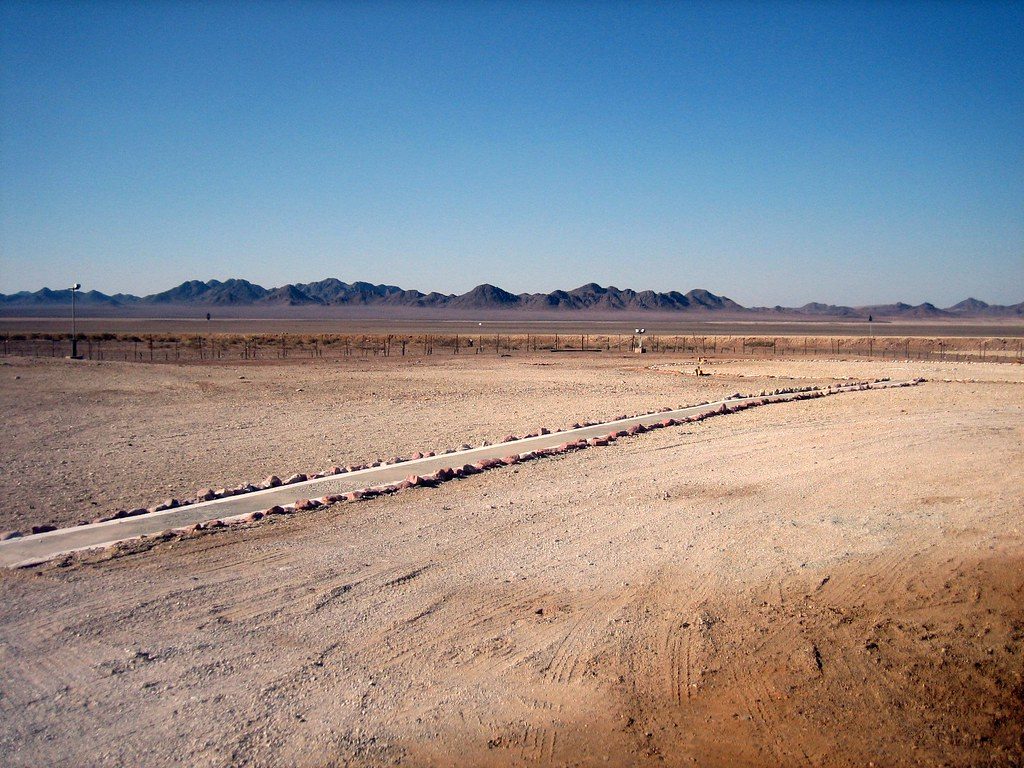
The Sinai Peninsula from the Space Shuttle, 1994. NASA / JSC (public domain)
Gallery
The world of Moses
The Sinai mountainsSinai Mountains, Prince Roy, CC BY 2.0A wave breakingCrashing Wave, Clearly Ambiguous, CC BY 2.0Sunrise from Mount Sinai (Jebel Musa)The wooded slopes around Mount Nebomount nebo view, bertknot, CC BY-SA 2.0
Go deeper
Go deeper
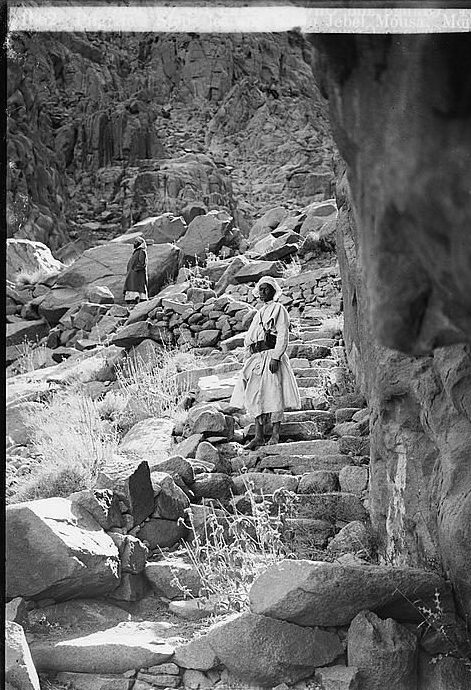
St Catherine's Monastery, Sinai, in evening light. American Colony (Jerusalem) Photo Dept. / Matson Photo Service, Library of Congress (public domain)The stories
Moses and Pharaoh: the story told in full, with the three tellings side by side.
Exodus Rabbah fills in his childhood and his calling. Every Passover Seder retells the Exodus; the Talmud has God silence the angels' song as the Egyptians drown: “My handiwork is drowning” (Sanhedrin 39b).
Christian tradition
Stephen's speech in Acts 7 retells Moses' life. Hebrews 3 compares Moses, faithful as a servant in God's house, with Christ.
Tafsir and hadith
Ibn Kathir, on 20:9 onwards, follows Moses (peace be upon him) from the fire in the valley to his mission. Moses is called Kalīm Allāh because God spoke to him directly (4:164).
Reference works: Encyclopaedia Judaica (2nd ed.); The Oxford Dictionary of the Christian Church; Encyclopaedia of Islam (3rd ed.); Ibn Kathir, Qisas al-Anbiya.