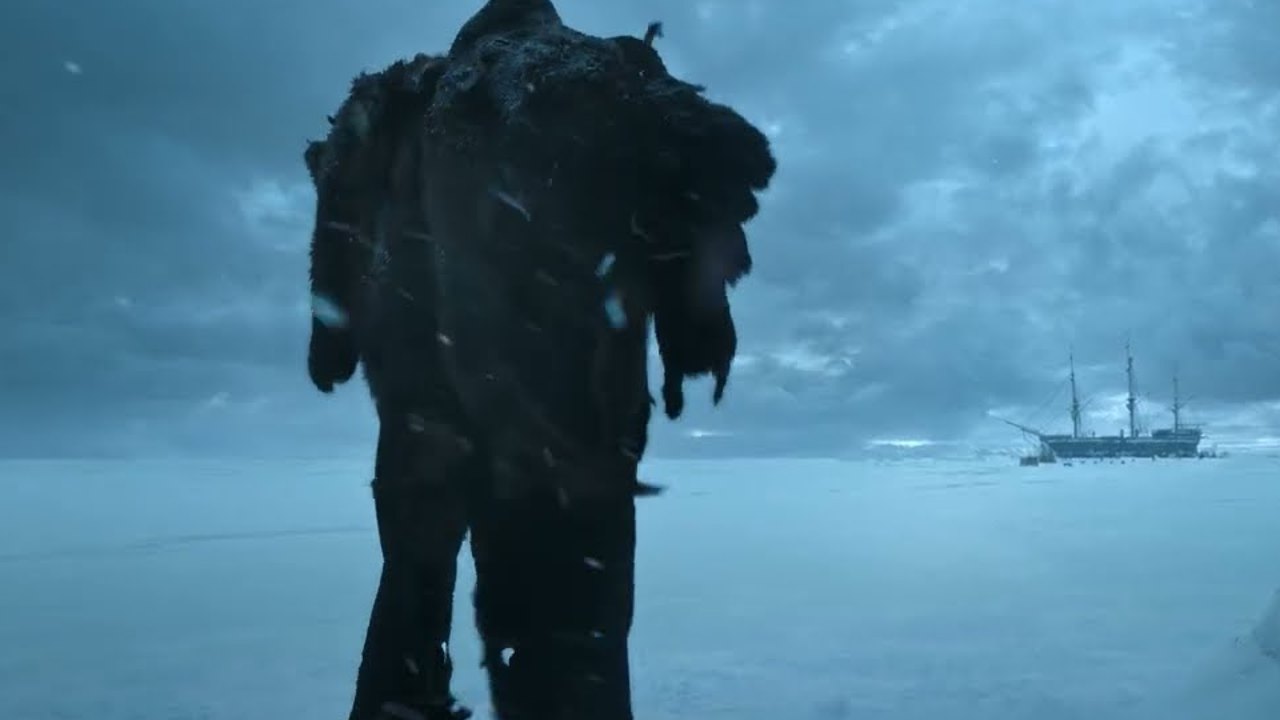
The idea in one minute
This page looks at Frankenstein, the story of a scientist who brings a body to life and then runs away from it. It explains how Mary Shelley wrote it in 1816 and how Guillermo del Toro has filmed it again. You will learn what the story asks about what a maker owes to what it makes.
The question: What does it mean to make a living thing, and what does a maker owe the one he makes?
In the summer of 1816 the skies over Europe stayed grey and cold. A volcano on the other side of the world had filled the air with ash. Stuck indoors by a lake near Geneva, a group of young writers held a contest to write a ghost story. The winner was eighteen-year-old Mary Godwin, soon to be Mary Shelley. Her story became Frankenstein.
It is often called the first science fiction novel. But on its title page Mary Shelley put a line from a seventeenth-century poem about the Bible, spoken by Adam (peace be upon him) to God: 'Did I request thee, Maker, from my clay / To mould me man?' The book is not only about a monster. It is about a creature who wants to know why he was made, and a maker who will not answer.
In the makers' own words
“I realized I understood my faith or my dogmas better through "Frankenstein" than through Sunday Mass.”
Guillermo del Toro, on seeing the 1931 film as a seven-year-old, 23 October 2025 · NPR, Fresh Air with Terry Gross
“creating something without considering the consequences”
Guillermo del Toro, on Victor Frankenstein, 23 October 2025 · NPR, Fresh Air
“I tried to make it an autobiography of the soul for me.”
Guillermo del Toro, 23 October 2025 · NPR, Fresh Air
“Remember that I am thy creature; I ought to be thy Adam, but I am rather the fallen angel”
The Creature, in Mary Shelley's novel, 1818 · Frankenstein, Volume 2, Chapter 10 (Project Gutenberg #84)
“A new species would bless me as its creator and source”
Victor Frankenstein, in Mary Shelley's novel, 1818 · Frankenstein, Chapter 4 (Project Gutenberg #84)
A maker who runs away
Victor Frankenstein dreams big. 'A new species would bless me as its creator and source,' he says. He spends months in a locked room, collecting parts and testing ideas, until one November night he infuses 'a spark of being into the lifeless thing'. The creature opens its eyes. Victor looks at what he has made and runs out of the room.
Everything that goes wrong in the novel grows from that moment. The creature is not born evil. He learns to speak by listening to a family through a crack in a wall, reads Milton's Paradise Lost, and comes to see himself in its story. When he finally confronts Victor, he says: 'I ought to be thy Adam, but I am rather the fallen angel.' He adds: 'I was benevolent and good; misery made me a fiend.' The terror of the book is not that a scientist made life. It is that he made it and did not love it.
Del Toro's creature
Guillermo del Toro has wanted to film Frankenstein for most of his life. He told NPR's Terry Gross that seeing Boris Karloff in the 1931 film at the age of seven was like 'a St. Paul on the road to Damascus kind of experience'. He describes himself as a lapsed Catholic, and says he understood his faith 'better through Frankenstein than through Sunday Mass'.
His 2025 film, with Oscar Isaac as Victor and Jacob Elordi as the Creature, keeps Shelley's big theme and sharpens it. Victor, he says, is like a modern tech founder, 'creating something without considering the consequences'. Del Toro asked his cast to read the Book of Job, because the creature's cry is Job's cry: why. He calls the film, half joking, 'a parable of the prodigal father', turning the parable of the prodigal son, told by Jesus (peace be upon him), round so that it is the father who has wandered off.
What can we actually make?
Mary Shelley was writing in an age of electrical experiments. In 1803, in London, the Italian scientist Giovanni Aldini passed electric current through the body of an executed man, and the face and limbs twitched in front of an audience. People wondered if electricity was the spark of life. It was not: the muscles moved, but no life returned.
Two centuries later, scientists can do things Shelley could not have imagined. In 2016 a team at the J. Craig Venter Institute built a bacterium called JCVI-syn3.0 with a genome written on a computer and assembled in the laboratory. It had only 473 genes, fewer than any free-living cell known. It is a real achievement. But look at what it needed: the design was trimmed down from a genome that already existed in nature, and the new DNA was 'booted up' inside a living cell that was already there. Even the most advanced synthetic biology works by rearranging what has been given.
Scientists are honest about this. No laboratory has yet made a living cell from non-living chemicals alone, though research into the origins of life is active and exciting. Every human maker starts with materials, laws and life that were already in place.
Three Names for making
The Qur'an gives three Names for God as maker, side by side: 'He is Allah, the Creator, the Shaper out of naught, the Fashioner. His are the most beautiful names. All that is in the heavens and the earth glorifieth Him, and He is the Mighty, the Wise.' (59:24, Pickthall). The scholar al-Ghazālī compared them to the stages of building a house. Al-Khāliq is like the architect who measures and plans. Al-Bāriʾ is the One who brings what was planned into being. Al-Muṣawwir is the One who gives each thing its final form and beauty.
The comparison only goes so far, and al-Ghazālī knew it. A human builder needs stone, tools, time and a plan copied from somewhere. The Qur'an says God needs none of these: 'The Originator of the heavens and the earth! When He decreeth a thing, He saith unto it only: Be! and it is.' (2:117, Pickthall). It also has a striking challenge for anyone who thinks making life is easy: all the powers people call on besides God 'O mankind! A similitude is coined, so pay ye heed to it: Lo! those on whom ye call beside Allah will never create a fly though they combine together for the purpose. And if the fly took something from them, they could not rescue it from it. So weak are (both) the seeker and the sought!' (22:73, Pickthall).
The Names this touches
The contrast
The film imagines a maker who needs a body, a storm and a laboratory, and cannot love what he makes; the Names describe the One who creates without material or experiment, gives the form and the soul together, and does not turn away from His creation.
Al-Khāliq: The Creator, who measures and determines before anything exists.
Al-Bāriʾ: The Originator, who brings into being, with no prior material to borrow.
Al-Muṣawwir: The Fashioner, who gives the form and the life within it.
Al-Muḥyī: The Giver of life, who needs no storm and no laboratory.

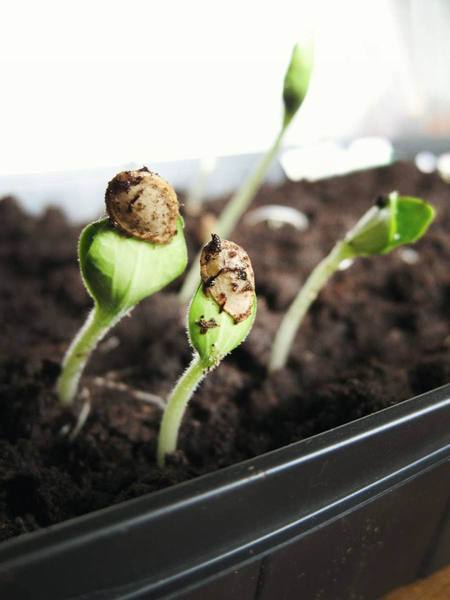
What each faith says
Judaism
“Then the LORD God formed man of the dust of the ground, and breathed into his nostrils the breath of life; and man became a living soul.”
Genesis 2:7 · JPS 1917
The Torah describes the first human as shaped with care: 'Then the LORD God formed man of the dust of the ground, and breathed into his nostrils the breath of life' (Genesis 2:7). The making is close and personal, like a potter at the wheel, and Isaiah uses that very picture: 'we are the clay, and Thou our potter' (Isaiah 64:7).
Jewish tradition has a made-man story centuries older than Frankenstein: the golem, a figure of clay brought to life. In the Talmud (Sanhedrin 65b), a sage called Rava makes a man and sends him to a colleague, who speaks to it and gets no reply. Realising that it is a made thing with no inner life, he tells it to return to its dust. The best-known legend, about Rabbi Judah Loew of Prague in the sixteenth century, also ends with the golem being returned to clay. Both stories say the same thing: people can shape, but only God gives a soul.
The making of the body is also a daily blessing. Every morning many Jews say Asher Yatzar. It thanks God “who formed man in wisdom and created in him many openings and many hollows”, so that the body can live and stand before Him (Berakhot 60b, our rendering). It is a prayer of wonder at a made thing that works.
Christianity
“For you formed my inmost being. You knit me together in my mother's womb. I will give thanks to you, for I am fearfully and wonderfully made.”
Psalm 139:13–14 · WEB
Christians read Genesis as the story of a Creator who looks at what He has made and calls it 'very good' (Genesis 1:31). Human beings are made 'in the image of God' (Genesis 1:27), which many Christians understand to include our own ability to make and create. That gift carries responsibility, which is exactly where Victor fails.
Christianity also says the Maker did not run away from what He made. In Christian belief, God the Son, through whom 'all things were made' (John 1:3), became a human being and came looking for His creatures. Del Toro's 'prodigal father' is a mirror image of that faith: the story of a father who abandons, set against the Christian hope of a Father who runs to meet his child (Luke 15:20).
Christian worship sings the same wonder back. The Benedicite, the old “Song of the Three Young Men”, calls on every made thing, from whales and frost to all humankind, to bless the Lord. It is part of Morning Prayer in the Book of Common Prayer and of Catholic and Orthodox morning worship.
Islam
“He is Allah, the Creator, the Shaper out of naught, the Fashioner. His are the most beautiful names. All that is in the heavens and the earth glorifieth Him, and He is the Mighty, the Wise.”
Qur'an 59:24 · Pickthall (1930)
The Qur'an tells the story of human making step by step, from clay and then in the womb, and ends with praise: 'Then fashioned We the drop a clot, then fashioned We the clot a little lump, then fashioned We the little lump bones, then clothed the bones with flesh, and then produced it as another creation. So blessed be Allah, the Best of creators!' (23:14, Pickthall). Muslim scholars note the gentle point in that phrase: human beings can 'create' in a small sense, by shaping and arranging, but God is the One who creates from nothing and gives life.
The Qur'an even describes Jesus shaping a bird from clay and breathing into it, and adds twice that it becomes a bird 'I fashion for you out of clay the likeness of a bird, and I breathe into it and it is a bird, by Allah's leave.' (3:49, Pickthall). Life is God's to give, even through a prophet. A well-known hadith on image-makers says they will be told on the Day of Judgement, 'Make alive what you have created' (Bukhari 5951). Scholars have long differed on what kinds of images this covers; its core point is the one Frankenstein dramatises. We can make the shape. We cannot give the life.
Same and different
All three faiths say life is God’s gift, that human beings can shape but not truly create from nothing, and that making brings responsibility. They differ in what follows. Islam carries the strongest caution about making images of living things, which is one reason this site never shows a prophet. Judaism has the oldest legends of a made man, the golem, and they end with the clay returned to dust. Christians believe the Maker became one of His creatures in Christ. Jews and Muslims hold that God does not become a creature, while He remains near, merciful and attentive to every soul He makes.
Go deeper
- Frankenstein; or, The Modern Prometheus, full text · book
- NPR Fresh Air interview with Guillermo del Toro (23 October 2025) · interview
- Hutchison et al., 'Design and synthesis of a minimal bacterial genome', Science (2016) · paper
- Qur'an 59:22–24 with translations · scripture
- Sanhedrin 65b on Sefaria · scripture
- John 1 (Bible Gateway, WEB) · scripture
Sources (10)
- Del Toro quotes on faith, consequences, Job, 'prodigal father', 'autobiography of the soul': NPR, Fresh Air, 23 October 2025
- Film cast, Venice premiere 30 August 2025, Netflix 7 November 2025: Wikipedia, Frankenstein (2025 film)
- BBFC 15: strong violence, injury detail: BBFC
- Novel quotations: Mary Shelley, Frankenstein, Project Gutenberg #84
- Milton epigraph on the 1818 title page: Paradise Lost, Book X, lines 743–745 (Project Gutenberg #26)
- 1816, the 'year without a summer', after the 1815 Tambora eruption: Encyclopaedia Britannica, 'Year Without a Summer'
- Aldini's 1803 galvanism demonstration in London: Science Museum Group / encyclopaedia entries on Giovanni Aldini
- JCVI-syn3.0: 473 genes; designed genome transplanted into an existing cell: Hutchison et al., Science 351 (2016)
- Golem passage: Babylonian Talmud, Sanhedrin 65b
- Hadith on image-makers: Sahih al-Bukhari 5951