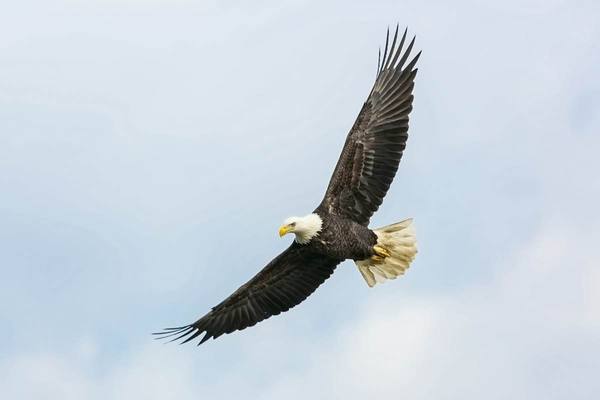
A Rüppell's vulture hit an airliner over Abidjan in Côte d'Ivoire at 11,300 metres, higher than Everest. It happened on 29 November 1973, and it is the highest a bird has ever been recorded.
In November 2026, Voyager 1 became the first human-made object a full light-day from Earth. Al-Mutaʿālī, the Supremely Exalted, is not the top of any of these scales.
Start with what we know
Start with something we know. Then take away everything it needs. What is left is not a bigger version of us: it is the Name.
Episode 1
In us
In 2020 China and Nepal jointly announced a new height for Mount Everest: 8,848.86 metres. Above about 8,000 metres climbers enter the 'death zone', where there is not enough oxygen to survive for long. Most people who reach the summit carry bottled oxygen and wait for a short window of calm weather. Standing on top of the world is one of the great human achievements. Yet even there, a climber can only stay a few minutes, depends on what they carry, and must go down. Our highest point is a visit, not a home.
Episode 2
In nature
Rüppell's vultures soar over African savannahs on rising currents of warm air. Their blood contains a special form of haemoglobin that grabs oxygen even in very thin air. That may explain the record-breaking 1973 encounter at 11,300 metres recorded by Guinness World Records. Bar-headed geese cross the Himalayas too. Birds can reach heights that would leave us unconscious. But every bird has a ceiling, set by air, oxygen and cold, and every flight must land.
Episode 3
At our best
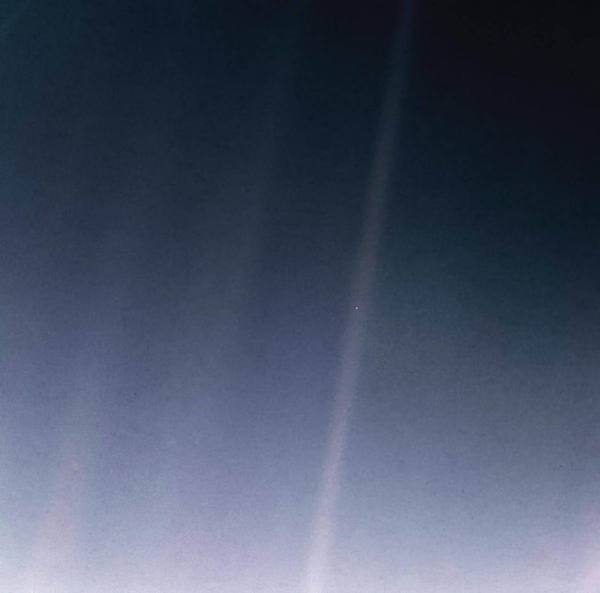
Voyager 1, launched in 1977, is the farthest human-made object. Around 18 November 2026 it reached one light-day from Earth (EarthSky): so far that its radio signals, travelling at the speed of light, take 24 hours to arrive. It left the solar wind's bubble, the heliosphere, in 2012. It is the most distant thing we have ever reached. Yet one light-day is nothing on the scale of the galaxy; the nearest star is more than four light-years away. Height and distance are numbers on a scale that keeps going.
Episode 4
The Break
Our 'high' is always a matter of altitude, distance and comparison, measured on a scale. Everest, the vulture and Voyager are all high on a ladder that has no top. Al-Mutaʿālī is not the highest point on it; He is exalted above the ladder itself. Schools of theology describe 'above' in different ways, and this page stays neutral. Isaiah (peace be upon him) gives the other half: the Exalted One dwells “with him also that is of a contrite and humble spirit” (Isaiah 57:15). “He is the Knower of the Invisible and the Visible, the Great, the High Exalted.” (Qur'an 13:9, Pickthall).
From the tradition: Isaiah 57:15 'I dwell on high, in holiness; yet with the contrite and the lowly in spirit'. Schools differ on 'above' : stay neutral.
On screen
Journey's traveller reaches the mountain top. Al-Mutaʿālī is not the summit; He is beyond the climb.
The Companion Jābir ibn ʿAbdullāh described a habit he and his fellow travellers learned on journeys with the Prophet Muhammad ﷺ (peace be upon him).
Whenever we went up a hill, he said, we would say Allāhu akbar, God is greater. And whenever we went down into a valley, we would say Subḥān Allāh, glory be to God. (Bukhari 2993)
It sounds like a small thing, but Muslims have treasured it for centuries, and many still do it on stairs, escalators and mountain paths. Scholars explained the reasoning. Climbing, a person feels higher than what is below them, so they say: God is greater. Going down, they remember that God is above every lowness and every limit, so they say: glory be to Him, the One who is free of every lack.
The habit turns every hill into a reminder that height is ours only for a moment. However high we climb, al-Mutaʿālī is higher. And however low we go, He is not absent from the valley. On another journey, the Prophet reminded his companions who were shouting their takbīr that they were not calling on someone deaf or far away (Bukhari 6384). The Exalted is also near.
What each faith says
Read:
Judaism
“For thus saith the High and Lofty One That inhabiteth eternity, whose name is Holy: I dwell in the high and holy place, With him also that is of a contrite and humble spirit, To revive the spirit of the humble, And to revive the heart of the contrite ones.”
Psalm 113 asks: “Who is like unto the LORD our God, that is enthroned on high, that looketh down low upon heaven and upon the earth?” The God higher than the heavens has to 'look down' even to see them, and then raises the poor from the dust.
Isaiah 57:15 holds both truths in one sentence: the High and Lofty One, who inhabits eternity, also dwells with the humble and contrite.
Hannah's prayer says the same: God “raiseth up the poor out of the dust” (1 Samuel 2:8). In the Aleinu, which closes every service, Jews bow at the words “we bend the knee and bow down” before the King of kings; on Rosh Hashanah and Yom Kippur many go right down to the floor.
Christianity
“Humble yourselves in the sight of the Lord, and he will exalt you.”
Christians sing of God as “Most High”, and Mary praised God who “has put down princes from their thrones, and has exalted the lowly” (Luke 1:52).
The New Testament draws a practical lesson: “Humble yourselves in the sight of the Lord, and he will exalt you.” Christians also believe God humbled Himself in Christ. At the start of the Good Friday liturgy, Catholic priests lie face down on the floor before a bare altar.
Islam
“He is the Knower of the Invisible and the Visible, the Great, the High Exalted.”
Al-Mutaʿālī appears once in the Qur'an, at 13:9, and many other verses call God al-ʿAliyy, the Most High. Muslims say subḥāna rabbiya l-aʿlā, “glory be to my Lord, the Most High”, in every prostration. The moment when the forehead is lowest is the moment the believer speaks of God's height.
Theologians have differed over how to understand God's 'aboveness', and Muslims generally agree it is unlike any created height.
Same and different
All three faiths say God is exalted beyond all things and near to the humble. Psalm 113, Mary's song and the Muslim prostration all pair height with lowliness. Christians add the belief, distinctive to them, that God came low in Christ; Jews and Muslims hold that God's exaltation rules that out. Prostration itself is shared: Muslims in every prayer, Jews on the High Holy Days, Catholic priests on Good Friday.
A moment to reflect
What is the highest place you have ever been? How did you feel?
Have you ever felt bigger by making yourself smaller?
What 'scales' do we use to rank people, and what would it mean to step off them?
Watch
BBC News: what it is really like to climb to the top of the world.
NASA on how we keep in touch with spacecraft as far away as Voyager.
Do it together
families / faith groupsUp and down walk
Go for a hill walk together. Agree a word or phrase for going up and another for going down, as Jābir's companions did. Talk at the top about what looks small from up there.
schools / neighboursVoyager night
Look up where Voyager 1 is today: more than a light-day away. Work out how long light takes to reach the Moon, the Sun and Voyager, and read Psalm 113:5-6 and Qur'an 13:9.
faith groups / schoolsBow, kneel, prostrate
Invite a Jewish, a Christian and a Muslim guest to show when and how they bow, kneel or go to the floor in prayer, and what they say as they do it. Then talk about what lowering the body does to the mind.

 Episode 1