Your body keeps its core close to 37 °C, whether you are standing in snow or sitting in a heatwave. You shiver, you sweat, your blood vessels widen and narrow, all without being asked.
Everything alive governs itself a little, within limits. Al-Wālī, the Governor, names the One who governs all affairs, including the limits.
Start with what we know
Start with something we know. Then take away everything it needs. What is left is not a bigger version of us: it is the Name.
Episode 1
In us
The human body is a master of self-government. Sensors in the skin and brain report temperature to the hypothalamus, which orders shivering when we are cold and sweating when we are hot, keeping our core near 37 °C. Biologists call this homeostasis, and it also controls our blood sugar, water and salt. It works brilliantly, most of the time. But it has limits. A fever can push it too high, cold water can overwhelm it within minutes, and illness or age can weaken it. Our inner governor manages well, and only within a range.
Episode 2
In nature
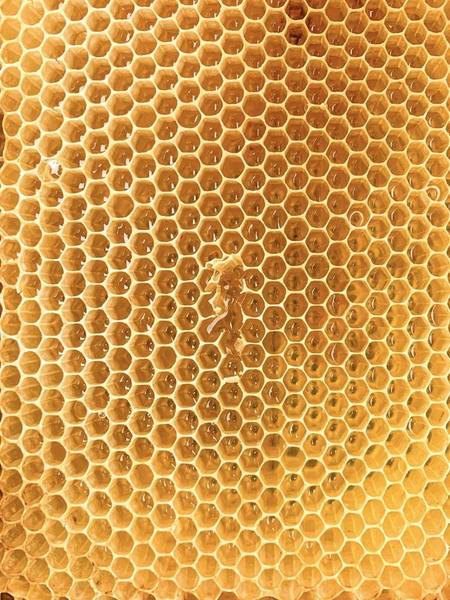
A honeybee colony keeps its brood, the developing young, at about 34 to 35 °C, whatever the weather. On hot days worker bees fan their wings at the entrance and spread water to cool the hive. On cold days they cluster and shiver their flight muscles to warm it. A 2004 study in Science by Julia Jones and colleagues found that colonies with more genetic variety held their temperature more steadily. It is government by many small decisions. But a hive can still overheat, freeze, or be lost to disease. Every natural regulator has its breaking point.
Episode 3
At our best
Since 1982 the Thames Barrier has protected London from surging tides. Its steel gates rise from the riverbed when the Environment Agency's forecasters see a dangerous tide coming down the estuary. It has been closed many times to keep the city dry. It is one of the great pieces of public engineering in Britain. But it was designed for a certain range of sea levels, and planners are already preparing for the end of its working life later this century. Our best systems govern within limits we did not set.
Episode 4
The Break
Every governor we know works within a range, has a breaking point, holds a mandate that ends and knows only in part. Every one of them, from the hypothalamus to the hive to the barrier, manages affairs inside limits set by something else. Al-Wālī governs the limits themselves. Al-Ghazālī described Him as the One who manages all affairs. The Qur'an speaks of His protection and of a responsibility given to us. “For him are angels ranged before him and behind him, who guard him by Allah's command. Lo! Allah changeth not the condition of a folk until they (first) change that which is in their hearts; and if Allah willeth misfortune for a folk there is none that can repel it, nor have they a defender beside Him.” (Qur'an 13:11, Pickthall).
In the year 639 ʿUmar ibn al-Khaṭṭāb, the second caliph, set out for Syria. At a place called Sargh, his commanders met him with bad news: plague had broken out in the land ahead.
ʿUmar called his advisers together and asked them what to do. They could not agree. Some said: we came out for a purpose; we should not turn back. Others said: you have with you the best of the people; do not lead them into this plague. He asked another group, and again they disagreed. Finally he asked the elders of Quraysh, and they all said: take the people back.
ʿUmar announced that they would return. One of his commanders, Abū ʿUbayda, objected: are you running away from God's decree? ʿUmar answered: yes, we are running from God's decree to God's decree. If you had a camel and came to a valley with one green slope and one barren one, whichever you grazed it on, would that not be by God's decree?
Then ʿAbd al-Raḥmān ibn ʿAwf arrived and told them he had heard the Prophet Muhammad ﷺ (peace be upon him) say this. If you hear of plague in a land, do not go into it, and if it breaks out where you are, do not leave. ʿUmar praised God and went home. (Bukhari 5729)
What each faith says
Read:
Judaism
“The LORD hath established His throne in the heavens; And His kingdom ruleth over all.”
The Psalms picture God as the ruler of everything: “The LORD hath established His throne in the heavens; and His kingdom ruleth over all.” The Aleinu prayer, which closes every Jewish service, ends with the hope that one day “the LORD shall be King over all the earth” (Zechariah 14:9).
Jewish law also puts great weight on human responsibility in governing: the Torah commands judges and officers in every town (Deuteronomy 16:18), and pikuach nefesh, “saving a life”, overrides almost every other rule.
Christianity
“See the birds of the sky, that they don’t sow, neither do they reap, nor gather into barns. Your heavenly Father feeds them. Aren’t you of much more value than they?”
Jesus pointed to the birds: they do not sow or reap, and yet the Father feeds them. Christians speak of God's providence: His wise government of everything He has made.
The Lord's Prayer asks that God's will be done “as in heaven, so on earth”, a prayer that God's good government will be seen in human affairs too.
Each Sunday many churches pray for “all in authority”, from the King to local councillors, following 1 Timothy 2:1-2. Plague reached Eyam in Derbyshire in 1665. In 1666 the Anglican rector, William Mompesson, and the former minister Thomas Stanley persuaded the villagers to close themselves off so that it would not spread.
Islam
“For him are angels ranged before him and behind him, who guard him by Allah's command. Lo! Allah changeth not the condition of a folk until they (first) change that which is in their hearts; and if Allah willeth misfortune for a folk there is none that can repel it, nor have they a defender beside Him.”
Al-Wālī comes from the same root as al-Waliyy, the Protecting Friend, but means the One who governs and manages. The Qur'an uses the word in 13:11, which says that each person has guardians before and behind them by God's command, and that “they have no governor besides Him”.
The same verse contains one of the most quoted lines in Muslim civic life: God does not change a people's condition until they change what is within themselves. Governance from God and responsibility for us go together.
Same and different
All three faiths describe God as the ruler and carer of creation and call people to responsible stewardship. All three have rich teaching on public health and saving life. Christians speak of the kingdom of God especially in the teaching of Jesus; Jews and Muslims have their own ways of describing God's rule.
A moment to reflect
What do you look after or manage in your own life?
When have you changed your plans to keep someone else safe?
What would it look like for your street or school to 'change what is within' itself?
Watch
A clear GCSE-level explanation of how the body controls its temperature.
How honeybees cool their hive with coordinated fanning.
Do it together
schools / familiesWhy do we shiver?
Measure your temperature with a thermometer after sitting still, after running about and after holding an ice cube. Talk about the body's governor, and the limits it has.
faith groups / neighboursThe plague decision
Read the story of ʿUmar at Sargh together and talk about how communities made decisions during Covid-19. What did faith groups do well? Read Psalm 103:19 and Qur'an 13:11.
schools / families / faith groupsThe plague village
Visit Eyam in the Peak District, or read its story together: in 1665-66 the villagers, led by their rector and the Puritan minister Thomas Stanley, stayed put so that plague would not spread. Set it beside ʿUmar's decision at Sargh and talk about what each community gave up.

 Episode 1