The Sun holds every planet in its grip, yet it burns hundreds of millions of tonnes of fuel each second. Even the Sun runs on something it cannot replace.
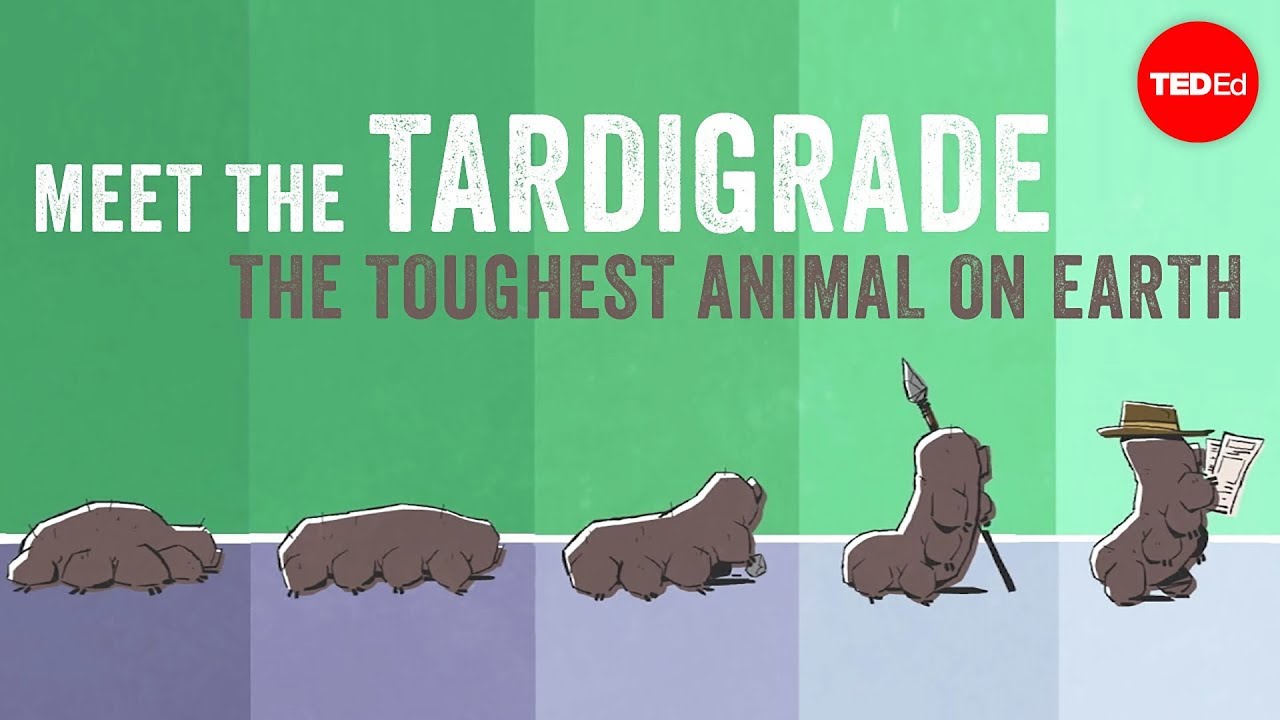
Even the toughest animal on Earth, the half-millimetre tardigrade, lies dried and still until a drop of water comes back. Everything turns to something for what it lacks. Aṣ-Ṣamad is the One everything turns to, who turns to nothing.
Start with what we know
Start with something we know. Then take away everything it needs. What is left is not a bigger version of us: it is the Name.
Episode 1
In us
We are walking bundles of need. We breathe about 20,000 times a day; without oxygen, brain cells begin to be damaged within minutes. We need water within days and food within weeks. We need other people: babies who are fed but never held fail to thrive. Every second we are drawing on the air, the Sun, the farm, the family. Even our independence is borrowed. The most self-sufficient person you know needs a heartbeat they did not start and a planet they did not make.
Episode 2
In nature
Tardigrades are famous for their toughness. When their pond dries up they pull in their legs, lose almost all their water and become a 'tun', shutting their bodies down. In that state they can survive being frozen, and have survived temperatures near absolute zero and, in a 2007 experiment, ten days exposed to space in low Earth orbit, carried on a European FOTON-M3 satellite. Some have revived after years in a dried state. But a tun does nothing at all until water returns: no eating, no moving, no growing. The toughest creature we know is a dependant, waiting for something outside itself.
Episode 3
At our best
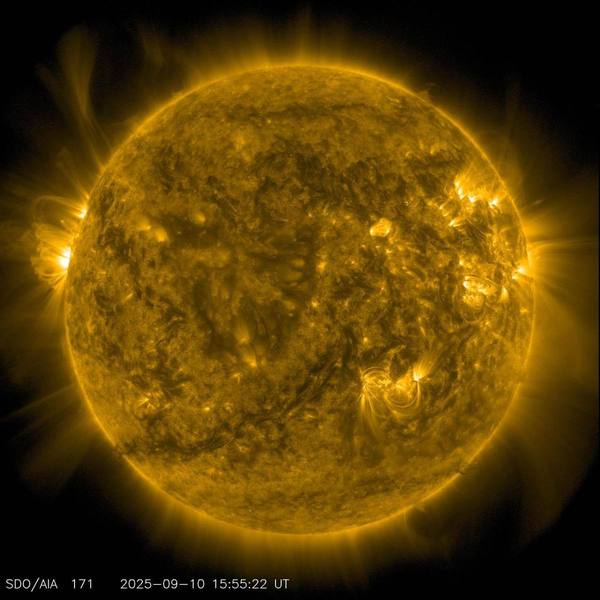
The Sun is the centre our whole solar system turns to. Its gravity holds the planets in orbit and its light, 3.828 × 10²⁶ watts by the International Astronomical Union's figure, powers almost every living thing on Earth. Plants lean towards it and sunflowers track it. Yet the Sun is not self-sufficient. NASA says it fuses hundreds of millions of tonnes of hydrogen every second and will eventually run out, in about five billion years. Every centre we know is itself a dependant.
Episode 4
The Break
Everything we know has needs: fuel, support, an emptiness to be filled. Everything turns to something: the plant to the Sun, the Sun to its fuel, the child to its parent. Aṣ-Ṣamad turns to nothing, and everything turns to Him. Classical scholars gave two meanings and kept both: al-Ṭabarī, the Lord to whom all turn in their needs; Ibn ʿAbbās and Mujāhid, the One who is not hollow, lacking nothing. “Say: He is Allah, the One! Allah, the eternally Besought of all!” (Qur'an 112:1-2, Pickthall).
From the tradition: Two glosses : al-Ṭabarī 'the lord to whom all turn'; Ibn ʿAbbās/Mujāhid 'not hollow, without lack'. Shīʿa (Imām al-Ḥusayn): 'Ṣamad is One who does not sleep'.
Watch and listen
Films, documentaries and voices that reach towards this Name. Each links out to where you can watch it.
The Prophet Muhammad ﷺ (peace be upon him) once sent out a small group under a commander who also led them in prayer. His companions noticed something unusual. Whatever he recited in the prayer, he always finished with the same short chapter: “Say: He is God, One. God, the Eternal Refuge. He did not beget and was not begotten, and there is none comparable to Him.”
When they came home, they mentioned it to the Prophet. Ask him why he does it, the Prophet said.
They asked, and the man answered: because it describes the Most Merciful, and I love to recite it.
The Prophet said: tell him that God loves him. (Bukhari 7375)
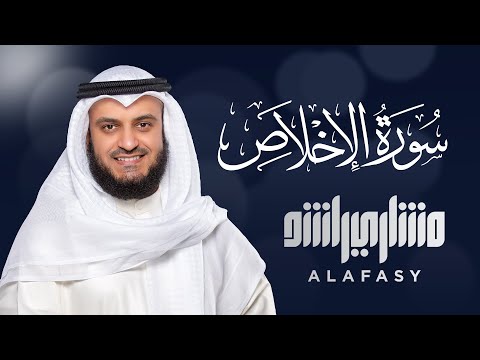
Another Companion heard a man reciting the same sūra over and over through the night and thought it was not enough. The Prophet told him that it is equal to a third of the Qur'an (Bukhari 5013). The chapter, al-Ikhlāṣ, is the only place in the Qur'an where aṣ-Ṣamad appears. It is four lines long, and children in mosques around the world learn it first.
What each faith says
Read:
Judaism
“The eyes of all wait for Thee, And Thou givest them their food in due season. Thou openest Thy hand, And satisfiest every living thing with favour.”
Maimonides' first principle of faith is that God exists perfectly and that everything that exists depends on Him for its existence, while He depends on nothing. Psalm 145, said three times a day in the Ashrei prayer, puts it as a picture of a whole world waiting at God's door.
Jewish tradition calls God makom, the Place: the One in whom the world exists, rather than the other way round.
Christianity
“He isn’t served by men’s hands, as though he needed anything”
Paul stood among the temples of Athens and told the people that the God who made the world “doesn't dwell in temples made with hands. He isn't served by men's hands, as though he needed anything”.
Christian theologians speak of God's aseity: God exists from Himself and needs nothing. Christians also believe that God's inner life is the love of Father, Son and Holy Spirit, so that God did not create out of loneliness or need.
Augustine prayed at the start of his Confessions that “our heart is restless, until it rests in you” (Confessions 1.1). Teresa of Ávila, the sixteenth-century Carmelite nun, kept a short prayer in her breviary that ends: God alone suffices.
Aṣ-Ṣamad appears once, in Sūrat al-Ikhlāṣ (112:2). The Qur'an makes the same point elsewhere: “O mankind! Ye are the poor in your relation to Allah. And Allah! He is the Absolute, the Owner of Praise.” (35:15, Pickthall).
Scholars kept both classical glosses side by side, and Shīʿī tradition adds a saying of Imām al-Ḥusayn that aṣ-Ṣamad is the One who does not sleep. Muslims recite al-Ikhlāṣ in daily prayer and before sleep.
Same and different
All three faiths say God needs nothing and everything needs God. Maimonides, Paul in Athens and Sūrat al-Ikhlāṣ say it in different words. Christians add that God's self-sufficiency is a life of love within the Trinity; Jews and Muslims reject the Trinity and describe God's self-sufficiency without it.
A moment to reflect
What do you depend on that you rarely think about?
Who do you turn to first when something goes wrong?
TED-Ed meets the tardigrade, the toughest animal on Earth, and the one thing it cannot do without.
National Geographic's Sun 101: the star our whole solar system turns to, and its fuel.
Do it together
families / schoolsWho do you turn to?
Draw a chain: you need food, food needs farms, farms need rain, rain needs the Sun. Keep asking 'and what does that need?' until you run out. Read Sūrat al-Ikhlāṣ and Psalm 145:15-16.
neighbours / faith groupsTurning-to map
Make a list of local places people turn to in need: food banks, warm spaces, helplines. Many food banks in Britain run from church halls, and synagogues, gurdwaras and mosques often collect for them. Arrange a visit to one and ask how your group can help.
Beyond the Abrahamic family, other traditions reach for something like this. Each in its own words; we connect, never rank.
Sikh
There is but one God whose name is True, the Creator, devoid of fear and enmity, immortal, unborn, self-existent.
Mul Mantar (ajuni, saibhang: unborn, self-existent) · Guru Granth Sahib p. 1 · tr. M. A. Macauliffe, The Sikh Religion (1909), vol. 1. Compare Qur'an 112, which follows this Name: 'He has not fathered, and was not born.'
 Episode 1