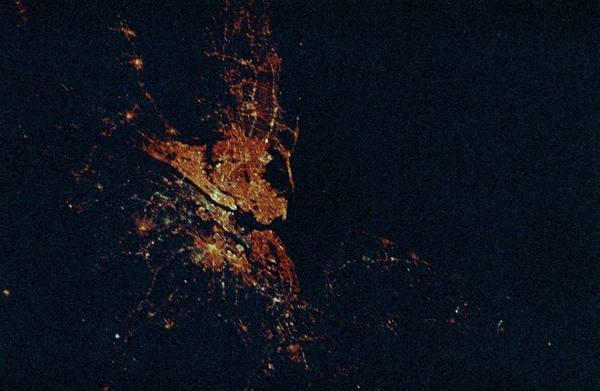
 Episode 1
In us
Everything we thought was one has come apart. “Atom” means “uncuttable”; Rutherford split it.
Reading settings
Text size
Easier reading
More space between lines and letters, plain font for headings, no italics.
Calm mode
No moving backgrounds or animations; softer images.
Save data
No background video and no card photos: good on a slow or capped connection.
Saved on this device only. Nothing is sent to us.

The 99 Names · Name 67 of 99 · Beyond
al-Aḥad الْأَحَدُ
Recited as it sounds in the Qur'an, 112:1.
Heard together with: al-Wāḥid / al-Aḥad / aṣ-Ṣamad
Ask a Muslim child which chapter of the Qur'an they learned first, and many will say al-Ikhlāṣ. It is four short lines, fifteen words in Arabic, and it is recited in prayers around the world every day. The Prophet Muhammad ﷺ (peace be upon him) said it is worth a third of the whole Qur'an.
A Jewish child's first prayer is often the Shema: “Hear, O Israel: the LORD our God, the LORD is One.” And when Jesus (peace be upon him) was asked which commandment is the greatest, he began with those same words. Three faiths, one sentence. Al-Aḥad is the One who has no parts, no partner and no equal. The three faiths say it together, and honestly mean different things by it.
Start with something we know. Then take away everything it needs. What is left is not a bigger version of us: it is the Name.
Episode 1Everything we thought was one has come apart. “Atom” means “uncuttable”; Rutherford split it.
 Episode 2
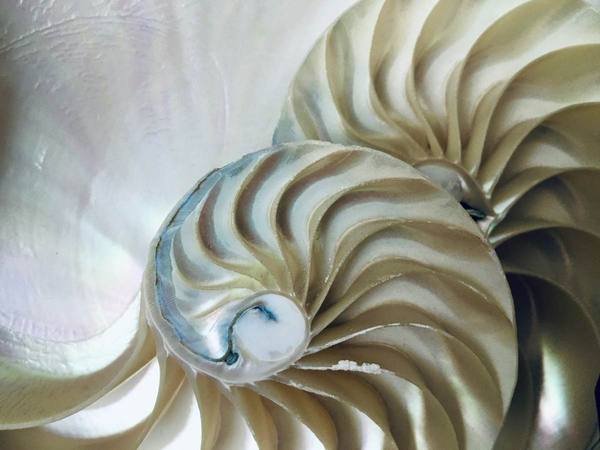
A body is trillions of cells; a cell is molecules; a molecule is atoms.
 Episode 3
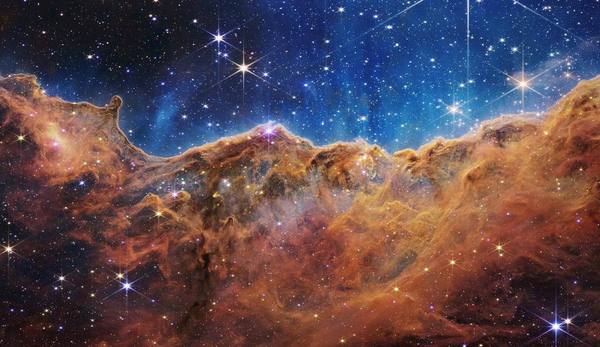
Even protons are made of quarks, held by the strong force (CERN). Every “one” in physics so far has had parts.
 Episode 4
Take away parts, assembly, division. Everything we called uncuttable came apart. Al-Aḥad has no parts to come apart. “Say: He is Allah, the One!” (Qur'an 112:1 · Pickthall).
Read: 112:1–4; 'al-Aḥad' with the article appears only in hadith.
From the tradition: Al-Rāzī: aḥad means no parts at all; Sunni formula: attributes 'not He nor other than He'; Maimonides: no body (MT 1:7).
Films, documentaries and voices that reach towards this Name. Each links out to where you can watch it.
On screen
The films imagine someone gathering infinite power. The Names describe the One who never had to gather anything.
Living it
Sincerity (ikhlāṣ): an undivided heart.
Bilāl ibn Rabāḥ was an enslaved man in Mecca, born to an Abyssinian mother. When he became one of the first to follow the Prophet (peace be upon him), his owner set out to break him.
According to the early reports, the men who owned the weakest of the first Muslims dressed them in coats of iron mail and left them out in the full heat of the Meccan sun. Later accounts say a great rock was laid on Bilāl's chest. They wanted him to deny God and praise their idols. Then they handed him to boys, who dragged him through the streets of Mecca by a rope.
Through all of it, Bilāl said only two words: “Aḥad, Aḥad.” One. One.
Abū Bakr bought Bilāl's freedom. Bilāl went on to become the first muezzin, the first person to give the call to prayer, chosen for the beauty of his voice. Every call to prayer since has carried the same claim he made in the street: there is no god but God. ʿUmar later said of Abū Bakr: “Abū Bakr is our master, and he freed our master,” meaning Bilāl (Bukhari 3754).
“HEAR, O ISRAEL: THE LORD OUR GOD, THE LORD IS ONE.”
Deuteronomy 6:4 · JPS 1917
The Shema is said morning and evening, and many Jews hope it will be the last words on their lips.
The great medieval thinker Maimonides, who wrote in Arabic as well as Hebrew, made God's oneness the second of his Thirteen Principles. God is one, but not one as a pair or a species or a body is one. His oneness is unlike any other. In his law code he states that God has no body and no form (Mishneh Torah, Foundations of the Torah 1:7).
“Jesus answered, “The greatest is, ‘Hear, Israel, the Lord our God, the Lord is one'”
Mark 12:29 · WEB
Christians are monotheists, and they quote the Shema too. Asked for the greatest commandment, Jesus answered with it, then added love of neighbour.
Christians also believe that the one God is Father, Son and Holy Spirit: three persons, one God. The Athanasian Creed insists that there are “not three Gods, but one God”. Christians see the Trinity as a deeper account of oneness, not a step away from it. Many churches say the Nicene Creed together every Sunday, beginning “We believe in one God”.
“Say: He is Allah, the One! Allah, the eternally Besought of all! He begetteth not nor was begotten. And there is none comparable unto Him.”
Qur'an 112:1-4 · Pickthall (1930)
Surah al-Ikhlāṣ, ‘Sincerity’, is the Qur'an's shortest statement of who God is. Al-Aḥad means one with no parts at all. The theologian Fakhr al-Dīn al-Rāzī said aḥad denies any division or composition in God. Aṣ-Ṣamad, in the next line, means the One everyone turns to in need, who needs no one.
The chapter's title points to what it asks of people. Ikhlāṣ, sincerity, means an undivided heart: doing things for God alone, not for show. One God, and one heart turned towards Him.
Jews, Christians and Muslims all say ‘God is One’, and the Shema is shared word for word by Jesus. The Hebrew eḥad and the Arabic aḥad, ‘one’, are close cousin words. All three reject many gods. They genuinely differ on what that oneness allows. Christians believe the one God is three persons, Father, Son and Holy Spirit, and that the Son became human. Jews and Muslims hold that God's oneness has no persons, no parts and no incarnation. Jews and Muslims do not accept the Trinity, and it is right to say so plainly: this is one of the real differences between the faiths. Each faith sees its view as faithful to the one God, and each deserves to be described in its own words. Each also says it daily in its own way: the Jewish Shema, the Christian creed and the Muslim shahāda, “there is no god but God”.
A moment to reflect
The 2,400-year search for the ‘uncuttable’ atom, and how it was finally cut.
The strong force that holds quarks together inside every proton: even our smallest ‘ones’ have parts.
The classic 1977 film Powers of Ten, zooming from a picnic out to the cosmos and down into a carbon atom.
Ask a Jewish, a Christian and a Muslim volunteer to read Deuteronomy 6:4, Mark 12:29 and Qur'an 112:1 in their original language and in English. Then talk honestly, and kindly, about what each tradition means by ‘One’.
Give everyone a strip of paper and scissors, and halve it again and again until you can't. Most people manage eight or nine cuts. Talk about the Greek atomos, ‘uncuttable’, and why the faiths say God has no parts at all.
Beyond the Abrahamic family, other traditions reach for something like this. Each in its own words; we connect, never rank.
Hindu
That One Thing, breathless, breathed by its own nature: apart from it was nothing whatsoever.
Rig Veda 10.129.2 · tr. R. T. H. Griffith (1896)
7 films and talks, chosen for this page. They play here.
Who Owns Your Heart? | Allah’s Names | Dr. Omar Suleiman | Ep. 2
Yaqeen Institute · 17 min
Yaqeen: Dr Omar Suleiman on al-Ahad and al-Wahid (episode 2).
11 - The Divine Names Al-Majid until Al-Akhir - Ninety-Nine Names of Allah for Youth - Imam Yama
SeekersGuidance · 41 min
SeekersGuidance: Imam Yama Niazi on the Names to al-Akhir, including al-Ahad.
Who Is Allah? | Surah Al-Ikhlas
Cambridge Central Mosque · 1 min
Cambridge Central Mosque: Surah al-Ikhlas, 'Say: He is God, the One'.
What is the Shema? Intro to the Most Important Jewish Prayer
BimBam · 3 min
Belief in ONE God, Is It ONLY for Jews?
Jewish Learning Institute · 3 min
Jewish Learning Institute: belief in one God, is it only for Jews?
The Higgs Mechanism Explained | Space Time | PBS Digital Studios
PBS Space Time · 10 min
Your Mass is NOT From the Higgs Boson
Veritasium · 7 min