Voices of scripture · Qur'an
The art of
recitation
The word Qur'an means “the recitation”. Recitation is not singing, but it is an art, with rules for every sound.
Snapshot
Muslims believe the Qur'an was revealed aloud, memorised aloud and passed on aloud, teacher to student, for fourteen centuries; printed copies came much later. Recitation has no instruments, no beat and no composed tunes. It has strict rules for every sound (tajwīd), several accepted ways of reading the text (qirāʾāt), and schools of style from Cairo to Istanbul to Jakarta. Here is how to hear it.
Three styles
Measured, embellished, teaching
Murattal
Measured: a moderate pace, rules applied clearly, little repetition. The style of prayer, daily reading and complete recordings. Nelson credits al-Husary as the first to record and broadcast it.
Mujawwad
Embellished, “made beautiful”: slow, melodic, improvised in the maqamat, with phrases repeated at the listeners' request. Heard on public occasions, on mosque evenings and on the radio.
Muʿallim
Teaching: slow and carefully articulated, with pauses for a learner to repeat. The best-known example is al-Husary's al-Muṣḥaf al-Muʿallim.
Hear the difference: one voice, al-Husary, in all three styles, reciting the same surah.
Tajwid basics
The rules of every sound
Makhārij
Points of articulation: every letter has its place in the throat, tongue, lips or nose.
Ṣifāt
Qualities: heavy and light letters, whispered and voiced.
Madd
Lengthening: vowels held for two, four, five or six counts, depending on what follows.
Ghunna
A nasal hum, held for two counts on a doubled n or m.
Nūn sākina
Four rules for a silent n: clear, merged, turned into m before b, or hidden.
Qalqala and waqf
A small echo on five letters (ق ط ب ج د), and the signs for where you may, should or must not stop, because a pause can change the meaning.
The ten readings
One text, ten ways of reading it
The qirāʾāt are accepted, chain-transmitted ways of reciting the same text. They differ in vowels, dotting, lengthening and a few words, and their meanings complement each other. Ibn Mujahid (d. 936) fixed seven; Ibn al-Jazari (d. 1429) added three. Each reader is known through two transmitters.
| Reader (city) | Transmitters | Where you hear it today | One recording |
|---|---|---|---|
| ʿĀṣim (Kufa) | Ḥafṣ | Most of the Muslim world | |
| Shuʿba | Rarely heard in public | ||
| Nāfiʿ (Madinah) | Warsh | Morocco, Algeria, Mauritania, the Sahel and West Africa | |
| Qālūn | Libya and most of Tunisia | ||
| Abū ʿAmr (Basra) | al-Dūrī | Sudan, Chad and parts of East Africa | |
| al-Sūsī | Rare | ||
| Ibn ʿĀmir (Damascus) | Hishām · Ibn Dhakwān | Specialist | |
| Ibn Kathīr (Makkah) | al-Bazzī · Qunbul | Specialist | |
| Ḥamza (Kufa) | Khalaf · Khallād | Specialist | |
| al-Kisāʾī (Kufa) | al-Layth · al-Dūrī | Specialist | |
| Abū Jaʿfar (Madinah) | Ibn Wardān · Ibn Jammāz | Specialist | |
| Yaʿqūb (Basra) | Ruways · Rawḥ | Specialist | |
| Khalaf (Kufa) | Isḥāq · Idrīs | Specialist | No recording found yet |
Hear the difference: one voice, four readings
Al-Husary recites al-Fatiha in four readings. In Warsh, listen for maliki where Hafs has māliki, and for the longer lengthening.
Hear the difference: Abdul Basit in Hafs and in Warsh
Ar-Rahman, first in Hafs mujawwad, then from the complete Warsh recording he made in Morocco in 1986.
Audio streams from mp3quran.net. The exact differences between readings are best explained by a qualified reader; we show only the al-Fatiha example.
The maqamat
Modes, not tunes
Egyptian reciters move between melodic modes as the meaning moves, improvising in the moment and drawing on remembered phrases of the great reciters. Recitation keeps no metre. A teaching shorthand often quoted is “Ṣa-Na-Ha-Ra-Ja-Bas”: a convention, not a rule.
Five voices, one surah
Five great voices of the Egyptian school
All five recite Surah ar-Rahman in mujawwad, each from the official channel that holds his recordings. Often called the five pillars; Nelson and Wikipedia list four, and many Egyptians add al-Banna.
Maḥmūd Khalīl al-Ḥuṣarī
1917–1980 · The model of correctness; the teacher's voiceMuṣṭafā Ismāʿīl
1905–1978 · The musician's reciter, most inventive with maqamMuḥammad Ṣiddīq al-Minshāwī
1920–1969 · Gravity and tearsʿAbd al-Bāsiṭ ʿAbd al-Ṣamad
1927–1988 · Breath and brillianceMaḥmūd ʿAlī al-Bannā
1926–1985 · Polished and rhythmicA shorter set: at-Takwir from all five
- Maḥmūd Khalīl al-Ḥuṣarī: at-Takwir, mujawwad ▶
- Muṣṭafā Ismāʿīl: at-Takwir, mujawwad ▶
- Muḥammad Ṣiddīq al-Minshāwī: at-Takwir, mujawwad ▶
- ʿAbd al-Bāsiṭ ʿAbd al-Ṣamad: at-Takwir, mujawwad ▶
- Maḥmūd ʿAlī al-Bannā: at-Takwir, mujawwad ▶
Other schools
From Makkah to Jakarta
Makkah and Madinah
Shorter phrases, fewer modulations, often in Rast or Hijaz: a direct style linked with the imams who lead prayer. From the 1970s it became widely heard, including in Egypt.
Hear the difference: Abdul Basit's at-Takwir (above) against prayer in Makkah.
Türkiye
Ottoman makam practice gives Turkish recitation its own smooth, ornate colour. The aşr-ı şerif is a short passage recited at gatherings; the mukabele is the Ramadan read-through, juz by juz.
Indonesia
The national recitation competition, the MTQ, began in 1968. Women reciters are prominent and celebrated; Hj. Maria Ulfah was the first woman to win an international recitation award, in Malaysia in 1980.
The Maghreb and West Africa
Warsh country, where children have learned the Qur'an on wooden boards for centuries. Morocco's Qur'an channel broadcasts the Warsh reading.
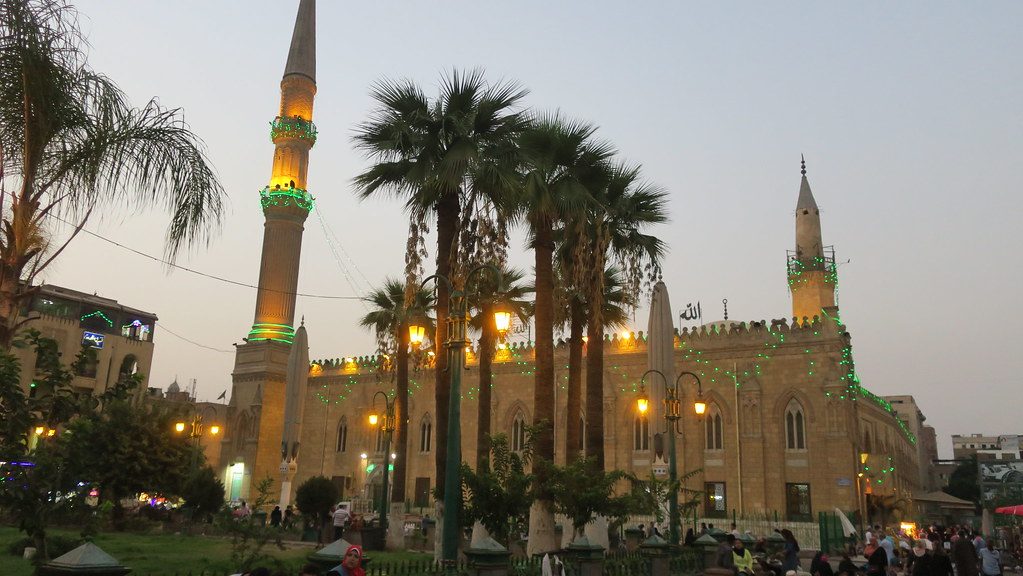 Meet the voiceSheikh Abdul BasitHis life, his style, and four pairs to compare.
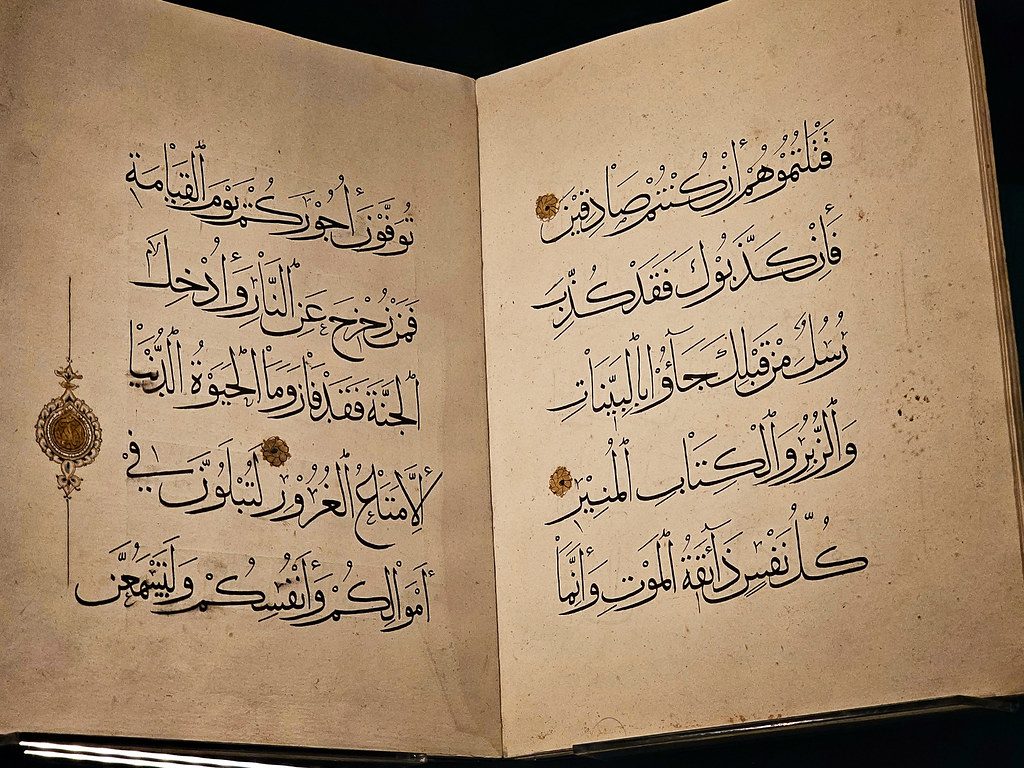 Across the traditionsVoices of the Torah and the BibleEvery scripture here was written to be heard.
Sources
- Wikipedia, “Tajwid”
- Wikipedia, “Qiraʾat”
- Kristina Nelson, The Art of Reciting the Qur'an (1985; 2001)
- Afropop Worldwide, Frishkopf and Nelson (2011)
- Anne K. Rasmussen, Women, the Recited Qur'an, and Islamic Music in Indonesia (UC Press, 2010)
- Anna M. Gade, Perfection Makes Practice (Hawaiʻi, 2004)
- Audio: Quran.com and mp3quran.net, streamed, not stored.
- Films: Sono Cairo official channels; Saudi Quran TV (Saudi Broadcasting Authority); Diyanet TV; Indonesia's Ministry of Religious Affairs; Assadissa TV.
Picture credits
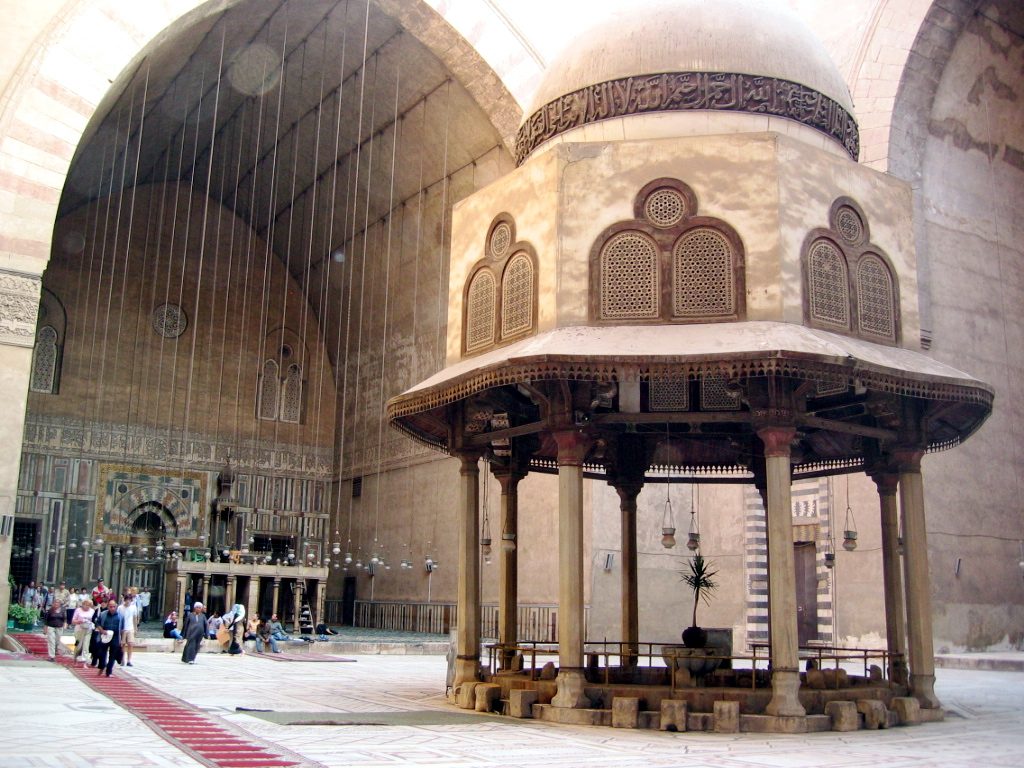
- Sultan Hassan mosque, neil cummings, CC BY-SA 2.0
Watch more: The art of recitation
7 films and talks, chosen for this page. They play here.
Intro to Maqamat | Ep. 1 | The Art of Quran Recitation with Qari Ibrahim Bakeer & Nouman Ali Khan
Nouman Ali Khan - Official - Bayyinah · 11 min
Maqam Saba | Ep. 2 | The Art of Quran Recitation with Qari Ibrahim Bakeer & Nouman Ali Khan
Nouman Ali Khan - Official - Bayyinah · 11 min
Maqam Saba, episode 2 of The Art of Qur'an Recitation.
Maqam Hijaz | Ep. 7 | The Art of Quran Recitation with Qari Ibrahim Bakeer & Nouman Ali Khan
Nouman Ali Khan - Official - Bayyinah · 11 min
Maqam Hijaz, episode 7 of The Art of Qur'an Recitation.
Where Have All the Female Quran Reciters Gone | Ustadha Maryam Amir
The Rahmah Foundation · 6 min
Ep 6: Sound and meaning in the Qur'an with Professor Michael Sells
The Ismaili · 37 min
الشيخ عبد الباسط - سورة الرحمن (مرتل)
القناة الرسمية للشيخ عبد الباسط عبد الصمد · 10 min
Sheikh Abdul Basit: Surah ar-Rahman in the plainer murattal style, to compare.
Surat Al-Ikhlas - Mishary Rashed Alafasy
Alafasy · 1 min
- More films and talks on F-ILMWatch free