Voices of scripture · Qur'an
Abdul Basit
Sheikh Abdul Basit ʿAbd us-Samad (1927–1988). Listeners call him al-ḥanjara al-dhahabiyya, “the Golden Throat”.
One-minute snapshot
The voice that carried the Qur'an around the world
Abdul Basit Muhammad ʿAbd us-Samad was born in 1927 in al-Maraʿza, a village near Armant in Upper Egypt, into a family of Qur'an memorisers. He had the whole Qur'an by heart at about ten. In 1951 Egyptian Radio took him on, and for nearly four decades his voice was the sound of the Qur'an for millions of people who had never been to Egypt.
Scholars point to his breath, which carried a single phrase far longer than seems possible, and to his high, clear voice. He recited in Jakarta, Damascus, Lahore, Johannesburg, Paris and Moscow. In 1984 he became the first head of Egypt's Syndicate of Qur'an Reciters. He died in Cairo on 30 November 1988.
He recited in the Hafs ʿan ʿĀṣim reading, in two styles: mujawwad, slow and soaring, made for a listening audience; and murattal, measured and clear. Press play on both below and hear the difference.
From Sono Cairo, which holds the Egyptian Radio recordings, on the official channel. We show no photographs of the Sheikh himself.
Hear the difference
One voice, two styles
The same reciter, the same words. Murattal is the measured style of prayer and daily reading. Mujawwad is slow, wide-ranging and made for listeners. All eight films are from his official channel.
55 · ar-Rahman
Same text, double the time. Listen for the refrain that returns 31 times: “Which is it, of the favours of your Lord, that ye deny?” (55:13, Pickthall).
81 · at-Takwir
His best-loved short surah, which opens “When the sun is overthrown” (81:1, Pickthall). Hear how the mujawwad lets each oath hang in the air.
19 · Maryam
The surah of Mary (peace be upon her). The murattal runs about 23 minutes; the mujawwad nearly twice as long.
35 · Fatir
The first surah he recited on Egyptian Radio, in 1951.
His life
From Armant to the world
- 1927
Born in al-Maraʿza, near Armant in Upper Egypt, into a family of Qur'an memorisers.
Sources: Wikipedia; Quran.com; TDV İslâm Ansiklopedisi
- c. 1937
Has the whole Qur'an by heart at about ten, taught by Sheikh Muhammad ﷺ (peace be upon him) al-Amir at the village Qur'an school.
Sources: Wikipedia; TDV; Quran.com
- c. 1941
Studies tajwid and the seven readings with Sheikh Muhammad Salim Hamada; later completes the ten readings in Cairo.
Sources: TDV; Wikipedia
- 1951
Joins Egyptian Radio. His first broadcast surah is Fatir.
Sources: Quran.com; Wikipedia; TDV
- 1950s
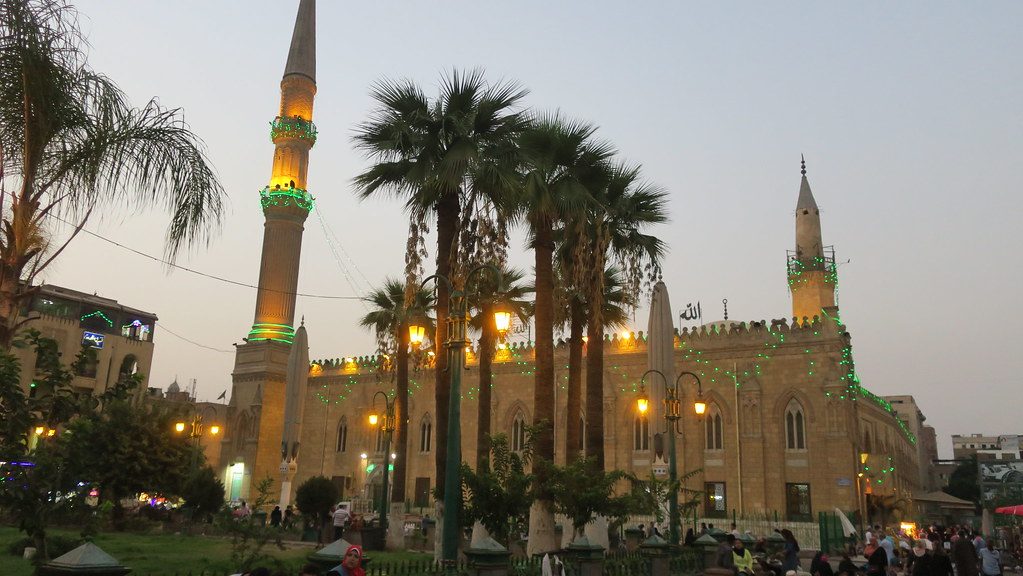
Reciter at the Imam al-Shafiʿi Mosque in Cairo, and later at al-Hussein Mosque.
Sources: Quran.com; TDV (their dates differ)
- 1955–61
Recites in Jakarta, Damascus, Aleppo, Malaysia and Lahore; in 1960 he recites in Moscow during President Nasser's visit.
Sources: Wikipedia
- 1966
South Africa: a crowd of more than 30,000 at Green Point, Cape Town, according to Muslim News.
Sources: Wikipedia
- 1984
Becomes the first head of Egypt's Syndicate of Qur'an Reciters.
Sources: Wikipedia (citing Nelson); Quran.com. TDV gives 1983
- 1986
Records the complete Qur'an in the Warsh reading in Morocco, at King Hassan II's request.
Sources: Wikipedia; TDV
- 30 Nov 1988
Dies in Cairo, and is buried near the mausoleum of Imam al-Shafiʿi.
Sources: Wikipedia; Quran.com; TDV
His style
What to listen for
Breath
Ask anyone who loves his recitation and they mention his breath first. Kristina Nelson, in the standard academic study of Egyptian recitation, notes he was admired for his breath control and his high, clear voice. The Turkish Encyclopaedia of Islam says he could hold the top of his range for 45 to 50 seconds in one breath. The breath serves the meaning: a reciter must not stop mid-phrase where a pause would change the sense, so a long breath lets a whole thought arrive intact.
Madd, the lengthening
Tajwid sets how long certain vowels are held, counted in beats: two, four, five or six. In mujawwad a reciter fills those beats with sustained, ornamented tone. With Abdul Basit you can hear the rule and the beauty at once.
Maqam
Egyptian reciters improvise in the maqāmāt, the melodic modes of Arabic music, without instruments, metre or fixed tunes; scholars stress that recitation is not treated as music. He often opens low and quiet, in Bayati, and climbs over several minutes to a brilliant top register before returning home.
The listener
In mujawwad the reciter moves through the text phrase by phrase, repeating freely. Live recordings catch the audience calling out Allāh! and asking for a verse again. Listen for it in the archive films below.
The Prophet urged believers to beautify the Qur'an with their voices (Sunan Abi Dawud 1468, paraphrased). He praised Abu Musa al-Ashʿari's recitation as a gift like the voice of the family of David (Sahih al-Bukhari 5048; Sahih Muslim 793, paraphrased).
From the archive
Filmed and recorded live
The best film of him reciting
Audio from the archive
Audio from the archive
Sources
- Wikipedia, “Abdul Basit ʿAbd us-Samad”
- Quran.com, reciter page
- TDV İslâm Ansiklopedisi, “Abdüssamed, Abdülbâsıt Muhammed” (Ahmet Özel)
- Kristina Nelson, The Art of Reciting the Qur'an (Texas, 1985; AUC Press, 2001)
- Afropop Worldwide, Michael Frishkopf and Kristina Nelson on Qur'anic recitation (2011)
- Films: Sono Cairo (Sawt al-Qahira), the rights-holder of the Egyptian Radio recordings, on @AbdulbasitOfficial.
Where sources disagree we say less: the year of the Reciters' Syndicate (1984 in most sources, 1983 in TDV), his years at each mosque, and the date of Egypt's Order of Merit. We do not repeat crowd sizes we cannot check.
Picture credits
- Al-Hussein Mosque, Cairo, Terrazzo, CC BY 2.0
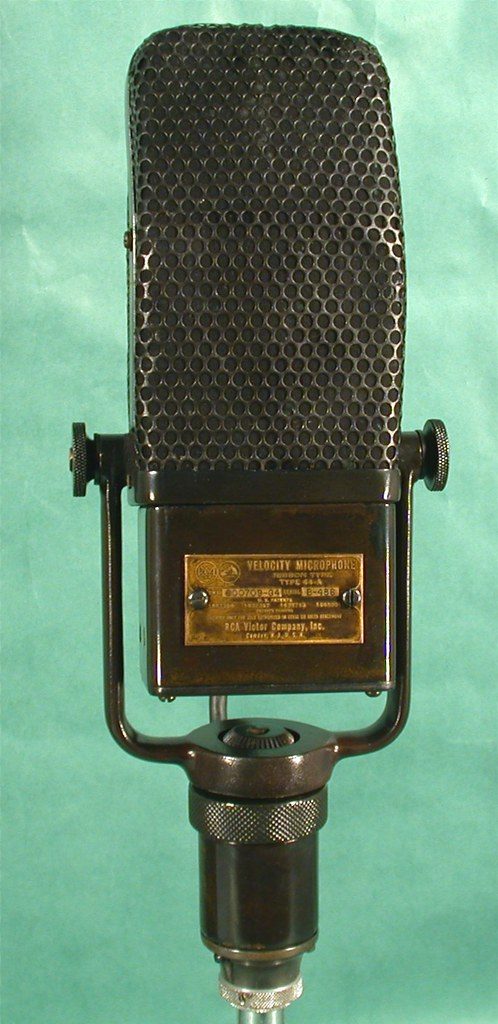
- Restored RCA 44-A, Roadside Guitars, CC BY-SA 2.0
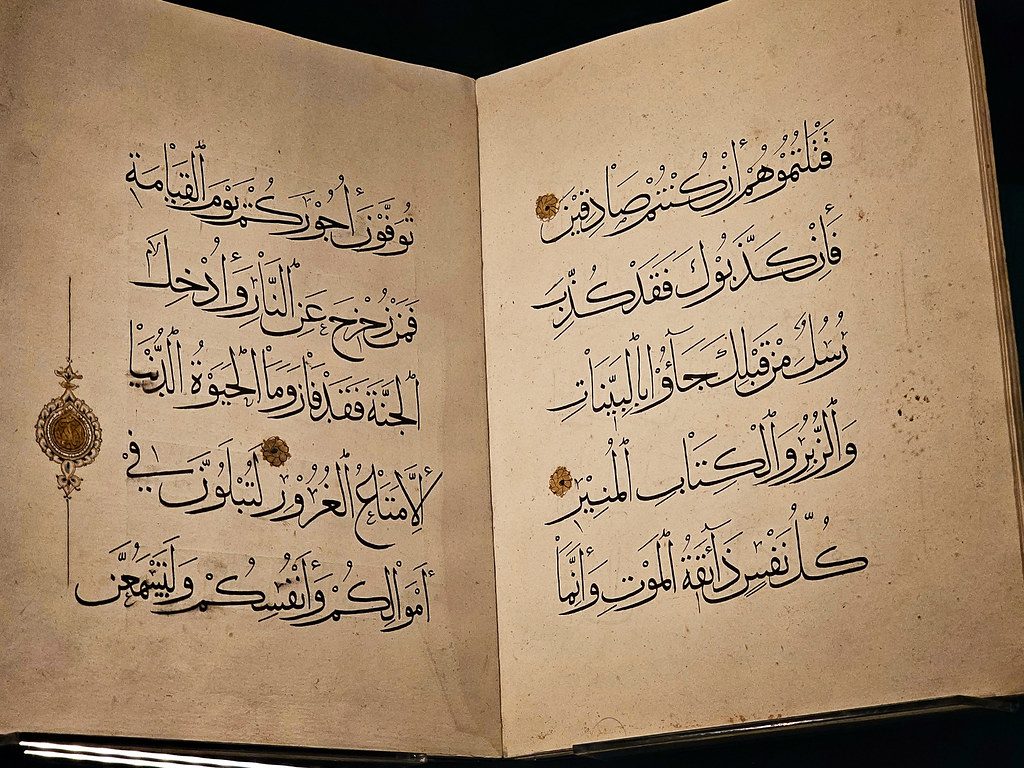
- Mamluk Quran, Cairo, 14th century (2), Prof. Mortel, CC BY 2.0
Watch more: Abdul Basit
3 films and talks, chosen for this page. They play here.
تلاوة خاشعة تاريخية | الشيخ عبد الباسط عبد الصمد - بغداد 1986 (الأحزاب، الضحى، الشرح، القدر)
القناة الرسمية للشيخ عبد الباسط عبد الصمد · 28 min
A historic live recitation by Sheikh Abdul Basit in Baghdad, 1986.
الشيخ عبد الباسط عبد الصمد | سورة البقرة 183-187 | مسجد أبي العلاء عام 1982
تسجيلات ماسبيرو الدينية · 12 min
Egyptian state radio and TV archive: Abdul Basit recites al-Baqarah 183-187, the fasting verses, 1982.
Mona Siddiqui and Madinah Javed on Qur’an recitation — BBC Radio Scotland Interview 06.10.2020
Madinah Javed · 8 min
- More films and talks on F-ILMWatch free