Moses (peace be upon him), the prophet who spoke with God, is asked a simple question: who is the most knowledgeable person on earth? He answers, “I am.” God tells him: there is someone who knows more. Go and find him, where the two seas meet.
So begins one of the strangest stories in the Qur’an. Moses finds the man, a servant of God whom tradition calls al-Khidr, “the Green One”. He may travel with him on one condition: no questions. Then the guide does three things that look outrageous. Moses cannot keep quiet. Only at the end does he learn what was hidden. Jewish and Christian readers have similar stories of their own. This one is for adults: one of the three acts is hard to read.
“Then found they one of Our slaves, unto whom We had given mercy from Us, and had taught him knowledge from Our presence. Moses said unto him: May I follow thee, to the end that thou mayst teach me right conduct of that which thou hast been taught?”
Qur'an 18:65–66 · Pickthall (1930)
The story fills verses 60–82 of Surah al-Kahf (The Cave), the chapter many Muslims read every Friday. The guide is never named in the Qur’an; the name al-Khidr comes from hadith. The Hebrew Bible draws its own line between what is hidden and what is ours to do: “The secret things belong unto the LORD our God; but the things that are revealed belong unto us” (Deuteronomy 29:28, JPS 1917).
The world behind the story
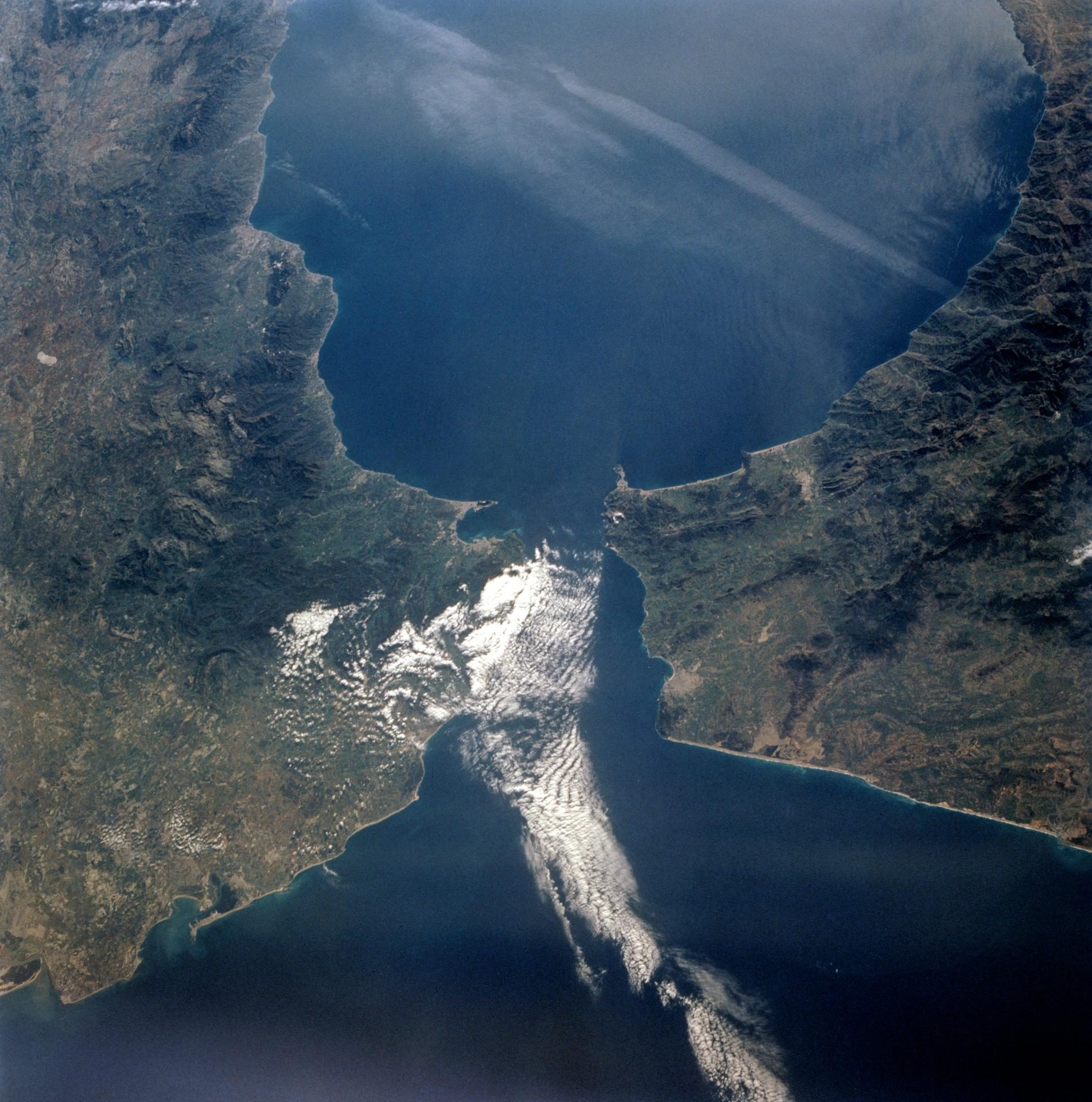
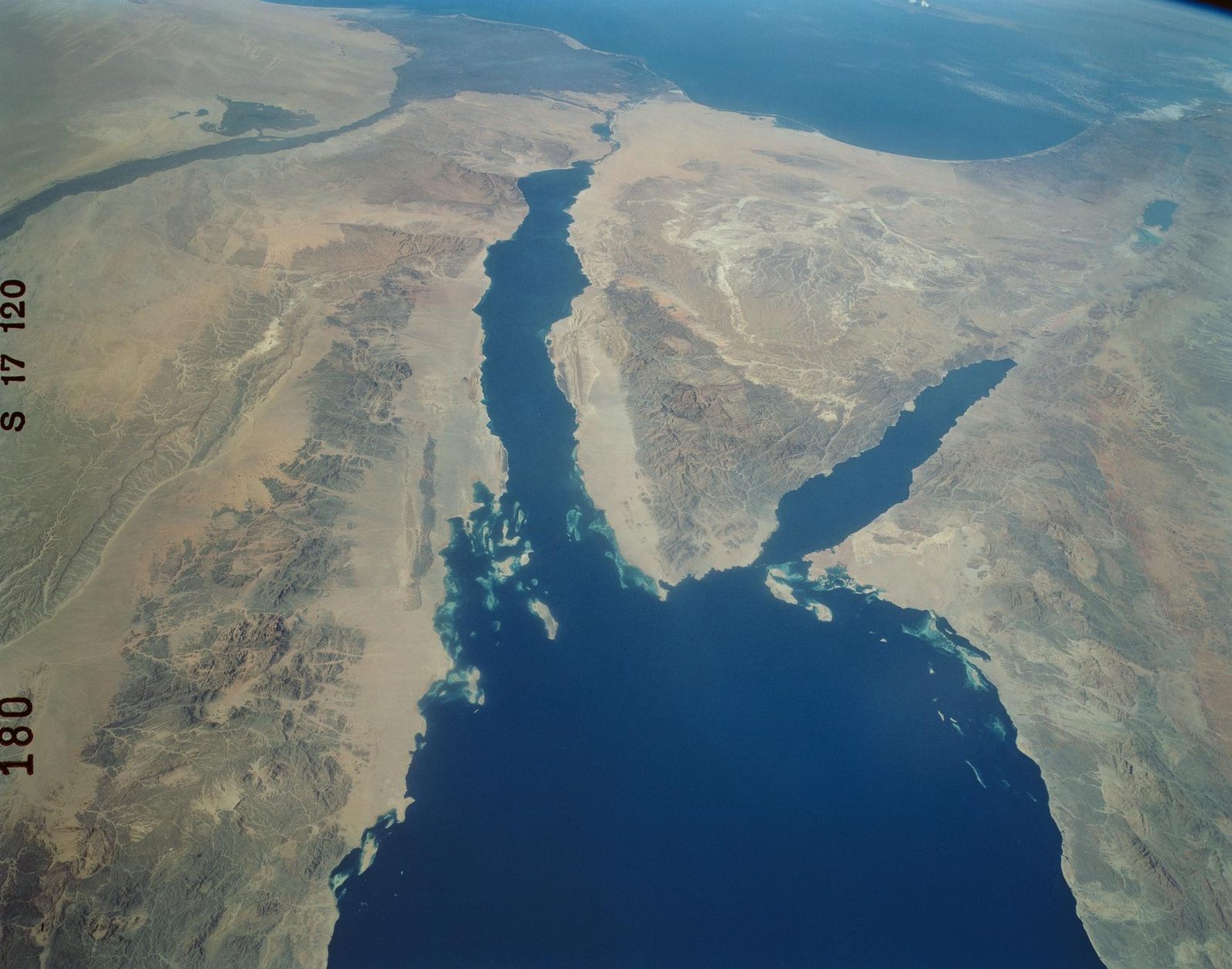
Where is “the junction of the two seas” (majma’ al-bahrayn, 18:60)? Muslim commentators have suggested many places. One is where the Gulf of Suez and the Gulf of Aqaba meet at the tip of Sinai. Another is where the Tigris and Euphrates join the Gulf. Another is even the Strait of Gibraltar. Many read it symbolically as the meeting of two kinds of knowledge, the knowledge we can see and the knowledge hidden with God. The Qur’an does not say.
Historians have noticed that the story shares motifs with older tales of the region. There is a journey to the ends of the earth, a fish that comes back to life when it touches the water of life, and a mysterious wise guide. Similar elements appear in the Syriac Alexander Romance and, further back, in the Epic of Gilgamesh. Muslims hold the Qur’an’s account as revelation; historians study how ideas travel between cultures. Both can be true to their own methods.
The figure of al-Khidr has had a remarkable life across the Middle East and South Asia. He is remembered as a wanderer who appears to people in need, a patron of travellers and of the sea. In many places he has been linked with the prophet Elijah (peace be upon him) and with St George. Shared shrines have long been visited by Muslims, Christians and Jews. At al-Khader, a village near Bethlehem named after him, the Orthodox church of St George has been honoured by local Muslims and Christians alike for centuries.
Rivers of tradition flowed the other way too. In the eleventh century, Rabbi Nissim ben Jacob of Kairouan, in what is now Tunisia, told a Hebrew story with the same shape. A medieval Christian tale, later turned into a famous English poem, tells it again. The three versions sit side by side below.
What each faith says
Judaism
“The secret things belong unto the LORD our God; but the things that are revealed belong unto us and to our children for ever, that we may do all the words of this law.”
Deuteronomy 29:28 · JPS 1917
The Hebrew Bible has no story of Moses and a hidden guide, and we don’t force one. The nearest real parallel comes from medieval North Africa. Rabbi Nissim of Kairouan (about 990–1062) tells of Rabbi Joshua ben Levi, who asks to travel with the prophet Elijah. Elijah agrees, on condition that Joshua asks no questions. Elijah lets a poor couple’s only cow die. He rebuilds the wall of a rich man who refused them food. He blesses rude hosts, while giving kind hosts a curse that sounds cruel. At the end he explains. The poor wife was due to die, and he asked God to take the cow instead; under the wall lay treasure the miser did not deserve to find.
The Jewish lesson is that God’s justice is real but often hidden. Moses himself, in the Talmud, asks God why the righteous suffer and is not given a full answer (Berakhot 7a). And Deuteronomy draws a line between what is hidden and what is ours to do.
Elijah, the hidden guide of the story, is a guest at Jewish tables to this day. Every Saturday night, as Shabbat ends, families sing “Eliyahu ha-Navi”, “Elijah the prophet”. At the Passover Seder a cup of wine is poured for him and the door is opened, in case he comes. At every circumcision an empty chair is set for him. The one who knows the hidden reasons is always expected, never seen.
Christianity
“Oh the depth of the riches both of the wisdom and the knowledge of God! How unsearchable are his judgements, and his ways past tracing out!”
Romans 11:33 · WEB
The New Testament has no version of this story either. The nearest Christian parallel is a medieval tale, found in the Latin story collection Gesta Romanorum and elsewhere, of a hermit who travels with an angel in disguise. The angel steals a golden cup from a generous host, gives it to a mean one, and does something terrible to a child. The hermit is horrified, until the angel reveals the hidden purpose of each act. The English poet Thomas Parnell turned it into a famous poem, The Hermit (1721).
Christian scripture states the lesson directly. Paul, after wrestling with why God’s plan unfolds as it does, breaks into praise: “Oh the depth of the riches both of the wisdom and the knowledge of God!” (Romans 11:33). Isaiah, read in churches and synagogues alike, says: “My thoughts are not your thoughts” (Isaiah 55:8).
English hymn-singers know the lesson by heart. William Cowper, who lived with deep depression, wrote “God moves in a mysterious way” for the Olney Hymns (1779). It is still sung in Anglican, Methodist and Free Church congregations: “Judge not the Lord by feeble sense, But trust Him for His grace; Behind a frowning providence He hides a smiling face.”
Islam
“And as for the wall, it belonged to two orphan boys in the city, and there was beneath it a treasure belonging to them, and their father had been righteous, and thy Lord intended that they should come to their full strength and should bring forth their treasure as a mercy from their Lord; and I did it not upon my own command. Such is the interpretation of that wherewith thou couldst not bear.”
Qur'an 18:82 · Pickthall (1930)
In Surah al-Kahf, Moses sets out with a young companion, saying he will keep going “And when Moses said unto his servant: I will not give up until I reach the point where the two rivers meet, though I march on for ages.” (18:60, Pickthall). At the meeting of the seas, the fish they brought for food slips into the water and swims away, and there they find the servant of God. He warns Moses: “He said: Lo! thou canst not bear with me. How canst thou bear with that whereof thou canst not compass any knowledge?” (18:67–68, Pickthall). He holes a fishing boat; he takes the life of a boy; he rebuilds a falling wall in a town that refused them food, and asks no payment. Each time Moses protests.
Then the guide explains. The boat belonged to poor fishermen; a king was seizing every sound boat, and the damage saved it. The boy would have brought misery to his believing parents, and God would give them a better child. Under the wall was treasure belonging to two orphans, kept safe until they were grown. “And as for the wall, it belonged to two orphan boys in the city, and there was beneath it a treasure belonging to them, and their father had been righteous, and thy Lord intended that they should come to their full strength and should bring forth their treasure as a mercy from their Lord; and I did it not upon my own command.” (18:82, Pickthall). The Prophet Muhammad ﷺ (peace be upon him) said that as they sailed, a sparrow dipped its beak in the sea. The guide said: our knowledge beside God’s is like what that sparrow took from the sea (Bukhari 4725). Muslim scholars stress that the guide acted by God’s direct command; ordinary people may never take such actions themselves.
Same and different
Three traditions tell a story with the same shape. A person of faith travels with a messenger of God on condition of silence, sees acts that look unjust, and learns at the end that each served a hidden mercy. All three teach humility about what we can see, and trust that God’s justice is real when we can’t trace it. They differ in their characters and in their status. In Christianity it is a medieval moral story about an angel and a hermit. In Judaism it is a medieval rabbinic tale about Elijah, and Deuteronomy’s line between the hidden and the revealed. In the Qur’an it is scripture, with Moses and a servant of God. All three, and their teachers, are careful to say that no human being may act like the guide on their own authority. That limit matters.
A moment to reflect
- Have you ever judged something as wrong and later found there was a reason you couldn’t see?
- Have you ever promised to stay quiet and found you couldn’t? What made it so hard?
- Is it comforting or troubling to believe that there are hidden reasons for what happens?
- Where is the line between trusting that God knows best and simply accepting injustice?
Watch
Shaykh Yasir Qadhi on the lessons Muslim scholars draw from Moses and al-Khidr.
An in-depth, verse-by-verse study of the story in Surah al-Kahf.
Surah al-Kahf recited in full by Mishary Rashid Alafasy, to hear the story in Arabic.
Do it together
Read Qur’an 18:60–82, a summary of Nissim of Kairouan’s Elijah story and Parnell’s poem The Hermit. In mixed groups, chart the three acts in each version and what each teaches.
Fill a bowl with water and let each person take out a single drop with a straw. Talk about how much we know compared with all there is to know.
If you travel in the Levant, Turkey or Iraq, look for a shrine of al-Khidr, Mar Elias or St George. Ask locals who visits it, and why.
At Passover, many Jewish families pour a cup for Elijah and open the door for him. At any shared meal, leave one place set and talk about the guest you did not expect who turned out to matter.
Sing or read William Cowper’s hymn “God moves in a mysterious way” alongside Qur’an 18:82 and Deuteronomy 29:28. Ask each person for one thing they understood only years later.
Go deeper
- Qur'an 18:60–82 (Quran.com) · scripture
- Sahih al-Bukhari 4725, Moses and al-Khidr (Sunnah.com) · scripture
- Deuteronomy 29 (Sefaria) · scripture
- Romans 11 (Bible Gateway, WEB) · scripture
- Khidr (Encyclopaedia Britannica) · article
Check yourself
Three quick questions. No score, nothing saved.
1. On what condition may Moses travel with the guide?
2. Which three things does the guide do?
3. What lesson does the page draw?
Sources (6)
- Nissim of Kairouan’s Elijah and Joshua ben Levi tale: Jewish Encyclopedia (1906), Elijah
- Parallels with the Alexander Romance and Gilgamesh: Encyclopaedia Britannica, al-Khidr
- Khidr linked with Elijah and St George; shared shrines: Wikipedia, Khidr
- Al-Khader village and its church of St George: Wikipedia, al-Khader
- Parnell, The Hermit (1721), from the Gesta Romanorum tale: Poetry Foundation, Thomas Parnell
- The sparrow hadith: Sahih al-Bukhari 4725, Sunnah.com