Archaeologists at Masada, the desert fortress above the Dead Sea, found a handful of date stones in the 1960s. They lay in a storeroom. They were catalogued, put in a drawer, and forgotten for forty years.
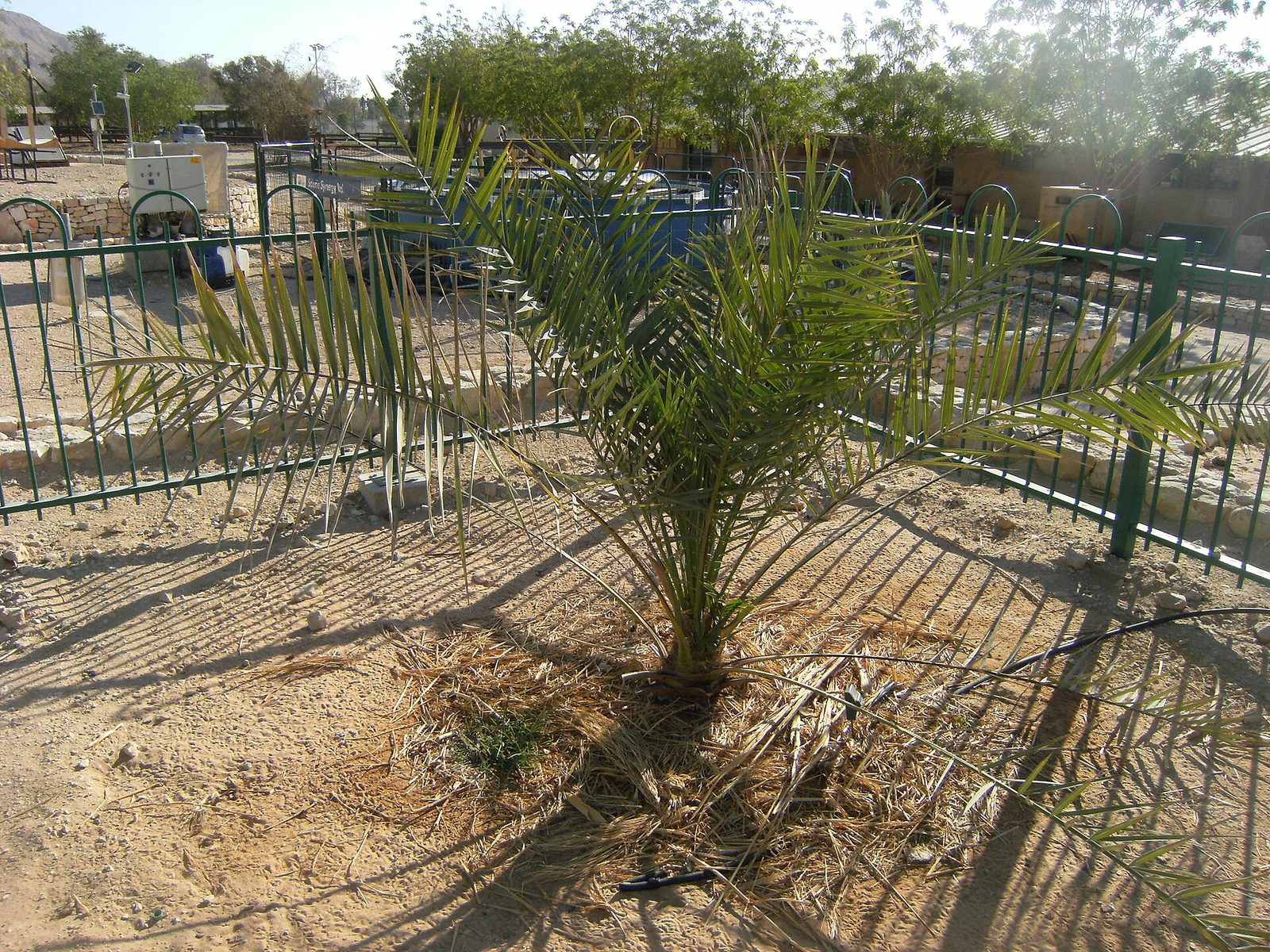
In 2005 a researcher in Jerusalem soaked one in water and fertiliser and planted it. Eight weeks later, a green shoot pushed up. The seed was about 2,000 years old. They named the young palm Methuselah, after the oldest man in the Bible. The Qur'an has a name for the One who does this: the splitter of the grain and the date stone.
“Lo! Allah (it is) Who splitteth the grain of corn and the date-stone (for sprouting). He bringeth forth the living from the dead, and is the bringer-forth of the dead from the living. Such is Allah. How then are ye perverted?”
Qur'an 6:95 · Pickthall (1930)
This verse opens a passage in the chapter al-Anʿām, The Cattle, that moves from the seed to the dawn to the stars (6:95-99). The word fāliq means the one who splits something open from inside. The next verse uses the same word for dawn: fāliq al-iṣbāḥ, the One who splits open the morning. A seed cracking and a night breaking are the same kind of event.
What science shows
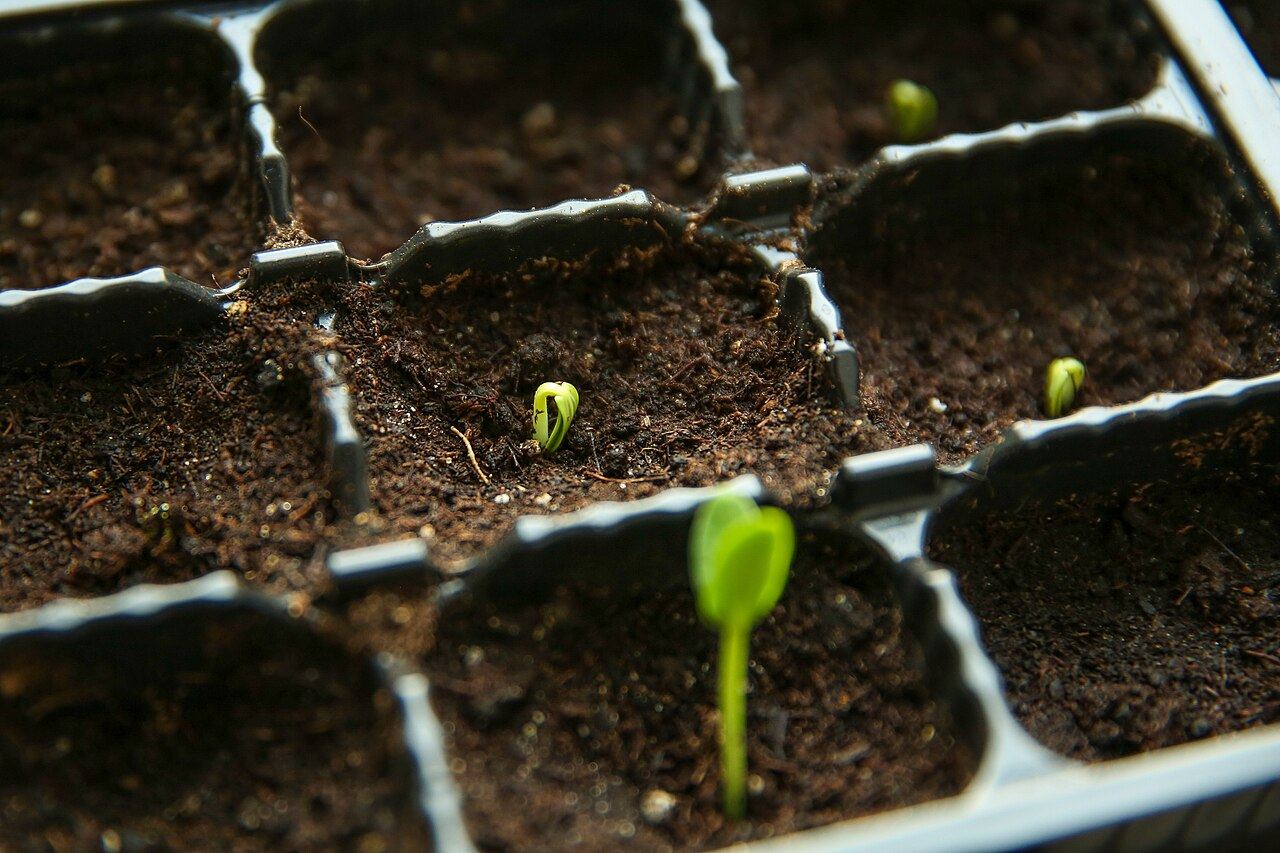
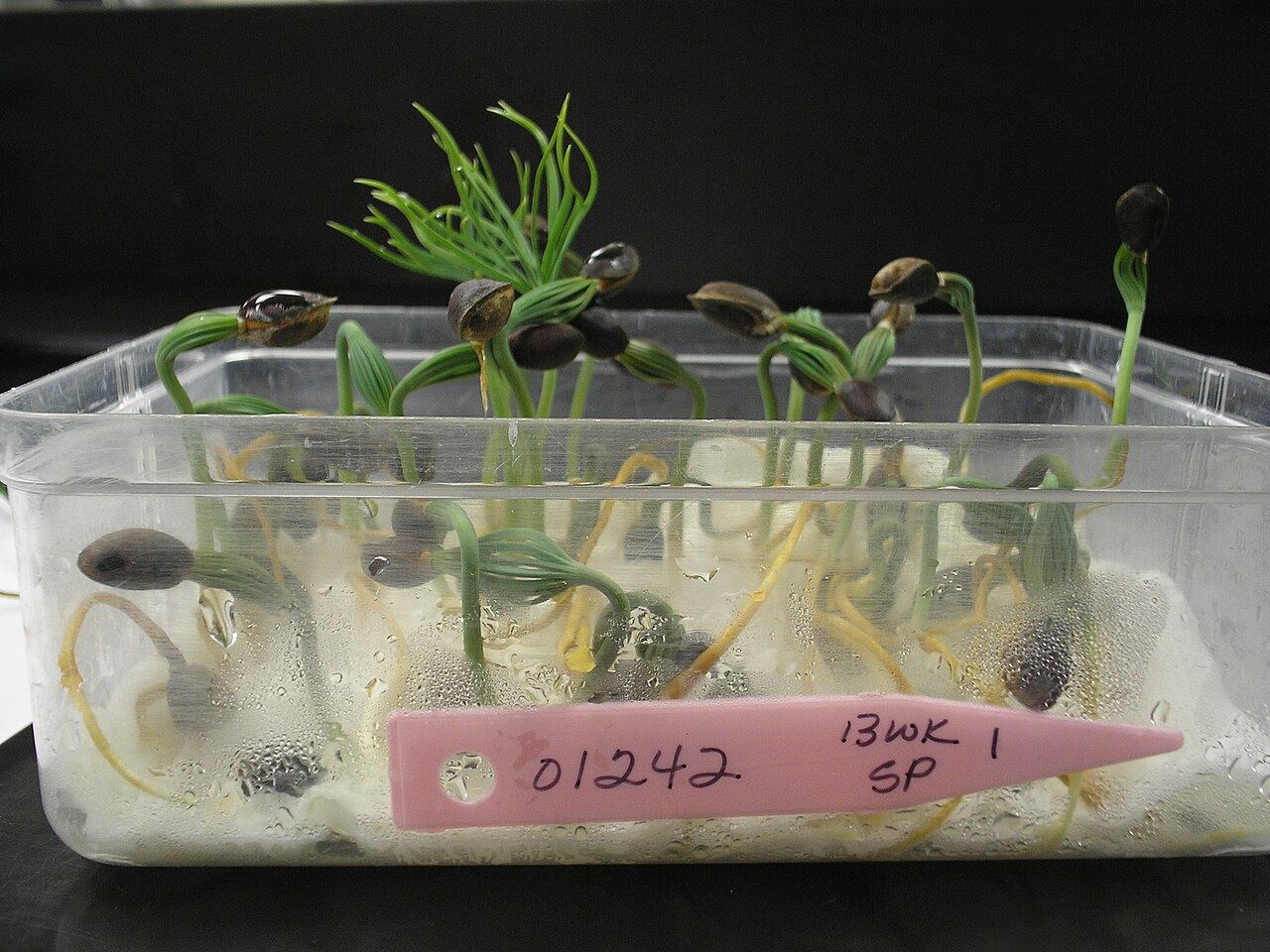
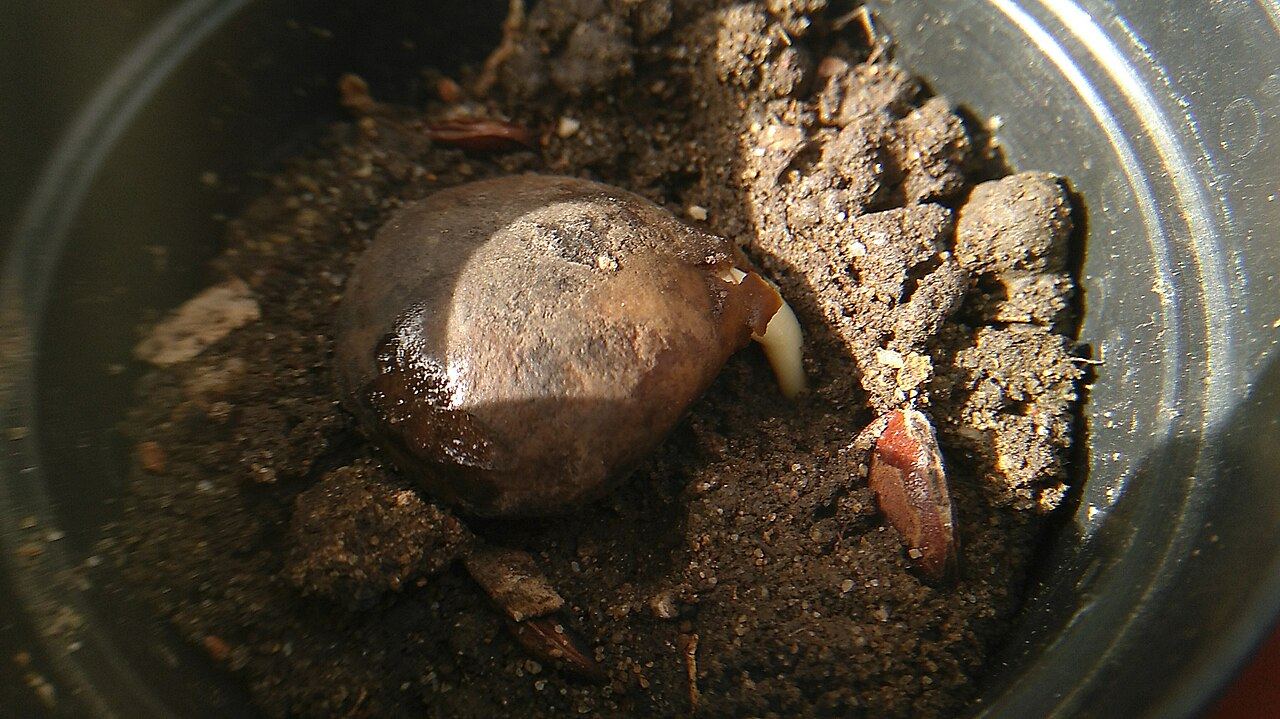
A seed is a baby plant packed with a lunch box and sealed in a coat. When conditions are right, it soaks up water, swells and switches on. The coat splits, and the first thing out is the root, the radicle, which turns downwards whichever way up the seed was planted. Then the shoot pushes up towards the light. A date stone is unusually hard, so the moment it splits is a real feat of pressure from inside.
The Masada seed was described in the journal Science in 2008 by Sarah Sallon, Elaine Solowey and colleagues. Radiocarbon dating put it in the first century, which made it the oldest directly dated seed ever germinated at that time. The dry, salty air of the Dead Sea region had preserved it. In 2020 the team reported in Science Advances that six more ancient Judean date seeds had sprouted. They are helping to bring back a variety of date praised in Roman times and then lost for centuries.
Even older life has been revived. In 2012 Russian scientists reported regrowing a flowering plant, Silene stenophylla, from fruit tissue that had been buried by an Ice Age squirrel in Siberian permafrost about 31,800 years ago. The regrown plants flowered and set seeds of their own.
Because seeds can wait, people now store them on purpose. The Millennium Seed Bank at Wakehurst in West Sussex, run by the Royal Botanic Gardens, Kew, holds billions of seeds from tens of thousands of wild plant species. They are dried and frozen as an insurance policy for the future. Some will still be able to grow in centuries.
So a seed is a strange thing: it looks dead, it can stay that way for a very long time, and yet it holds a whole tree folded up inside. The Qur'an's phrase “the living out of the dead” fits what a gardener sees every spring.
What each faith says
Judaism
“They that sow in tears Shall reap in joy.”
Psalm 126:5 · JPS 1917
Genesis describes plants “yielding seed” on the third day of creation, and the Psalms sing that those who sow in tears will reap in joy. Every year Jews mark Tu BiShvat, the New Year for Trees, often by planting saplings and eating fruits of the land of Israel. The Methuselah palm grows today at Kibbutz Ketura in the Arava desert. Rabban Yoḥanan ben Zakkai rebuilt Jewish life after the Temple fell in the year 70. He taught that if you are holding a sapling when someone cries that the Messiah has come, you should plant the sapling first. Only then go out to greet him (Avot de-Rabbi Natan B 31, our rendering).
The Talmud uses the seed to talk about resurrection. Asked whether the dead will rise clothed, Rabbi Meir, a second-century sage, is said to have answered with a grain of wheat. It is buried bare, and comes up dressed in many layers. How much more, then, the righteous, who are buried in their clothes (Sanhedrin 90b, our rendering).
Christianity
“God's Kingdom is as if a man should cast seed on the earth, and should sleep and rise night and day, and the seed should spring up and grow, though he doesn't know how.”
Mark 4:26-27 · WEB
Jesus told several seed parables. One of the shortest is about a farmer who scatters seed, then sleeps and rises night and day while the seed grows, “though he doesn't know how” (Mark 4:27). Another is the mustard seed, tiny when planted and large enough for birds to nest in. Both are about how God's kingdom grows quietly and beyond our control.
Paul uses the seed to explain Christian hope of resurrection: what you sow is a bare grain, and God gives it the body He chooses. For Christians this is bound up with the resurrection of Jesus himself, which they see as the first fruit of a new creation. In some English country parishes, Plough Sunday in January still brings a plough into church to be blessed before the farming year begins.
Islam
“Lo! Allah (it is) Who splitteth the grain of corn and the date-stone (for sprouting). He bringeth forth the living from the dead, and is the bringer-forth of the dead from the living. Such is Allah. How then are ye perverted?”
Qur'an 6:95 · Pickthall (1930)
Muslims read this verse as a sign of al-Fattāḥ, the Opener, who opens seeds, mornings, hearts and doors. The Qur'an also uses grain as a picture of generosity. A single grain grows seven ears, with a hundred grains in each: that is how God multiplies what is given for good (2:261).
The Prophet Muhammad ﷺ (peace be upon him) gave one of the most hopeful sayings in any tradition. If the Final Hour comes while one of you has a palm seedling in hand, and you are able to plant it before it arrives, then plant it. It is reported in Musnad Ahmad (12902) and in al-Bukhari's collection al-Adab al-Mufrad, “The Book of Manners” (479). Planting is never wasted, even at the end of the world.
Same and different
All three faiths see the seed as a picture of hope: something buried that rises. Judaism and Christianity both use it explicitly to speak of resurrection, as the Qur'an does with rain and seeds. Judaism and Islam even share a saying about planting a sapling when the end of the world, or the Messiah, seems to be arriving. They differ on what the seed points to most. For Jews, it points to God's faithfulness to the righteous and to the land. For Christians, it points above all to Christ's death and rising. For Muslims, it points to God as the One who brings life out of death, every season, as a sign of the Last Day.
A moment to reflect
- What looks finished in your life but might still have something waiting inside it?
- A seed puts down a root before anything shows above ground. What roots have you put down that nobody sees?
- The farmer in Mark's parable sleeps while the seed grows. What grows in you without your effort?
- Would you plant a seedling if you knew the world was ending? Why?
Watch
BBC Reel visits the scientists who brought the Judean date back.
David Attenborough on how seeds travel and wait.
Inside Kew's Millennium Seed Bank in West Sussex.
Do it together
Save stones from a box of Medjool dates. Soak them for two days, wrap in damp kitchen paper in a sealed bag and keep them somewhere warm. Check weekly: who sees the first root?
Read the palm-seedling hadith, Psalm 126:5 and Mark 4:26-27 together. Then plant a tree or bulbs in a shared space: a school, a place of worship or a street verge, with permission.
Plan a day out to Wakehurst in West Sussex to see the Millennium Seed Bank's public galleries, or find a local seed swap and exchange seeds with neighbours.
Read Rabban Yoḥanan ben Zakkai's saying about the sapling and the Messiah. Plant something together this month, a bulb, a pip or a tree, and agree to check on it together at Tu BiShvat, the Jewish New Year for Trees.
Some country churches hold Plough Sunday in January, blessing a plough, seed and tools for the year. Find one near you, or hold a seed blessing of your own: each person holds a packet of seeds and says what they hope will grow this year.
Go deeper
- Qur'an 6:95-99 with translations · scripture
- Sallon et al. 2008, Germination of an ancient date seed · paper
- Kew: Millennium Seed Bank · museum
- Talmud Sanhedrin 90b on Sefaria · scripture
- Mark 4 (WEB) on Bible Gateway · scripture
In pictures
Try this · KS1 · 1 week · Science
A bean in a jar
You need: a clean jam jar, kitchen roll, 2 or 3 dried broad beans or runner beans, water
- Line the jar with damp kitchen roll.
- Push the beans between the paper and the glass so you can see them.
- Keep the paper damp. Look every day.
- Which comes first, the root or the shoot? Which way does each grow?
- Draw what you see each day.
Safety: Raw beans are not for eating.
He splits the grain and the seed: something dry and still wakes up with water.
Sources (5)
- Masada date seed, first century CE, germinated; oldest directly dated viable seed: Sallon et al., Science, 2008
- Six more ancient Judean date seeds germinated: Sallon et al., Science Advances, 2020
- Silene stenophylla regenerated from ~31,800-year-old tissue: Yashina et al., PNAS, 2012
- Millennium Seed Bank stores seeds of tens of thousands of wild species: Royal Botanic Gardens, Kew
- The radicle emerges first in germination: Wikipedia, Germination (with sources)