The Atacama in Chile is one of the driest places on Earth. Some weather stations there have gone years without recording a single drop. The ground looks like the surface of Mars: grey, cracked, empty.
Then, every few years, an unusual storm comes. Within weeks the hills turn purple, yellow and white with flowers that nobody saw coming, because they were there all along, waiting as seeds in the dust. Chileans call it the desierto florido, the flowering desert. The Qur'an points at exactly this sight and says: so will the dead be raised.
“And Allah it is Who sendeth the winds and they raise a cloud; then We lead it unto a dead land and revive therewith the earth after its death. Such is the Resurrection.”
Qur'an 35:9 · Pickthall (1930)
The Qur'an returns to this picture again and again. Another verse says: “And of His portents (is this): that thou seest the earth lowly, but when We send down water thereon it thrilleth and groweth. Lo! He Who quickeneth it is verily the Quickener of the Dead. Lo! He is Able to do all things.” (41:39, Pickthall). For people in seventh-century Arabia, who knew drought and sudden rain, the argument needed no explaining: you have seen it happen to the ground; why not to us?
What science shows
Rain is the return leg of the water cycle. Heat from the Sun lifts water from the oceans, lakes and leaves as invisible vapour. It rises, cools and condenses on tiny specks of dust and salt to make clouds. The US Geological Survey explains that a molecule of water stays in the atmosphere for only about nine days on average before it falls again. Around 505,000 cubic kilometres of water fall as rain and snow every year.
Raindrops are not tear-shaped. NASA's rain-measuring scientists explain that small drops are almost perfect spheres, and larger ones flatten at the bottom as they fall, more like a burger bun. Very large drops break apart before they reach the ground.
Deserts depend on the soil seed bank. Many desert plants make seeds that can lie dormant for years, protected by tough coats and chemical signals that stop them sprouting after a light shower. Only a heavy enough rain, the kind that will keep the soil wet long enough for a plant to finish its life, wakes them. Then they germinate together, flower fast, set seed and vanish again.
In the Atacama, these blooms usually follow an El Niño year, when the Pacific warms and brings rare rain to the coast. In 2024, as Live Science reported, just 11 millimetres of autumn rain was enough to wake the desert in the middle of winter. It was helped by camanchaca, the thick coastal fog, and it was the first winter bloom in a decade. According to Chile's forestry agency CONAF, a full flowering desert can cover about 15,000 square kilometres with more than 200 species in bloom. They grow from seeds that can lie dormant for up to 15 years.
Even the smell of rain has a name. In 1964 two Australian scientists, Isabel Joy Bear and Richard Thomas, called it petrichor, from the Greek for “stone” and ichor, the fluid said to flow in the gods' veins. It is made of oils from plants and a compound made by soil bacteria, released into the air when rain hits dry ground. Human noses are extraordinarily sensitive to it. Long before anyone had a word for it, people knew the smell meant life was coming back.
What each faith says
Judaism
“For as the rain cometh down and the snow from heaven, And returneth not thither, Except it water the earth, And make it bring forth and bud, And give seed to the sower and bread to the eater; So shall My word be that goeth forth out of My mouth.”
Isaiah 55:10-11 · JPS 1917
In Jewish daily prayer, the Amidah, the second blessing praises God who “revives the dead”. In winter it includes the line “He makes the wind blow and the rain fall”. The Mishnah explains that the “might of the rains” belongs in the blessing about resurrection (Mishnah Berakhot 5:2). Rain and rising are said in one breath, every day. The winter line begins at Shemini Atzeret, the autumn festival at the end of Sukkot, when synagogues sing a special prayer for rain, Tefillat Geshem.
The Talmud goes further. Rabbi Abbahu, a teacher in Caesarea around the year 300, said that a day of rain is greater than the resurrection of the dead. Resurrection is for the righteous, he explained, while rain falls for everyone (Taanit 7a, our rendering). The Torah links rain to faithfulness in the land (Deuteronomy 11:14). The prophet Isaiah compares rain that does not return empty to God's word that does not return empty.
Christianity
“Yet he didn't leave himself without witness, in that he did good and gave you rains from the sky and fruitful seasons, filling our hearts with food and gladness.”
Acts 14:17 · WEB
Jesus used rain to describe God's generosity: God “sends rain on the just and the unjust” (Matthew 5:45). Rain is not a reward for good people; it is grace for everyone. And he used the seed in the earth to speak of death and new life. “Unless a grain of wheat falls into the earth and dies, it remains by itself alone. But if it dies, it bears much fruit” (John 12:24).
When the apostle Paul spoke to people who did not know the Hebrew scriptures, in the city of Lystra, he pointed to the weather. God “didn't leave himself without witness”, giving “rains from the sky and fruitful seasons”. In parts of England, Church of England parishes still walk the parish boundaries on Rogation Sunday in spring and pray over the fields.
Islam
“And of His portents (is this): that thou seest the earth lowly, but when We send down water thereon it thrilleth and groweth. Lo! He Who quickeneth it is verily the Quickener of the Dead. Lo! He is Able to do all things.”
Qur'an 41:39 · Pickthall (1930)
Rain in the Qur'an is mercy, raḥma, and evidence of al-Muḥyī, the Giver of life. When drought came to Madina, the Prophet Muhammad ﷺ (peace be upon him) led the community out to an open space to pray for rain. This is ṣalāt al-istisqāʾ, “the prayer asking for water”, and Muslims still pray it today. When it rained, he would say: “O God, let it be a beneficial rain” (Bukhari 1032).
A report in Sahih Muslim (898) describes him uncovering part of his arm so the rain could fall on it. Asked why, he said it had just come fresh from its Lord. Rain was not just weather: it was a message, newly sent.
Same and different
Judaism, Christianity and Islam each see in rain a picture of God's generosity to everyone. Judaism and Islam both make it a sign of resurrection, in daily prayer and in the Qur'an. Christianity reaches the same hope through the seed that dies and rises, which Christians connect with the resurrection of Jesus. Judaism is the one that writes rain into its daily prayer, a line that comes and goes with the seasons. They differ in how they picture the rising itself, but share the instinct that a world which revives every spring is a world in which new life is possible.
A moment to reflect
- When did you last notice the smell of rain? What did it remind you of?
- Rabbi Abbahu said rain is greater than resurrection because it falls on everyone. Do you agree?
- What in your life, or your town, looks dead but might be waiting for the right rain?
- Does seeing new life come back make the idea of resurrection easier or harder to think about?
Watch
A short National Geographic film of the Atacama in flower.
Scientists on the ground studying a rare bloom.
NASA's animated tour of Earth's water cycle.
The full Our Planet episode on fresh water, free from Netflix.
Do it together
Make a gauge from a straight-sided jar and a ruler, put it in the open and record rainfall for a month. Compare with a friend's in another part of town, or a partner school in another faith community.
Scatter a handful of wildflower seeds on very dry compost and leave it a week. Then water one half generously and leave the other dry. Watch which half wakes up.
Read the Amidah's rain line, Acts 14:17 and the Prophet's “beneficial rain” prayer together. Talk about drought and water in the places your families come from.
Go deeper
- Qur'an 35:9 with translations · scripture
- Mishnah Berakhot 5:2 on Sefaria · scripture
- Talmud Taanit 7a on Sefaria · scripture
- USGS: The water cycle · article
- ESO: the Atacama Desert in bloom (photo) · article
- Acts 14 (WEB) on Bible Gateway · scripture
In pictures
Try this · KS2 · 1 week · Geography
Make a rain gauge
You need: a clear plastic bottle, scissors (adult), a ruler and marker, a few pebbles
- An adult cuts the top third off the bottle.
- Put pebbles in the bottom, add water up to a line, and mark that line as zero.
- Turn the top upside down into the bottle as a funnel.
- Put it outside away from trees. Check and note the level at the same time each day.
- Which day brought the most rain?
Safety: An adult cuts the bottle; the cut edge can be sharp.
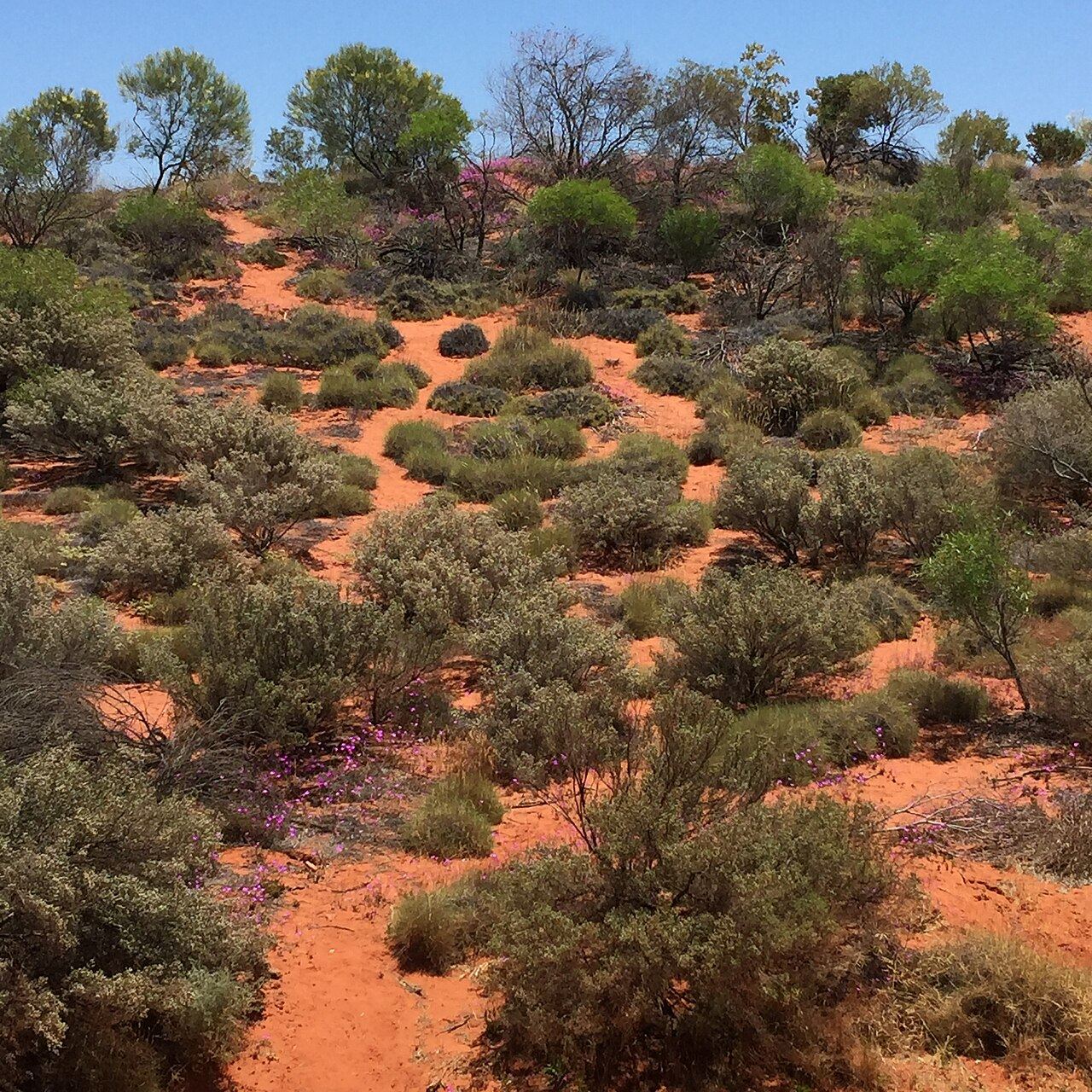
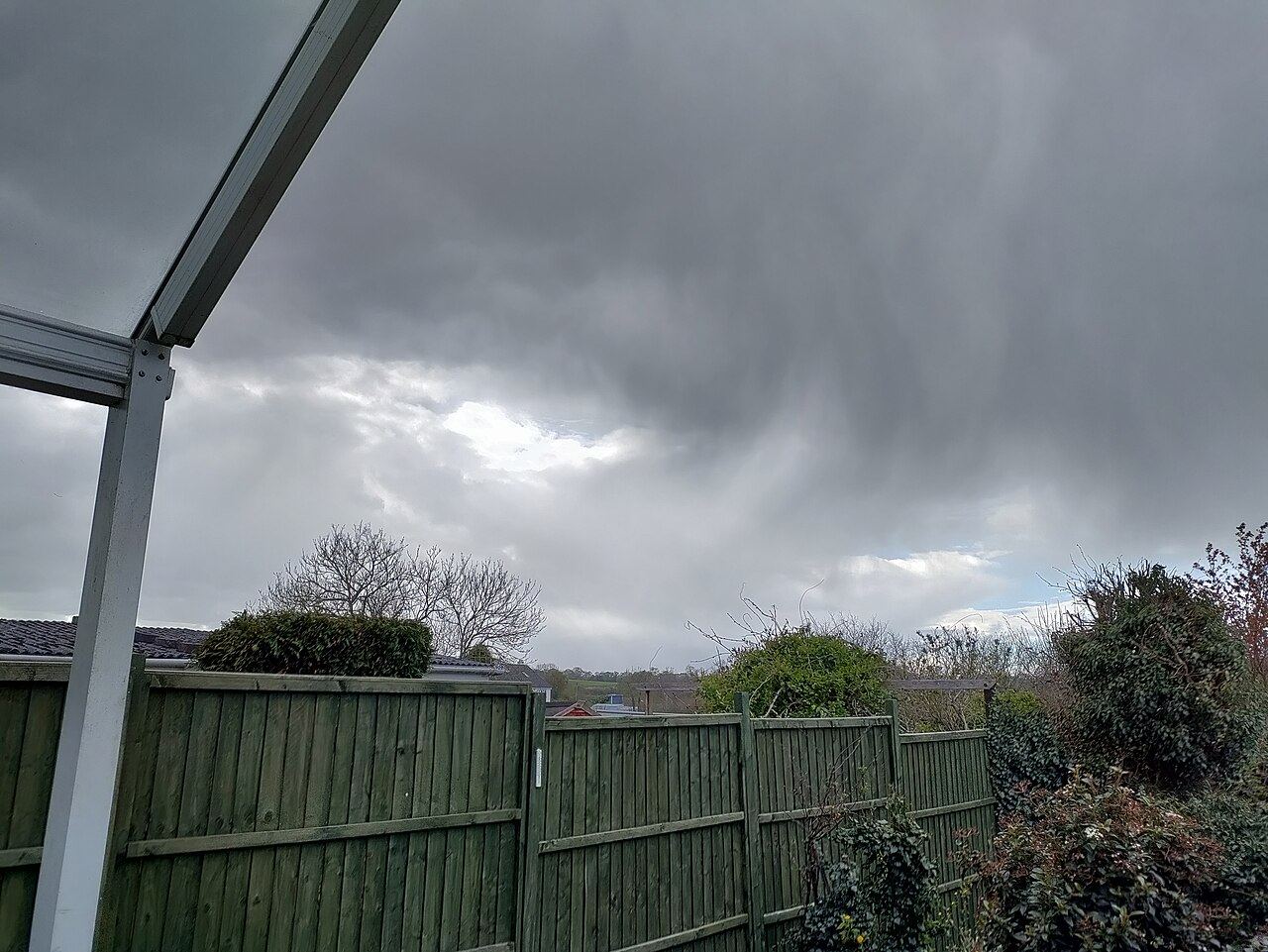
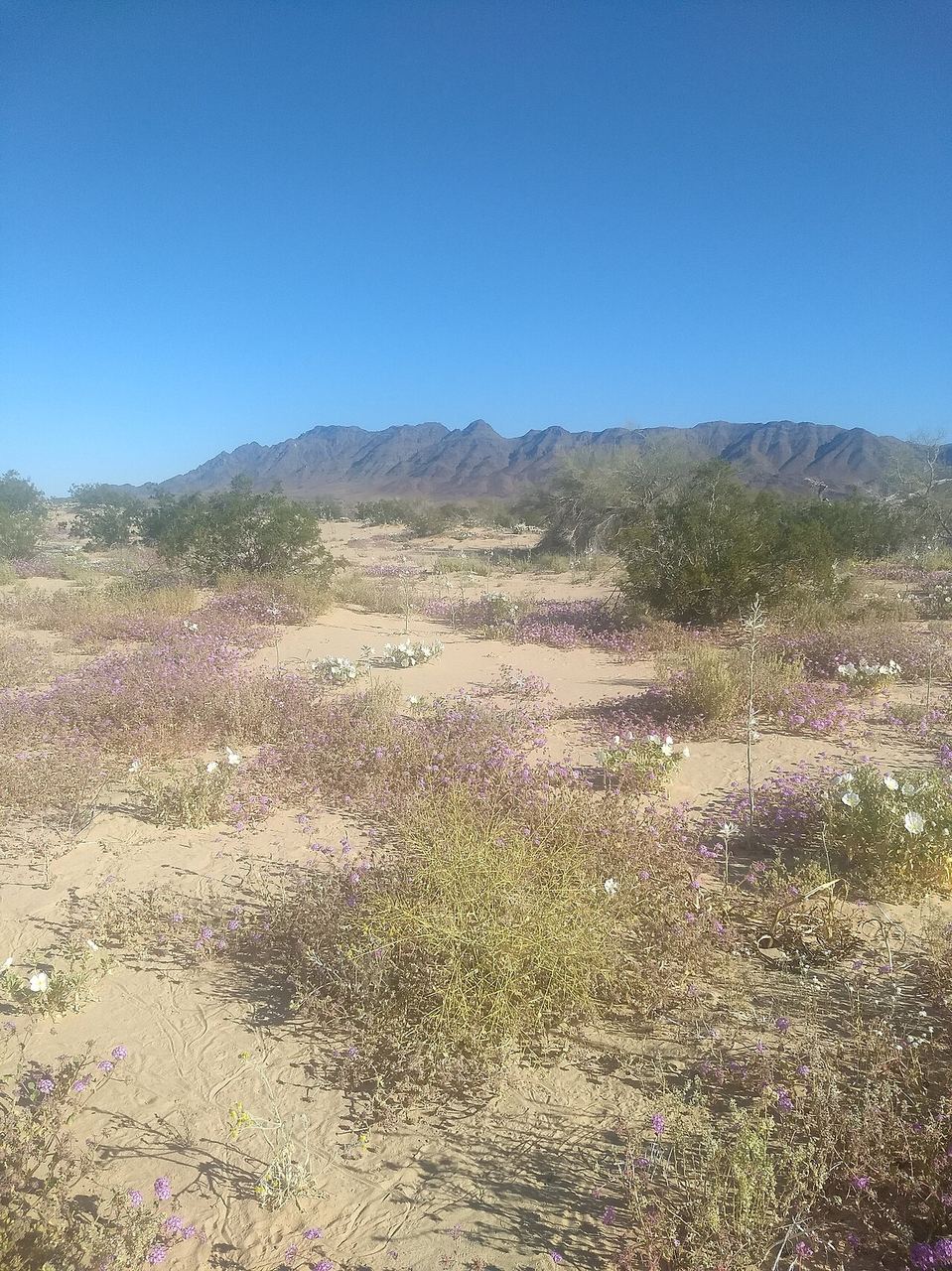
Bare ground, one downpour, and the earth stirs: the Qur'an's picture of the rising.
Sources (5)
- Water stays in the atmosphere about 9 days; about 505,000 km³ of precipitation a year: USGS Water Science School, The water cycle
- Raindrop shapes: small spherical, larger flattened: NASA Global Precipitation Measurement, The anatomy of a raindrop
- Desert seeds stay dormant until enough rain falls: Gutterman, Seed Germination in Desert Plants (Springer, 1993); summary via Britannica, Desert
- 2024 winter bloom after 11 mm of rain and camanchaca fog; El Niño link; CONAF: 15,000 km², 200+ species, seeds dormant up to 15 years: Live Science, 19 July 2024
- Petrichor named in 1964: Bear & Thomas, Nature, 1964