Roughly two and a half million ants are alive on Earth for every person. You have almost certainly stepped on some today without noticing. They are so small and so common that we treat them as part of the pavement.
The Qur'an does the opposite. It stops a whole army so we can listen to one ant. She sees danger coming and calls out to the others to get to safety. And the king at the head of the army, Solomon (peace be upon him), hears her and smiles.
“Until, when they came to the valley of the ants, an ant said: “Ants, go into your homes, so that Solomon and his armies do not crush you without realising it.” He smiled, laughing at her words, and said: “And (Solomon) smiled, laughing at her speech, and said: My Lord, arouse me to be thankful for Thy favour wherewith Thou hast favoured me and my parents, and to do good that shall be pleasing unto Thee, and include me in (the number of) Thy righteous slaves.”
Qur'an 27:18-19 · Pickthall (1930)
This scene gives the chapter an-Naml, The Ant, its name. Solomon in the Qur'an is a prophet-king taught the speech of birds and creatures (27:16). Notice what the ant says: Solomon's army would crush them “without realising it”. She assumes the best of him. And notice what he does with his power: he stops, smiles and prays to be grateful. The Qur'an elsewhere says every creature is “peoples like unto you” (6:38, Pickthall).
What science shows
In 2022 a team led by Patrick Schultheiss and Benoit Guénard at the University of Hong Kong pulled together 489 studies of ants from every continent and habitat. Their best estimate is that about 20 quadrillion ants are alive at any time: a 2 followed by 16 zeros. Together they weigh about 12 million tonnes of carbon, more than all the world's wild birds and wild mammals put together.
Scientists have described more than 14,000 species of ant, and there are certainly more. They live everywhere except Antarctica, Iceland, Greenland and a few islands. Ant colonies range from a few dozen workers to supercolonies with millions.
Ants do warn each other. Many species release alarm pheromones, chemical signals that spread through the air and send nestmates into defence or retreat. Researchers studying fire ants, harvester ants and others have identified some of these chemicals and measured how quickly the alarm spreads. Ants are not using words, but they are a community that reacts together to danger.
Some even care for the injured. In 2017 the biologist Erik Frank and colleagues reported that the African Matabele ant, which raids termite nests, carries wounded nestmates home after battle. There they are cleaned and many recover to fight again. And leafcutter ants have farmed fungus underground for millions of years: a 2008 study traced ant agriculture back about 50 million years, long before any human planted a seed.
Scientists are careful not to read human feelings into ants, and so are we. The Qur'an pictures the ant as a caring member of a community. Science shows that ant colonies really do behave as communities, in their own ant way. Both are invitations to look down more carefully.
What each faith says
Judaism
“Go to the ant, thou sluggard; Consider her ways, and be wise; Which having no chief, Overseer, or ruler, Provideth her bread in the summer, And gatherest her food in the harvest.”
Proverbs 6:6-8 · JPS 1917
The Book of Proverbs, traditionally linked with King Solomon, sends the lazy person to the ant: “Go to the ant, thou sluggard; Consider her ways, and be wise.” The ant has no chief or overseer, yet it gathers its food in summer. Later, Proverbs lists four small creatures that are “exceeding wise”, and the ant is first. Jewish tradition places Proverbs among the Ketuvim, the “Writings”, the third part of the Tanakh, as the Hebrew Bible is called in Hebrew.
The Talmud adds a further lesson. Rabbi Yoḥanan was a great teacher of the third century in the Land of Israel. He said that if the Torah had not been given, we could have learned modesty from the cat and honesty from the ant. The ant does not steal from another ant's store (Eruvin 100b, our rendering). Jewish law also forbids tzaʿar baʿalei ḥayyim, “the suffering of living creatures”: causing an animal needless pain.
Christianity
“Consider the ravens: they don't sow, they don't reap, they have no warehouse or barn, and God feeds them.”
Luke 12:24 · WEB
The New Testament does not mention ants. The nearest teaching is Jesus pointing to small creatures to show God's care. There are the ravens who neither sow nor reap, yet God feeds them, and the sparrows of which not one is forgotten. Christians also read Proverbs as their own scripture, and the ant of Proverbs 6 has been a favourite of Christian preachers and children's teachers for centuries.
Saint Francis of Assisi, whose feast many churches mark with a blessing of animals in October, became famous for treating the smallest creatures as brothers and sisters in God's family. Franciscan friars and sisters still live by that instinct today. Pope Francis took the title of his 2015 letter on the care of creation, Laudato si', “Praise be to you”, from Francis's own Canticle of the Creatures.
Islam
“There is not an animal in the earth, nor a flying creature flying on two wings, but they are peoples like unto you. We have neglected nothing in the Book (of Our decrees). Then unto their Lord they will be gathered.”
Qur'an 6:38 · Pickthall (1930)
Islamic teaching takes the ant seriously. The Prophet Muhammad ﷺ (peace be upon him) told of an earlier prophet who was bitten by an ant and had the whole colony burned. God rebuked him: because one ant bit you, you have destroyed a community that glorifies God (Bukhari 3019, Muslim 2241). In another report he forbade killing four creatures, among them the ant and the bee (Abu Dawud 5267).
Solomon's prayer in this passage is one many Muslims say: “My Lord, inspire me to be grateful for Your favour.” Power, in this story, is the ability to hear the smallest voice and stop. One of the 99 Names, ash-Shakūr, “the Appreciative”, means the One who appreciates and rewards even the smallest good; Solomon asks to share a little of that gratitude.
Same and different
Judaism and Islam both bring Solomon and the ant together, from different directions. In Proverbs the ant is Solomon's example of wisdom; in the Qur'an she is a voice Solomon stops to hear. Islam is the one that gives the ant speech, and names a whole chapter after her: an-Naml, The Ant. Judaism has the most detailed law on the subject, the rule against tzaʿar baʿalei ḥayyim, where Islam has the Prophet's sayings and Christianity has its saints. Christianity reads Proverbs as scripture too, and adds a God who feeds the ravens and counts the sparrows. Its link to the ant runs through that teaching and through Francis rather than a matching verse.
A moment to reflect
- When did you last stop for something very small?
- The ant assumed Solomon's army would harm them only by accident. How often do we assume the best of people with power?
- Solomon's response to power was gratitude. What would that look like in your life?
- If every creature is “a community like you”, what changes about how we treat them?
Watch
Leafcutter ants farming in the forest, narrated by David Attenborough.
Kurzgesagt on ant supercolonies and how vast they can be.
An ant colony working together to defend its home.
A Royal Institution talk on ants that protect the trees they live in.
Do it together
Put a tiny drop of honey or jam on a paving stone near an ant nest and watch for 20 minutes. How long until the first ant arrives? How quickly do others follow? Clean up afterwards so they are not harmed.
Read Qur'an 27:18-19 and Proverbs 6:6-8 together. Then ask: whose voice in our neighbourhood is small and easily trampled? Choose one practical thing to do to hear them.
Each person writes down three things they are grateful for that they usually overlook, as Solomon did. Share them at a meal or in an assembly.
Many Catholic and Anglican churches hold a blessing of animals on or near 4 October, the feast of St Francis, and visitors are usually welcome. Go along, or hold a “small creatures” version at home: list the tiny lives in your garden or street and give thanks for each one.
Read Rabbi Yoḥanan's saying from the Talmud (Eruvin 100b): we could learn honesty from the ant and modesty from the cat. Each person picks a creature they know well and says what it could teach us. Write the best ones on a card for the fridge or the classroom wall.
Go deeper
- Qur'an 27:15-19 with translations · scripture
- Proverbs 6 (JPS 1917) on Sefaria · scripture
- Talmud Eruvin 100b on Sefaria · scripture
- Schultheiss et al. 2022, the abundance of ants on Earth · paper
- Frank et al. 2017, ants that rescue their injured · paper
- Luke 12 (WEB) on Bible Gateway · scripture
In pictures
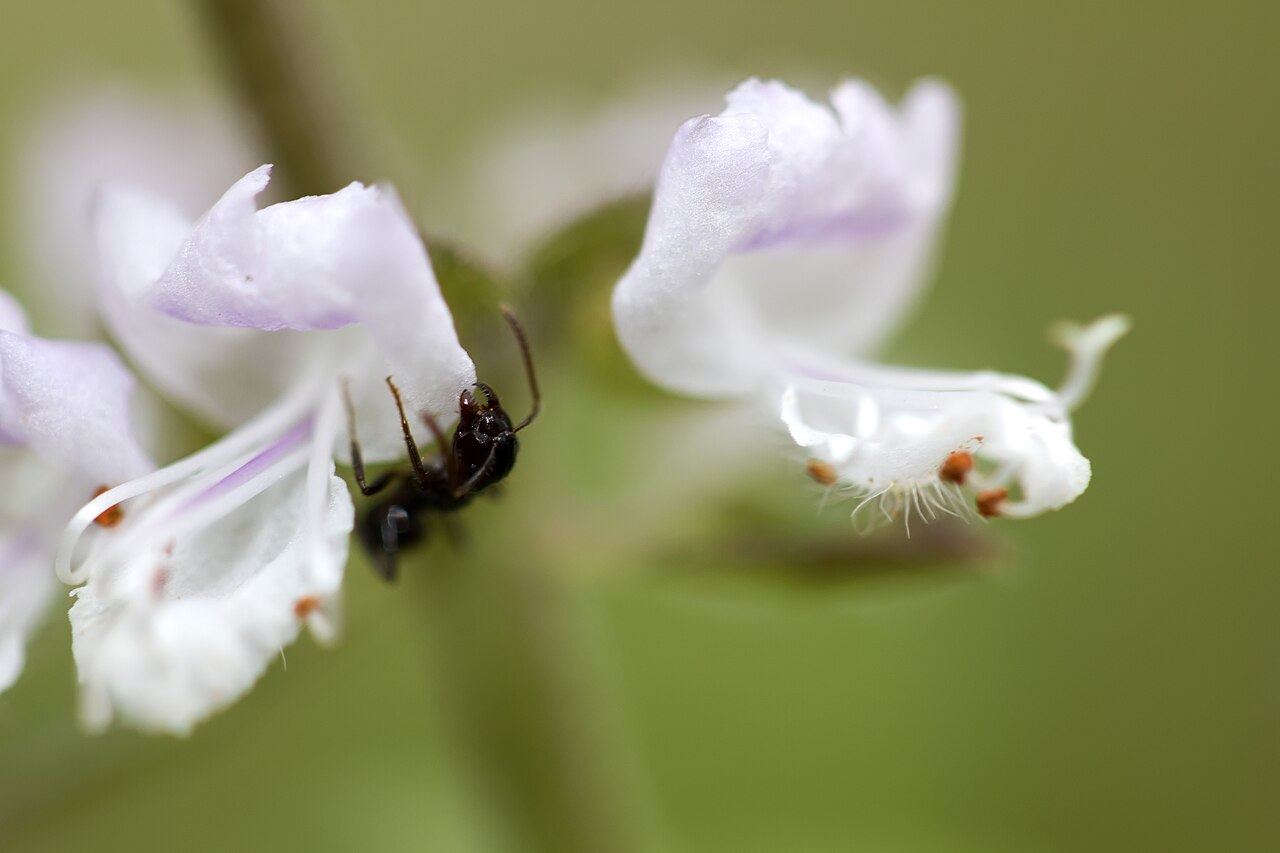
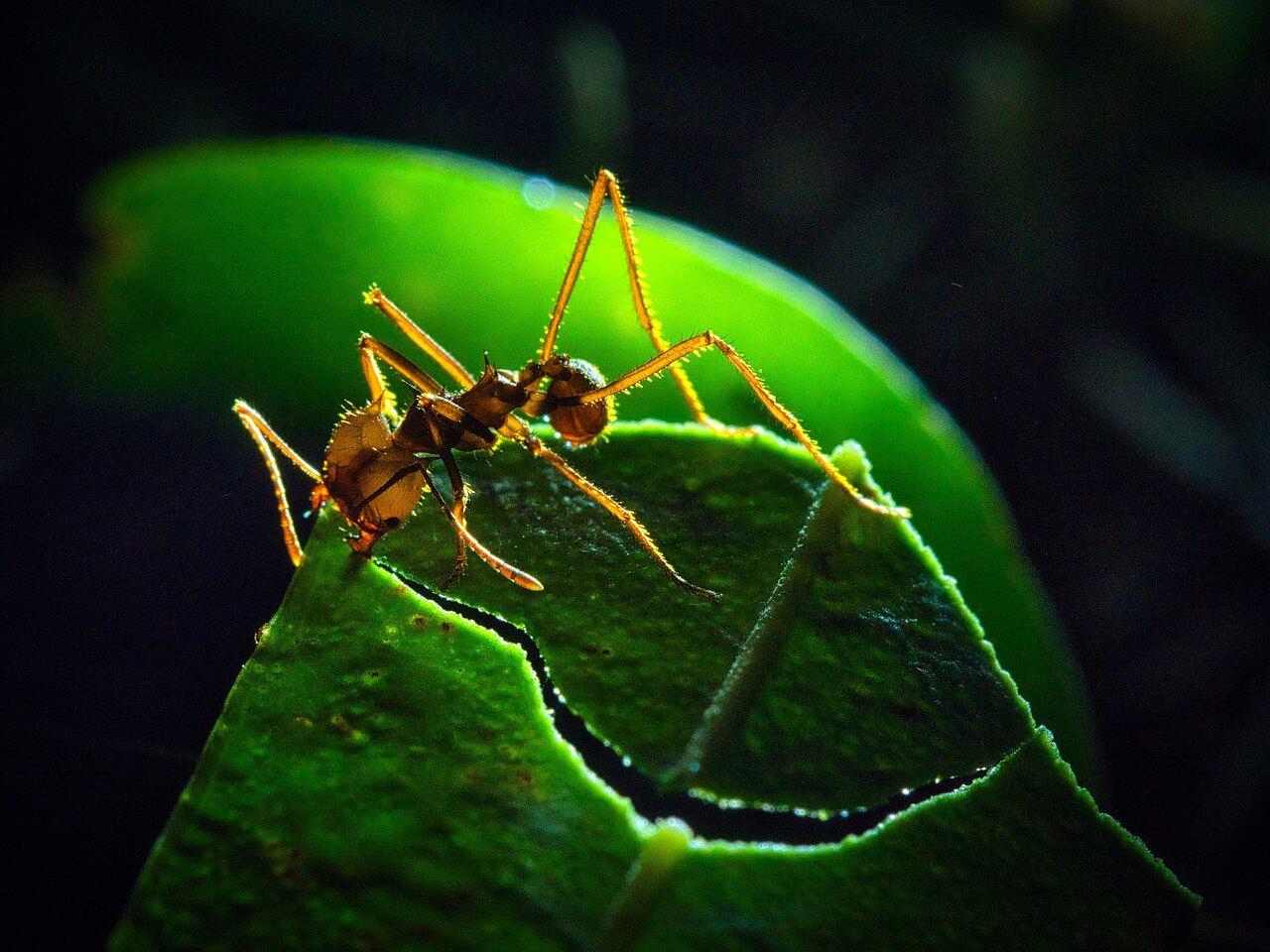
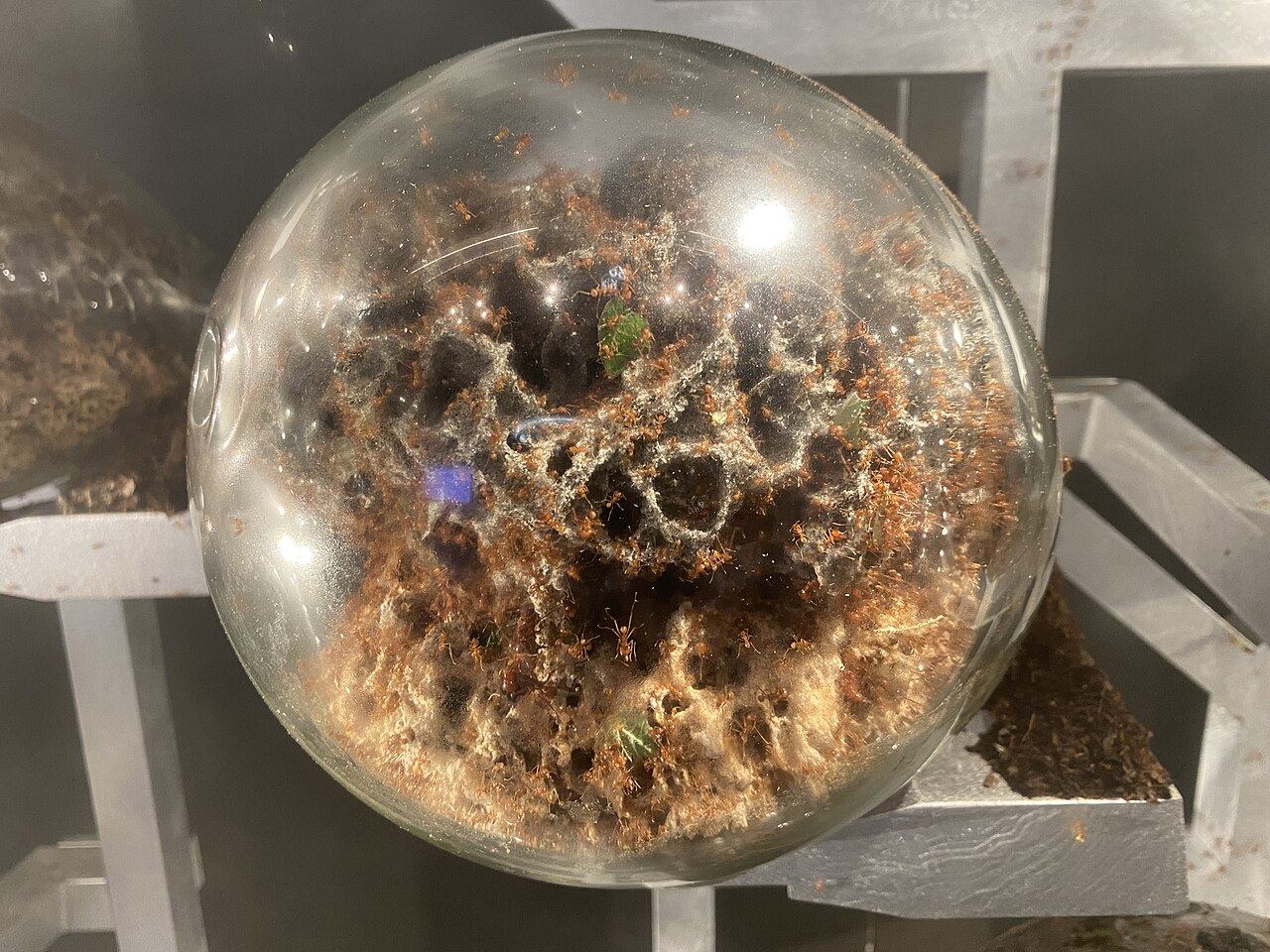
Try this · KS1 · 20 min · Science
Follow an ant trail
You need: a few grains of sugar or a crumb of biscuit, a paved path or patio, a notebook
- Put a few grains of sugar on a path near (not on) an ants' nest.
- Watch for the first ant to find it. Time how long it takes.
- Count how many ants arrive in the next five minutes.
- Look closely: do they walk in a line? Where does the line go?
Safety: Don't poke or block the nest. Wash your hands afterwards.
One ant finds food and the whole colony soon knows: Solomon stopped his army to listen to a voice this small.
Sources (6)
- About 20 quadrillion ants; 12 megatonnes of carbon, more than wild birds and mammals combined; 489 studies: Schultheiss et al., PNAS, 2022
- More than 14,000 described ant species: AntCat, an online catalogue of the ants of the world
- Alarm pheromones in ants: Lin et al., Insects, 2025
- Matabele ants rescue injured nestmates: Frank et al., Science Advances, 2017
- Ant agriculture evolved about 50 million years ago: Schultz & Brady, PNAS, 2008
- Ant burned by a prophet, God's rebuke: Sahih al-Bukhari 3019