The idea in one minute
This page looks at Isaac Asimov's story The Last Question, about the end of the universe, and the Time Stone in the film Doctor Strange. Both reach for something no clock can measure. You will learn how they connect with two Names of Allah: al-Awwal and al-Akhir, the First and the Last.
The question: What came before the beginning, and what is left after the end? Is there anything that time does not touch?
Isaac Asimov, one of the most famous science fiction writers who ever lived, wrote a short story in 1956. In it, people ask a computer the same question again and again, over billions of years: can the universe be stopped from running down? Each time, the computer gives the same reply. It does not have enough data yet. The stars burn out. People change beyond recognition. The question is still waiting.
Asimov said it was his favourite of all the stories he wrote. Its very last line is borrowed, word for word, from the first page of the Bible.
In the makers' own words
“INSUFFICIENT DATA FOR MEANINGFUL ANSWER.”
The computer's repeated reply, in Asimov's 'The Last Question', November 1956 · Isaac Asimov, 'The Last Question', Science Fiction Quarterly (quoted briefly for review)
“"The Last Question" was Asimov's favorite short story of his own authorship”
Summary of Asimov's own statements (he wrote in 1973 how easily it came once he had the idea), 1973 (Asimov); summarised 2026 · Wikipedia, 'The Last Question', citing Asimov's notes in The Best of Isaac Asimov (1973)
“was a real spiritual pivot for me”
Scott Derrickson, director of Doctor Strange, undated interview · Big Think, '13.8' series, interview with Adam Frank
“Mystery humbles you.”
Scott Derrickson, undated interview · Big Think, interview with Adam Frank
A story told across a trillion years
'The Last Question' jumps forward in time in a series of scenes. It begins in 2061 with two technicians who have had a few drinks, arguing about whether the Sun will last for ever. They ask the giant computer Multivac whether the running-down of the universe, which physicists call the increase of entropy, can ever be reversed. Multivac replies that there is not enough data for a meaningful answer.
In each later scene the computer is bigger and further away, and humanity is stranger, until people are minds spread across the galaxies. Each generation asks the same question and gets the same answer. At last the stars are dead and humanity has merged with the computer, now called AC, which exists outside space and time. AC keeps working on the problem alone, long after there is anyone left to tell. When it finally understands, there is no one to explain it to, so it shows the answer instead. Its last words are the Bible's own: let there be light. And there was light.
Asimov did not believe in God; he described himself as an atheist and a humanist. That makes his story all the more interesting. A writer who rejected religion reached for the opening of Genesis when he wanted the biggest ending he could imagine. The computer at the end of time becomes the beginning of a new one.
A sorcerer who bargains with time
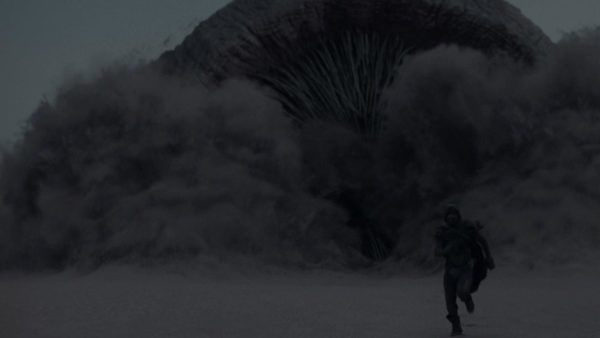
Marvel's Doctor Strange gives the same theme a different shape. Stephen Strange, a brilliant and arrogant surgeon, loses the use of his hands in a car crash and travels to Nepal looking for a cure. He discovers a mystical world and the Eye of Agamotto, which holds the Time Stone, one of the six Infinity Stones in Marvel's story. With it he can rewind and repeat moments.
In the film's finale he uses it to trap a cosmic enemy in a loop, dying and returning again and again until the enemy gives up. The director, Scott Derrickson, a Christian, says making the film 'was a real spiritual pivot' for him, and that 'mystery humbles you'. The film never claims the Stone is divine. It is a tool, and the hero still lives inside time, getting older, unable to stand outside it.
What science says about the beginning and the end
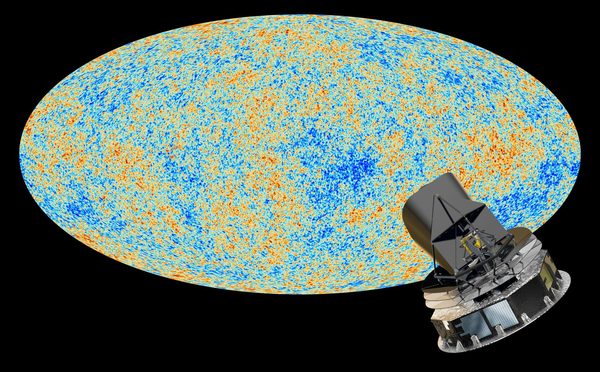
Physicists today can measure the age of the universe. Data from the European Space Agency's Planck satellite put it at about 13.8 billion years. Before about that point, our present physics cannot see; the equations stop working, and scientists are honest that they do not yet know what, if anything, came 'before'.
The future is clearer in outline. Asimov's question is about the second law of thermodynamics: in a closed system, useful energy spreads out and runs down. In 1997 the astrophysicists Fred Adams and Gregory Laughlin worked out a timeline. New stars will stop forming in around a hundred trillion years. Black holes will slowly evaporate over unimaginably longer times, around a googol years (a one followed by a hundred zeros) for the largest. In 2020 the physicist Matt Caplan calculated that the very last stellar explosions, from cold dead stars called black dwarfs, might come far later still. After that, a dark and almost unchanging universe.
Even our best clocks are part of this story. In 2024 scientists at JILA in Colorado reported an atomic clock so precise that it would drift by about one second in roughly 39 billion years, longer than the universe has existed. It is an astonishing achievement. But every clock measures time from inside time. No instrument can stand before the first moment or after the last.
The First and the Last
The Qur'an describes God with a pair of Names that speak directly to Asimov's question: 'He is the First and the Last, and the Outward and the Inward; and He is Knower of all things.' (57:3, Pickthall). Al-Awwal is the First; al-Ākhir is the Last.
The Prophet Muhammad ﷺ (peace be upon him) taught a bedtime prayer that explains them: 'You are the First, and there is nothing before You; You are the Last, and there is nothing after You' (Muslim 2713). Muslim scholars stress what this does not mean. God is not the oldest thing in the universe, or the last thing to switch off. He is not inside time at all. Schools of theology describe this differently, and the site does not choose between them, but they agree that time is something God made, not something God lives in.
That is where the Time Stone and Asimov's computer both fall short, and where they are beautiful. The Stone lets a hero move around inside time. AC survives the end and starts again. Both are pictures of creatures stretching towards something that does not need to stretch.
The Names this touches
The contrast
The films imagine a hero who moves around inside time, and a machine that survives the end to start again; the Names describe the One who was First with nothing before Him, and Last with nothing after Him, and never had to survive anything.
Al-Awwal: The First: there was no 'before' to move into.
Al-Ākhir: The Last, who remains when every star has gone out.
Al-Bāqī: The Everlasting, who remains (55:27).
What each faith says
Judaism
“Before the mountains were brought forth, or ever Thou hadst formed the earth and the world, even from everlasting to everlasting, Thou art God.”
Psalm 90:2 · JPS 1917
When Moses asks God's name at the burning bush, the answer is often translated 'I AM THAT I AM' (Exodus 3:14), a name many Jewish commentators read as describing God's being beyond change and time. The prophet Isaiah says it directly: 'I am the first, and I am the last, and beside Me there is no God' (Isaiah 44:6).
The well-known synagogue hymn Adon Olam, sung at the end of many services and said by many at bedtime, begins with the Lord who reigned 'before any being was created' and who 'was, is, and shall be' (our rendering). Psalm 90 adds the human side: for God, 'a thousand years... are but as yesterday when it is past'.
Christianity
“I am the Alpha and the Omega, the First and the Last, the Beginning and the End.”
Revelation 22:13 · WEB
Christians share Isaiah and the Psalms, and the last book of the New Testament takes up the same words: 'I am the Alpha and the Omega, the First and the Last, the Beginning and the End' (Revelation 22:13). Alpha and omega are the first and last letters of the Greek alphabet.
Christian thinkers have written about time for centuries. St Augustine, around 400 CE, admitted in his Confessions that he knew what time was until someone asked him to explain it. He argued that God did not make the world 'in' time but made time along with the world. The philosopher Boethius described God's eternity as possessing all of life at once, without past or future. Christians believe this eternal God entered time in Jesus, who said 'before Abraham came into existence, I AM' (John 8:58).
Christian worship says this many times a day. The Gloria Patri, sung after psalms in Catholic, Anglican, Lutheran and Methodist services, ends: “as it was in the beginning, is now, and ever shall be, world without end.”
Islam
“He is the First and the Last, and the Outward and the Inward; and He is Knower of all things.”
Qur'an 57:3 · Pickthall (1930)
In Islam, God's being First and Last is part of His oneness (tawḥīd): nothing shares His eternity. 'Everyone that is thereon will pass away; There remaineth but the Countenance of thy Lord of Might and Glory.' (55:26–27, Pickthall). The heavens themselves will one day be 'folded up like a scroll', and creation begun again (21:104).
The bedtime prayer of the Prophet makes this personal. Before sleep, a small daily 'ending', the believer places the day in the hands of the One before whom there was nothing and after whom there is nothing (Muslim 2713). The point is not fear of the end but trust in the One who is not subject to it.
Same and different
All three faiths call God the First and the Last, before time and after it, and all three scriptures use the phrase (Isaiah 44:6, Revelation 1:17, Qur'an 57:3). They differ on how the eternal God relates to time. Jews and Muslims hold that God never becomes part of His creation, though He acts in it at every moment (Qur'an 55:29). Christians believe God entered history as a human being in Jesus. Islam speaks most vividly of the end itself: the heavens folded like a scroll, and creation begun again.
Go deeper
- ESA: Planck and the age of the universe · space agency
- Adams and Laughlin, 'A dying universe' (1997) · paper
- Caplan, 'Black dwarf supernova in the far future' (2020) · paper
- Qur'an 57:1–6 with translations · scripture
- Isaiah 44 (JPS 1917) · scripture
- Augustine, Confessions, Book XI (public domain translation) · book
Sources (9)
- Story first published November 1956; Asimov's favourite; plot and ending: Wikipedia, 'The Last Question'
- Derrickson quotes: Big Think, interview with Adam Frank
- Doctor Strange 12A: BBFC
- Universe about 13.8 billion years old: ESA, Planck results (2013)
- End of star formation c. 10^14 years; black hole evaporation c. 10^100 years: Adams and Laughlin, Reviews of Modern Physics 69 (1997)
- Black dwarf supernovae in the far future: Caplan, MNRAS (2020)
- JILA clock systematic uncertainty 8.1 × 10^-19 (about 1 second in 39 billion years): Aeppli et al., Physical Review Letters, July 2024 (via R15)
- Bedtime prayer: 'You are the First...': Sahih Muslim 2713
- Asimov's atheism and humanism: Isaac Asimov, interview with Paul Kurtz, Free Inquiry, Spring 1982 (secondary)