The idea in one minute
This page is for people who have seen Dune: Part Three. It explains that Frank Herbert wrote the story as a warning about following a hero blindly. You will learn what the film's makers said it was for, and what five of its Arabic words, such as Mahdi and jihad, really mean to the people who use the
The question: Why do people keep looking for a saviour, and how do you tell true guidance from someone who asks you to stop thinking?
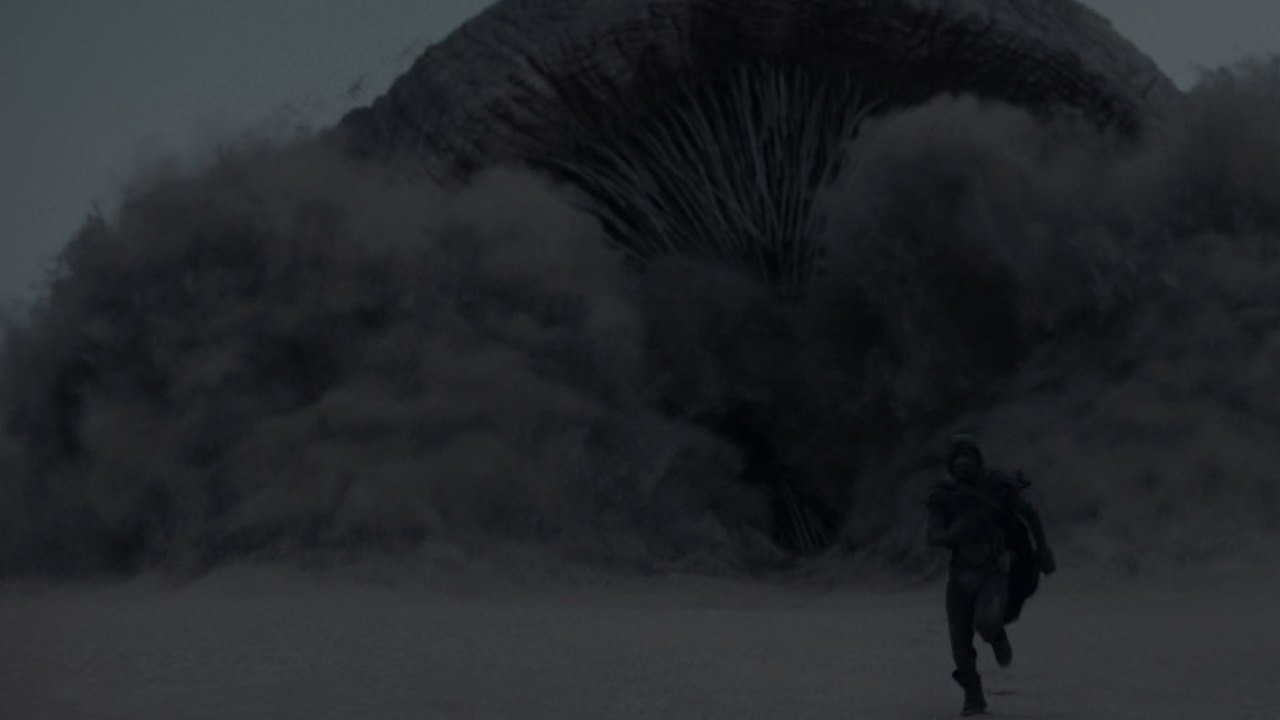
If you have just come out of the cinema, you will have seen what happens after the hero wins. In Dune: Part Two, Paul Atreides rode the sandworms to victory and the crowds called him their messiah. Dune: Part Three, adapting Frank Herbert's 1969 novel Dune Messiah, picks up years later. Paul is Emperor. His followers have carried his name across the stars in a holy war. And he can see, more clearly than anyone, what it has cost.
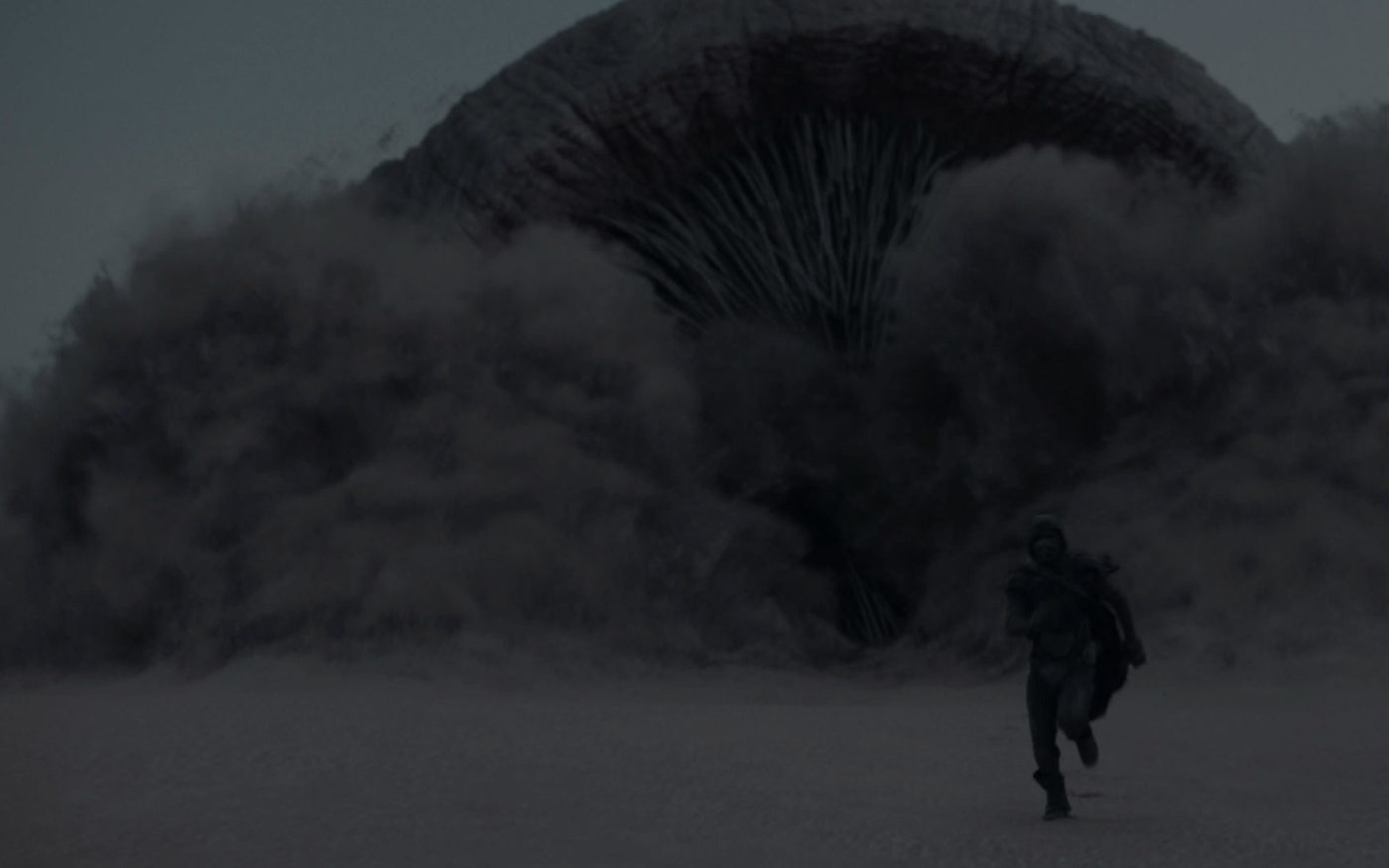
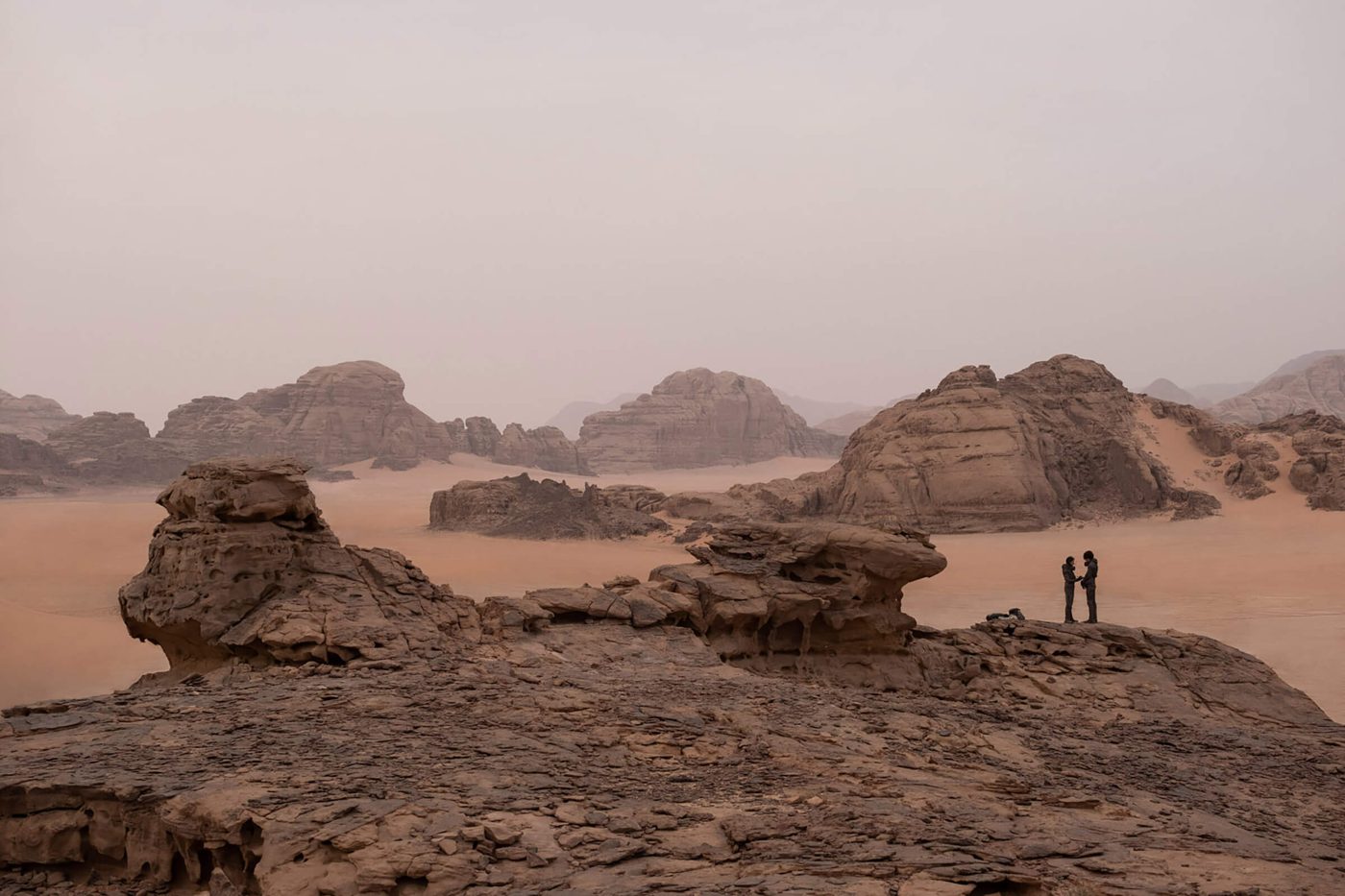
Herbert always said this was the point. Dune was never meant to be the story of a hero. It was meant to be a warning. And the words he used to tell it, Mahdi, Lisān al-Ghayb, Muad'Dib, Usul and jihad, were borrowed from Arabic and from Islam.
In the makers' own words
“superheroes are disastrous for humankind”
Frank Herbert, July 1980 · 'Dune Genesis', Omni
“Don't give over all of your critical faculties to people in power”
Frank Herbert, July 1980 · 'Dune Genesis', Omni
“'Dune Messiah' was written in reaction to the fact that people perceived Paul Atreides as a hero.”
Denis Villeneuve, to Empire, reported 28 August 2023 · SlashFilm, 'Why Dune director Denis Villeneuve wants to adapt Dune: Messiah'
“My adaptation [of 'Dune'] is closer to his idea that it's actually a warning.”
Denis Villeneuve, to Empire, reported 28 August 2023 · SlashFilm
“thoroughly Muslim”
Haris Durrani, on Herbert's Dune novels, 18 October 2021 · 'The Muslimness of Dune', Tor.com
The warning Herbert wrote
Frank Herbert spent years researching Dune. He read about deserts, ecology and religion, and drew on the history of Muslim lands, including a book about Imam Shamil, who led resistance to the Russian Empire in the Caucasus. In 1980 he explained in Omni magazine what he had been trying to say: 'superheroes are disastrous for humankind'. His advice to readers was blunt: 'Don't give over all of your critical faculties to people in power.'
Many readers of the first novel missed it and cheered Paul as a hero. So Herbert wrote Dune Messiah. Denis Villeneuve has said the same thing about his films: 'Dune Messiah was written in reaction to the fact that people perceived Paul Atreides as a hero,' and his own version is 'closer to his idea that it's actually a warning'. In Part Two he gave much of that warning to Chani, who watches the crowds and does not kneel. In Part Three, the warning is the whole story: a man who could see the future, who became a god to millions, and who cannot stop what he started.
Five words, and what they really mean
Mahdi. In Arabic, mahdī means 'the guided one', from the same root as al-Hādī, 'the Guide', one of the Names of God. In Islam it refers to a figure many Muslims expect near the end of time, who will 'fill the earth with fairness and justice as it has been filled with oppression and tyranny', according to a hadith in the collection of Abu Dawud (4282). Sunni and Shia Muslims understand the Mahdi in different ways, and history has seen many false claimants. In Dune, the Fremen use the word for Paul, but Paul's role was planted in their legends by the Bene Gesserit as propaganda. He is a manufactured messiah, not the Mahdi of Islam.
Lisān al-Ghayb. This means 'the tongue of the Unseen'. Al-ghayb, the Unseen, is everything only God knows: 'And with Him are the keys of the Invisible. None but He knoweth them. And He knoweth what is in the land and the sea. Not a leaf falleth but He knoweth it, not a grain amid the darkness of the earth, naught of wet or dry but (it is noted) in a clear record.' (Qur'an 6:59 · Pickthall). In Persian culture, Lisān al-Ghayb is also an honorary title of the much-loved fourteenth-century poet Hafez of Shiraz. The Fremen call Paul a voice from the Unseen. Islam teaches that the Unseen belongs to God alone.
Muad'Dib. Herbert's name for Paul echoes the Arabic muʾaddib, 'one who teaches', especially one who teaches adab, good manners and character. In the novel it is also the name of a small desert mouse. Usul. Paul's secret Fremen name means 'the base of the pillar'. In Arabic uṣūl means principles or foundations, as in uṣūl al-fiqh, the principles of Islamic law. The historian Juan Cole set these meanings out in 2024; the Muslim writer Haris Durrani has shown how deeply Islamic ideas run through the novels, which he calls 'thoroughly Muslim' as well as orientalist.
Jihad, and the struggle with the self
The hardest word is jihad. In Herbert's novels the 'jihad' is a galactic holy war that kills billions. The films use 'holy war' instead. But it matters what the word means to the nearly two billion people whose religion it comes from.
In Arabic, jihād means striving or making an effort. The Qur'an uses it for every kind of effort for God: 'As for those who strive in Us, We surely guide them to Our paths, and lo! Allah is with the good.' (29:69, Pickthall). It can include fighting, but the Qur'an tightly limits that: 'Fight in the way of Allah against those who fight against you, but begin not hostilities. Lo! Allah loveth not aggressors.' (2:190, Pickthall), and permission was given to those 'Sanction is given unto those who fight because they have been wronged; and Allah is indeed Able to give them victory.' (22:39, Pickthall). It also says 'There is no compulsion in religion. The right direction is henceforth distinct from error. And he who rejecteth false deities and believeth in Allah hath grasped a firm handhold which will never break. Allah is Hearer, Knower.' (2:256, Pickthall). A war to spread a ruler's cult across the galaxy is the opposite of all of that.
Muslim teachers also speak of jihād al-nafs, the struggle with one's own self: against selfishness, anger and pride. The Prophet Muhammad ﷺ (peace be upon him) said, 'The one who truly strives is the one who strives against his own self' (Tirmidhi 1621). A well-known saying calls this 'the greater jihad'; scholars grade its chain as weak, but the idea is grounded in sayings like the one above. In that sense, the tragedy of Paul is that he wins every war except the one inside himself.
How to watch it, and what to ask
Dune is a story, not a lesson in religion, and it does not need defending or attacking. Some Muslims enjoy it for taking Islamic ideas seriously in a science fiction future; Durrani has said it gave readers a fully realised science fiction future in which Islam was taken seriously. Others are uneasy that the most Islamic words in modern popular culture belong to a story about fanatics. Both reactions are understandable.
The best way to honour Herbert's warning is to do what he asked: keep thinking. Ask who gains when people stop asking questions. Ask what true guidance looks like. All three Abrahamic faiths give the same test: real guidance makes people more just, more merciful and more honest, never less.
The Names this touches
The contrast
The films imagine a man who sees the future, is called the voice of the Unseen and lets a holy war be fought in his name; the Names describe the One who alone holds the keys of the Unseen, guides those who strive, and asks no one to stop thinking.
Al-Hādī: The Guide: 'Mahdi' means the one He guides, not the one who replaces Him.
Ar-Rashīd: The Guide to the right course, who never leads astray.
Al-ʿAlīm: The All-Knowing, who holds the keys of the Unseen (6:59).
What each faith says
Judaism
“When a prophet speaketh in the name of the LORD, if the thing follow not, nor come to pass, that is the thing which the LORD hath not spoken; the prophet hath spoken it presumptuously, thou shalt not be afraid of him.”
Deuteronomy 18:22 · JPS 1917
Judaism looks forward to the Messiah, the Mashiach, a human king from the line of David who will bring justice and peace. It also has the Torah's own warning about false prophets who perform signs and wonders: 'thou shalt not hearken unto the words of that prophet' if he leads you away from God (Deuteronomy 13:2–4). Maimonides taught that the true Messiah will be known by what he does, not by miracles (Mishneh Torah, Laws of Kings 11).
Jewish history has a painful example. In 1665 Shabbetai Tzvi declared himself the Messiah, and thousands of Jews across Europe and the Middle East sold their homes to follow him. In 1666 he converted to Islam under pressure from the Ottoman sultan. The hope did not die with him, but it learned caution. Many Jews still sing words drawn from Maimonides: “I believe with perfect faith in the coming of the Messiah, and though he tarry, I will wait for him every day.” It is a faith that waits, rather than one that crowns the first man who claims the title.
Christianity
“Beware of false prophets, who come to you in sheep's clothing, but inwardly are ravening wolves. By their fruits you will know them.”
Matthew 7:15–16 · WEB
Christians believe Jesus is the Messiah, and the Gospels record him warning his followers to watch for counterfeits: 'there will arise false christs, and false prophets, and they will show great signs and wonders, so as to lead astray, if possible, even the chosen ones' (Matthew 24:24).
He also gave a simple test: 'By their fruits you will know them' (Matthew 7:16). A true servant of God produces love, joy, peace, patience, kindness and self-control (Galatians 5:22–23), not empires built on fear.
Christians keep that waiting in a season of its own. In Advent, the four weeks before Christmas, churches light one candle a week and sing “O come, O come, Emmanuel”. They look back to Christ’s birth and forward to his return, warned by Jesus himself that “no one knows of that day and hour” (Matthew 24:36).
Islam
“As for those who strive in Us, We surely guide them to Our paths, and lo! Allah is with the good.”
Qur'an 29:69 · Pickthall (1930)
Islam teaches that guidance comes from God alone. Muslims ask for it in every prayer, 'Show us the straight path.' (1:6, Pickthall), and the Qur'an reminds even the Prophet that the Unseen belongs to God (72:26). The Prophet said that every prophet warned his people about the Dajjāl, the great deceiver of the end of time (Bukhari 7131), a figure who will claim divine powers and lead people astray.
History has seen many self-declared mahdis, and Muslim scholars have measured them by the same standard Herbert points to: does this person bring justice, or demand worship? In Islam no human being, however guided, is to be treated as divine. The Qur'an praises those 'who strive for Us' and promises them guidance (29:69): guidance that comes to the one who keeps striving, thinking and turning to God.
Same and different
All three faiths expect a rightly guided figure (the Mashiach, the returning Christ, the Mahdi and the return of Jesus in Islam) and all warn against false claimants. Each tests them by their justice and their fruits. They differ on who that figure is. Jews await a human Messiah still to come. Muslims await the Mahdi and the return of Jesus as a prophet, never as God. Christians believe the Messiah has come in Jesus and will return.
Go deeper
- Haris Durrani, 'The Muslimness of Dune' (Tor.com, 2021) · essay
- Juan Cole, Dune's Islamic dimension (Informed Comment, 10 March 2024) · article
- Frank Herbert, 'Dune Genesis' (Omni, July 1980) · article
- Qur'an 29:69 with translations · scripture
- Deuteronomy 13 (JPS 1917) · scripture
- Matthew 24 (Bible Gateway, WEB) · scripture
Sources (11)
- Herbert's Omni quotes: Frank Herbert, 'Dune Genesis', Omni, July 1980 (via R9)
- Villeneuve on Dune Messiah as a reaction and his adaptation as a warning: SlashFilm, 28 August 2023, citing Empire
- Herbert 'wanted the book to be a warning'; Chani expanded: A.V. Club, 1 March 2024
- Meanings of Mahdi, Lisān al-Ghayb, Muad'Dib, Usul; jihad as striving: Juan Cole, Informed Comment, 10 March 2024
- 'Thoroughly Muslim'; Islam 'taken seriously': Haris Durrani, Tor.com, 18 October 2021; New Lines podcast, 15 April 2022
- Films use 'holy war' in place of 'jihad': SlashFilm, 31 March 2024
- Herbert drew on Lesley Blanch's The Sabres of Paradise (Imam Shamil): Religion News Service, 18 October 2021
- UK release 18 December 2026: Flicks UK
- Director, co-writer, cast, US date 18 December 2026: Wikipedia, 'Dune: Part Three'
- BBFC: Part Three trailer 15; Part Two 12: BBFC
- Hadith: Mahdi; the one who strives against himself; the Dajjāl: Sunan Abi Dawud 4282 (graded hasan sahih by al-Albani); Jami' at-Tirmidhi 1621 (graded sahih); Sahih al-Bukhari 7131