The idea in one minute
This page looks at the Assassin's Creed games. It explains that the first game is set in the Holy Land in 1191, in castles that really belonged to a Muslim community. You will learn the real history behind the game, where its motto 'Nothing is true' came from, and how the Name al-Haqq, the Truth, an
The question: If 'nothing is true', what is left to stand on? And who gets to tell a community's story?
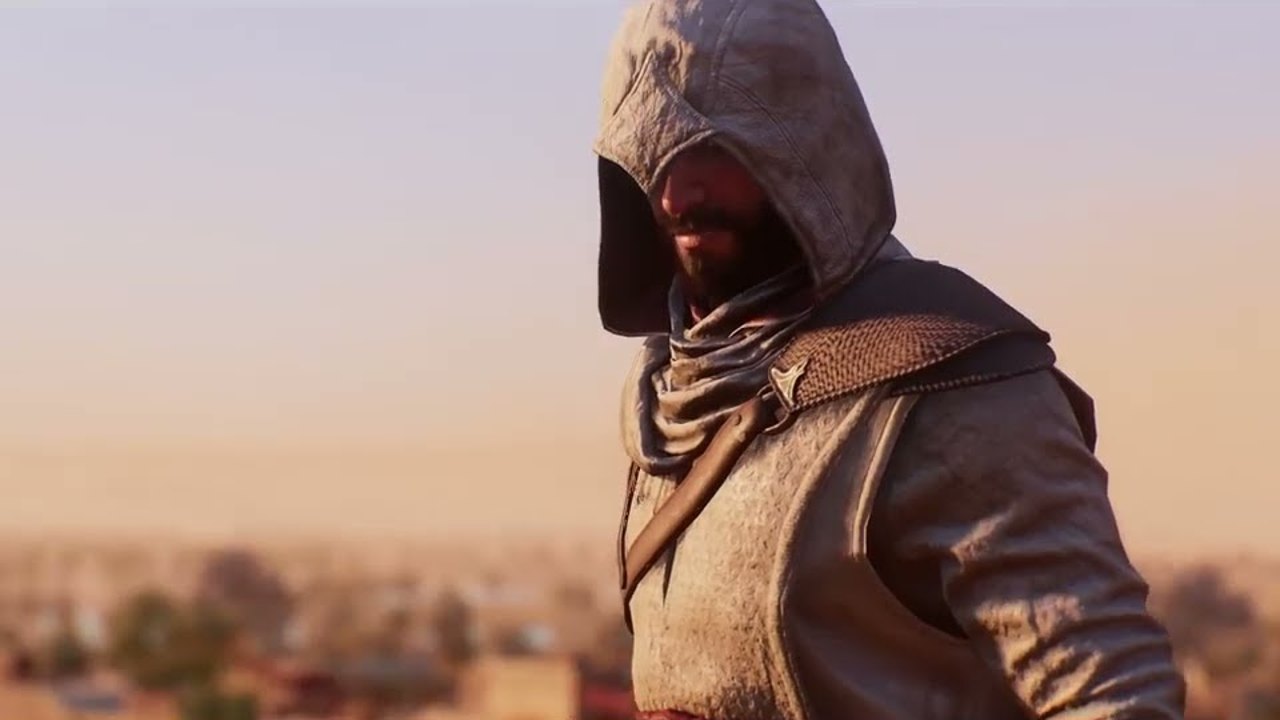
Hundreds of millions of people have played Assassin's Creed. The first game, released in 2007, drops you into the Holy Land in 1191, during the Third Crusade. You climb the walls of Jerusalem, Acre and Damascus as Altaïr, a member of a secret brotherhood whose headquarters is a castle called Masyaf. The castle is real. So was the community that held it.
The game's creed is just as famous: 'Nothing is true, everything is permitted.' It sounds like an ancient secret. In fact the version most people know comes from a German philosopher in 1887 and a Slovenian novel in 1938. Behind the myth there is a real history worth knowing, and a real question: what happens to us if nothing is true?
In the makers' own words
“Inspired by historical events and characters. This work of fiction was designed, developed and produced by a multicultural team of various religious faiths and beliefs.”
Ubisoft, opening disclaimer of the Assassin's Creed games, 2007 onwards · In-game disclaimer, as discussed by Frank G. Bosman, Online – Heidelberg Journal of Religions on the Internet 10 (2016), via Medievalists.net
“Nothing is true, everything is allowed”
Friedrich Nietzsche, describing what he believed was the Assassins' secret motto, 1887 · On the Genealogy of Morals, Third Essay, section 24 (Horace Samuel's translation, Project Gutenberg #52319)
“actually fabricated and put into circulation by Europeans”
Farhad Daftary, Institute of Ismaili Studies, on the 'Assassin legends', accessed 8 November 2026 · Institute of Ismaili Studies, 'Introduction to The Assassin Legends'
The real people behind the legend
The 'Assassins' of the game are based on the Nizari Ismailis, a branch of Shia Islam. In 1090 their leader Hassan-i Sabbah took the mountain fortress of Alamut in northern Persia. Over the next century and a half the Nizaris held a network of castles across Persia and Syria, including Masyaf, surrounded by far larger enemies: the Seljuk Turks, the Abbasid caliphs, rival Ismailis in Egypt and, later, the Crusaders.
They were a small, besieged community, and they did use targeted killings of powerful enemies. Over nearly two centuries they killed hundreds of people, including caliphs, sultans' ministers and a Crusader ruler of Jerusalem. That is a real and uncomfortable part of the story, and we should not hide it. But they were also scholars. Alamut held a famous library. The great astronomer and philosopher Naṣīr al-Dīn al-Ṭūsī worked for years among the Nizaris before he went on to build the observatory at Maragha.
In 1256 the Mongol armies of Hulagu Khan took Alamut. The Persian historian Juvayni, who served the Mongols and disliked the Ismailis, inspected the library before it was destroyed. He kept some books and burned those he thought heretical. Much of what we know about the Nizaris was later written by their enemies.
Where the myths came from
The word 'assassin' comes from an insulting Arabic nickname, ḥashīshiyya, used by the Nizaris' rivals. European travellers and Crusaders turned it into a story: young men were drugged with hashish, carried into a secret garden of paradise and then sent out to kill. Marco Polo's book made the tale famous across Europe.
Historians now treat these stories as legends. Farhad Daftary of the Institute of Ismaili Studies in London has shown that they were 'actually fabricated and put into circulation by Europeans', and notes that similar stories are not found in the medieval Islamic sources. Even the anti-Ismaili Juvayni, who described Alamut's storerooms and library in detail, says nothing about a garden of paradise.
The motto came later still. In 1887 Friedrich Nietzsche claimed that the Assassins' highest secret was 'Nothing is true, everything is allowed'. In 1938 the Slovenian writer Vladimir Bartol made it Hassan's motto in his novel Alamut, which inspired the game. The Nizaris of history would not have recognised it: they were a religious community with a strong sense of divine truth.
The Nizari Ismailis are not a historical curiosity. They are a living community of millions around the world, led today by the Aga Khan, with an institute in London. The 'assassin' label has been used against them for nine hundred years. They deserve to be met as they are.
What the games get right, and wrong
Ubisoft deserves credit for some things. Each game opens with a statement that it was made 'by a multicultural team of various religious faiths and beliefs'. The researcher Frank Bosman found in 2016 that the series largely grounds the Nizaris in real history and quietly corrects the hashish legend, even though it treats religion mainly as a tool of power. Others, writing in the Arab press, have called the games an orientalist fantasy. Both views are worth hearing.
Assassin's Creed Mirage (2023) went further. Set in ninth-century Baghdad, it was the first game in the series with full Arabic voice acting. It includes an educational 'History of Baghdad' database built with four academic experts in Islamic art, illustrated with objects from the Khalili Collections, the David Collection, the Doris Duke Foundation for Islamic Art and the Institut du Monde Arabe, with grants from the UK's Economic and Social Research Council and the Barakat Trust. You can visit the House of Wisdom on screen and then go and see real Abbasid objects in museums.
If nothing is true
In the games, the creed is explained as a kind of humility: laws and rulers are human-made, so think for yourself and take responsibility for what you do. Put that way, it has something in common with Frank Herbert's warning in Dune: do not hand over your conscience to people in power.
But taken literally, 'nothing is true' cannot even be said without contradicting itself. If nothing is true, then that sentence is not true either. And 'everything is permitted' is the logic of every cruelty in history. The real question the game asks is whether there is any truth that does not depend on who holds power. The Qur'an calls God al-Ḥaqq, the Truth, the Real: not one more opinion, but the reality that makes anything true at all.
The Names this touches
The contrast
The games imagine a brotherhood whose secret is that nothing is true and everything is permitted; the Names describe the One who is the Truth itself, by whom anything is real, and before whom nothing is permitted that wrongs another soul.
Al-Ḥaqq: The Truth, the Real: what makes anything true at all (22:62).
Al-ʿAlīm: The All-Knowing, who knows each community as it really is, not as legends tell it.
Al-ʿAdl: The Just, before whom every story, and every storyteller, will be weighed.

What each faith says
Judaism
“But the LORD God is the true God, He is the living God, and the everlasting King.”
Jeremiah 10:10 · JPS 1917
The Hebrew word for truth, emet, is spelt with the first, middle and last letters of the Hebrew alphabet. The rabbis took this as a sign that truth runs through everything from beginning to end, and taught that 'the seal of the Holy One, blessed be He, is truth' (Talmud, Shabbat 55a). The Torah calls God 'a God of faithfulness and without iniquity' (Deuteronomy 32:4).
Jewish law treats truthfulness as a duty: 'Keep thee far from a false matter' (Exodus 23:7). It also warns against spreading harmful stories about others, lashon hara, even when they are partly true. A tradition that has been the target of legends itself, such as the medieval blood libel, knows how much damage a false story can do.
In 1873 Rabbi Israel Meir Kagan published a whole book on harmful speech, Chafetz Chaim, “Desiring Life”, named from Psalm 34: “Who is the man that desireth life… Keep thy tongue from evil.” Many Orthodox Jews still study a short passage of it every day.
Christianity
“You will know the truth, and the truth will make you free.”
John 8:32 · WEB
In the Gospel of John, the Roman governor Pontius Pilate asks Jesus the question at the heart of this game: 'What is truth?' (John 18:38). Christians believe the answer was standing in front of him. Jesus says: 'I am the way, the truth, and the life' (John 14:6), and 'You will know the truth, and the truth will make you free' (John 8:32).
For Christians, freedom does not come from 'everything is permitted' but from being set free by the truth to love. Paul writes that 'all things are lawful' but 'not all things are profitable' (1 Corinthians 10:23), turning the slogan around: freedom is for building others up.
Some Christians have built a whole way of life on plain truth. Quakers, the Religious Society of Friends, have long refused to swear oaths in court. They hold that a person should tell the truth at all times, not only under oath. English law has let them affirm instead since the 1690s.
Islam
“That is because Allah, He is the True, and that whereon they call instead of Him, it is the false, and because Allah, He is the High, the Great.”
Qur'an 22:62 · Pickthall (1930)
Al-Ḥaqq is one of the Names of God in the Qur'an: 'That is because Allah, He is the True, and that whereon they call instead of Him, it is the false, and because Allah, He is the High, the Great.' (22:62, Pickthall). When the Prophet Muhammad ﷺ (peace be upon him) rose at night to pray, he would say: 'You are the Truth, and Your promise is the truth' (Bukhari 1120). He also praised a line by the poet Labīd as 'the truest words a poet ever said': 'Everything except God is passing' (Bukhari 3841).
The Qur'an also insists on honesty about other people. 'O ye who believe! If an evil-liver bring you tidings, verify it, lest ye smite some folk in ignorance and afterward repent of what ye did.' (49:6, Pickthall). That verse is a good rule for reading legends about the Assassins. And on violence it is clear: 'For that cause We decreed for the Children of Israel that whosoever killeth a human being for other than manslaughter or corruption in the earth, it shall be as if he had killed all mankind, and whoso saveth the life of one, it shall be as if he had saved the life of all mankind.' (5:32, Pickthall).
Same and different
All three faiths reject 'nothing is true': each holds that God is truth itself, that lying and slander are serious wrongs, and that freedom is not the same as 'everything is permitted'. They differ on where truth is fully revealed. For Muslims it is in the Qur'an and the example of the Prophet; for Jews in the Torah and God's covenant; for Christians in the person of Jesus. Judaism has built a detailed everyday discipline around harmful speech, lashon hara, gossip that may be true but still wounds.
Go deeper
- Farhad Daftary, 'Introduction to The Assassin Legends' (Institute of Ismaili Studies) · scholarship
- Frank G. Bosman on the portrayal of the Nizari Ismailis in Assassin's Creed (Medievalists.net, 2016) · paper summary
- Nietzsche, The Genealogy of Morals (public domain translation) · book
- Qur'an 22:62 with translations · scripture
- John 18:28–38 (World English Bible) · scripture
- Shabbat 55a, “the seal of the Holy One is truth” (Sefaria) · scripture
Sources (8)
- Game setting 1191, Masyaf, Jerusalem, Acre, Damascus: Wikipedia, Assassin's Creed (video game)
- Alamut 1090; castle network; killings of hundreds incl. caliphs; Mongol conquest 1256; Juvayni and the library; Marco Polo: Wikipedia, Order of Assassins
- Legends fabricated by Europeans; not found in medieval Islamic sources: Farhad Daftary, Institute of Ismaili Studies
- Bosman's assessment; the disclaimer: Bosman 2016, via Medievalists.net
- Nietzsche's 'Nothing is true, everything is allowed' (1887): On the Genealogy of Morals III §24, Project Gutenberg #52319
- Mirage: Baghdad, Arabic dubbing, History of Baghdad database, collections, ESRC and Barakat Trust: Wikipedia, Assassin's Creed Mirage
- BBFC 15 for Assassin's Creed (game): BBFC
- Hadith: 'You are the Truth'; Labīd's line: Sahih al-Bukhari 1120; 3841