
Closer look · 9 min · Film: Rogue One
One with the Force
A blind man walks into battle repeating one short line. What is he holding on to?
A blind man walks out from cover into open ground. Around him, a battle. He has no weapon that can win it and no special power. As he walks, he repeats one short line, over and over: “I am one with the Force, and the Force is with me.” He reaches the switch he came for. Then he falls.
His name is Chirrut Îmwe, from Rogue One (2016). Of all the moments in nine films and many series, it is the one that most resembles something people of faith do every day: holding on to a few words, said again and again, when the ground shakes. This page looks at what the Force is, where it came from, how people in the story fall and come back, and what Jews, Christians and Muslims might recognise in it. It also says plainly where the likeness ends.
In one minute
- Chirrut Îmwe walks into battle repeating one line. That is the moment in Star Wars most like what people of faith do every day: holding on to a few words.
- The Force grew from Lucas's reading of Joseph Campbell, Buddhism and Japanese cinema. Its map of how a good person falls (fear, anger, hate) is one the faiths drew long before.
- Where it breaks: the Force has two sides and does not hear. The God of Abraham has no dark side and no equal, and He listens, answers and forgives.
Chirrut's line in the film's first act, on Jedha, is on StarWars.com: “I am one with the Force and the Force is with me” (official clip) ↗
Falling, and coming back
The real spine of Star Wars is not the war. It is people being tested.
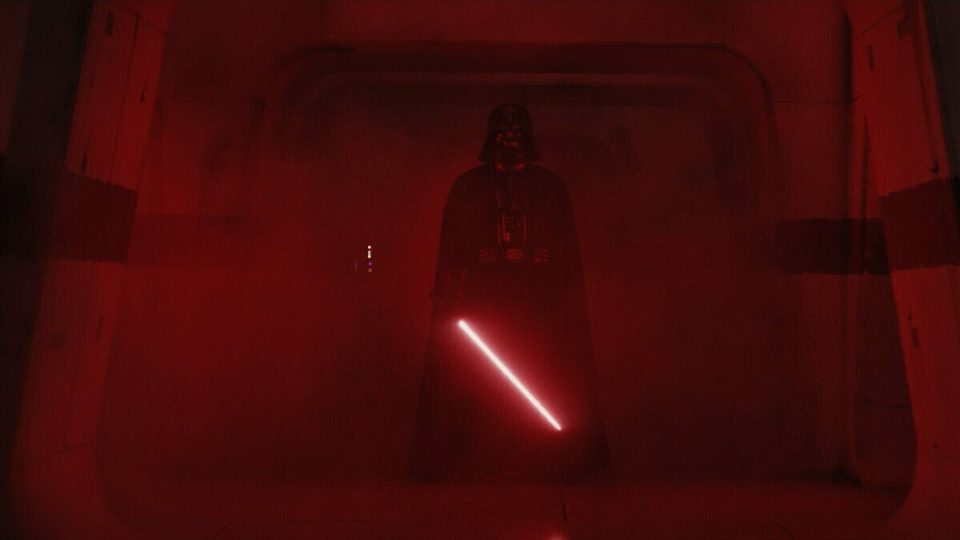
- Anakin Skywalker is kind and gifted, and haunted by fear of losing the people he loves. That fear is what is used to turn him. Years later, his son's refusal to hate him brings him back.
- Luke sees his own face inside the mask of his enemy in a cave, nearly strikes in rage, and in the end throws his weapon away rather than kill.
- Ben Solo falls far and does terrible things, and still comes home.
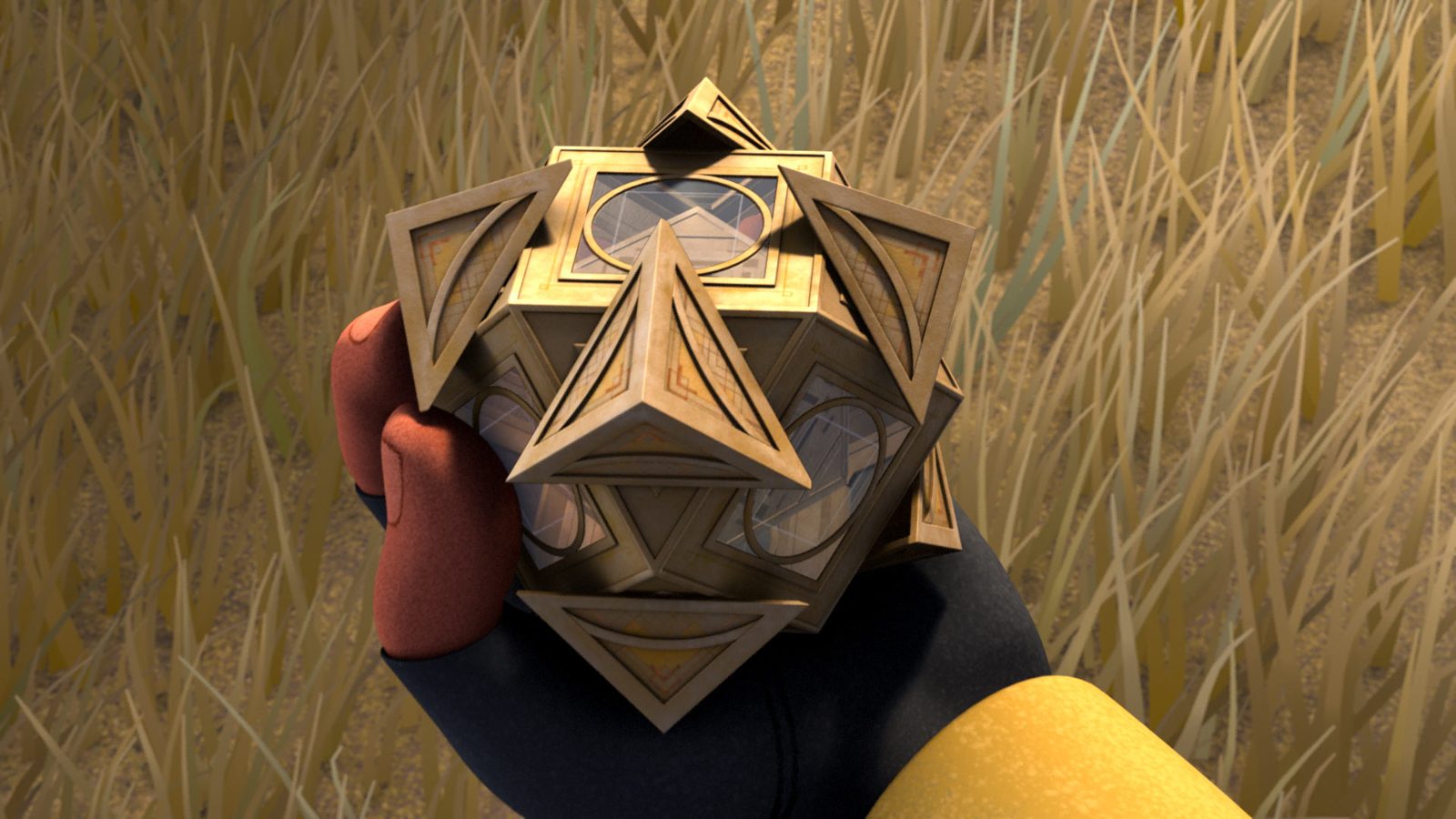
- Ezra Bridger, in the animated Rebels, is offered the chance to pull his dead teacher back through a door in time. He doesn't. He lets him go, which is exactly what Anakin could not do.
Put Anakin and Ezra side by side and you have a whole sermon on attachment. The faiths add one thing the films leave out: someone waiting at the end of the road. “Despair not of the mercy of Allah, Who forgiveth all sins” (Qur'an 39:53, Pickthall). In Hebrew, return is teshuvah; in Arabic, tawbah. In the Gospel, the father sees his lost son “still far off”, and runs (Luke 15:20).
Who's who
The two figures this page turns on. Non-human and masked characters are shown as stills; actors' scenes play in the official clips.
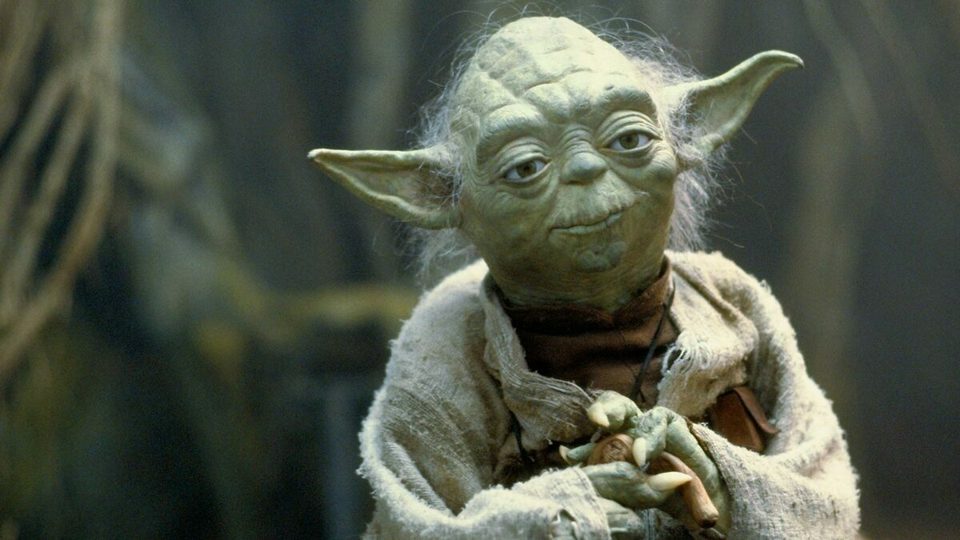
© & ™ Lucasfilm Ltd., used for criticism and review
What the Force is
In the first film, an old hermit describes it to a farm boy as an energy field that every living thing makes, which surrounds us, runs through us and holds the galaxy together. Lucasfilm's own reference pages add that it guides those who are open to it, and that it has a will of its own.
George Lucas has been unusually open about why he put it there. In a long 1999 interview with the journalist Bill Moyers, he said he wanted to wake a kind of spirituality in young people: to get them asking whether there is a God, and what God might be like. He did not want to invent a religion, he said, but to retell old religious ideas in a new way. And then, carefully, he drew his own line: he would hesitate, he said, to call the Force God.
Where it came from
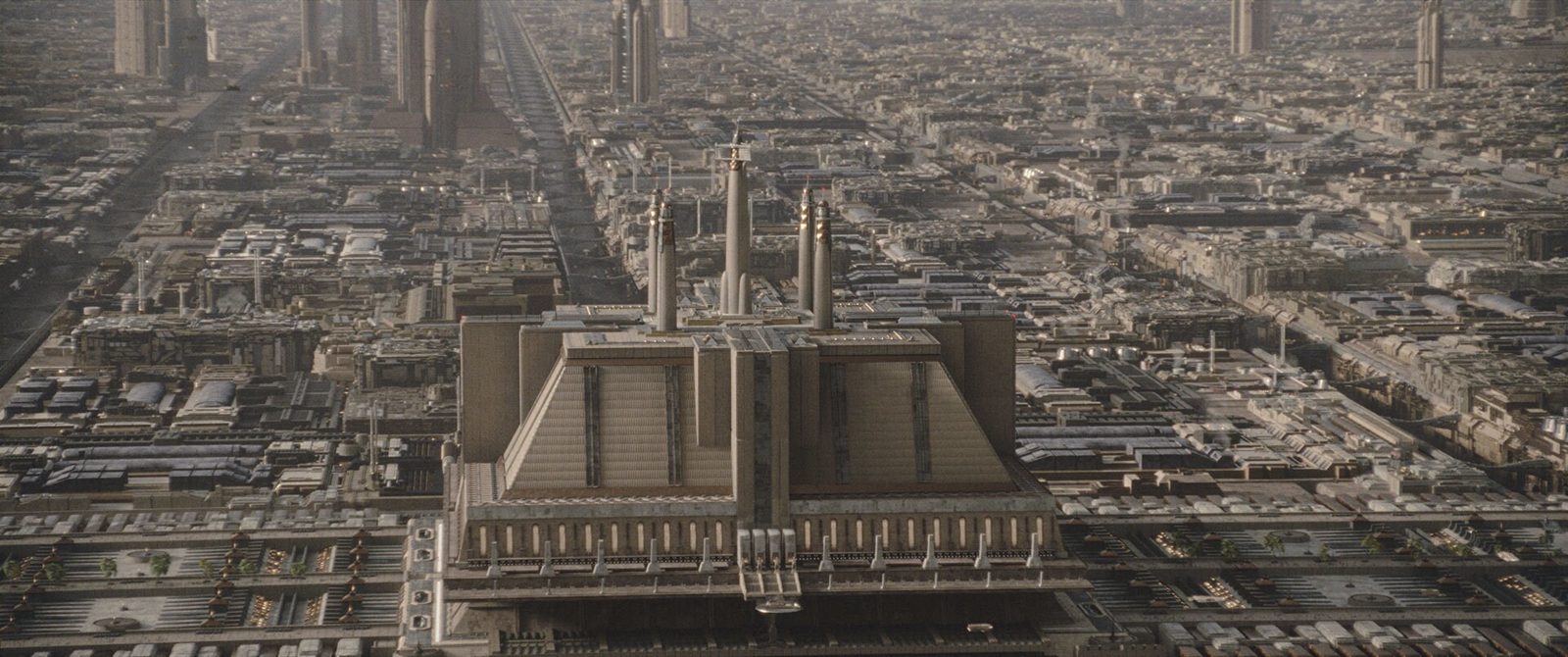
Lucas wrote draft after draft until he read Joseph Campbell's The Hero with a Thousand Faces, a study of the hero stories that cultures tell again and again; he later called Campbell his own Yoda. He has said that the Force idea is older than Buddhism but clearest there, and that the spiritual side of The Empire Strikes Back owes a lot to its director, Irvin Kershner, a Buddhist. He once described his own faith, half joking, as “Buddhist Methodist”.
Japan is in it too. The BFI notes that the word Jedi is widely traced to jidaigeki, Japanese period drama, the genre of Akira Kurosawa's The Hidden Fortress (1958), whose two squabbling peasants became R2-D2 and C-3PO.


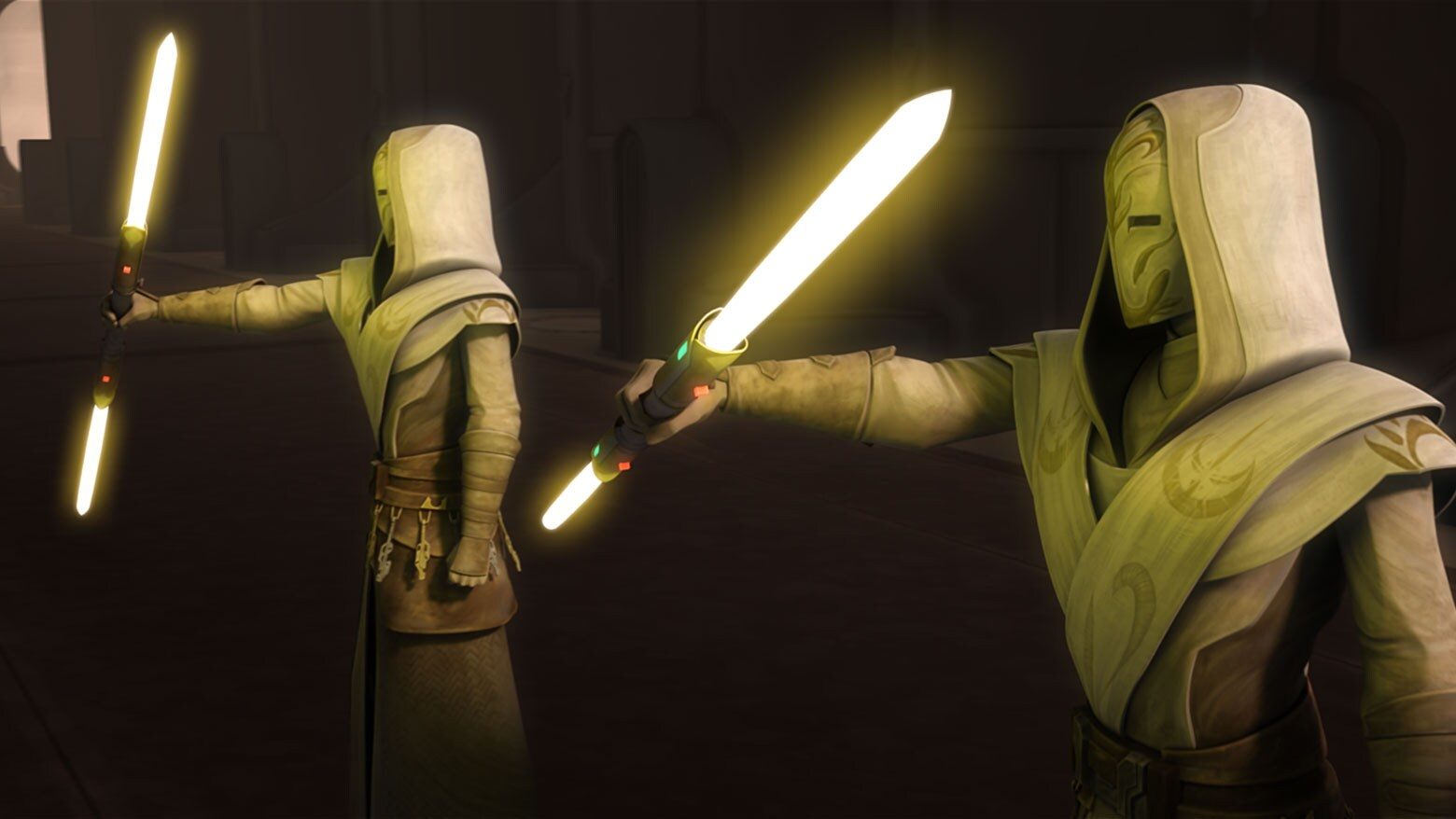
And the robes. The costume designer John Mollo wrote that Lucas wanted the costumes to be real clothes, and Obi-Wan was conceived as somewhere between a monk and a samurai: hooded, rough-woven, earth-coloured. Trisha Biggar, who dressed the later films, made sure no two Jedi looked alike, because they came from different worlds and cultures; Lucasfilm's own costume exhibition points to kimono-like wraps beneath the cloaks. The habit marks a life given over to something.
The cloak passed on
Many traditions know this. The Christian monk's habit. The Sufi khirqa, a plain cloak given by a teacher to a student as a sign of entering the path and joining a chain of teachers. And in the Hebrew Bible, the prophet Elisha takes up the mantle that fell from Elijah, and the watching disciples say that Elijah's spirit now rests on him (2 Kings 2:13–15).
Two sides
Lucas has said the whole saga turns on two things: compassion and greed. The light side shows itself as calm, service and letting go; the dark side works through fear, anger, hatred and the urge to grasp. Yoda puts the chain in one breath when he meets the boy Anakin: “Fear is the path to the dark side… fear leads to anger”, and from there, he goes on, anger leads to hate and hate to suffering.
It is a map of how a good person goes wrong, and the faiths drew that map long before. In Pirkei Avot, the sayings of the Jewish sages, Ben Zoma asks who is truly mighty, and answers: the one who masters his own inclination (Avot 4:1). The Prophet Muhammad, peace be upon him, said that real strength is not overpowering others but holding yourself in check when angry (Bukhari 6114). And the First Letter of John answers Yoda's chain at its first link: “There is no fear in love; but perfect love casts out fear” (1 John 4:18, WEB).
Masters and apprentices
Yoda, Lucasfilm says, trained Jedi for some eight hundred years. Knowledge in the Jedi Order is not downloaded; it passes from a master to one apprentice, a Padawan, face to face, over years: Yoda to Dooku, Dooku to Qui-Gon, Qui-Gon to Obi-Wan, Obi-Wan to Anakin and later Luke. Character travels with the knowledge, and so, sometimes, do failures.
Judaism
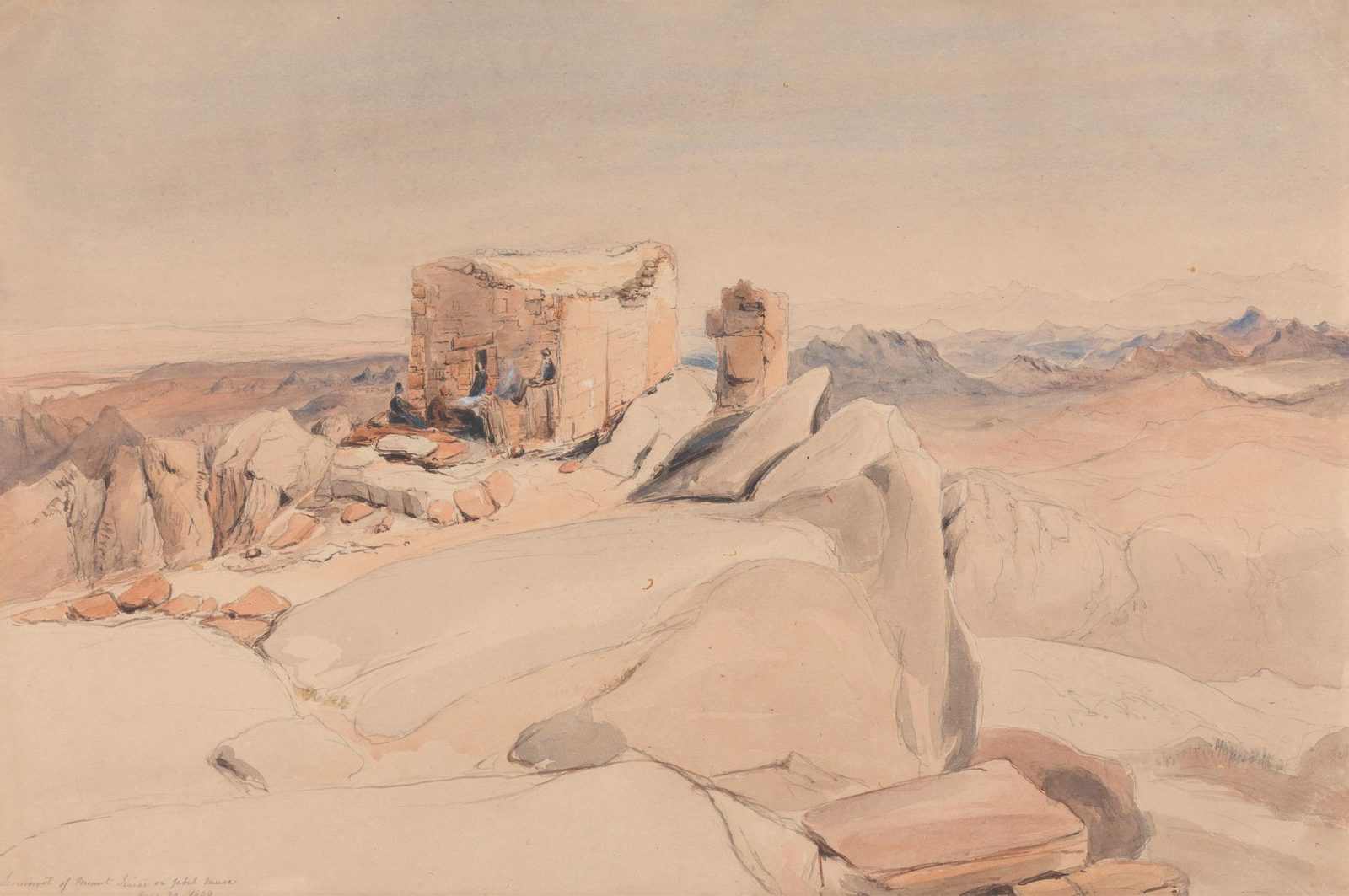
Pirkei Avot opens with a chain: Moses received the Torah at Sinai and handed it to Joshua, Joshua to the elders, the elders to the prophets, and they taught: raise up many students (Avot 1:1). A student is a talmid; “find yourself a teacher”, says the next chapter.
Christianity
Jesus calls disciples, and sends them to make disciples. Paul tells Timothy to entrust what he has learned “to faithful men, who will be able to teach others also” (2 Timothy 2:2, WEB): four links of a chain in one verse.
Islam
The ijāzah is a teacher's personal permission to pass on what was learned, often with an isnād, a chain of names going back teacher by teacher to the Prophet. A Qur'an reciter's chain can run to about thirty generations.
The difference matters, gently. A Jedi passes on a discipline and a tradition. In the faiths, the chain carries what believers hold to be revelation, words from God, and the teacher is a trustee of it, not its source. That is why the chains are checked so carefully: a teacher can fall, as Anakin's teachers learned.
Chirrut's line
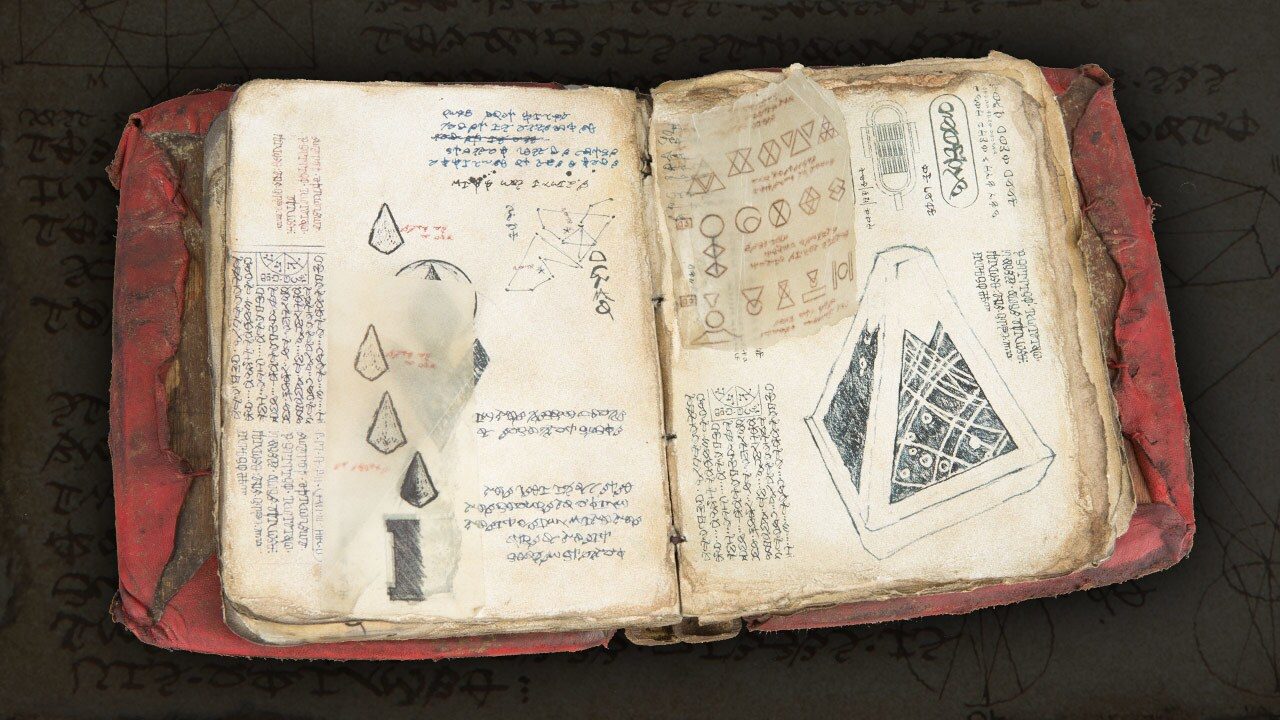
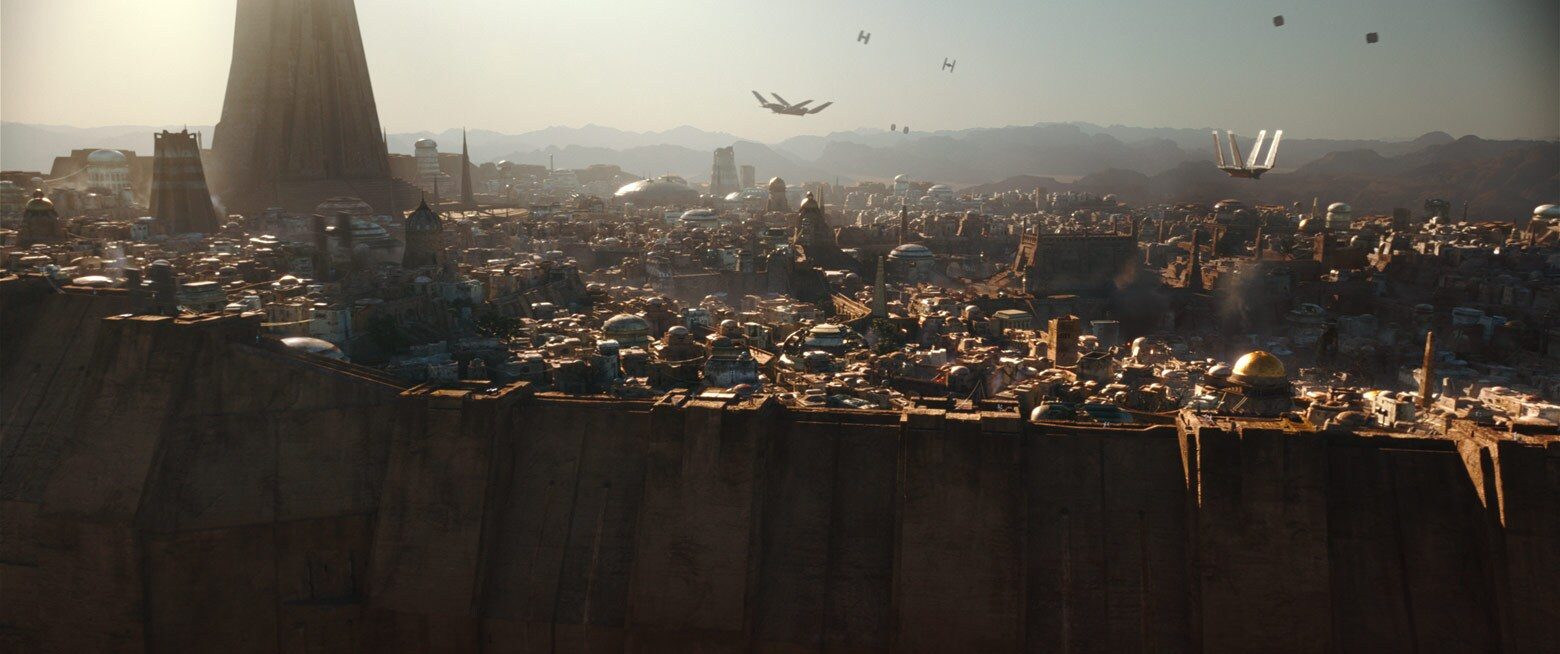
Chirrut is not a Jedi. He belongs to the Guardians of the Whills, a monastic order that kept a temple on Jedha, a holy city of pilgrims, until the Empire stripped it and destroyed it. He cannot move objects or read minds. Lucasfilm's description is simple: deeply spiritual, sure that all living things are connected, a warrior who trained body and mind without any Force powers at all. The actor Donnie Yen suggested that he be blind; when you cannot see, he said, you have to feel with your heart.
His friend Baze Malbus had been a Guardian too, and lost his faith. On the beach at Scarif, near the end of the film, Chirrut walks into the fire repeating his line; he reaches the switch; he dies. And Baze, who had stopped believing, stands up and walks out in his turn, taking the same words into his own mouth.
Anyone who has said a prayer in a hospital corridor will recognise this. Three ways of remembering:
Islam: dhikr
Dhikr means remembrance: short phrases repeated through the day, on prayer beads, after prayer, on a frightening journey. SubḥānAllāh, glory be to God; al-ḥamdu lillāh, praise be to God; lā ilāha illā Allāh, there is no god but God. “Verily in the remembrance of Allah do hearts find rest!” (Qur'an 13:28, Pickthall).
Judaism: the Shema
“Hear, O Israel: the LORD our God, the LORD is one” (Deuteronomy 6:4, JPS 1917): said morning and night, and the words a Jew hopes to say last. The sages ask for kavanah, the heart turned towards what the mouth says, so that fixed words never become mechanical.
Christianity: the Jesus Prayer
In the Orthodox tradition, a single sentence asking Christ for mercy is repeated hundreds of times, often on a knotted prayer rope, to obey Paul's “pray without ceasing” (1 Thessalonians 5:17). It is the heart of hesychasm, the practice of inner stillness.
And something else in the scene: Chirrut does not just believe and wait. He walks to the switch. Muslims know the balance as tawakkul, trust in God alongside doing what you can: “Whosoever putteth his trust in Allah, He will suffice him” (Qur'an 65:3, Pickthall). With it goes ṣabr, steady patience: “Seek help in steadfastness and prayer. Lo! Allah is with the steadfast” (2:153).
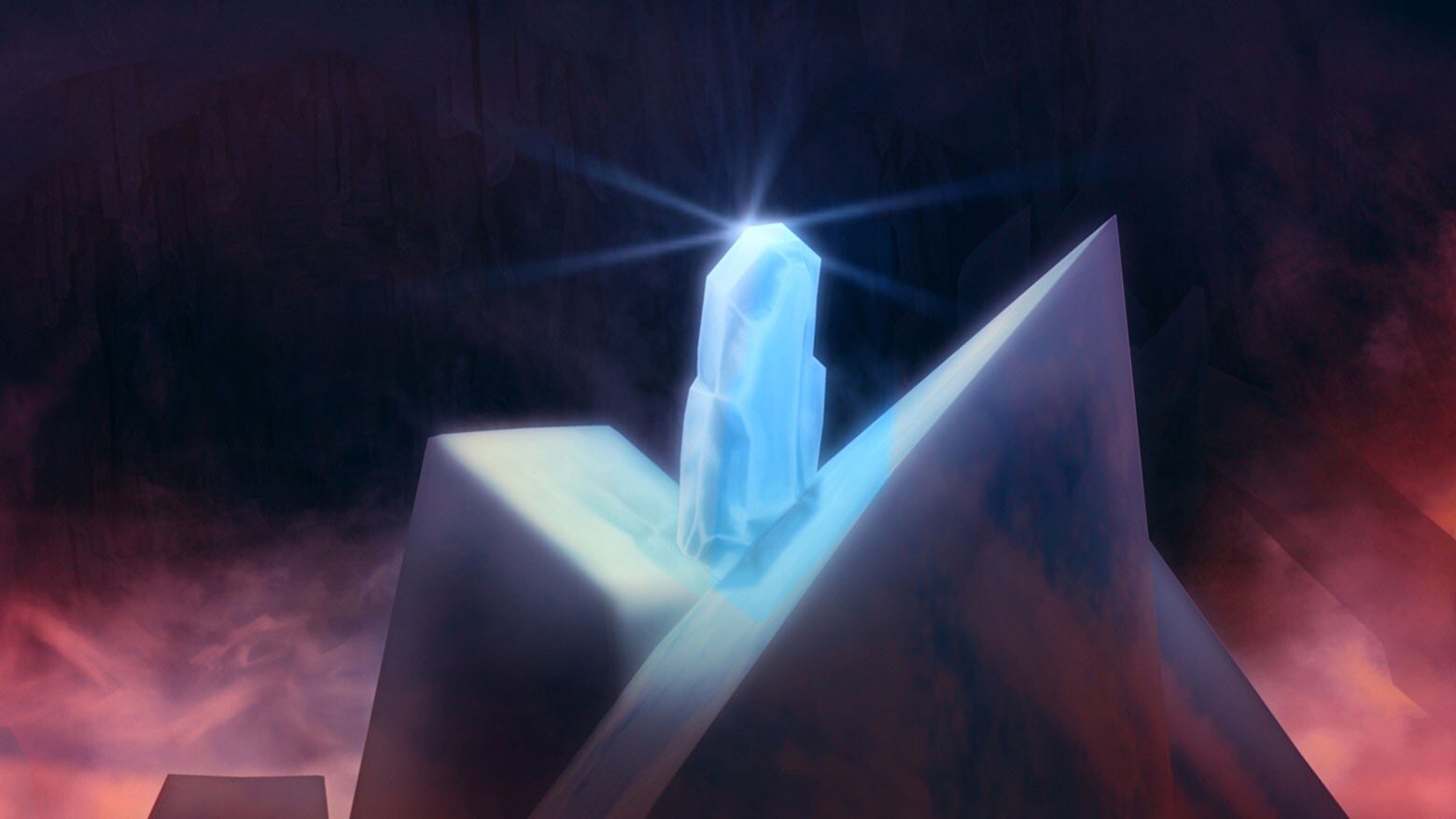
Where the comparison breaks
This is the most important part of the page, and the films help us see it.
The Force has two sides. In one episode of The Clone Wars the idea of “balance” is even pictured as a father with a bright daughter and a dark son. The God of Abraham has no dark side and no equal. “Say: He is Allah, the One! Allah, the eternally Besought of all! He begetteth not nor was begotten. And there is none comparable unto Him” (Qur'an 112:1–4, Pickthall). Isaiah has God say that He forms light and creates darkness, so that there is no second power beside Him (Isaiah 45:7). “God is light, and in him is no darkness at all” (1 John 1:5, WEB).
The Force is a field; God hears. In the films, nobody really prays to the Force. Chirrut trusts it. Dhikr, the Shema and the Jesus Prayer are all addressed to Someone, who knows, answers and forgives. In Star Wars, coming back needs no one to forgive you. In the faiths, Someone does.
And Chirrut's words point the other way. He says that he is one with the Force. Dhikr never says “I am one with God”. It remembers Him: the One who, the Qur'an says, is nearer to us than our jugular vein, and still not us.
Lucas himself would hesitate to call the Force God. He was right to. Star Wars can make you long for something it cannot name. That longing is where wonder begins.
The Names in this closer look





Talk about it
- Chirrut has no powers, yet he is the bravest person in the film. What gives someone courage when they can't see the way ahead?
- Is there a word or phrase you, or someone you love, says when frightened? What does it do?
- Baze had lost his faith, but at the end he takes up Chirrut's words. Can faith be carried for someone else for a while?
- Yoda says fear leads to anger. When have you seen that chain happen, and what broke it?
- Anakin couldn't let Padmé go; Ezra let Kanan go. What is the difference between loving someone and holding on to them?
- The Force has two sides. The faiths say God has no dark side and no equal. Does that difference matter to how you live?
Where to watch · Trailer
Widely available to stream or buy. Where to watch: F-ILM.
Next closer look
A different film, a different question.

Watch more: One with the Force
7 films and talks, chosen for this page. They play here.
Is Jediism a Religion?
ReligionForBreakfast · 8 min
Bishop Barron on “Star Wars: The Last Jedi”
Bishop Robert Barron · 9 min
Faith in Star Wars: A conversation with Elizabeth Scalia
Father Roderick - Story Secrets · 27 min
The Meaning of La ilaha illa Allah | Ep. 3 | Deeper into Dhikr with Dr. Omar Suleiman
Yaqeen Institute · 14 min
Yaqeen: the meaning of La ilaha illa Allah, the one line Muslims hold on to.
What the Shema Meant to Jacob
Chabad.org · 6 min
Shema: How to Say This Jewish Prayer
myjewishlearning · 2 min
The Meaning of SubhanAllah | Ep. 1 | Deeper into Dhikr with Dr. Omar Suleiman
Yaqeen Institute · 14 min
Yaqeen: the meaning of SubhanAllah, a short line repeated through the day.
- More films and talks on F-ILMWatch free