Drop an ice cube into a glass of water and it floats. That seems obvious, but almost every other substance does the opposite: its solid form is denser than its liquid and sinks. If ice sank, lakes and seas would freeze from the bottom up, and much of the Earth's water could have ended up as permanent ice.
Water is the most familiar liquid there is, and one of the strangest. Chemists list dozens of ways it behaves unusually. Some of the water molecules in your glass are probably older than the Sun.
“Have not those who disbelieve known that the heavens and the earth were of one piece, then We parted them, and we made every living thing of water? Will they not then believe?”
Qur'an 21:30 · Pickthall (1930)
This is the second half of a verse about the creation of the heavens and the earth (see the episode The beginning). Commentators read it as saying that all life depends on water, and some as saying that living things are made from it. Elsewhere the Qur'an asks: 'Have ye observed the water which ye drink? Is it ye who shed it from the raincloud, or are We the Shedder?' (56:68-69, Pickthall).
What science shows
A water molecule is tiny and simple: one oxygen atom and two hydrogen atoms, H2O, with the hydrogens at an angle of about 104.5 degrees. The oxygen pulls electrons towards itself, so one end of the molecule is slightly negative and the other slightly positive. That makes neighbouring water molecules cling to one another with 'hydrogen bonds', and almost all of water's strange behaviour follows from this.
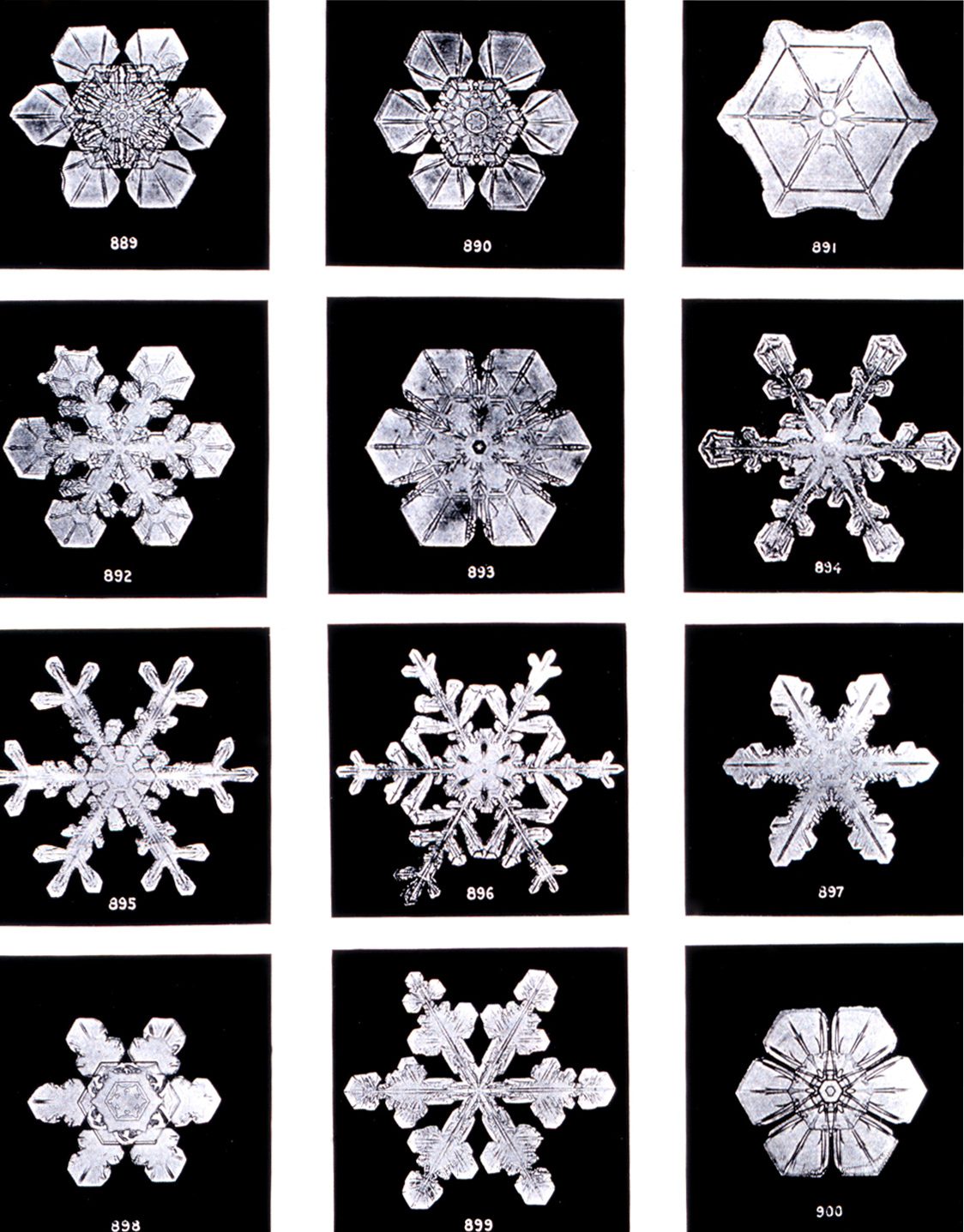
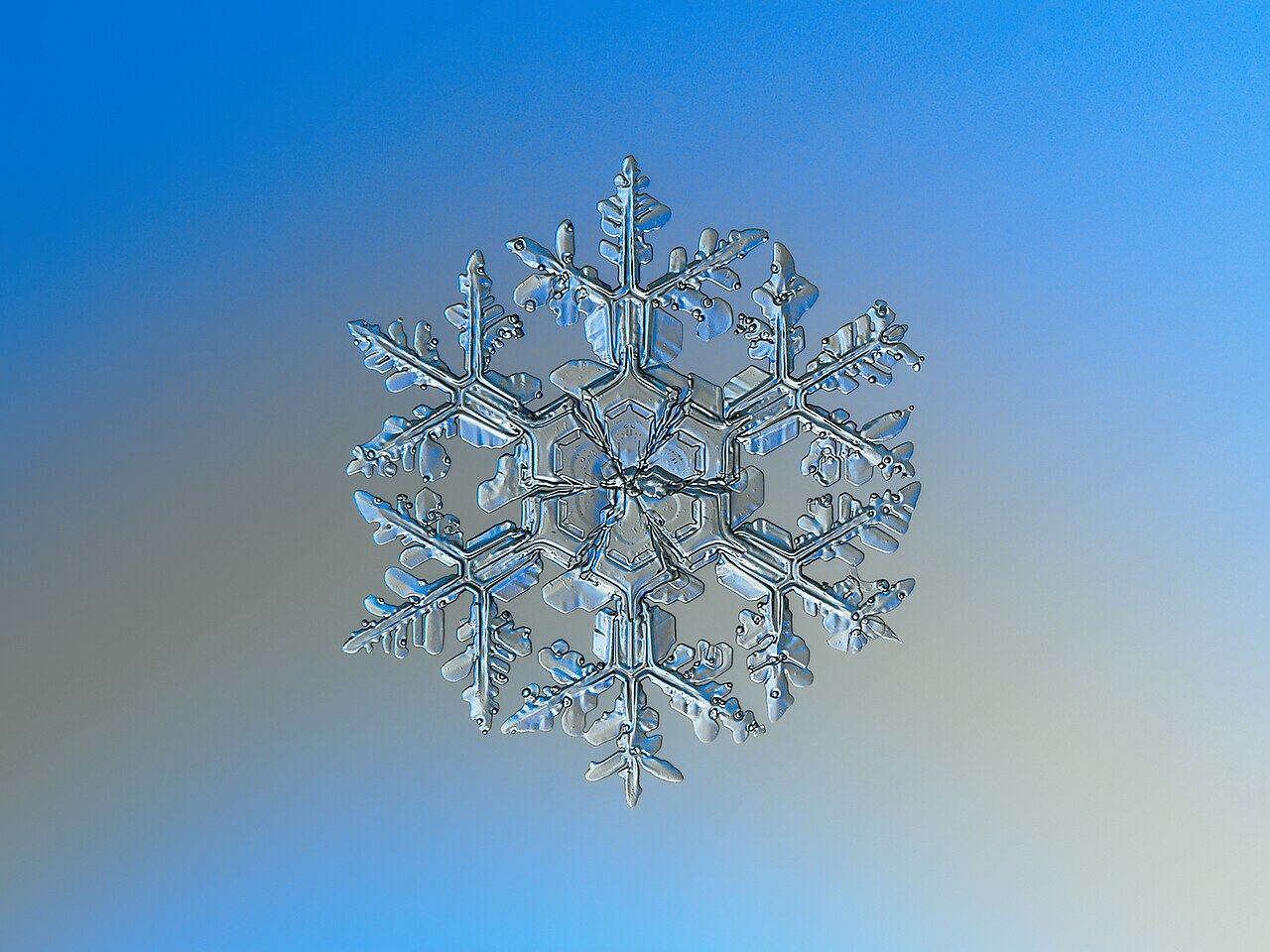
Because of hydrogen bonding, liquid water is densest at about 4 degrees Celsius. When it freezes it forms an open, six-sided crystal lattice that takes up about 9 per cent more space. So ice floats, insulating the water below. In winter, ponds freeze at the top, while fish survive in the 4-degree water at the bottom.
Water also soaks up heat. Its specific heat capacity, about 4.18 joules per gram per degree, is one of the highest of any common substance. That is why the oceans keep coastal climates mild and why your body, which is around 60 per cent water, can hold a steady temperature. Water dissolves more substances than almost any other liquid, which is why it carries food and messages round your body, and minerals round the planet.
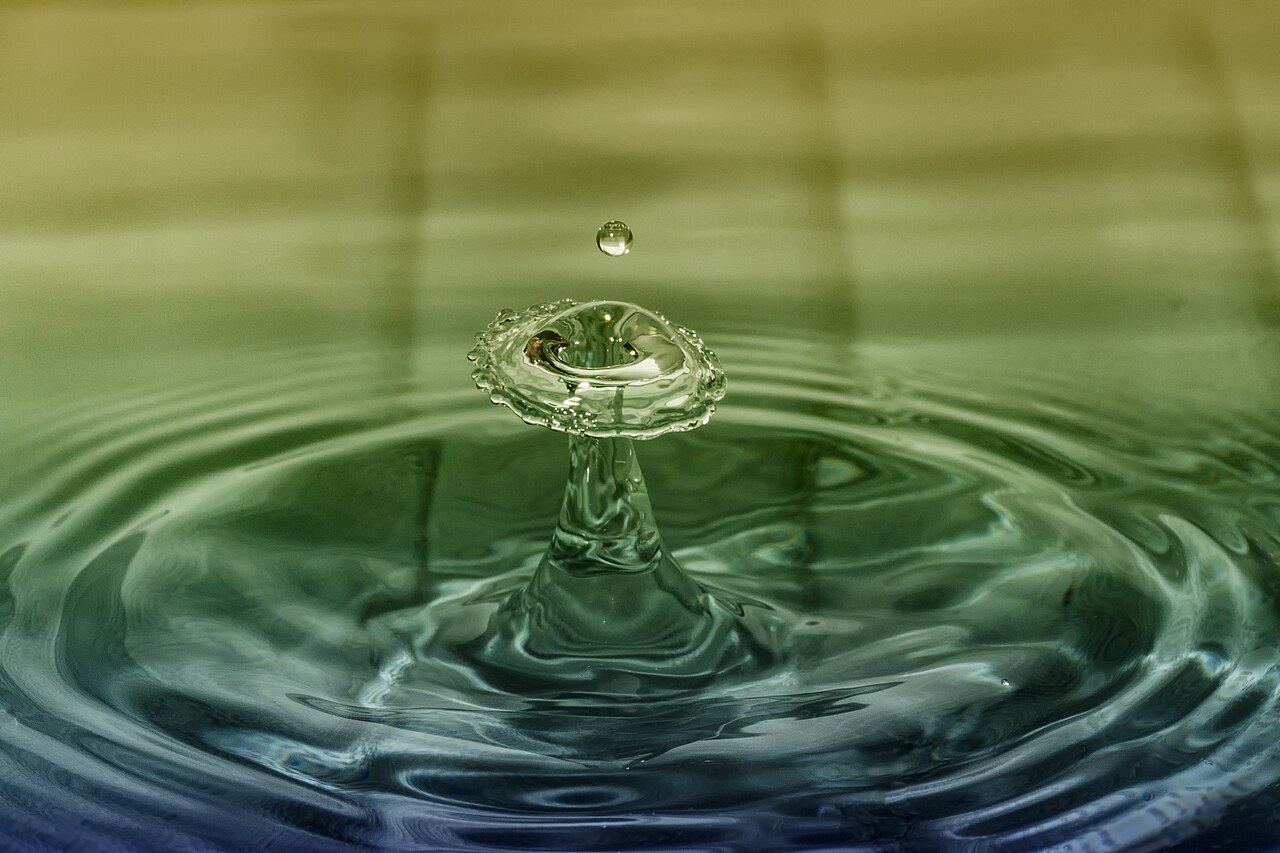
Its stickiness gives water surface tension strong enough for pond skaters to walk on, and lets it climb. Trees lift water up to the leaves through narrow tubes, pulled from above by evaporation. The tallest trees, around 115 metres, lift it higher than any mechanical suction pump could manage; a pump is limited to about 10 metres.
There is a lot of it and very little of it. About 71 per cent of the Earth's surface is covered by water, but about 97 per cent of the planet's water is salty. Of the fresh water, most is locked in ice caps, glaciers and deep underground. Less than 1 per cent of all the Earth's water is fresh water in lakes, rivers and accessible groundwater.
And where did it come from? In 2014 a study in Science modelled how heavy hydrogen (deuterium) forms in water ice. It concluded that between 30 and 50 per cent of the water in the Earth's oceans may be older than the Sun. It was made as ice in the cold cloud from which our Solar System formed. Whether Earth's water arrived mostly with the rocks that built the planet, or later on asteroids and comets, is still debated.
What each faith says
Judaism
“Ho, every one that thirsteth, come ye for water, And he that hath no money; Come ye, buy, and eat; Yea, come, buy wine and milk Without money and without price.”
Isaiah 55:1 · JPS 1917
Water is there in the second verse of the Torah: 'the spirit of God hovered over the face of the waters' (Genesis 1:2). Throughout the Hebrew Bible water stands for life and blessing. There is the well of Miriam that followed the Israelites in the desert. There are the rivers of Eden, and the call of Isaiah, 'come ye for water'. Rain is so precious that the Amidah prayer asks for it daily through the winter.
Water is also central to Jewish practice. Hands are washed in a set way before eating bread, netilat yadayim, 'lifting the hands', and the mikveh, a pool of natural water, is used for spiritual purification. The rabbis compared the Torah itself to water: it flows down to the lowest places, which they read as a lesson in humility (Ta'anit 7a).
Christianity
“but whoever drinks of the water that I will give him will never thirst again; but the water that I will give him will become in him a well of water springing up to eternal life.”
John 4:14 · WEB
For Christians, water is the sign of new birth in baptism, used in almost every Christian tradition; Quakers and the Salvation Army are the best-known exceptions. In John's Gospel, Jesus meets a Samaritan woman at a well. He speaks of 'living water' that becomes 'a well of water springing up to eternal life' (John 4:14). Christians take this to mean the life of God given to the believer.
St Francis of Assisi, in his Canticle of the Creatures (1225), praised God for 'Sister Water, who is very useful and humble and precious and pure'. Pope Francis took up the theme in Laudato Si' (2015), calling access to safe drinking water 'a basic and universal human right'.
Islam
“Have ye observed the water which ye drink? Is it ye who shed it from the raincloud, or are We the Shedder? If We willed We verily could make it bitter. Why then, give ye not thanks?”
Qur'an 56:68-70 · Pickthall (1930)
The Qur'an mentions water more than sixty times. It is a sign of mercy, sent down 'And we send down from the sky water in measure, and We give it lodging in the earth, and lo! We are Able to withdraw it.' (23:18, Pickthall), brought down from clouds, stored in the earth and turned into rivers. God's throne is described as being 'upon the water' before the creation of the heavens and the earth (11:7). Muslims perform ablution (wudu) with water before each prayer, and drinking water to those who thirst is praised as one of the best charities.
The Qur'an also asks people to notice how easily it could be otherwise: 'Have ye observed the water which ye drink? Is it ye who shed it from the raincloud, or are We the Shedder? If We willed We verily could make it bitter. Why then, give ye not thanks?' (56:68-70, Pickthall). Water, in Islamic teaching, is never just a resource. It is a daily gift.
Same and different
All three faiths treat water as a sign of life and blessing. Each uses it for purification, in the mikveh, baptism and wudu, 'ablution', and sees giving water to the thirsty as a holy act. Their rites mean different things. Jewish immersion restores ritual purity. Christian baptism marks a new birth in Christ and is usually done once. Muslim ablution prepares the body for each prayer, several times a day.
A moment to reflect
- What would change in your day if water stopped being something you never think about?
- When has washing, a shower, a swim or rain on your face, made you feel new?
- If ice sank, life might never have flourished on Earth. Does that kind of 'lucky' fact make you wonder?
- Who in the world lacks safe water, and what could your community do about it?
Watch
BBC Ideas explains why water is 'really, really weird' in three minutes.
TED-Ed on why ice floats, and why that matters for life.
Veritasium on how trees pull water to the top of a 100-metre trunk.
A short TED-Ed animation on polarity, the root of water's odd behaviour.
Do it together
Count how many drops of water you can pile onto a coin before it spills, using a dropper or straw. Most people guess five; the answer is often more than twenty, thanks to surface tension.
Carry a litre of water each for a kilometre, then talk about the millions of people who walk much further every day for water. Many charities (for example WaterAid) offer free school resources.
Invite Jewish, Christian and Muslim neighbours to explain hand-washing before bread, the baptismal font, and wudu. Look at what is similar and what is different, and why each matters to the people who do it.
Go deeper
- Water: anomalous properties (London South Bank University, Martin Chaplin) · article
- Where is Earth's water? (USGS) · article
- The ancient heritage of water ice in the Solar System (Science, 2014) · paper
- Surah al-Waqi'ah 56:68-70 (Quran.com) · scripture
- John 4 (Bible Gateway, WEB) · scripture
- Isaiah 55 (JPS 1917) on Sefaria · scripture
In pictures
Try this · KS2 · 10 min · Science
The floating paper clip
You need: a bowl of water, a paper clip, a small square of tissue, washing-up liquid
- Lay the paper clip on the tissue and float the tissue on the water.
- Wait: the tissue sinks, and the metal clip stays floating on the skin of the water.
- Touch the water near the clip with a drop of washing-up liquid.
- What happens? The water's skin breaks.
Water breaks almost every rule a liquid should follow, and life depends on its oddness.
Sources (8)
- Water molecule bond angle of about 104.5 degrees; hydrogen bonding: Chaplin, Water Structure and Science (LSBU)
- Water is densest at about 4 °C and expands about 9% on freezing: USGS Water Science School, Water density
- Specific heat of water about 4.18 J/g°C: USGS, Heat capacity and water
- Adult human body about 60% water: USGS, The water in you
- Tallest trees around 115 m; water pulled up by transpiration: Koch et al., Nature 428, 851 (2004)
- 71% of surface covered by water; 97% saline; under 1% accessible fresh water: USGS, How much water is there on Earth?
- 30-50% of Earth's ocean water may predate the Sun: Cleeves et al., Science 345, 1590 (2014)
- Laudato Si' on access to safe water as a basic human right (para 30): Vatican, Laudato Si' (2015)