Drop a stone into the Challenger Deep, the Pacific's deepest point, and it would fall for about an hour. It would touch bottom nearly 11 kilometres down. If you put Mount Everest there, its peak would still be more than 2 kilometres under water.
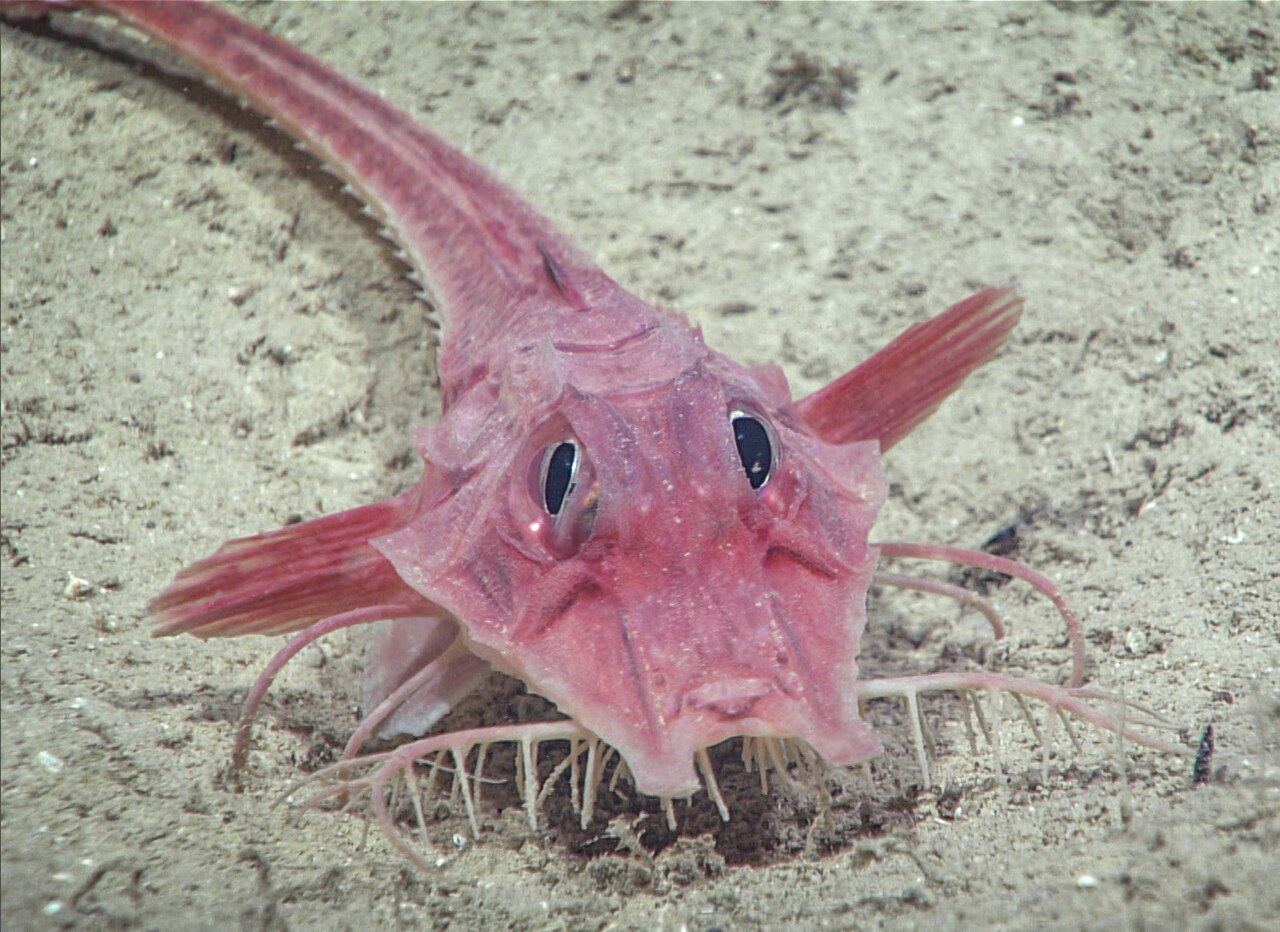
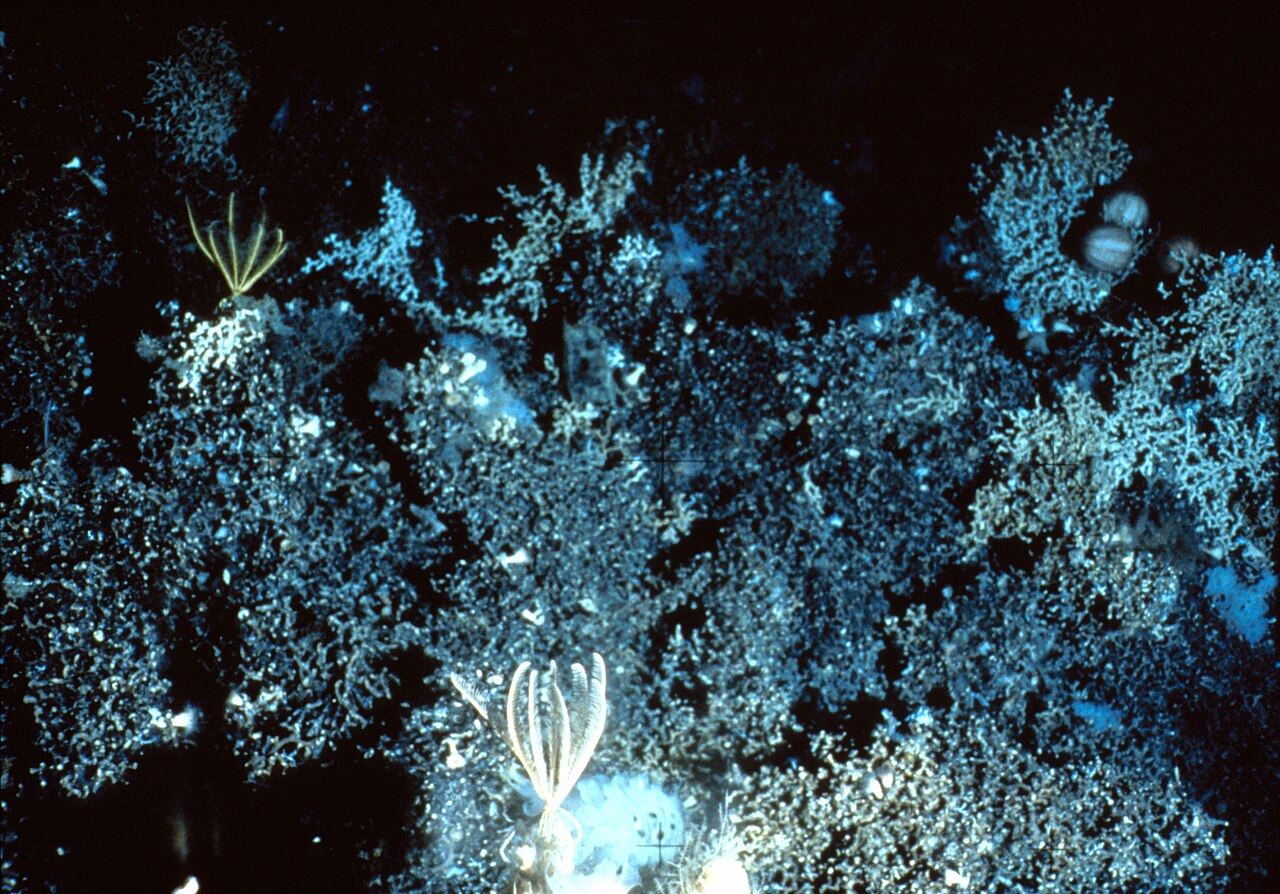
Down in that dark, where sunlight never reaches, the water is near freezing and the pressure is more than a thousand times what we feel at the surface. And yet it is full of life: fish that make their own light, worms around volcanic vents, creatures nobody has yet named. The deep sea is the largest living space on Earth, and most of it has never been seen.
“Or as darkness on a vast, abysmal sea. There covereth him a wave, above which is a wave, above which is a cloud. Layer upon layer of darkness. When he holdeth out his hand he scarce can see it. And he for whom Allah hath not appointed light, for him there is no light.”
Qur'an 24:40 · Pickthall (1930)
This verse comes straight after the Verse of Light (24:35) and is a parable about the deeds of those who reject faith. It pictures layers of darkness with no light to guide them. Some modern writers claim it describes internal ocean waves discovered by science. We do not make that claim. It is a picture of spiritual darkness, drawn from the sea, and the real deep sea makes it vivid.
What science shows
The ocean covers about 71 per cent of the Earth's surface and holds about 97 per cent of its water. Its average depth is about 3,700 metres. The deepest point known, the Challenger Deep in the Mariana Trench, is about 10,935 metres down. Only a handful of people have ever been there; far more people have been to space.
We know surprisingly little about it. The international Seabed 2030 project reported that by 2024 only about a quarter of the ocean floor had been mapped in high detail. The US National Oceanic and Atmospheric Administration (NOAA) says that most of our ocean remains unexplored. New species are described every year, including many from the deep.
Light fades fast. In clear water, enough sunlight for photosynthesis reaches only the top 200 metres or so. A faint blue twilight can reach down to about 1,000 metres. Below that, in the 'midnight zone', there is no sunlight at all. Yet a 2017 study of deep-sea video found that about three quarters of animals in the open ocean, from the surface down to 4,000 metres, can make their own light. This is called bioluminescence.
The ocean keeps the planet liveable. Tiny drifting phytoplankton produce roughly half of the oxygen made on Earth each year. The ocean has absorbed about a quarter of the carbon dioxide released by human activity and more than 90 per cent of the extra heat trapped by greenhouse gases. That slows warming on land, but it is making seawater warmer and more acidic.
It is always moving. Surface currents are driven by wind, such as the Gulf Stream that keeps Britain milder than its latitude would suggest. They link to slow deep currents driven by differences in temperature and saltiness. Together they form a 'global conveyor belt'; a single parcel of water can take around a thousand years to complete the circuit.
In 1977 scientists in the submersible Alvin found hydrothermal vents on the Pacific floor. These are hot springs where life thrives with no sunlight at all, feeding on chemical energy from the Earth's interior. Some researchers think life itself may have begun at places like these. The ocean is also home to the largest animal ever known to have lived, the blue whale, up to about 30 metres long.
What each faith says
Judaism
“Hast thou entered into the springs of the sea? Or hast thou walked in the recesses of the deep?.”
Job 38:16 · JPS 1917
Psalm 104 marvels at 'yonder sea, great and wide', full of 'creeping things innumerable', with ships on its surface and Leviathan playing in it. In the Book of Job, God asks: 'Hast thou entered into the springs of the sea? Or hast thou walked in the recesses of the deep?' (Job 38:16). It is a question no human could answer yes to for thousands of years.
The Mishnah (Berakhot 9:2) records a special blessing for seeing the ocean: 'Blessed are You... who made the great sea', said when someone sees it after a long time. The story of Jonah, read on Yom Kippur, takes its hearers into 'the heart of the seas' (Jonah 2:4), where the prophet prays from the depths. And after the crossing of the Red Sea, Miriam took up a timbrel and led the women in song and dance (Exodus 15:20-21). Many Jewish communities now celebrate that moment on Shabbat Shirah.
Christianity
“He awoke and rebuked the wind, and said to the sea, ‘Peace! Be still!’ The wind ceased and there was a great calm. He said to them, “Why are you so afraid? How is it that you have no faith?” They were greatly afraid, and said to one another, “Who then is this, that even the wind and the sea obey him?”
Mark 4:39-41 · WEB
The Gospels tell of Jesus calming a storm on the Sea of Galilee. The frightened disciples ask, 'Who then is this, that even the wind and the sea obey him?' (Mark 4:41). For Christians, the story shows Jesus sharing God's authority over the chaotic waters that the Hebrew Bible says only God can command.
Psalm 107:23-24 says that those who 'go down to the sea in ships' see 'the LORD's deeds, and his wonders in the deep' (Psalm 107:24, WEBBE). Sailors' chapels and the Anglican Mission to Seafarers, founded in 1856, carry that tradition on. Many Christians see the ocean's beauty and danger together as pointing to a God who is both awesome and caring.
Islam
“Say: Though the sea became ink for the Words of my Lord, verily the sea would be used up before the words of my Lord were exhausted, even though We brought the like thereof to help.”
Qur'an 18:109 · Pickthall (1930)
The Qur'an often speaks of the sea as a sign of God's mercy. 'And He it is Who hath constrained the sea to be of service that ye eat fresh meat from thence, and bring forth from thence ornaments which ye wear. And thou seest the ships ploughing it that ye (mankind) may seek of His bounty and that haply ye may give thanks.' (16:14, Pickthall). It also uses the sea to describe God's endless words. 'Say: Though the sea became ink for the Words of my Lord, verily the sea would be used up before the words of my Lord were exhausted, even though We brought the like thereof to help.' (18:109, Pickthall).
The Qur'an describes the danger of storms at sea, when people cry out to God sincerely, and then forget Him once they reach land (10:22-23, 31:32). Muslim scholars have drawn from this a lesson about remembering God in safety as well as in fear. The Prophet Muhammad ﷺ (peace be upon him) said of the sea: 'Its water is pure and its dead creatures are lawful' (Abu Dawud 83).
Same and different
All three faiths see the sea as both a gift and a place of awe and danger. Each tells the story of Jonah, known in Islam as Yunus, who gives his name to a chapter of the Qur'an. Judaism is the one that reads his story aloud every Yom Kippur. They agree that God alone rules the deep. Christianity adds its belief that Jesus showed that same authority in calming the storm; in Islam, Jesus is a prophet and such signs happen by God's permission.
A moment to reflect
- We have mapped Mars better than our own sea floor. What is close to you that you have never really explored?
- What does it feel like to stand at the edge of the sea?
- Qur'an 24:40 uses deep-sea darkness as a picture of being without guidance. When have you felt in the dark?
- If most of the ocean is unexplored, what else in the world might we be overlooking?
Watch
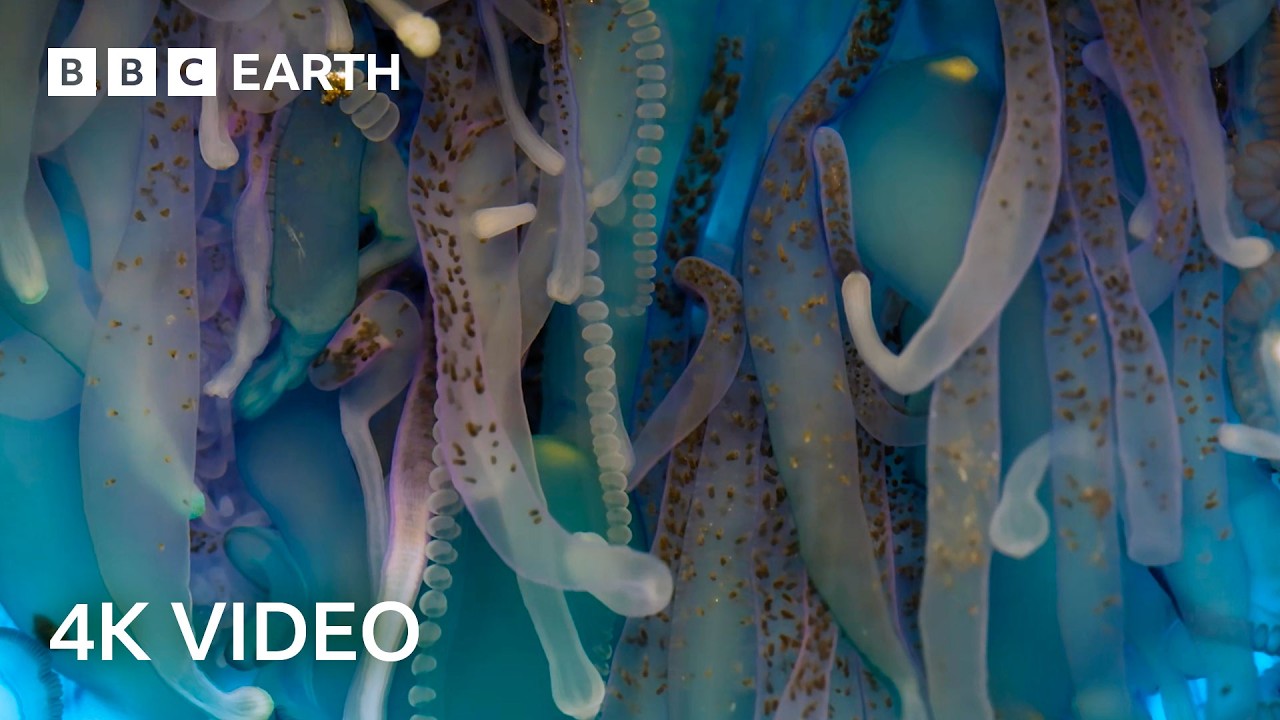 Travel to the Depths of Our Mysterious Oceans | 4K UHD | Blue Planet II | BBC Earth · BBC EarthPlays on “If the sea were ink” →
An hour in the deep with Blue Planet II, from BBC Earth.
TED-Ed gives a sense of how big and deep the ocean really is.
NASA's Perpetual Ocean: real current data turned into a moving painting.
TED-Ed explains how ocean currents work, including the global conveyor belt.
Do it together
Organise a beach or riverside clean-up with neighbours of different faiths, with groups such as the Marine Conservation Society. Finish by reading Psalm 104:25, Mark 4:39-41 and Qur'an 16:14 by the water.
Poke three holes at different heights in a plastic bottle, fill it with water and watch which jet shoots furthest. The deepest one does, because pressure increases with depth. Imagine 11 kilometres of it.
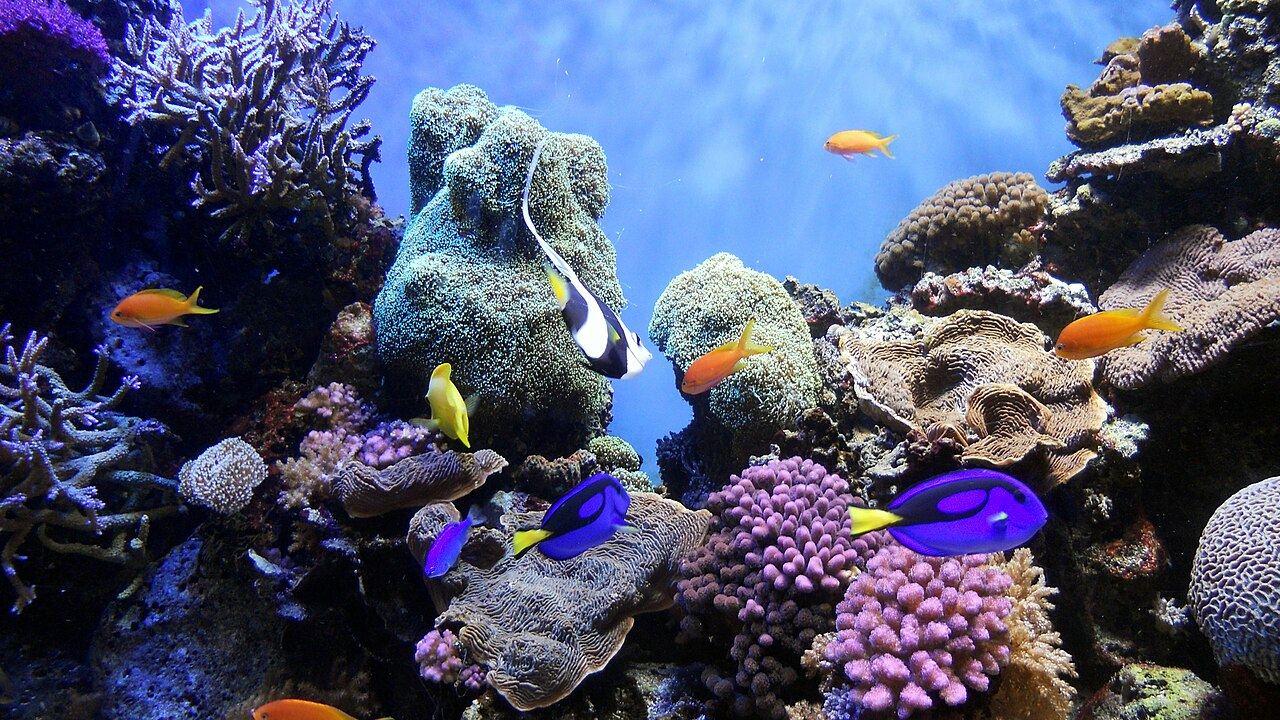
Visit a public aquarium such as the National Marine Aquarium in Plymouth or SEA LIFE centres, and look for animals that make their own light. Talk about life in places with no sunlight.
Go deeper
- How much of the ocean have we explored? (NOAA Ocean Service) · article
- Seabed 2030 (Nippon Foundation-GEBCO) · article
- Bioluminescence in the deep sea (Martini and Haddock, 2017) · paper
- Surah an-Nur 24:39-40 (Quran.com) · scripture
- Psalm 104 (Sefaria) · scripture
- Mark 4 (WEB) on Bible Gateway · scripture
In pictures
Try this · KS2 · 15 min · Science
The floating egg
You need: two glasses of water, an egg, salt, a spoon
- Put the egg in plain water. Does it sink or float?
- Stir lots of salt into the second glass, a spoonful at a time.
- Put the egg in. Keep adding salt until it floats.
- Why does salt water hold things up better?
Safety: Wash hands after handling raw egg.
The ocean covers seven tenths of the planet and makes half its oxygen; we have hardly begun to explore it.
Sources (10)
- Ocean covers 71% of surface and holds about 97% of Earth's water: NOAA Ocean Service / USGS
- Average ocean depth about 3,700 m; Challenger Deep about 10,935 m: NOAA Ocean Service, How deep is the ocean?
- About a quarter of the sea floor mapped in high resolution (2024): Seabed 2030
- Most of the ocean remains unexplored: NOAA Ocean Service
- Sunlight zones: photic to about 200 m, no light below about 1,000 m: NOAA Ocean Service, How far does light travel in the ocean?
- About 76% of observed open-ocean animals are bioluminescent: Martini and Haddock, Scientific Reports 7, 45750 (2017)
- Phytoplankton produce about half of Earth's oxygen: NOAA Ocean Service
- Ocean has absorbed over 90% of excess heat and about a quarter of human CO2: NASA Climate, Ocean warming
- Global conveyor belt takes about 1,000 years: NOAA Ocean Service, Thermohaline circulation
- Hydrothermal vents discovered by Alvin in 1977: Woods Hole Oceanographic Institution