In May 1860 Charles Darwin wrote to his friend Asa Gray, a Christian botanist at Harvard. Darwin was troubled. “There seems to me too much misery in the world,” he wrote. He could not believe that a kind and all-powerful God “would have designedly created the Ichneumonidæ with the express intention of their feeding within the living bodies of caterpillars.” Ichneumons are wasps that lay their eggs inside other insects. Nine years earlier his own daughter Annie had died of a fever, aged ten.
Then, in the very next lines, Darwin wrote: “I cannot anyhow be contented to view this wonderful universe & especially the nature of man, & to conclude that everything is the result of brute force.” Disease raises the question of God as sharply as anything does. It is also the reason believers of every faith have built hospitals for two thousand years. Here is what the science says about why bodies break, the strongest answers believers give, the sceptic's reply, and each tradition's call to heal.
“God has not sent down any disease without also sending down its cure.”
Sahih al-Bukhari 5678 · our rendering
A saying of the Prophet Muhammad. Muslim physicians took it as a command to search: if every disease has a cure, finding it is a duty. The Hebrew Bible calls God “the LORD that healeth thee” (Exodus 15:26, JPS 1917), and the Gospels are full of healings.
Heard in all three
“And when I sicken, then He healeth me.”
Qur'an 26:80 · Pickthall (1930) (the words of Abraham)
Why bodies break
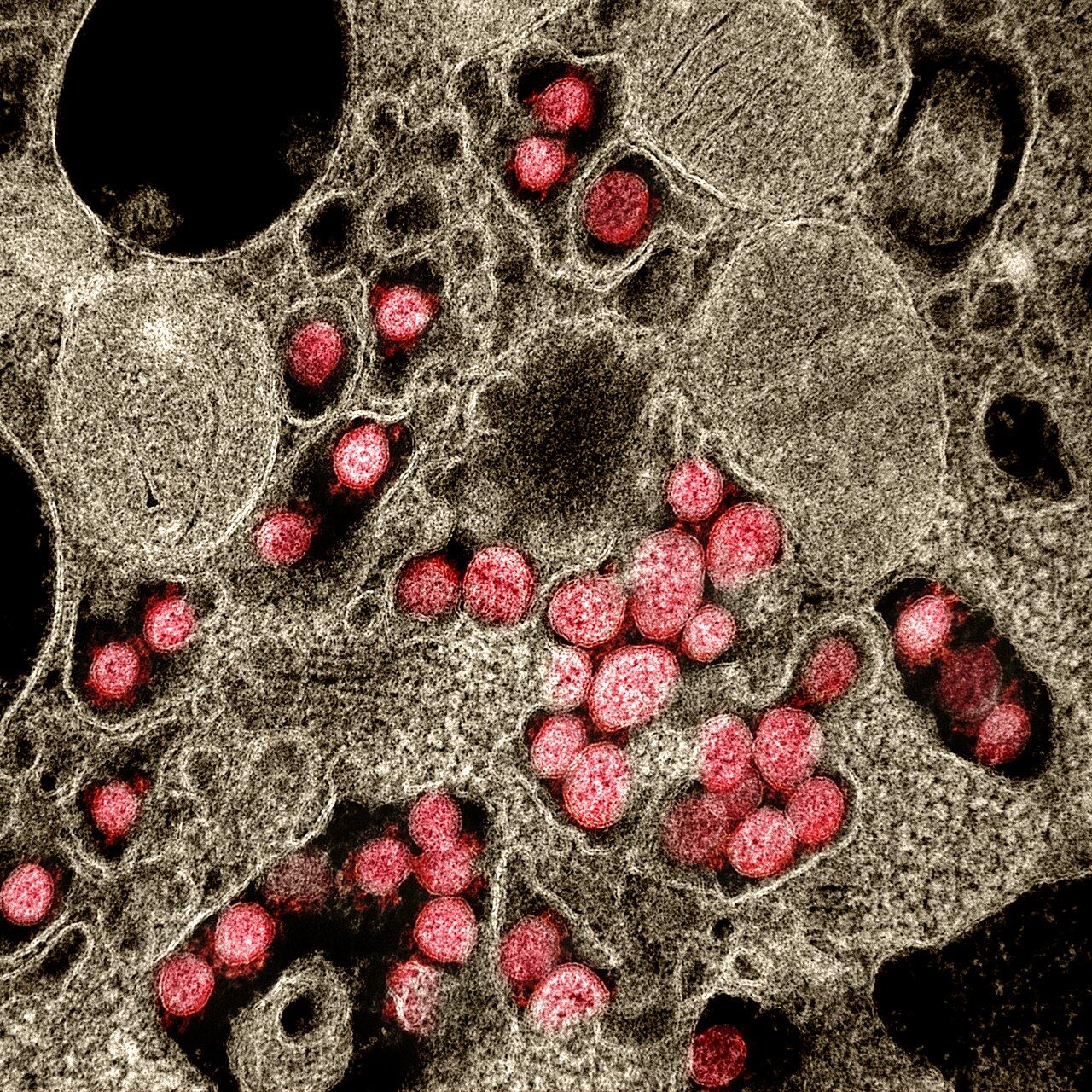
Most microbes are not our enemies. A typical adult carries about 38 trillion bacteria, roughly one for every human cell, and most of them help us digest food and train our immune system. Of the countless species of microbe on Earth, about 1,400 are known to cause disease in people, and around 58 per cent of those come to us from animals.
The same thing that makes life possible also makes illness possible. Every time a cell divides, it copies three billion letters of DNA. The copying is astonishingly accurate, but not perfect, and those small changes are the raw material of evolution. Your immune system deliberately shuffles its own genes to make billions of different antibodies. In 2017 the scientists Cristian Tomasetti and Bert Vogelstein estimated that about two-thirds of the mutations found in cancers come from random copying errors, rather than from what people inherit or what they are exposed to. Other researchers dispute the exact share, and about 40 per cent of cancers can still be prevented.
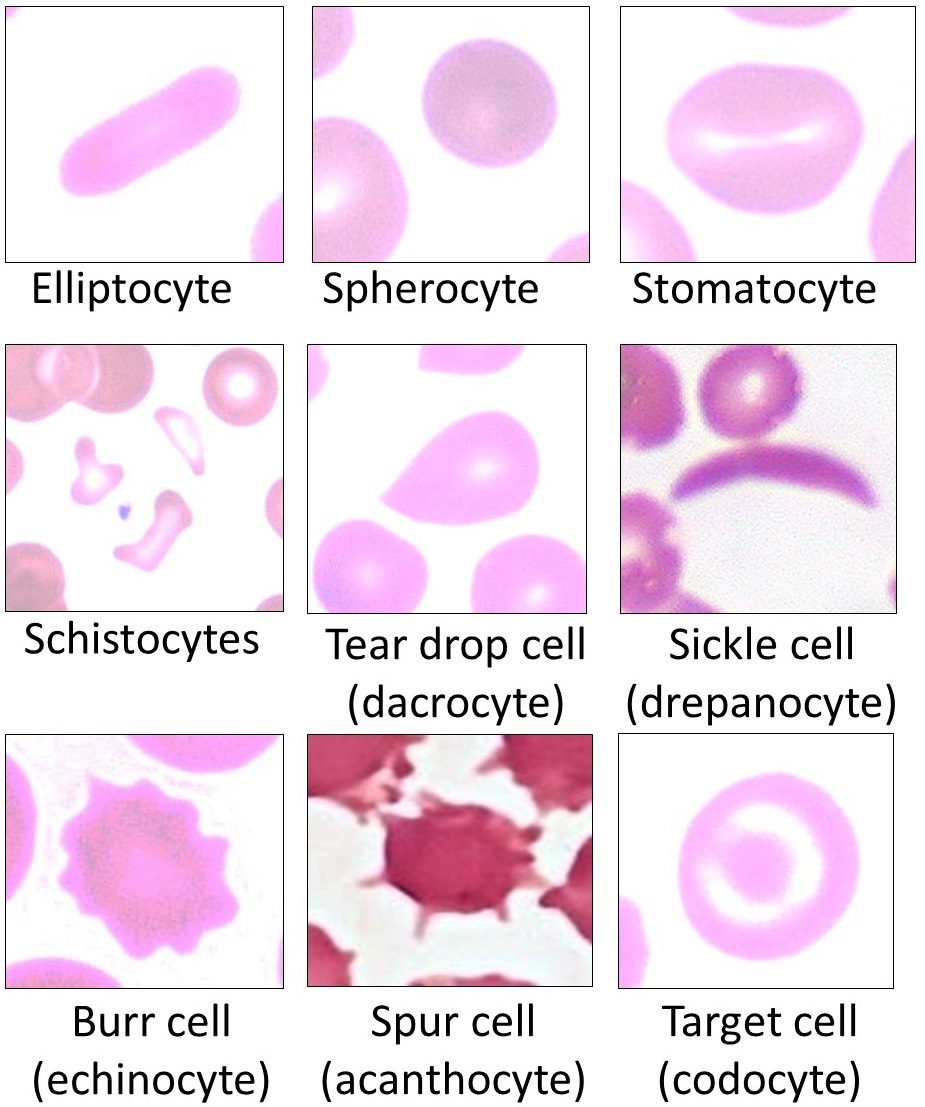
Bodies are full of trade-offs. One copy of the sickle-cell gene protects against malaria, but two copies cause a painful disease. Fever and inflammation fight infection, but the same defences can turn on the body and cause allergies and autoimmune illness. A body flexible enough to adapt is also a body that can go wrong.
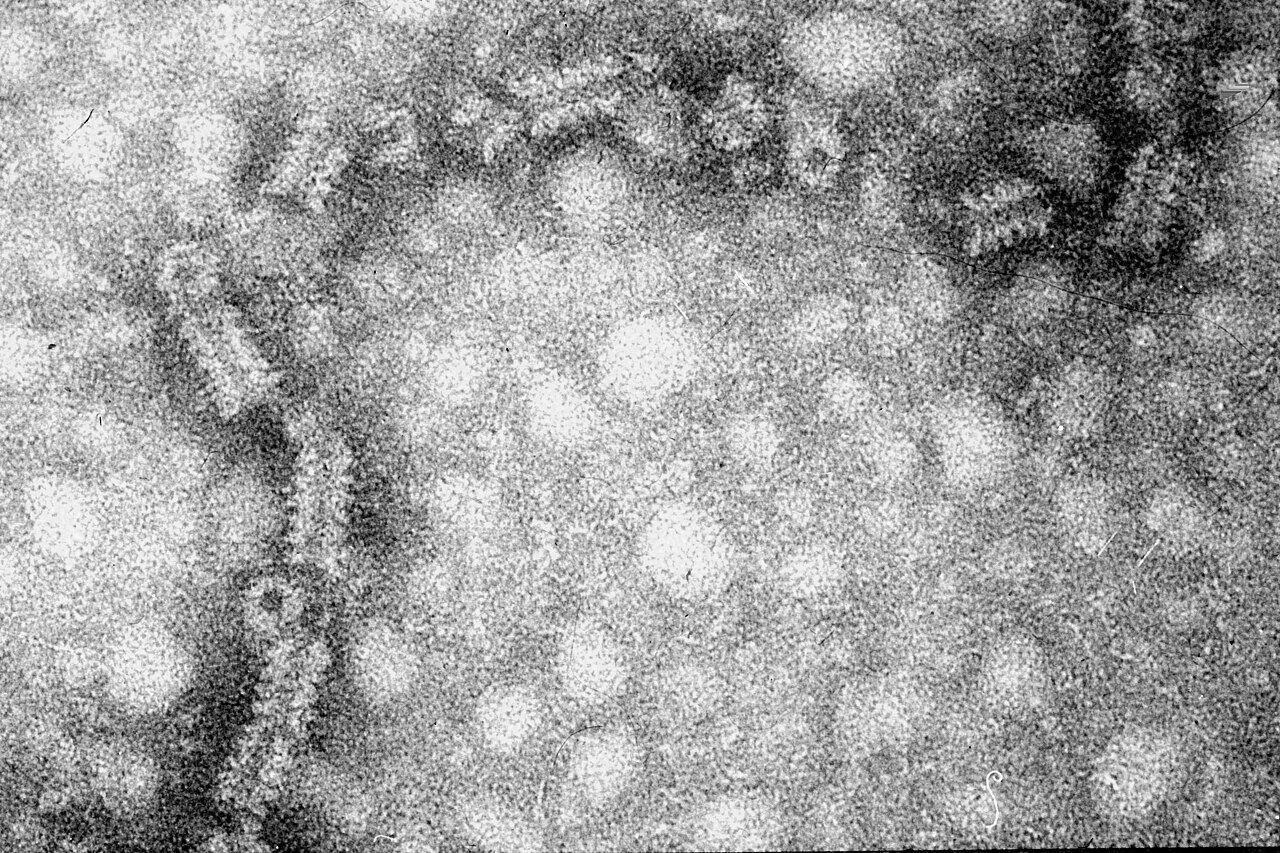
Then there is the healing. Smallpox killed an estimated 300 million people in the twentieth century alone. In 1980 the World Health Organization declared it eradicated. The first vaccine had come from Edward Jenner, a country doctor and son of a Gloucestershire vicar.
The strongest case for believers runs like this. A world with stable laws, living things that grow and change, and a body that can adapt cannot also be a world where nothing ever goes wrong. The physicist and Anglican priest John Polkinghorne called this “a world allowed to make itself”. In such a world disease is the shadow side of life's freedom, not a punishment. Medicine, on this view, is people joining in the work of making creation whole.
The sceptic replies that an all-powerful God could have made a world of life without parasites, childhood leukaemia or malaria. Darwin's wasp, they say, looks like what you would expect from blind nature, not from a loving designer. Believers answer that we cannot know which worlds were possible, and that God's goodness is shown in more than this life. The question stays open.
Watch
Watch more
 The Immune System Explained I – Bacteria Infection · Kurzgesagt – In a NutshellPlays on “The body that heals itself” →
What each faith says
Judaism
“Ye shall therefore keep My statutes, and Mine ordinances, which if a man do, he shall live by them: I am the LORD.”
Leviticus 18:5 · JPS 1917
In Jewish law, saving a life, pikuach nefesh, overrides almost every other commandment. The Talmud reads the verse below and adds: “live by them, and not die by them” (Yoma 85b). So the Sabbath is broken to drive someone to hospital, and the Yom Kippur fast is broken for the sick. The Talmud also finds in Exodus 21:19 “permission for the physician to heal” (Bava Kamma 85a). Healing does not interfere with God's plan; it carries it out.
Maimonides, the great twelfth-century rabbi, was also court physician in Cairo and wrote medical books in Arabic. In synagogues today the Mi Sheberach prayer asks for “healing of the soul and healing of the body” for the sick, by name.
Christianity
“Jesus answered, “This man didn't sin, nor did his parents, but that the works of God might be revealed in him.”
John 9:3 · World English Bible (British Edition), public domain
When Jesus's disciples met a man born blind, they asked whose sin had caused it. Jesus rejected the question. Christians have taken his answer, quoted below, as a refusal to blame the sick. Jesus spent much of his ministry healing, and sent his followers to “heal the sick” (Luke 10:9). He counted visiting them as visiting him: “I was sick and you visited me” (Matthew 25:36).
Around 369, Basil, bishop of Caesarea in what is now Turkey, built a great complex to care for the sick and the poor. It is often called the first hospital. In London, St Bartholomew's was founded in 1123 and is still treating patients. Florence Nightingale believed God had called her to serve, and the hospice movement grew from Christian faith.
Islam
“And when I sicken, then He healeth me.”
Qur'an 26:80 · Pickthall (1930) (the words of Abraham) · in brief
The Prophet Muhammad told people to seek treatment, and gave a rule for epidemics: if you hear of plague in a land, do not go into it, and if it breaks out where you are, do not leave (Bukhari 5728). When the caliph Umar heard of plague in Syria, he turned his army back. Islam also honours the sick. A believer who dies of plague is counted a martyr (Bukhari 2829), and illness patiently borne is said to wipe away sins.
Muslim lands built great hospitals called bimaristans. The doctor al-Razi, who died around 925, was the first to tell smallpox from measles. The Mansuri hospital in Cairo, opened in 1284, treated rich and poor, Muslim and non-Muslim, free of charge. Islamic theology does not call disease good in itself. In a prayer the Prophet taught, Muslims say to God that “evil is not to be ascribed to You” (Muslim 771).
Without religion
“I cannot persuade myself that a beneficent & omnipotent God would have designedly created the Ichneumonidæ with the express intention of their feeding within the living bodies of caterpillars, or that a cat should play with mice.”
Charles Darwin, letter to Asa Gray, 22 May 1860 · original English
For many non-religious people, disease is what you would expect from a world shaped by unguided evolution. Viruses and parasites are simply living things doing well at our expense. That is why Darwin's letter still matters. The humanist answer to disease does not try to explain it. It answers it with medicine, research, public health and care, offered to everyone because everyone shares the same fragile body.
Sikhi
“Suffering is the medicine, and comfort the disease.”
Guru Granth Sahib, ang 469 (Guru Nanak, Asa di Var) · our rendering
The seventh Guru, Guru Har Rai, kept a herbal garden and a dispensary at Kiratpur, and Sikh tradition says he gave medicine even to the family of the emperor. His son, Guru Har Krishan, became Guru at five. In 1664, during an epidemic in Delhi, Sikh tradition remembers the child Guru tending the sick. He caught smallpox himself and died before his eighth birthday. Gurdwara Bangla Sahib stands where he stayed.
Seva, selfless service, is at the heart of Sikh life, and caring for the sick is among its highest forms. Guru Nanak's saying below turns the usual view around: comfort can make us forget God, while suffering can bring us back. Sikhs do not take it as a reason to refuse treatment.
Hindu traditions
Ayurveda, the ancient Indian science of life, has been practised for over two thousand years. Hindus honour Dhanvantari, the physician of the gods, on Dhanteras, two days before Diwali. Many Hindus link illness to karma, the fruit of past actions. Many teachers also warn against ever blaming the sick, and say that the duty of the healthy is seva: to serve, to give medicine and to pray for healing.
Beyond the Abrahamic faiths
Buddhist scriptures tell of a monk lying sick with dysentery, ignored by the others. The Buddha and his attendant Ananda washed him and laid him on a bed themselves. Then the Buddha told the monks: whoever would care for me should care for the sick (Vinaya, Mahavagga 8.26). Buddhists often call the Buddha the great physician. His Four Noble Truths follow a doctor's method: name the illness, find its cause, say it can be cured, and give the treatment.
Same and different
Traditions differ on why disease exists. Some see it as a test, some as a consequence of a world allowed to make itself, some as karma, and non-religious people see it as nature with no purpose. On what to do, they agree almost completely. Jewish law sets aside the Sabbath to save a life. Jesus refused to blame the blind man. The Prophet Muhammad said every disease has a cure, Sikh Gurus tended the sick, and the Buddha washed a sick monk with his own hands. Humanists put their faith in medicine. Every one of them says: heal.
A moment to reflect
- Darwin found wasps hard to square with a loving God, and the universe as a whole hard to explain without one. Can both feelings be true at once?
- The same DNA copying that lets life change also causes cancer. Would you choose a world without either?
- Why do you think so many religions treat caring for the sick as caring for God?
- Guru Nanak said comfort can be a disease. What do you think he meant?
Do it together
Find out who founded your nearest old hospital or hospice. Many began in a monastery, a church, a synagogue's charity or a Victorian benefactor's faith. Make a timeline from Basil's hospital (around 369) to the Mansuri hospital (1284), St Bartholomew's (1123) and your local one.
Visiting the sick is a duty in Judaism (bikur cholim), Christianity, Islam (iyadat al-marid), Sikhi and Buddhism. Plan a visit or cards for a care home together. Each person brings one blessing for healing from their own tradition.
Find three microbes that help us and three that harm us. Then talk it through: does knowing that most germs are friends change how you think about disease?
Go deeper
- Darwin's letter to Asa Gray, 22 May 1860 (Darwin Correspondence Project) · document
- Sahih al-Bukhari 5678 (Sunnah.com) · scripture
- Pikuach nefesh (My Jewish Learning) · article
- Smallpox (World Health Organization) · article
- Revised estimates for the number of human and bacteria cells in the body (PLOS Biology, 2016) · research
- Random DNA errors and cancer (ScienceDaily, 2017) · article
In pictures
Sources (16)
- Darwin to Asa Gray, 22 May 1860, including ‘brute force’ sentence: Darwin Correspondence Project, DCP-LETT-2814
- ‘There is no disease that Allah has created, except that He also has created its treatment’: Sahih al-Bukhari 5678
- Plague and drowning deaths counted as martyrdom: Sahih al-Bukhari 2829
- ‘Evil is not to be ascribed to You’ (wa al-sharru laysa ilayk): Sahih Muslim 771
- Plague: do not enter or leave the land: Sahih al-Bukhari 5728
- Exodus 15:26 and Leviticus 18:5 text: Sefaria, JPS 1917
- ‘Live by them, and not die by them’: Babylonian Talmud, Yoma 85b (Sefaria)
- Permission for the physician to heal: Babylonian Talmud, Bava Kamma 85a (Sefaria)
- John 9:3, Luke 10:9, Matthew 25:36 text: World English Bible (British Edition) via bible-api.com
- About 38 trillion bacteria and 30 trillion human cells: Sender, Fuchs and Milo, PLOS Biology (2016)
- 1,407 human pathogen species, 58% zoonotic: Woolhouse and Gowtage-Sequeria, Emerging Infectious Diseases 11 (2005)
- 66% copying errors, 29% environment, 5% inherited; about 40% of cancers preventable: Johns Hopkins via ScienceDaily (Tomasetti and Vogelstein, Science 2017)
- Smallpox eradication 1980; about 300 million deaths in the twentieth century: World Health Organization
- Guru Har Krishan died of smallpox in 1664 before his eighth birthday: Wikipedia, Guru Har Krishan
- ‘Dukh daru sukh rog bhaiaa’: Guru Granth Sahib ang 469, SikhiToTheMax
- The Buddha tends the sick monk (Mahavagga VIII.26): Sacred Books of the East vol. 17, Rhys Davids and Oldenberg (1882)