Philosophy This is a question for reasoning, not for experiment.
A Sunday congregation in Cairo, Amman or Bethlehem prays to Allah. Walk into a church there and you will hear it. Open a Bible in Arabic and the first verse reads: “In the beginning Allah created the heavens and the earth.” Open the Torah translation made by Rabbi Saadia Gaon in tenth-century Baghdad, and he uses Allah too.
So the word is shared. But is the God the same? This is not an easy question, and it has split friends, colleges and even churches. In 2015 a professor at a Christian college in Illinois lost her job after saying yes. Here are the honest answers, from inside each faith, with no winner picked.
“And argue not with the People of the Scripture unless it be in (a way) that is better, save with such of them as do wrong; and say: We believe in that which hath been revealed unto us and revealed unto you; our God and your God is One, and unto Him we surrender.”
Qur'an 29:46 · Pickthall (1930)
“People of the Book” is the Qur’an’s name for Jews and Christians, who had received scripture before. This verse, from a late Makkan chapter, sets the tone for how Muslims are to speak with them. The Hebrew Bible’s great statement of faith, the Shema, is quoted by Jesus in the Gospels: “Hear, O Israel: the LORD our God, the LORD is one” (Deuteronomy 6:4, JPS 1917; Mark 12:29).
What history, language and numbers show
Start with the word. Allah is the Arabic for “God”, almost certainly from al-ilah, “the God”. It is a close cousin of the Hebrew Elohim and Eloah and the Aramaic Elaha, the word Jesus himself would have used. Linguists trace them all to an ancient Semitic root, il or el. A Christian inscription carved on a church lintel at Zabad in Syria in 512 CE uses a form of the word, a century before the Qur’an.
Then the numbers. In 2025 the Pew Research Center estimated that about 2.3 billion people, 28.8% of the world, are Christian, and about 2.0 billion, 25.6%, are Muslim. Jews number about 15 million. Together, more than half of humanity traces its faith back to Abraham (peace be upon him). In England and Wales, the 2021 Census counted 46.2% Christians, 6.5% Muslims and 0.5% Jews.
History shows deep connections and real differences. The Qur’an names Abraham, Moses, David, Jesus and Mary (peace be upon them) and many other figures of the Bible. Jewish and Muslim philosophers in Spain and Baghdad wrote in Arabic and read one another; Maimonides wrote his Guide for the Perplexed in Arabic. Christian scholars in Toledo translated Arabic philosophy into Latin.
Official statements have tried to say how close the faiths are. The Catholic Church’s declaration Nostra Aetate (1965) says Muslims “adore the one God, living and subsisting in Himself, merciful and all-powerful”. In 2007, 138 Muslim scholars wrote A Common Word Between Us and You, built on the two commandments to love God and neighbour. In 2000 more than 220 rabbis and Jewish scholars signed Dabru Emet (Speak Truth), saying “Jews and Christians worship the same God.”
So the history is clear about shared roots and shared words. Whether that adds up to the same God is a theological question, and it is answered differently inside each faith.
Three kinds of answer
Yes, the same God. There is only one God, and all three faiths intend the Creator of Abraham. If they describe Him differently, that is like two people describing the same person and getting some things wrong. This is the view of Nostra Aetate, of Pope John Paul II (“we believe in the same God”, Casablanca, 1985), and of many Muslim and Jewish teachers.
The same God, differently understood. The Yale theologian Miroslav Volf, in Allah: A Christian Response (2011), argues that Christians and Muslims refer to the same God and that their beliefs are “similar but not identical”: enough overlap to say same, enough difference to keep talking.
Not the same. Some Christians argue that God is known only as Father, Son and Holy Spirit, so a God described as not Trinity is a different God. Some Muslims argue that a God who has a Son is not the God of al-Ikhlas. In 2015 Wheaton College in Illinois parted company with a professor, Larycia Hawkins, over this question.
The question is confused. A sceptic may say there is no God for any of them to share, so the question is really about overlapping human ideas.
Where it stands
There is no single answer that all believers accept. We let each faith speak for itself. What everyone can agree on is the word: in Arabic, all three say Allah.
What each faith says
Judaism
“HEAR, O ISRAEL: THE LORD OUR GOD, THE LORD IS ONE.”
Deuteronomy 6:4 · JPS 1917
Judaism’s core is the Shema: God is one. Jewish law has long asked whether Christian and Muslim worship counts as worship of the One God. Maimonides (twelfth century) held that Muslims are strict monotheists, so a Jew may even pray in a mosque; he was more cautious about the Trinity. Later authorities, such as Rabbi Menachem Meiri, held that Christians and Muslims are “peoples bound by the ways of religion” and must be treated as such.
In modern times the Orthodox rabbinic statement To Do the Will of Our Father in Heaven (2015) called Christianity part of God’s plan for the world. Jewish thought does not usually ask “same God?” so much as “do they worship the God of Abraham, and live by His ways?”
Jewish denominations answer in different tones. Orthodox authorities tend to follow the careful line of Maimonides and Meiri. Reform, Liberal and Masorti rabbis in Britain have often led local interfaith work, and many synagogues welcome Christian and Muslim visitors for Shabbat services.
Christianity
“Jesus answered, “The greatest is, ‘Hear, Israel, the Lord our God, the Lord is one:”
Mark 12:29 · WEB
Christians believe in one God, revealed as Father, Son and Holy Spirit. The Catechism of the Catholic Church says that Muslims, “professing to hold the faith of Abraham, together with us adore the one, merciful God” (paragraph 841). Christians share the Jewish scriptures as their Old Testament, and see the God of Israel as the God and Father of Jesus.
Christian views on Islam range widely. Many Catholic, Orthodox and Anglican leaders say Muslims worship the same God. Some Protestant theologians say they do not, because the Trinity and the identity of Jesus are central to who God is. Arabic-speaking Christians, who have prayed to Allah for fourteen centuries and more, tend to find the question strange.
Islam
“Say: O People of the Scripture! Come to an agreement between us and you: that we shall worship none but Allah, and that we shall ascribe no partner unto Him, and that none of us shall take others for lords beside Allah. And if they turn away, then say: Bear witness that we are they who have surrendered (unto Him).”
Qur'an 3:64 · Pickthall (1930)
The Qur’an tells Muslims to say to Jews and Christians, “And argue not with the People of the Scripture unless it be in (a way) that is better, save with such of them as do wrong; and say: We believe in that which hath been revealed unto us and revealed unto you; our God and your God is One, and unto Him we surrender.” (29:46, Pickthall), and invites them to “an agreement between us and you” (3:64, Pickthall). Muslims believe the same God sent Abraham, Moses, Jesus and Muhammad (peace be upon them), and that earlier scriptures were revealed by Him.
Most Muslims therefore say it is the same God, while holding that some beliefs about Him are mistaken: above all, the Christian belief that God has a Son (Qur’an 112:3) or shares His divinity. Others stress that difference so strongly that they hesitate to say “the same”. The Qur’an also protects “Those who have been driven from their homes unjustly only because they said: Our Lord is Allah - For had it not been for Allah's repelling some men by means of others, cloisters and churches and oratories and mosques, wherein the name of Allah is oft mentioned, would assuredly have been pulled down. Verily Allah helpeth one who helpeth Him. Lo! Allah is Strong, Almighty -.” (22:40, Pickthall).
Without religion
“Roughly speaking, the word humanist has come to mean someone who … makes their ethical decisions based on reason, empathy, and a concern for human beings and other sentient animals”
Humanists UK, ‘What is humanism?’ · original English
For non-religious people, the question looks different. If there is no God, the three faiths share a word and a long history of ideas, not a Being. Many still care about the answer. They live in families, streets and workplaces where Jews, Christians and Muslims meet, often as the partner, friend or child of someone who believes.
Non-religious people take part in dialogue as well. In 2017 the Three Faiths Forum renamed itself The Faith & Belief Forum, so that people of no religion could sit at the table too. Humanists often say that what matters most is not the same God but the same decency. The Golden Rule, treat others as you would want to be treated, turns up in humanist writing as readily as in scripture.
Same and different
Each says there is one God, Creator of everything, who spoke to Abraham, cares for justice and mercy, and will judge. The deepest difference is about Jesus. Jews regard him as a Jewish teacher, not the Messiah, and keep their covenant without him. Muslims honour him as a prophet and the Messiah, not divine, and add a later prophet whom neither Jews nor Christians follow. Christians worship him as God the Son, the second person of the Trinity. Each faith is distinctive somewhere. Each faith uses those differences to answer the “same God?” question in its own way, and people within each faith disagree. Non-religious people often say the faiths share a word and a long history of ideas, and ask a different question: do they share the same decency?
A moment to reflect
- If two people describe a friend very differently, at what point are they no longer describing the same person?
- Does it matter to you whether your neighbour prays to the same God? Why?
- Which do you think matters more: agreeing about God, or treating each other as God asks?
- What would you want someone of another faith to understand about the God you believe in, or don’t?
Watch
Miroslav Volf, a Christian theologian at Yale, explains his “same God, differently understood” view.
A Muslim and a Christian debate the question courteously on a British radio and video show.
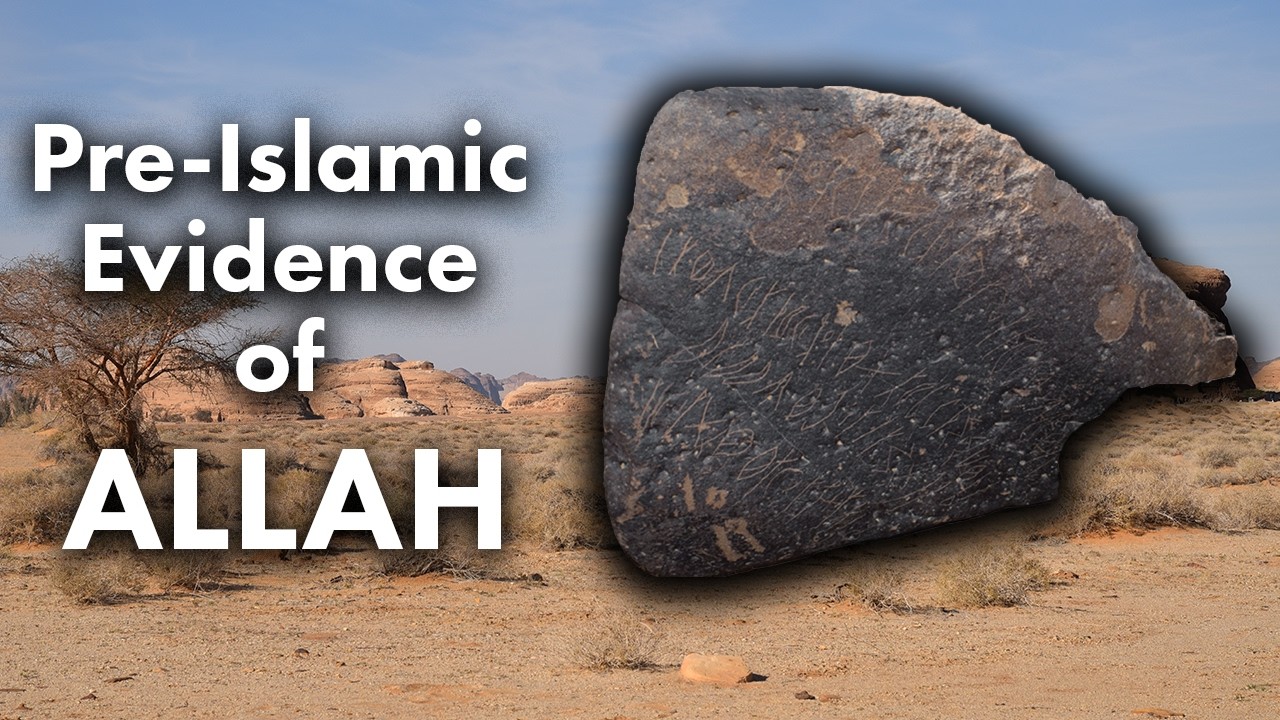
A scholar of religion on how Arabic-speaking Jews and Christians used the word Allah before Islam.
The Shema, the prayer Jesus quoted, explained from the Hebrew Bible.
A Muslim scholar on the Hebrew and Arabic names for God.
Do it together
Write Elohim, Elaha and Allah on the board. Ask a Hebrew, an Aramaic or Arabic speaker (or a recording) to say each one. Spot the shared sound.
Several UK cities have Arabic-speaking churches (Coptic, Antiochian Orthodox, Maronite, Arabic Anglican). Ask permission first, then listen for the word Allah in the prayers.
Invite one member of each faith to answer the page’s question in three minutes, without rebuttals. Then each listener writes one thing they learned and one thing they still disagree about.
Some synagogues and Jewish families open their Friday-night table to guests of other faiths and none: candles, blessings over wine and bread, and a long meal. Ask your local synagogue whether it runs a guest night, and bring something to share.
The Faith & Belief Forum runs school linking and dialogue programmes that include people of no religion. Invite a speaker from each faith and a humanist speaker to answer this page’s question, without rebuttals.
Go deeper
- Nostra Aetate (Vatican, 1965) · article
- A Common Word Between Us and You (2007) · article
- Dabru Emet: A Jewish Statement on Christians and Christianity (2000) · article
- Qur'an 29 (Quran.com) · scripture
- Deuteronomy 6 (Sefaria) · scripture
- Catechism of the Catholic Church (Vatican) · article
- The Faith & Belief Forum · article
Check yourself
Three quick questions. No score, nothing saved.
1. In an Arabic Bible, the first verse reads 'In the beginning ___ created the heavens and the earth'.
2. Where and when did Rabbi Saadia Gaon use 'Allah' in his Torah translation?
3. In the Qur'an, who are the 'People of the Book'?
Sources (9)
- Christians 28.8%, Muslims 25.6% of world population in 2020: Pew Research Center, How the Global Religious Landscape Changed From 2010 to 2020, June 2025
- Census 2021 England and Wales religion figures: ONS, Religion, England and Wales: Census 2021
- Muslims ‘adore the one God’: Nostra Aetate 3, 1965
- Catechism 841 on Muslims: Catechism of the Catholic Church, para. 841
- John Paul II, Casablanca, 19 Aug 1985: Address to young Muslims, Vatican
- A Common Word, 138 signatories, 2007: A Common Word official site
- Wheaton College and Larycia Hawkins, 2015–16: Wikipedia, Larycia Hawkins
- Zabad inscription, 512 CE: Wikipedia, Zabad inscription
- Volf, Allah: A Christian Response (HarperOne, 2011): Yale Center for Faith & Culture