Open Serious people still disagree; the evidence is not in.
A four-year-old is asked why rocks are pointy. The answer comes back at once: “So that animals can scratch on them when they get itchy.” A psychologist called Deborah Kelemen collected answers like that in the 1990s. Young children, she found, tend to think everything is for something: clouds are for raining, mountains are for climbing. She called it “promiscuous teleology”, a fancy way of saying that small children see purpose everywhere.
Is that a sign that we are made to look for God? Or a sign that our brains jump to conclusions? Both sides use the same science, and both sides have a point. The research is fascinating, and believers and non-religious people read it in different ways.
“So set thy purpose (O Muhammad) for religion as a man by nature upright - the nature (framed) of Allah, in which He hath created man. There is no altering (the laws of) Allah's creation. That is the right religion, but most men know not -.”
Qur'an 30:30 · Pickthall (1930)
The Arabic word here is fitra, the original nature God gave every human being. The Prophet Muhammad ﷺ (peace be upon him) said that every child is born on the fitra (Bukhari 1385). Ecclesiastes says God “hath set the world in their heart” (3:11, JPS 1917), a phrase many translators render as “eternity”.
What science shows
Belief in gods or spirits is found in nearly every human society that anthropologists have studied. In 2012 the Pew Research Center estimated that about 84% of the world’s people identify with a religious group. Humans have buried their dead with care for at least 100,000 years, though archaeologists warn against reading too much belief into ancient graves.
A field called the cognitive science of religion tries to explain why. Between 2008 and 2011 the University of Oxford ran a project with 57 researchers in 20 countries. Its conclusion, announced in May 2011, was that humans are “predisposed” to believe in gods and an afterlife. Small children readily believe that someone made the world, that things have purposes, and that something of a person continues after death.
Several mental habits seem to help. We are quick to detect agents: a rustle in the grass might be a lion, and it is safer to assume it is. We see design and purpose easily, as Kelemen found. And we find it hard to imagine our own minds simply stopping. Jesse Bering and David Bjorklund found in 2004 that young children who had heard a story about a mouse eaten by an alligator said the mouse’s body had stopped working, but it still felt hungry and still missed its mum.
Not everyone believes, of course. Life without religion is growing in Britain: in the 2021 Census, 37.2% of people in England and Wales said they had no religion. Psychologists such as Ara Norenzayan and Will Gervais argue that non-belief can come naturally too, for example in societies that feel secure. An early study suggesting that analytical thinking reduces belief did not hold up when it was repeated on a larger scale in 2017, a reminder that this field is young.
Both sides use this science
Made to seek. If humans are built to look for God, perhaps there is Someone to find, just as hunger suggests there is such a thing as food. The Qur’an’s fitra, Augustine’s “restless heart” and Ecclesiastes’ “world in their heart” say the same.
Natural does not mean false. Justin Barrett, a lead researcher in the field and a Christian, points out that we also believe naturally in other minds and in the reality of the past, and we don’t think those beliefs are mistakes.
A by-product. Our minds are wired to see agents and purposes everywhere because it helped our ancestors survive. Belief in God may be a side effect, like seeing faces in clouds, said the anthropologist Pascal Boyer and others.
Natural is not proof. Many natural beliefs are wrong: that the Sun goes round the Earth, or that heavy things fall faster. Science often means learning to think against our instincts.
Where it stands
The research shows that belief comes easily to human minds. It cannot show whether belief is true or false. The Oxford project’s director, Roger Trigg, said the findings do not prove that God exists or doesn’t; they show that religion is not going away.
What each faith says
Judaism
“He hath made every thing beautiful in its time; also He hath set the world in their heart, yet so that man cannot find out the work that God hath done from the beginning even to the end.”
Ecclesiastes 3:11 · JPS 1917
Jewish tradition teaches that every human being is made “in the image of God” (Genesis 1:27), and many Jewish thinkers have connected that image with the human capacity to seek, to reason and to choose. A Hasidic teaching speaks of the pintele Yid, the “little point of a Jew”: a spark of faith that never goes out, however far someone wanders.
The midrash pictures Abraham as a child who looked at the world, saw its order and asked who was behind it, like a traveller who sees a palace and asks who its owner is (Genesis Rabbah 39:1). Belief, in this picture, begins with curiosity.
Jewish children meet this seeking early. Many learn the Modeh Ani, a one-line prayer said on waking, thanking the living King for returning their soul, before their feet touch the floor.
Christianity
“that they should seek the Lord, if perhaps they might reach out for him and find him, though he is not far from each one of us. ‘For in him we live, move, and have our being.’”
Acts 17:27–28 · WEB
St Augustine began his Confessions (about 400 CE) with a prayer that many Christians know by heart: “You have made us for yourself, and our heart is restless until it rests in you.” Christians teach that every person is made for relationship with God, and that this longing is a clue.
In Athens, Paul told the philosophers that God made people so “that they should seek the Lord, if perhaps they might reach out for him and find him”, and quoted one of their own poets: “we are also his offspring” (Acts 17:27–28). The early Christian writer Tertullian spoke of the soul as “naturally Christian”. Modern Christian thinkers are more likely to say that all people have a natural sense of God that faith completes.
In many Christian homes the first prayer a child learns is a simple bedtime one. Anglican, Methodist and Catholic families alike teach the Lord’s Prayer early, so that its words are there before the questions come.
Islam
“So set thy purpose (O Muhammad) for religion as a man by nature upright - the nature (framed) of Allah, in which He hath created man. There is no altering (the laws of) Allah's creation. That is the right religion, but most men know not -.”
Qur'an 30:30 · Pickthall (1930)
The idea of fitra is central to Islam. The Prophet Muhammad ﷺ said: “Every child is born upon the fitra; then his parents make him a Jew, a Christian or a Magian” (Bukhari 1385; Muslim 2658). Muslim scholars read this as saying that recognising God is humanity’s default setting, and that culture and upbringing then shape it.
The Qur’an also tells of a covenant before birth, when God drew all humanity from the children of Adam (peace be upon him) and asked, “Am I not your Lord?” and they said, “Yes, we bear witness” (7:172). Many Muslims understand belief, then, not as learning something new but as remembering something known. That is why the Qur’an calls itself dhikr, a “reminder”.
Without religion
Non-religious people point out that ‘natural’ cuts both ways. If belief comes easily to young minds, so do many ideas we later grow out of. The anthropologist Pascal Boyer argues in Religion Explained (2001) that gods are a by-product of ordinary mental tools. Many non-religious parents see their children’s ‘purpose everywhere’ stage, enjoy it, and then watch them ask for evidence.
Others say life without religion is natural too. The sociologist Lois Lee, in Recognizing the Non-religious (2015), argues that being non-religious is not just an absence: people have their own beliefs, rituals and ways of making meaning. Phil Zuckerman, in Society without God (2008), described Danes and Swedes living calm, kind lives with little thought of God at all. Many Britons would simply say they are ‘just not religious’: the longing for purpose is real, and they find it in family, work, nature and friends.
Same and different
All three faiths teach that the longing for God is part of being human, built in by the Creator: fitra in Islam, the image of God in Judaism, the restless heart in Christianity. They differ on what happens next. Islam stresses that belief in one God is the original state, which people can drift from and return to. Christianity often adds that human nature is also wounded and needs grace to find its way. Judaism places the seeking within a covenant people and a way of life. Non-religious people accept the same research, and read it as a fact about brains rather than about God.
A moment to reflect
- Did you believe in God as a small child? What changed, or didn’t?
- If a belief comes naturally, does that make it more likely to be true, less likely, or neither?
- Can you think of a natural instinct that turned out to be right? One that turned out to be wrong?
- What do you think children should be told about God, and by whom?
Watch
Justin Barrett, a leading researcher, on whether children naturally believe in God.
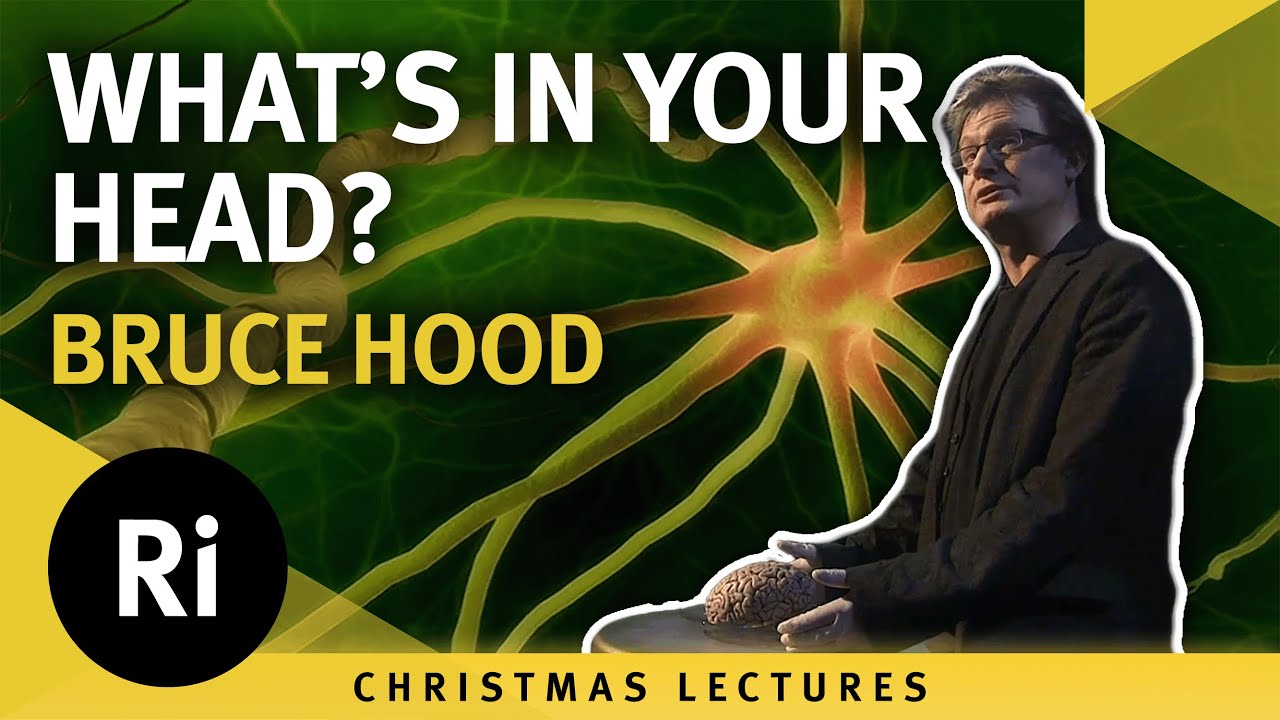 What's in your head? - Bruce Hood 2011 Christmas Lectures 1/3 · The Royal InstitutionPlays on “The brain, and the mystery of the mind” →
A Royal Institution Christmas Lecture by the psychologist Bruce Hood on how the brain builds its picture of the world.
A Faraday Institute lecture on what cognitive science does and doesn’t mean for faith.
A religious studies scholar on why people leave the religion they grew up with.
Do it together
Walk round a park and ask children what things are for: a cloud, a stone, a feather. Write down their answers. Talk about which answers grown-ups and scientists would give, and why.
Show pictures of clouds, plug sockets and car fronts and see how many faces people spot. Discuss: why are our brains so quick to find someone there?
In a mixed group, each person shares in two minutes how their faith, or their life without religion, has changed since childhood. No arguing, only questions to understand.
For one week, try a ‘first words’ habit when you wake. Use the Jewish Modeh Ani, a Christian morning prayer or the Muslim words on waking, or simply name one thing you are grateful for. At the end of the week, compare how it felt.
Go deeper
- Humans ‘predisposed’ to believe in gods and the afterlife (Oxford, 2011) · article
- Qur'an 30:30 (Quran.com) · scripture
- Hadith of the fitra, Bukhari 1385 (Sunnah.com) · scripture
- Acts 17 (Bible Gateway, WEB) · scripture
- Religion, England and Wales: Census 2021 (ONS) · article
- Genesis Rabbah 39:1, Abraham and the palace (Sefaria) · scripture
- Augustine, Confessions (Christian Classics Ethereal Library) · book
- Understanding Humanism: resources for schools (Humanists UK) · article
Check yourself
Three quick questions. No score, nothing saved.
1. What did Deborah Kelemen find young children tend to think?
2. Which Arabic word means the natural disposition God gave every person?
3. Does 'natural' mean the belief is true?
Sources (7)
- Oxford Cognition, Religion and Theology Project, 57 researchers, 20 countries, results May 2011: University of Oxford via Phys.org, 12 May 2011
- Children’s promiscuous teleology: Kelemen, Psychological Science 15(5), 2004
- Mouse and alligator afterlife study: Bering and Bjorklund, Developmental Psychology 40(2), 2004
- 84% of the world religiously affiliated: Pew Research Center, The Global Religious Landscape, 2012
- Origins of religious disbelief: Norenzayan and Gervais, Trends in Cognitive Sciences 17(1), 2013
- Analytic thinking–disbelief link did not replicate: Sanchez et al., PLOS ONE 12(2), 2017
- Census 2021: 37.2% no religion: ONS, 29 Nov 2022